The Duomo of Siena
and its treasures

Guide to the Cathedral of Santa Maria Assunta

L'incanto del Duomo

There are places that are immediately recognizable because they tell the greatness, faith, and identity of an entire city by themselves. 

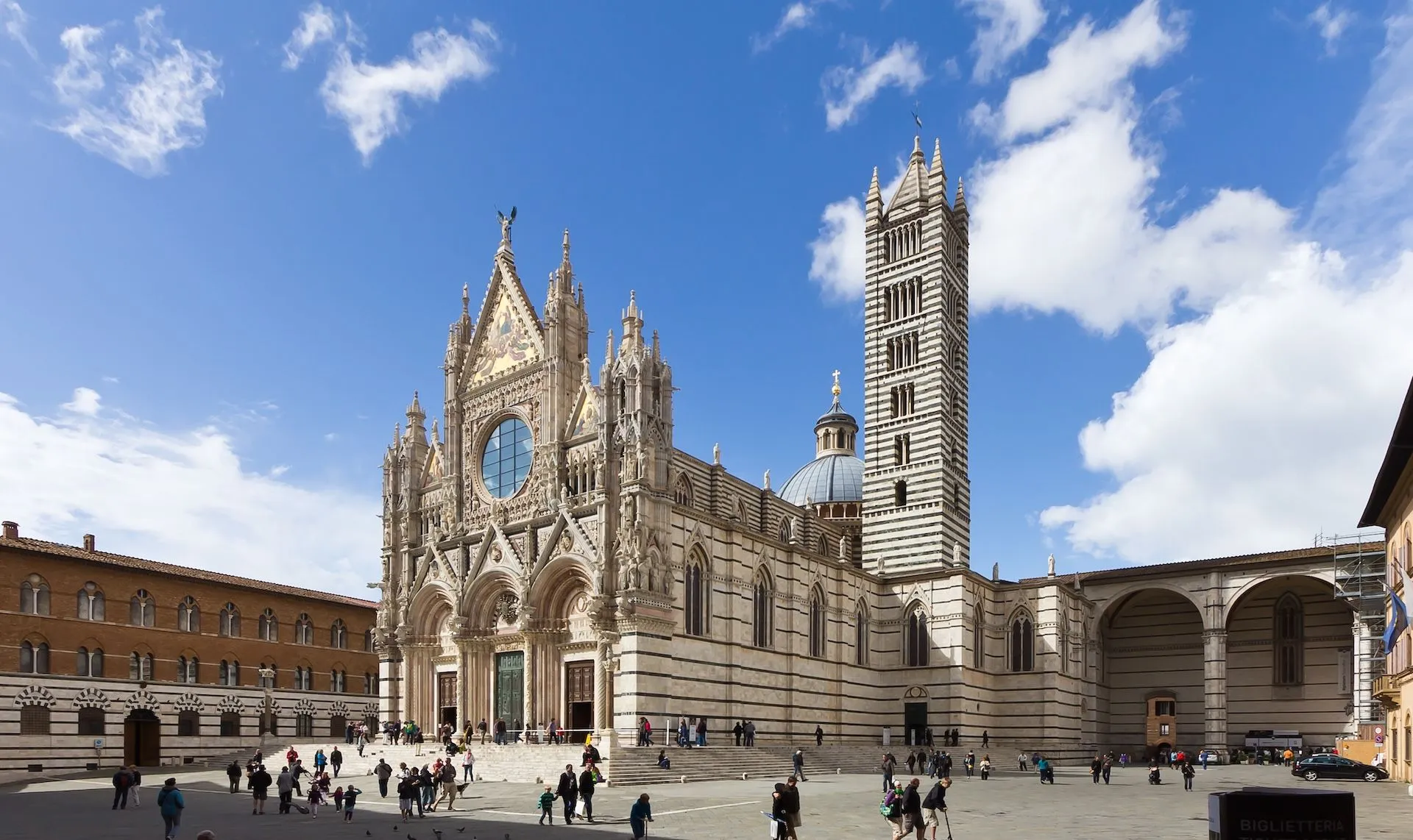
The Duomo of Siena, or Cathedral of Santa Maria Assunta, is one of these.

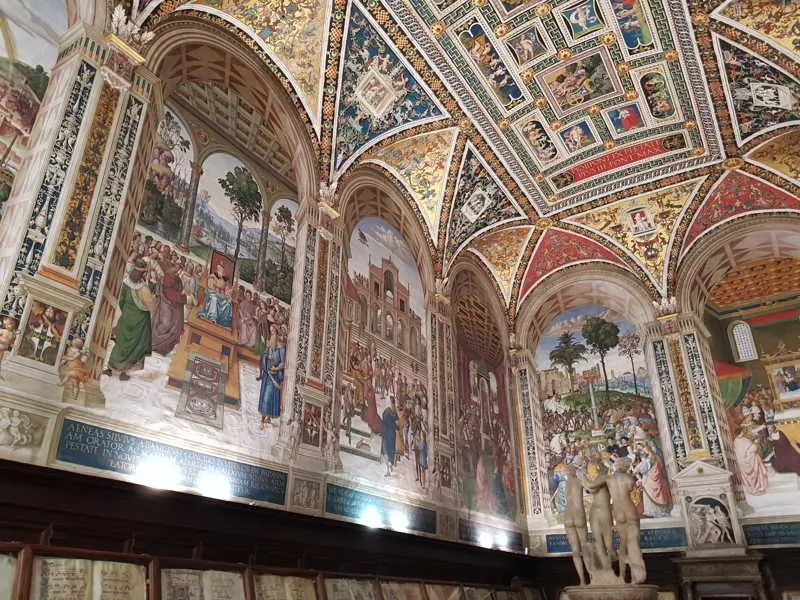
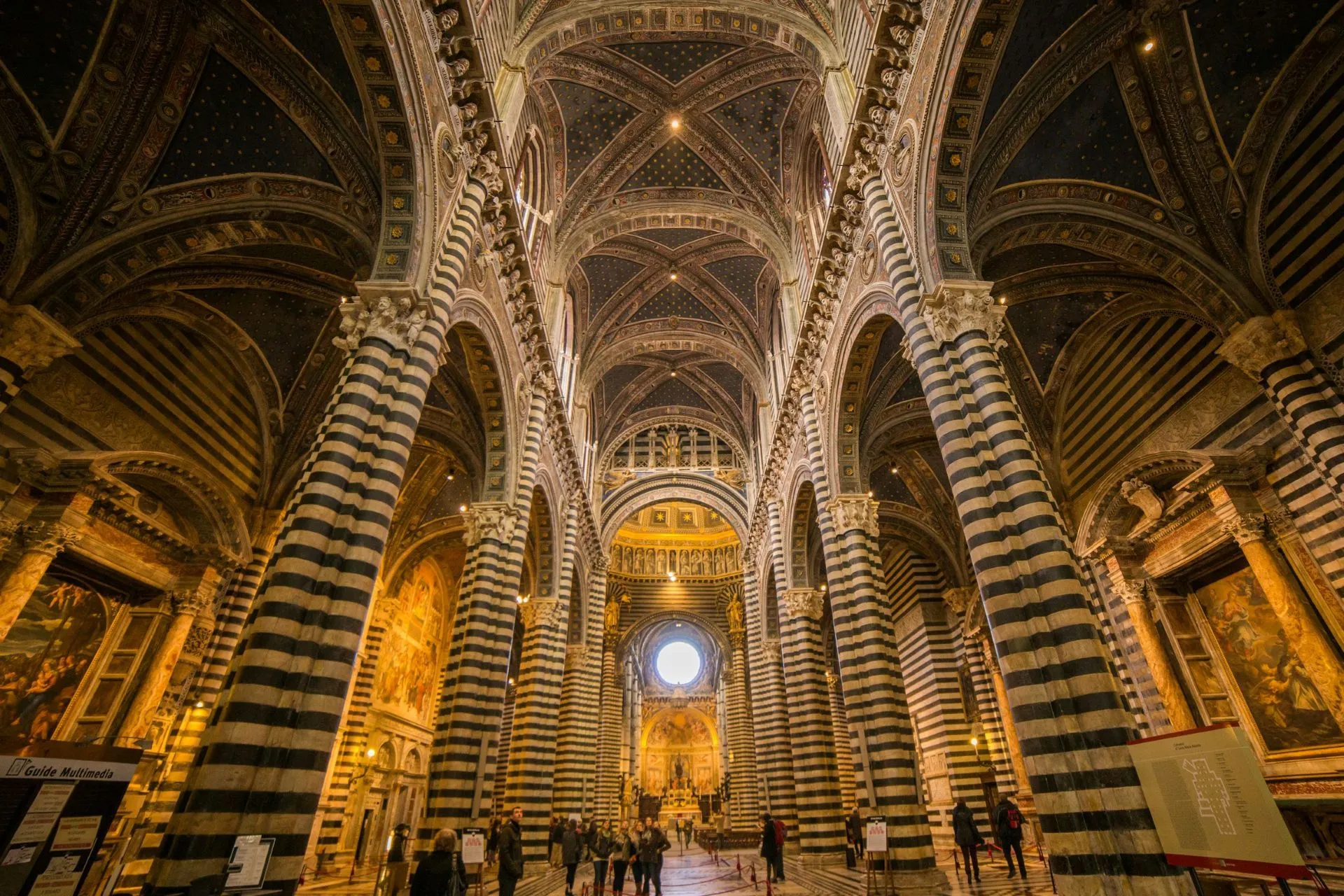
In the heart of the historic center, along the Via Francigena, it stands out as one of the strongest and most fascinating symbols of the city, unique in the world for its marble inlays, the Piccolomini Library, and the 14th-century works housed within.
History of the Duomo of Siena and the unfinished project

The cathedral is the centerpiece of the Museum Complex, which includes the Baptistery, the Crypt, the Facciatone, the Museum of the Opera, and the Oratory of San Bernardino. 

Consecrated in 1179, it took shape through a long construction site that lasted almost two centuries. 

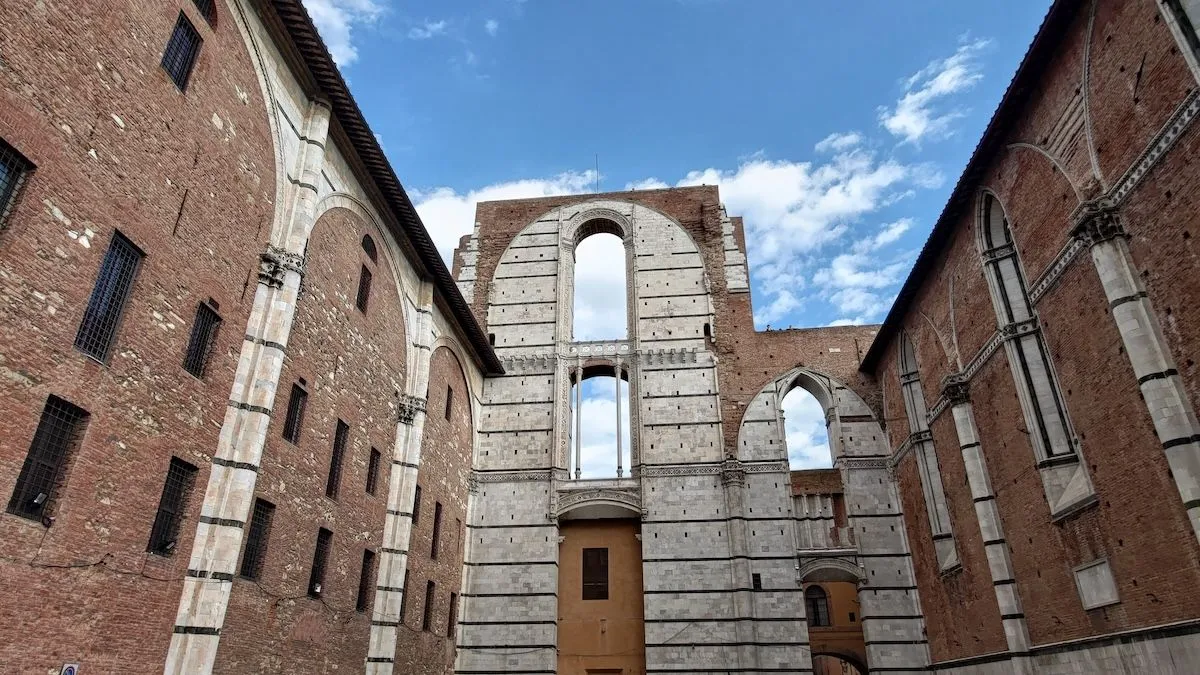
The plague of 1348 halted the expansion project, interrupting a monumental design that would have made the Duomo even more imposing. 

Traces of that vision remain today in the Facciatone, the skeleton of the unfinished façade, from which one can admire an exceptional view of the urban center and the surrounding countryside.

The architecture

Façade, colors, and symbols

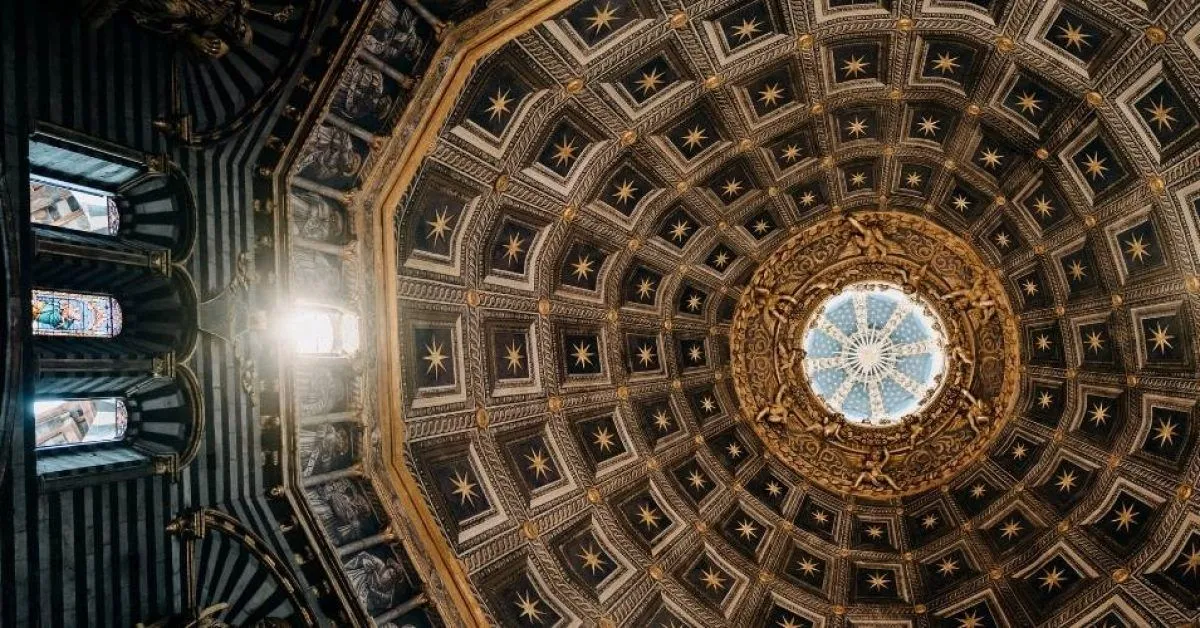
The façade astonishes with its refined chromatic use of materials: white marble, red Siena, and green serpentine from Prato. Inside, the famous black and white bicolor recalls the Balzana, the coat of arms of Siena, making the Duomo one of the most recognizable symbols of the city.

The Floor

A sacred text in marble

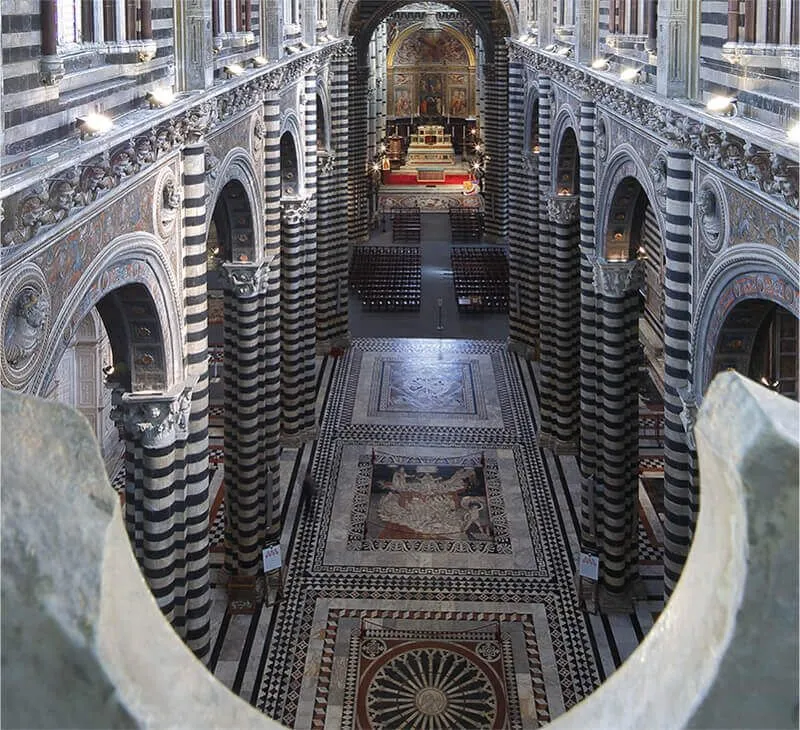
Sibyls, prophets, allegories, and biblical scenes transform the surface of the cathedral into a great symbolic narrative. Considered a unique masterpiece worldwide, the floor is composed of 56 marble inlays. At the entrance, the Latin inscription Castissimum virginis templum caste memento ingredi invites visitors to experience the visit with awareness and spirituality. This immense work of art can also be admired from above through the path of the Porta del Cielo.

When to admire the floor and the connection with the Palio

The floor of the Duomo is visible in its entirety from June to October. During the August Palio dedicated to the Assumption of the Virgin Mary, it is covered and, after the race, welcomes the winning contrada, confirming the bond between the Duomo and the Sienese tradition.

Art treasures:
from Michelangelo to Pinturicchio

Oltre al Pulpito di Nicola Pisano, il Duomo custodisce le sculture giovanili di Michelangelo e la spettacolare Biblioteca Piccolomini, affrescata dal Pinturicchio.

The Sator Square

An enigma carved in marble

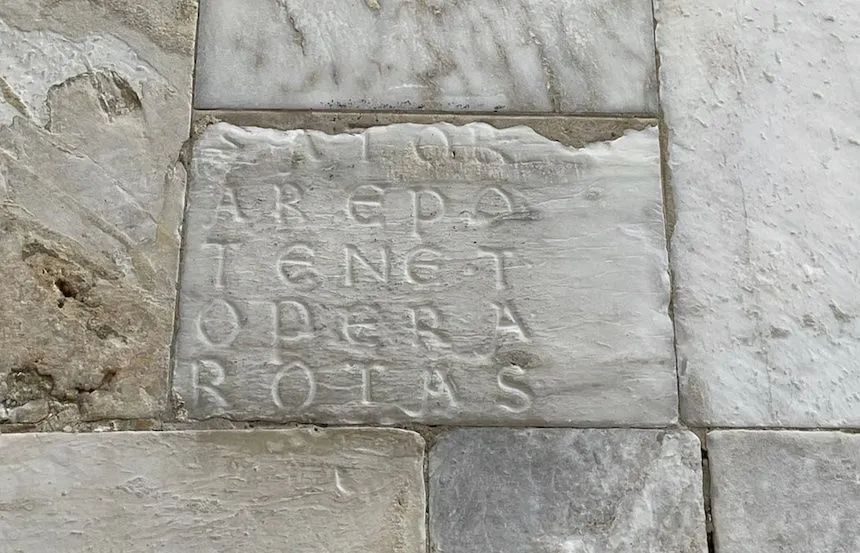
On the outside of the Cathedral, on the left side, is the famous Sator Square, a “magic square,” whose words form a perfect palindrome, interpreted over the centuries: in the Middle Ages as a formula to ward off rabid dogs, in the Renaissance as a protective talisman, and, according to the Jesuit Athanasius Kircher, as a symbol with dark connotations.

Purchase your ticket for the Duomo of Siena and access the Porta del Cielo to admire the marble floor and the city from a unique perspective.