The fountains of Siena

When water becomes architecture

A city that invented water

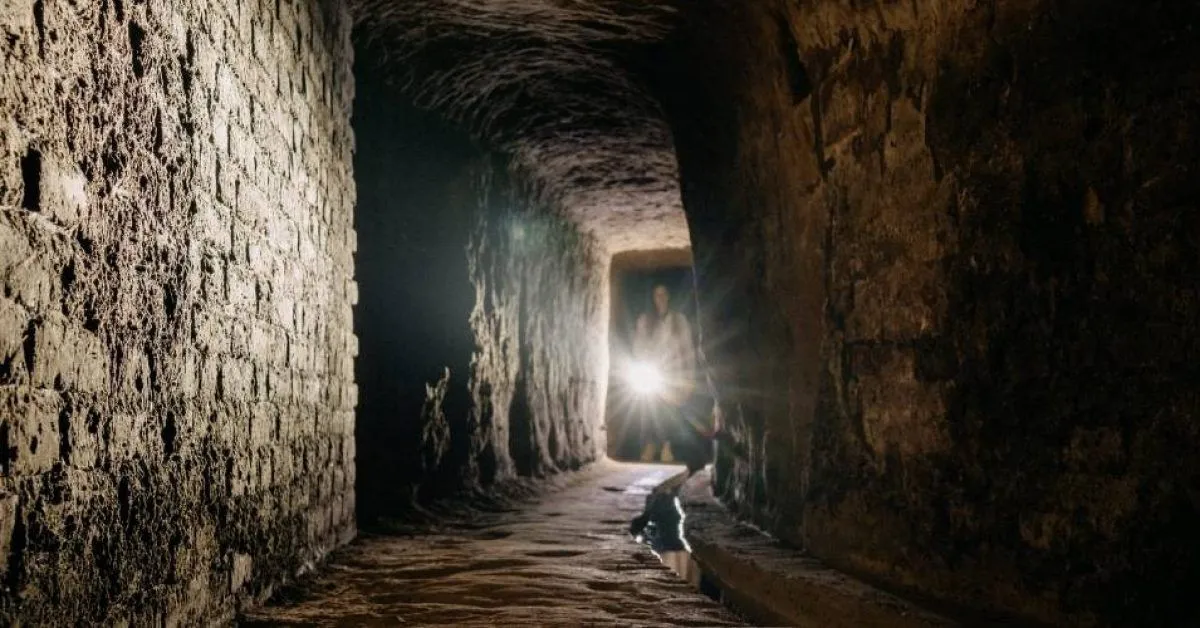
Siena does not have a major river. It has no lakes, no convenient springs, nor anything else that usually ensures a city's survival. Yet Siena solved this problem with an elegance and audacity that still leave people speechless today: it dug a network of drainage tunnels approximately 25 kilometers long beneath the ground the famous bottini which collect water through soil infiltration and channel it to the city's fountains.

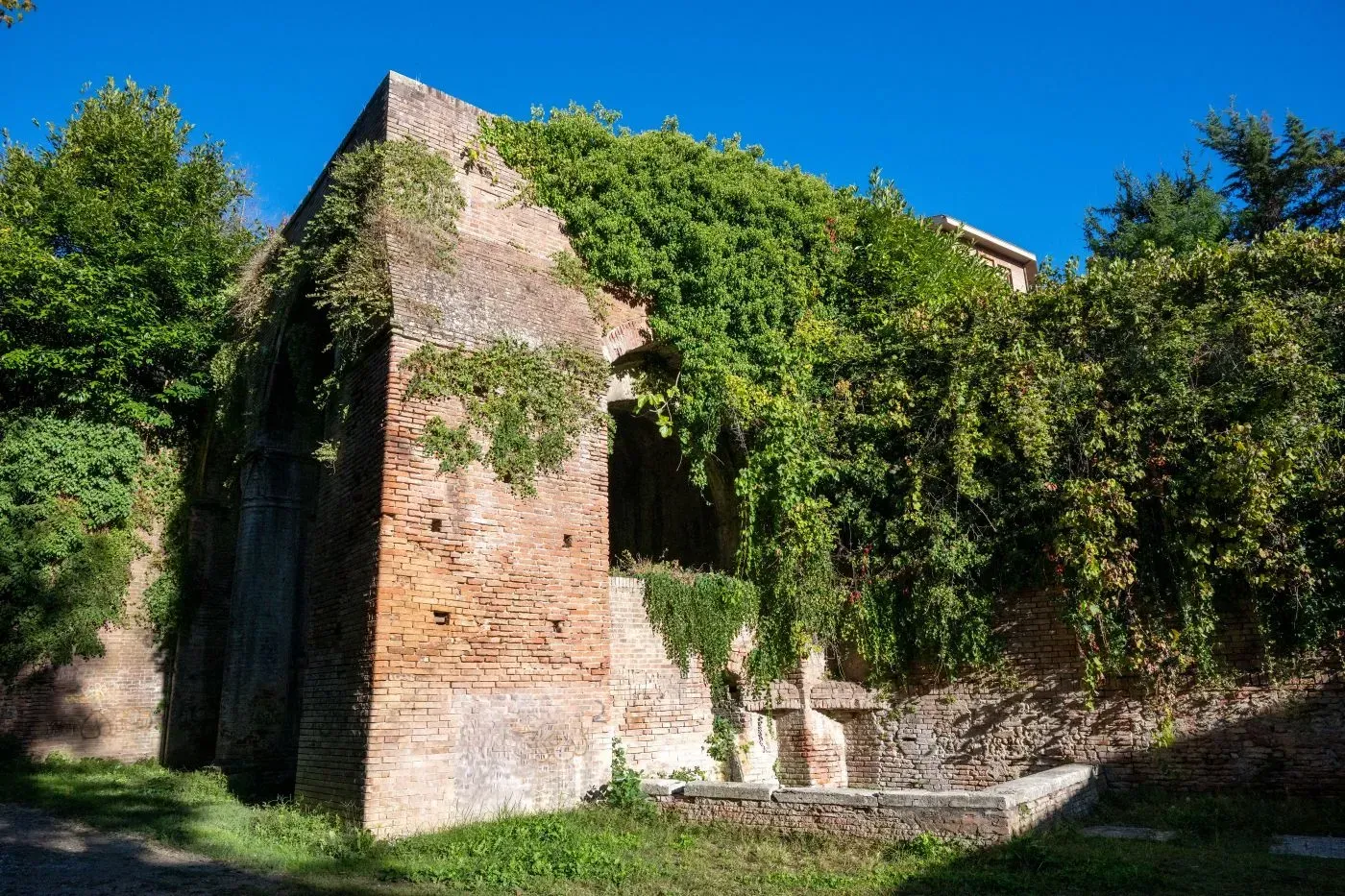
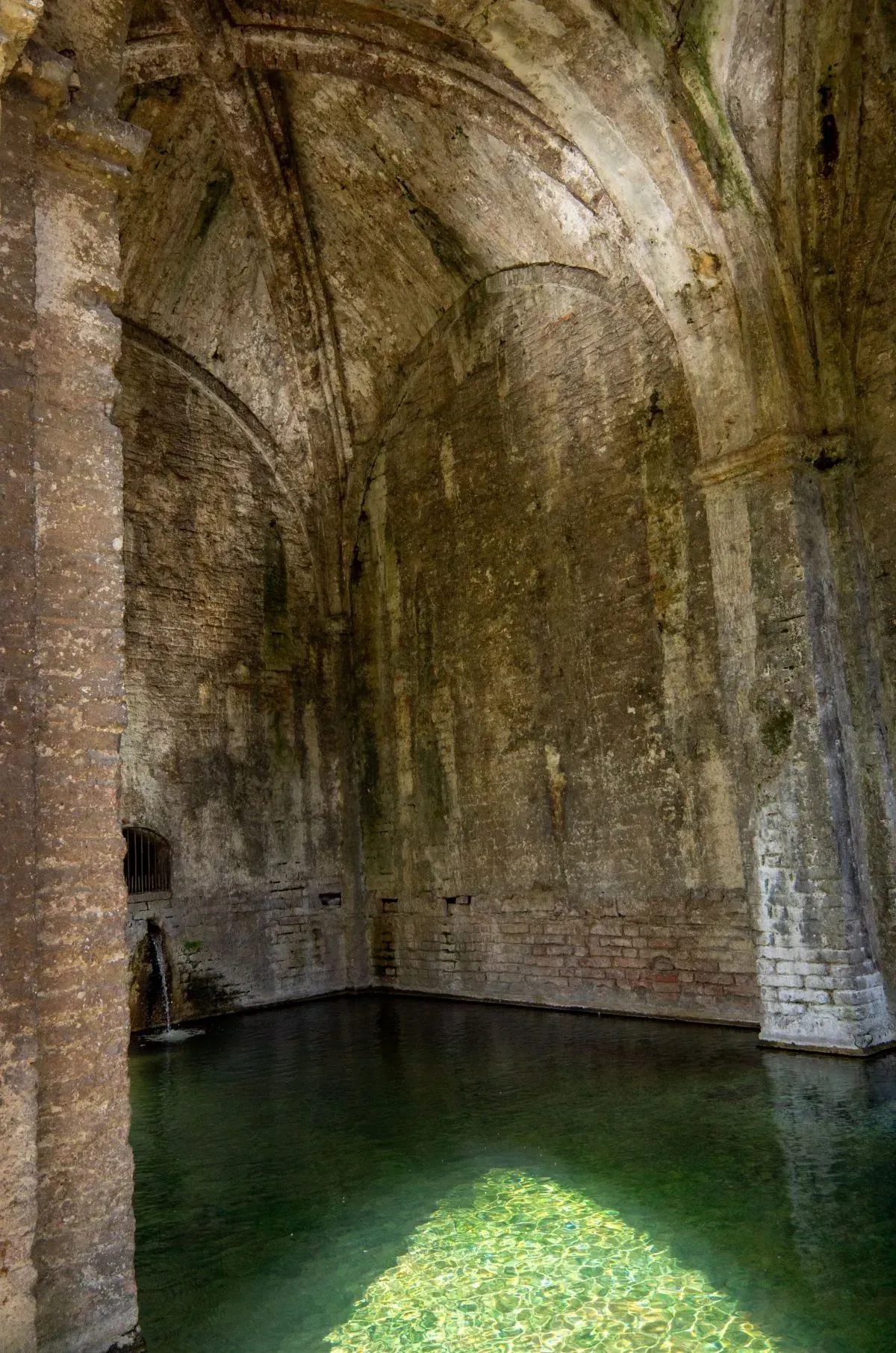
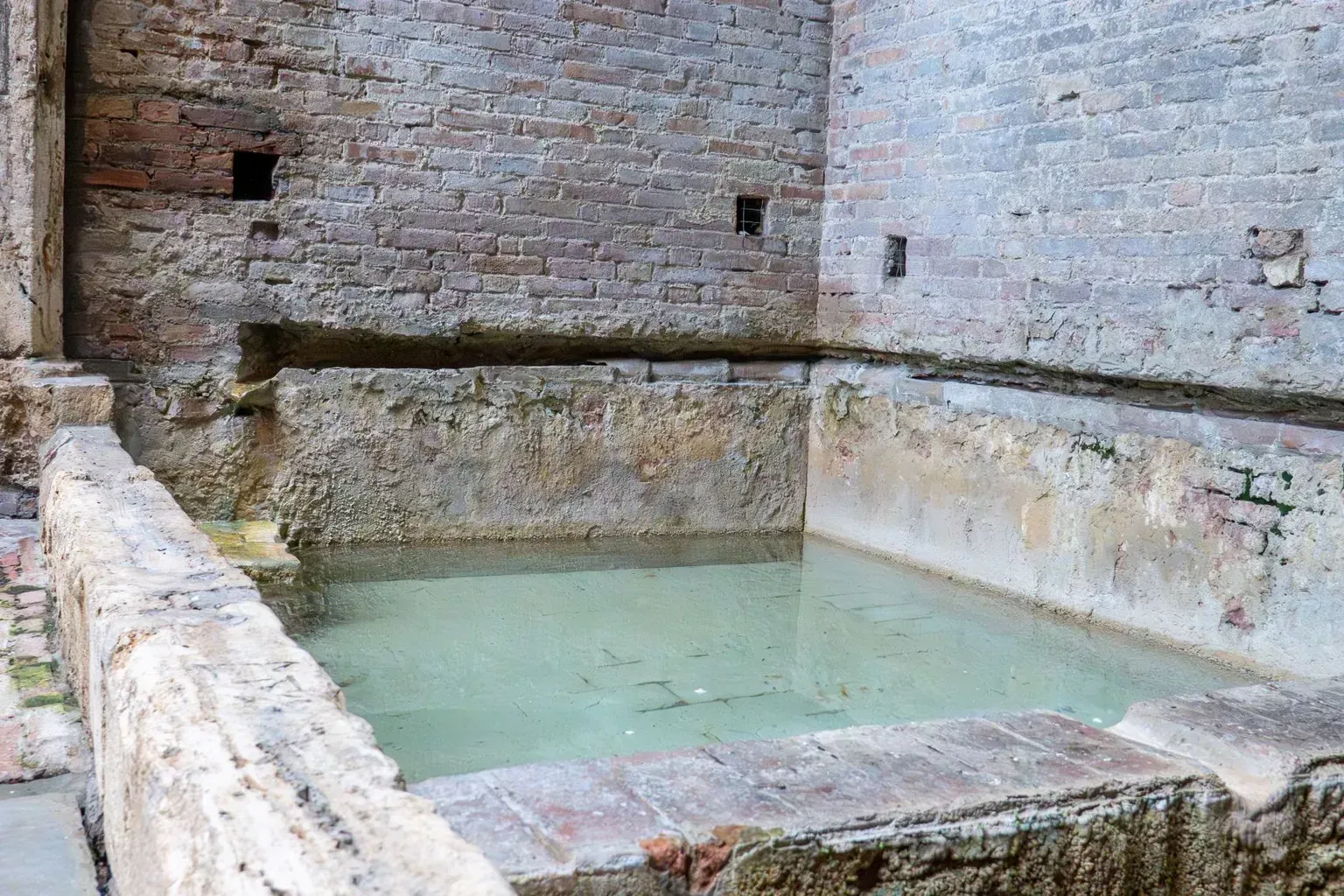
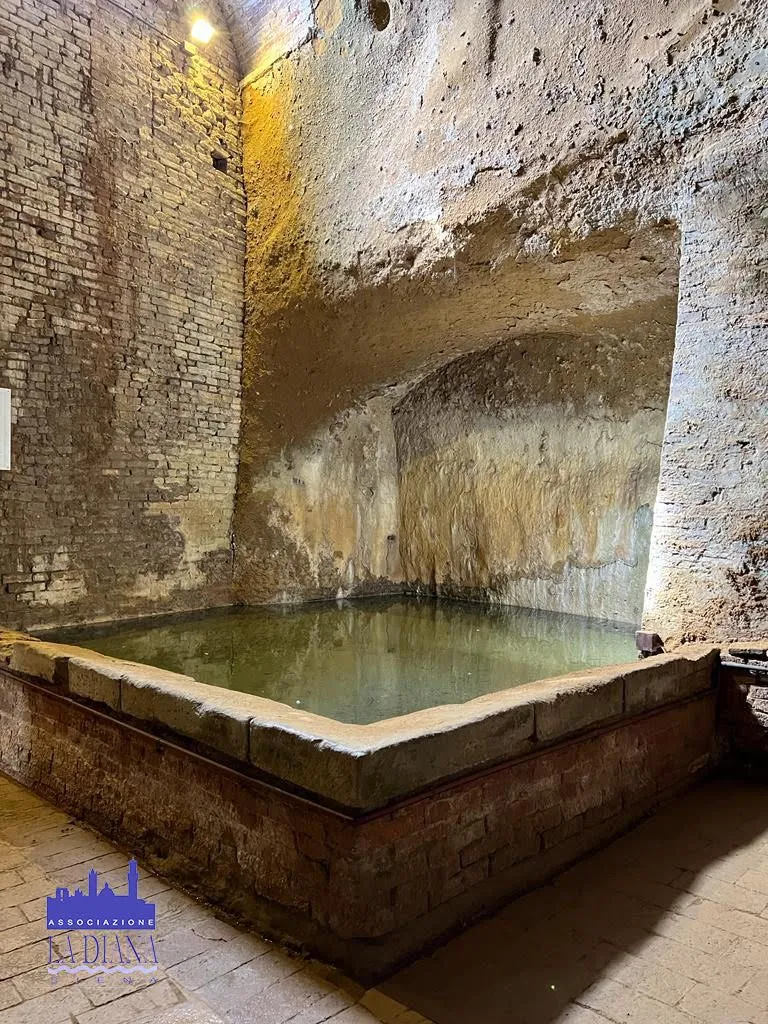
It was not mere engineering. It was underground poetry. And the result of it all are the fountains: magnificent architectures of water, both beautiful and functional, often featuring three distinct basins, one for drinking water, one for watering animals, and one for washing clothes that structured the daily life of entire neighborhoods. Some were covered and guarded like fortresses, because during a siege, water was as valuable as bread. Others were located outside the city walls and were gradually incorporated as Siena expanded. All of them, without exception, tell the story of a civilization that understood how water is life, and transformed it into beauty.
Sources not to be missed

Fonte Gaia: The heart of the city

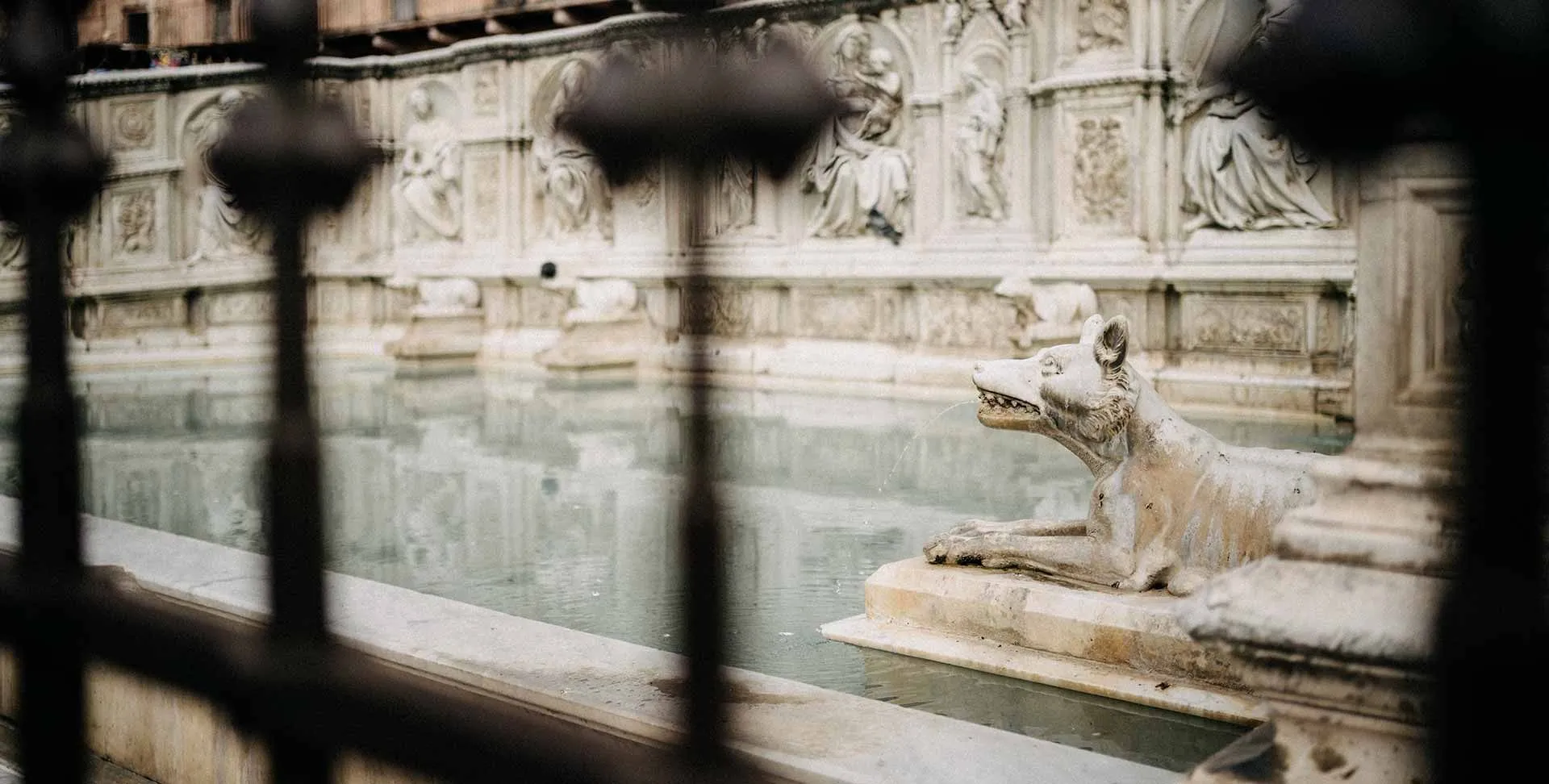
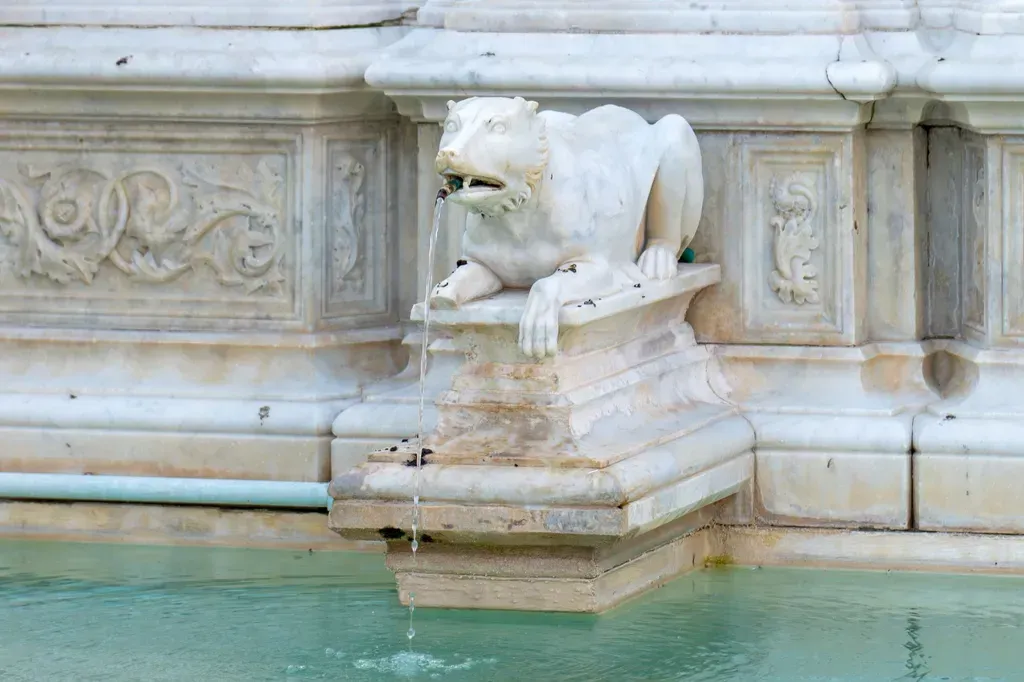
It's the most famous, the most beloved, the one everyone searches for without always knowing what they're looking for. It stands in the center of Piazza del Campo, and that's no coincidence: it was placed there because bringing water to that spot was a collective triumph, celebrated with such joy that it gave the fountain its name. The water arrived in 1343-1346, and the city rejoiced. Between 1409 and 1419, Jacopo della Quercia covered it with marble and sculptures that are among the pinnacles of the early Italian 15th century. What you see today is a…

Fontebranda: Dante and Caterina's fountain

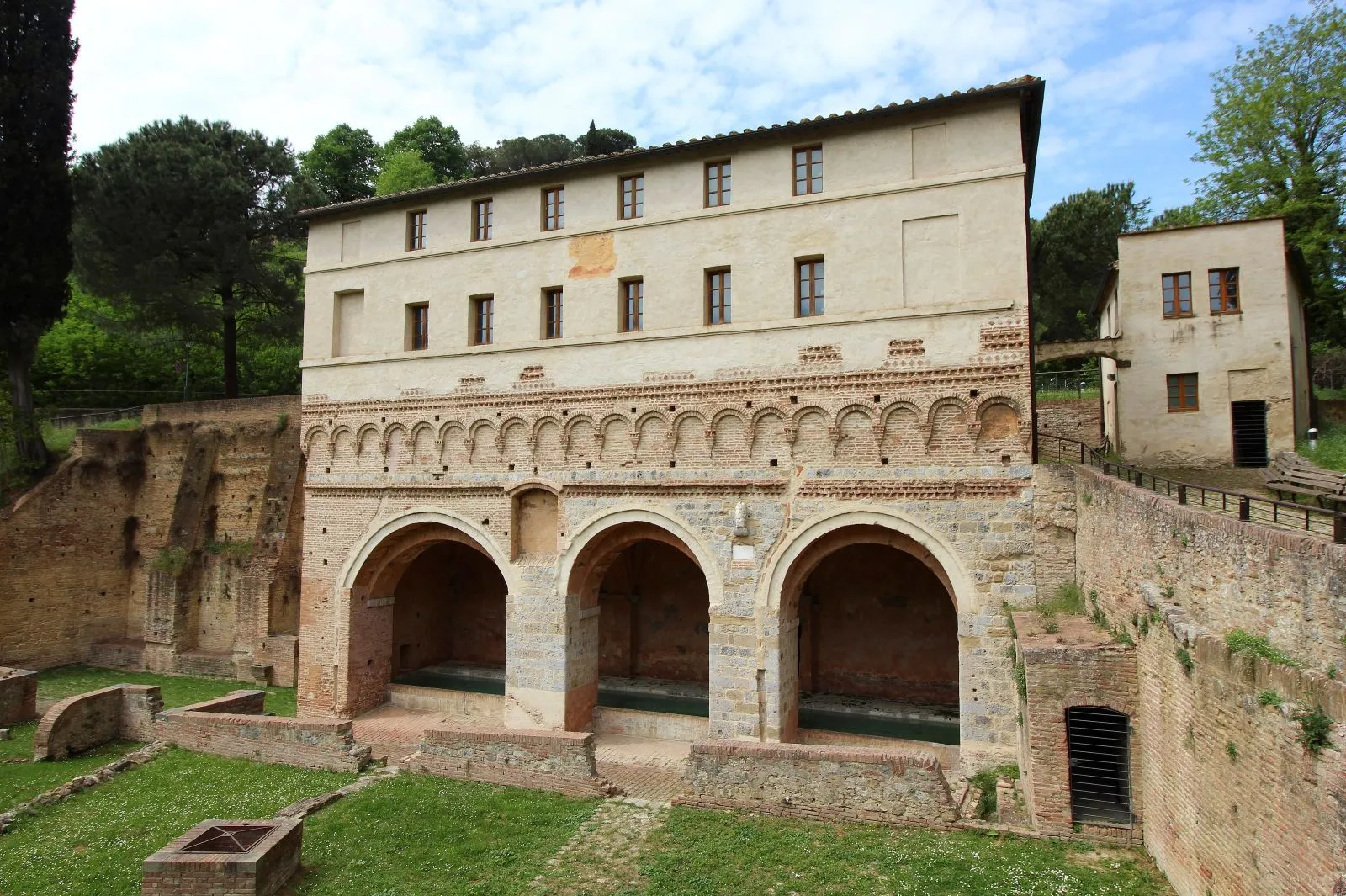
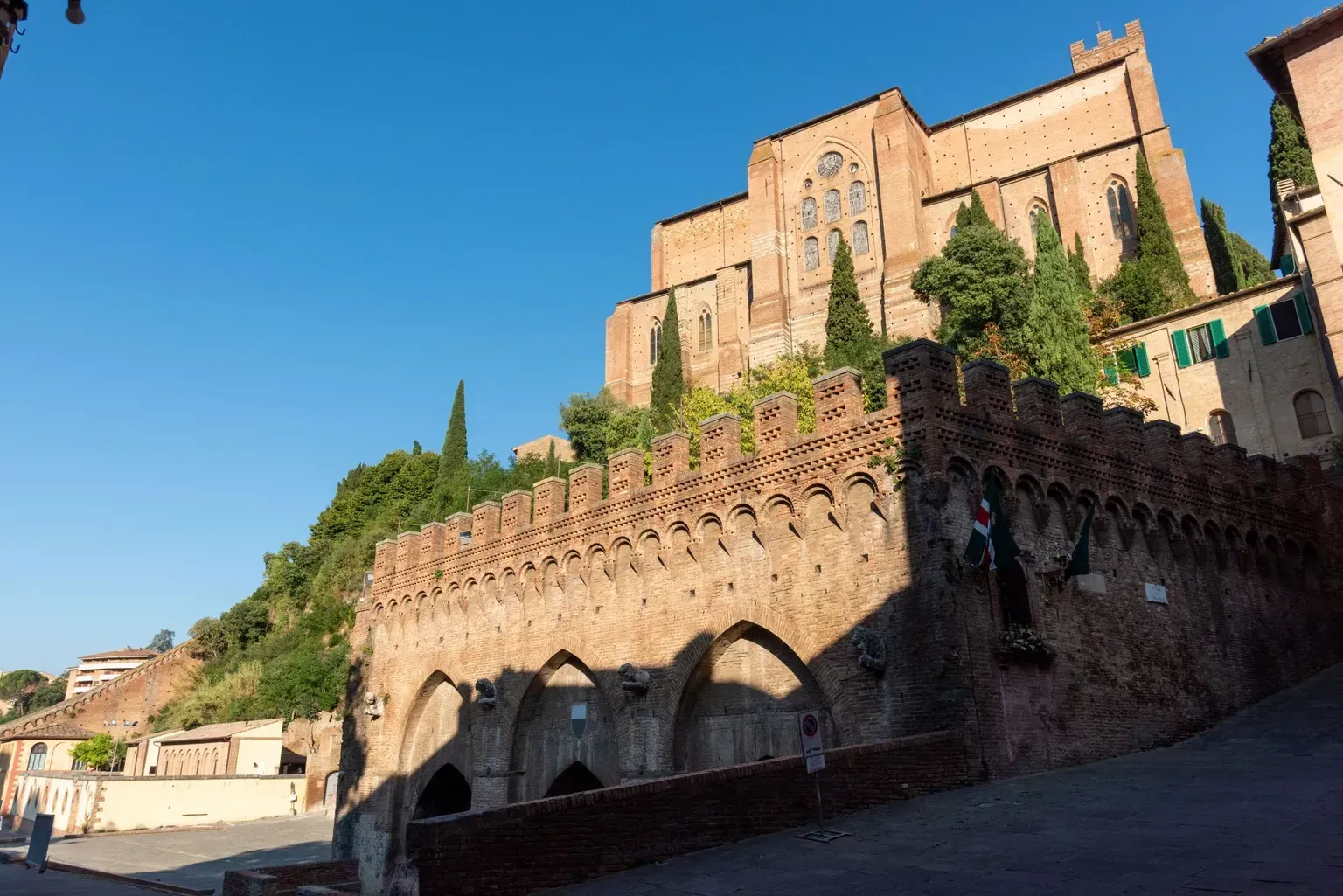
It is the oldest, the most imposing, the one that carries within it centuries of popular history. Cited by Dante, closely linked to the memory of Saint Catherine, who was born and raised right here, on the street that bears her name, Fontebranda was built in 1193 and still retains all the strength of its original structure. It is not an elegant fountain: it is a powerful, almost austere fountain, which tells everything about medieval Siena without needing explanation.

Fonte Nuova d'Ovile: strategic water

Built between 1296 and 1303, it is one of the city's most interesting Gothic fountains. Its location within the walls made it strategic in the event of a siege: whoever controlled this water controlled the life of the neighborhood. Over the centuries, water-related crafts developed around it, from meat processing to leatherwork.

Fonte del Casato, a secret beneath the road

Also known as Fonte Serena, it is located below street level on Via del Casato di Sotto, accessible via a flight of steps. It still retains its 14th-century appearance and is striking not for its monumentality but for something rarer: its intimate and almost secret connection with the surrounding urban fabric. It's the kind of place you find by chance and then want everyone to find it.

Fonte delle Monache, an underground theater

It is perhaps the most spectacular, and the least accessible. It is completely carved into the rock, deep beneath the garden of the former Augustinian monastery of San Paolo. Access was through a tunnel reserved for nuns, to respect their seclusion. The interior is large, lofty, almost theatrical, lit only by a small opening at the top. It is only open on limited occasions: if you get the opportunity, don't miss it.

Pescaia Spring, where water becomes a museum

One of the most important in terms of size and history, it was already active in the first half of the 13th century. Its name comes from the pescaie, the fish farming basins that once occupied the valley floor. It retains traces of its medieval fortifications and is now home to the Water Museum: one of the most effective places to truly understand the relationship between water, landscape, and urban life in Siena.

Caccialupi Spring: the source of shells

Near Porta Tufi, it's the most unusual of all: a niche carved into the rock and lined with small fossil shells, making it unique in Siena's landscape. Water collects in an outdoor basin still used for irrigation. It's not famous, nor is it signposted, but those who find it understand why Siena still has a surprising side.

The Bottini: the secret under the feet

Beneath every fountain, beneath every alley, beneath every square in Siena flow the bottini: the medieval tunnels that feed this extraordinary system. Some sections can still be visited today by reservation, on one of the most unique and unforgettable tours you can take in the city. Walking beneath Siena, feeling the water, touching the stone carved centuries ago: it's an experience that changes the way you look at the city even when you return to the surface.

Search for them, find them, listen to them

Siena's fountains aren't visited by following a predetermined route. They're sought out, discovered, and found by chance, turning down the wrong alley. Some are hidden below street level, others are in the center of piazzas that everyone passes through without stopping, and still others can only be reached by descending seemingly endless stairways. Step outside the map, follow the water, let it carry you. Siena's fountains are waiting for someone to truly find them, not just walk through them.