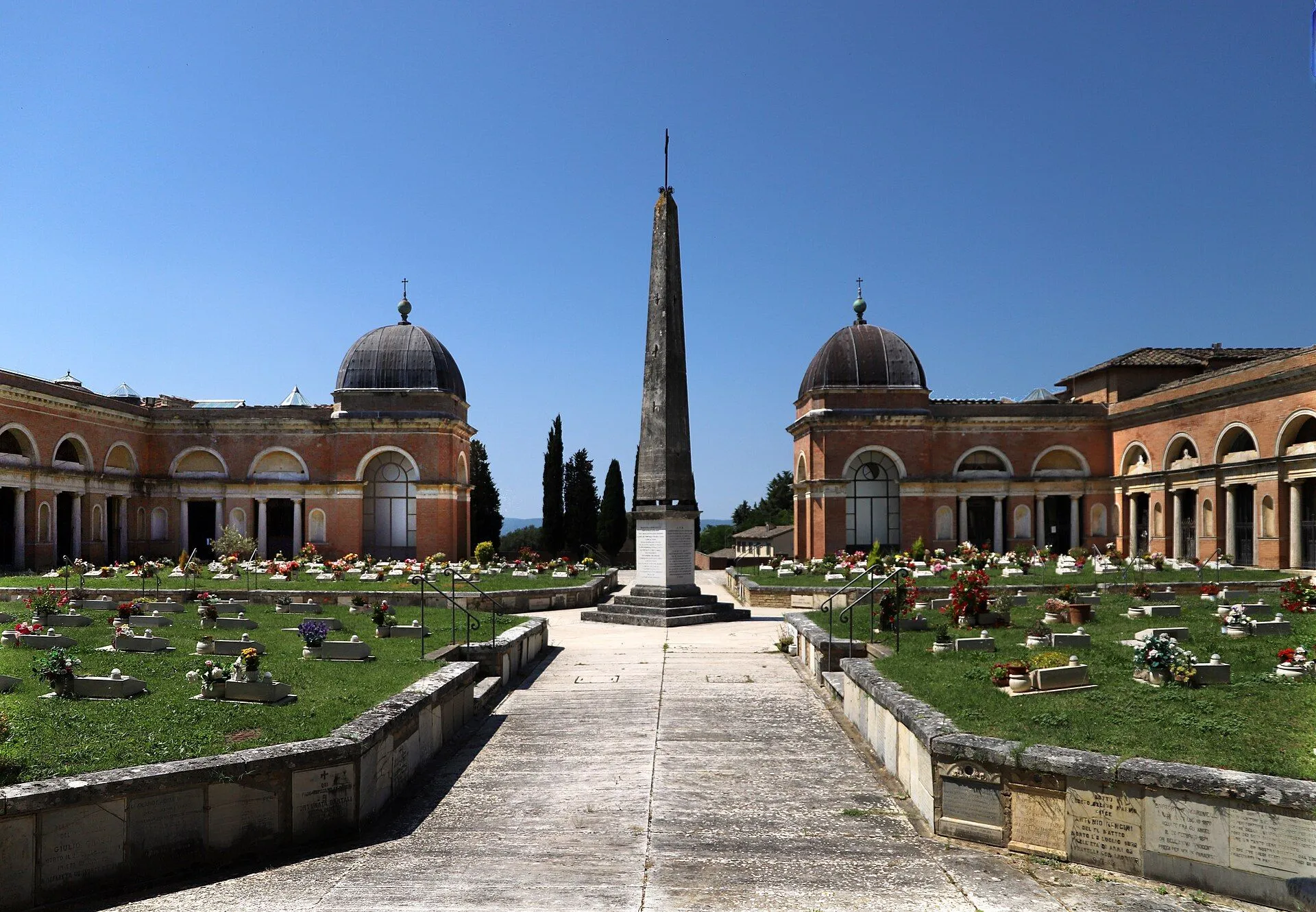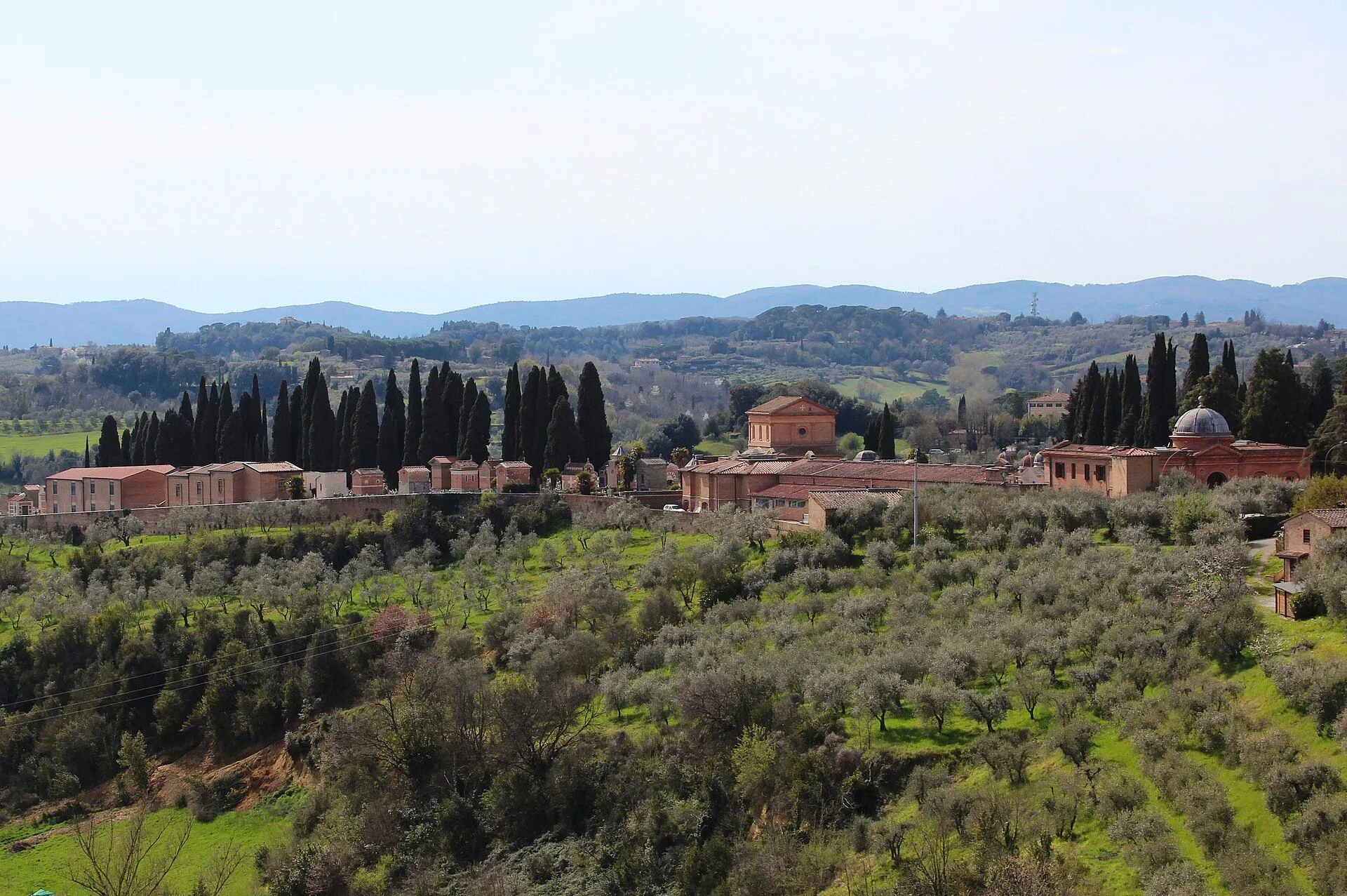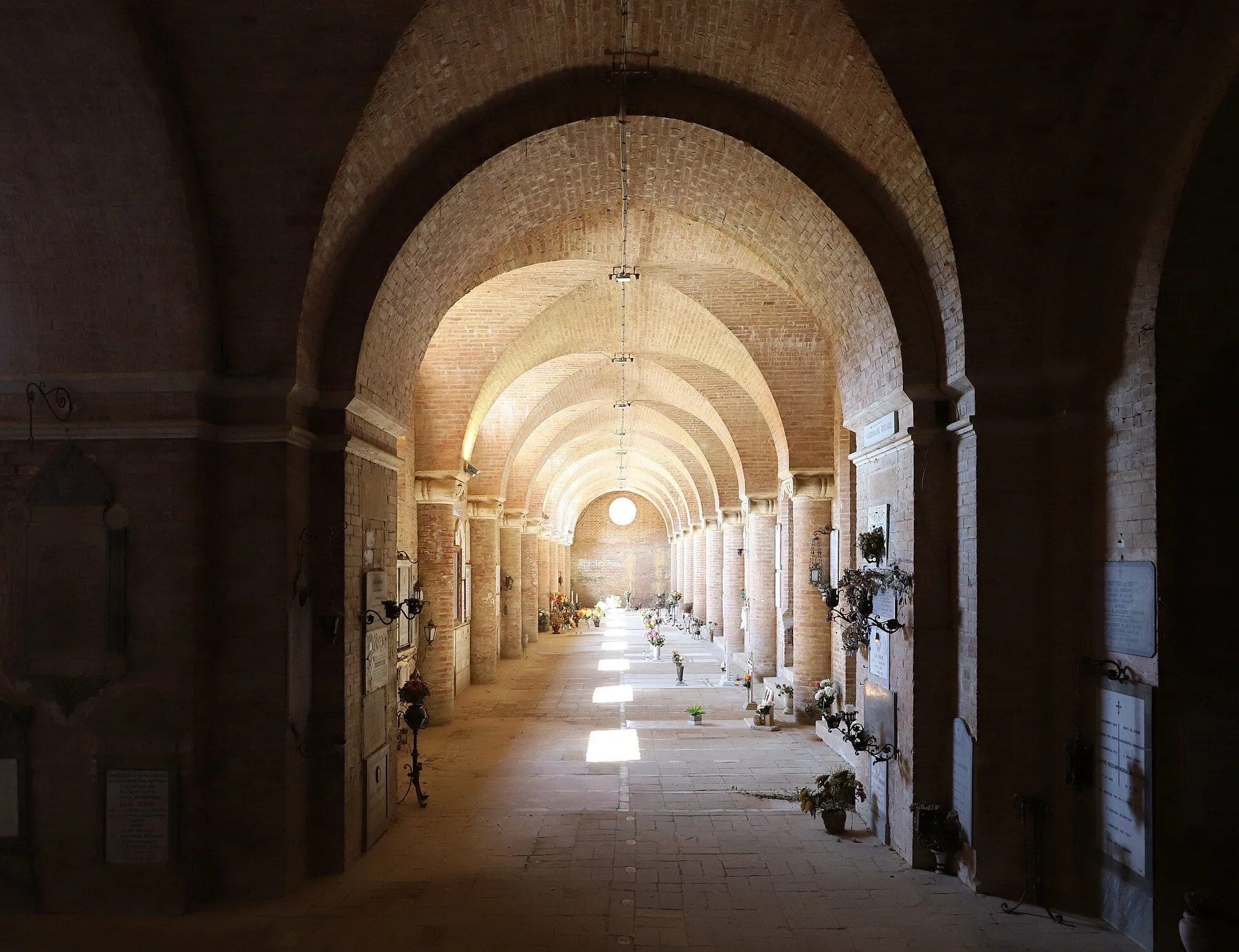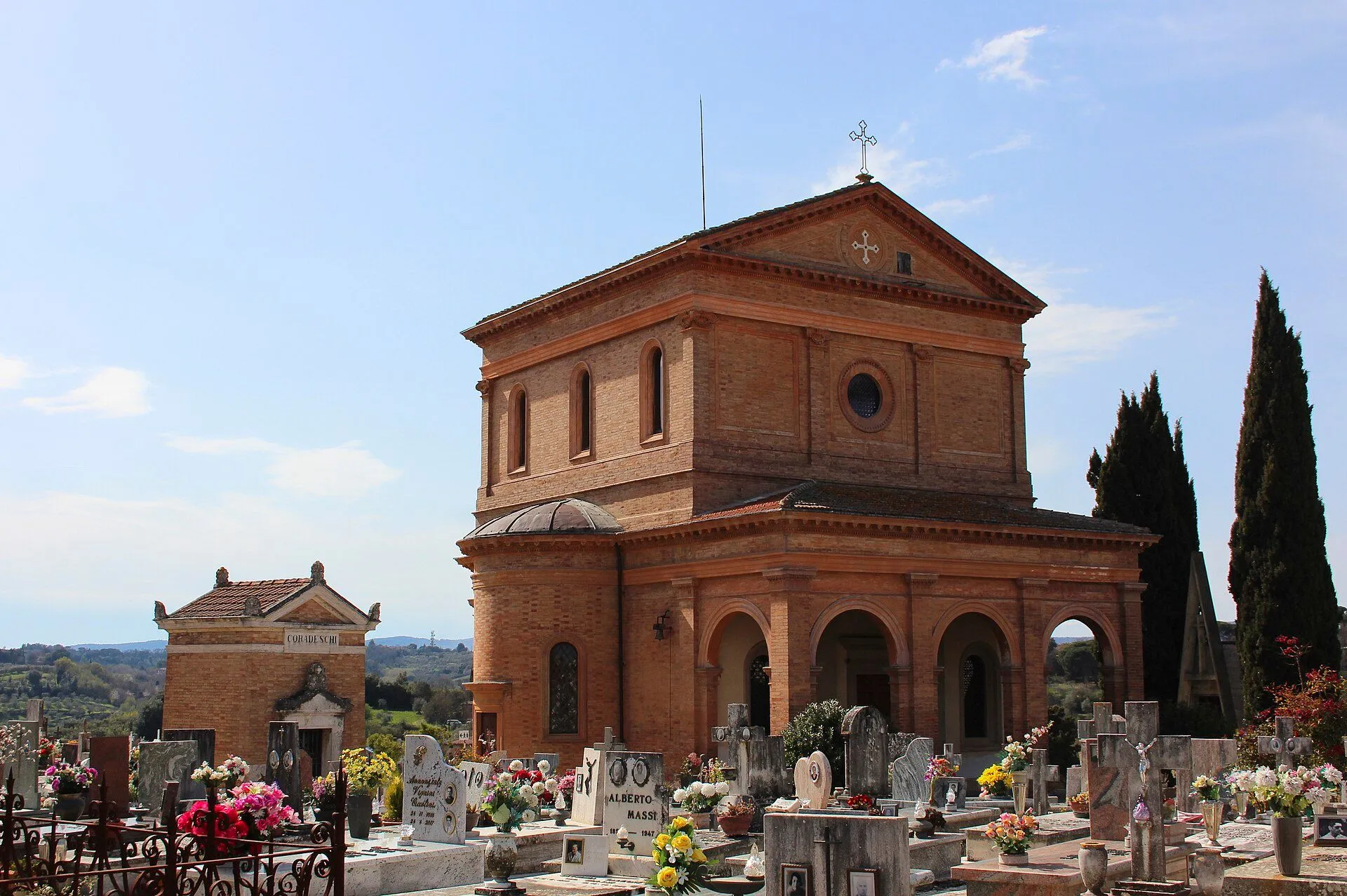
There are places that you visit on tiptoe. Places where the city slows down, lowers its voice, and safeguards a more intimate part of its history. The cemeteries of Siena belong to this dimension. Spaces of memory, contemplation, and reflection, where human value intertwines with historical, artistic, and civic heritage.
They are not merely places connected to the memory of those who have passed away, but also important testimonies of community life over time. Among chapels, funerary monuments, inscriptions, architecture, and paths immersed in silence, these spaces tell of the sensitivities, traditions, and transformations that have shaped the city and its generations.
Visiting places of memory means getting closer to a lesser-known Siena, more intimate and meditative. A Siena that does not impose itself through the monumentality of its most famous symbols, but allows itself to be understood through subtle traces, signs left over time, and individual stories that become collective memory.
In 1783, Grand Duke Peter Leopold of Lorraine mandated that burials be moved outside city churches and convents: a hygienic reform, certainly, but also a profound shift in how a city relates to its dead. From that turning point arose Siena's two main graveyards: the Laterino Cemetery, built first between 1784 and 1786 to a design by Bernardino Fantastici, and the Misericordia Cemetery, built between 1843 and 1866 outside Porta Tufi. Two places distinct in character, layout, and purpose, but united by a rare quality: preserving not only the dead, but their stories.