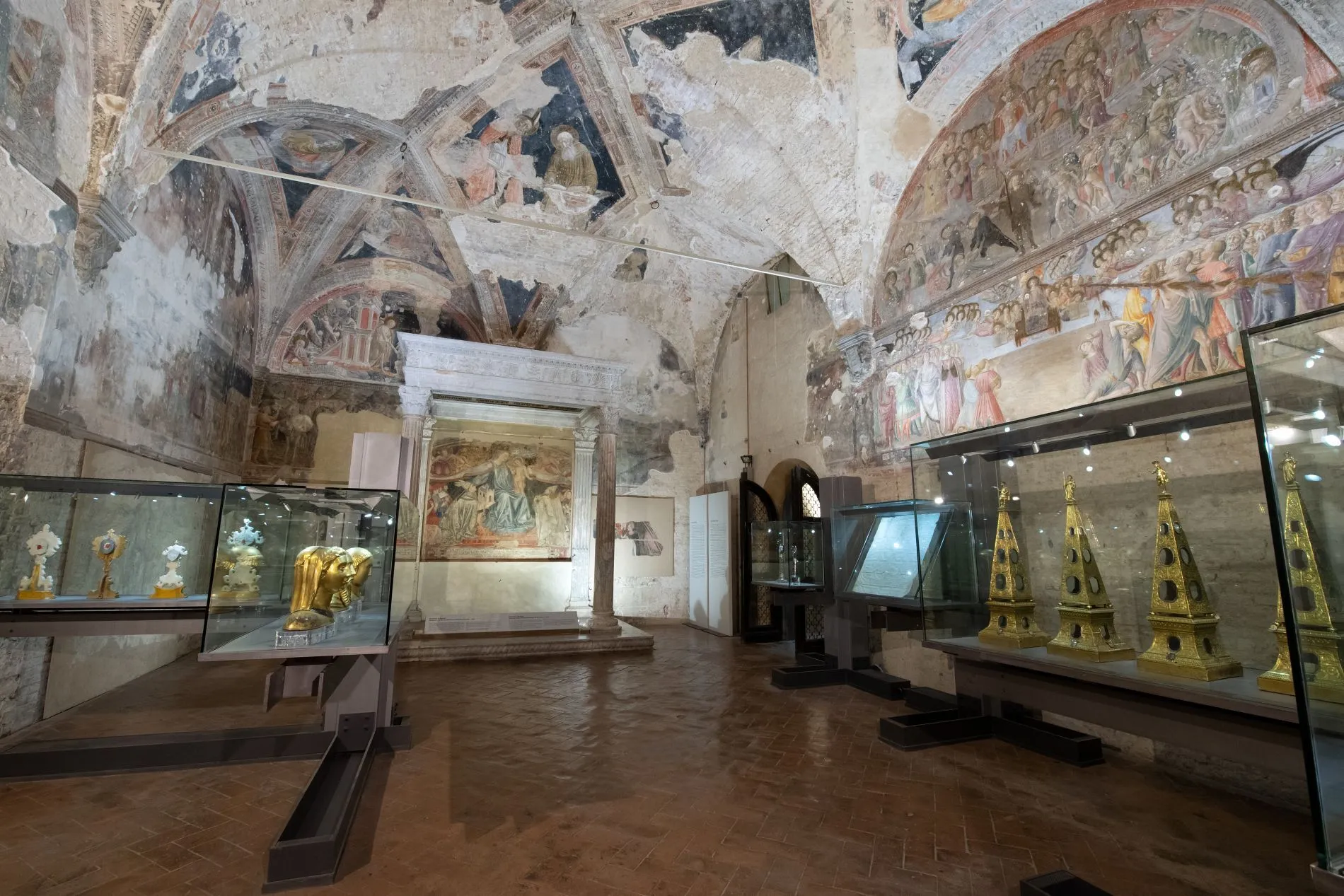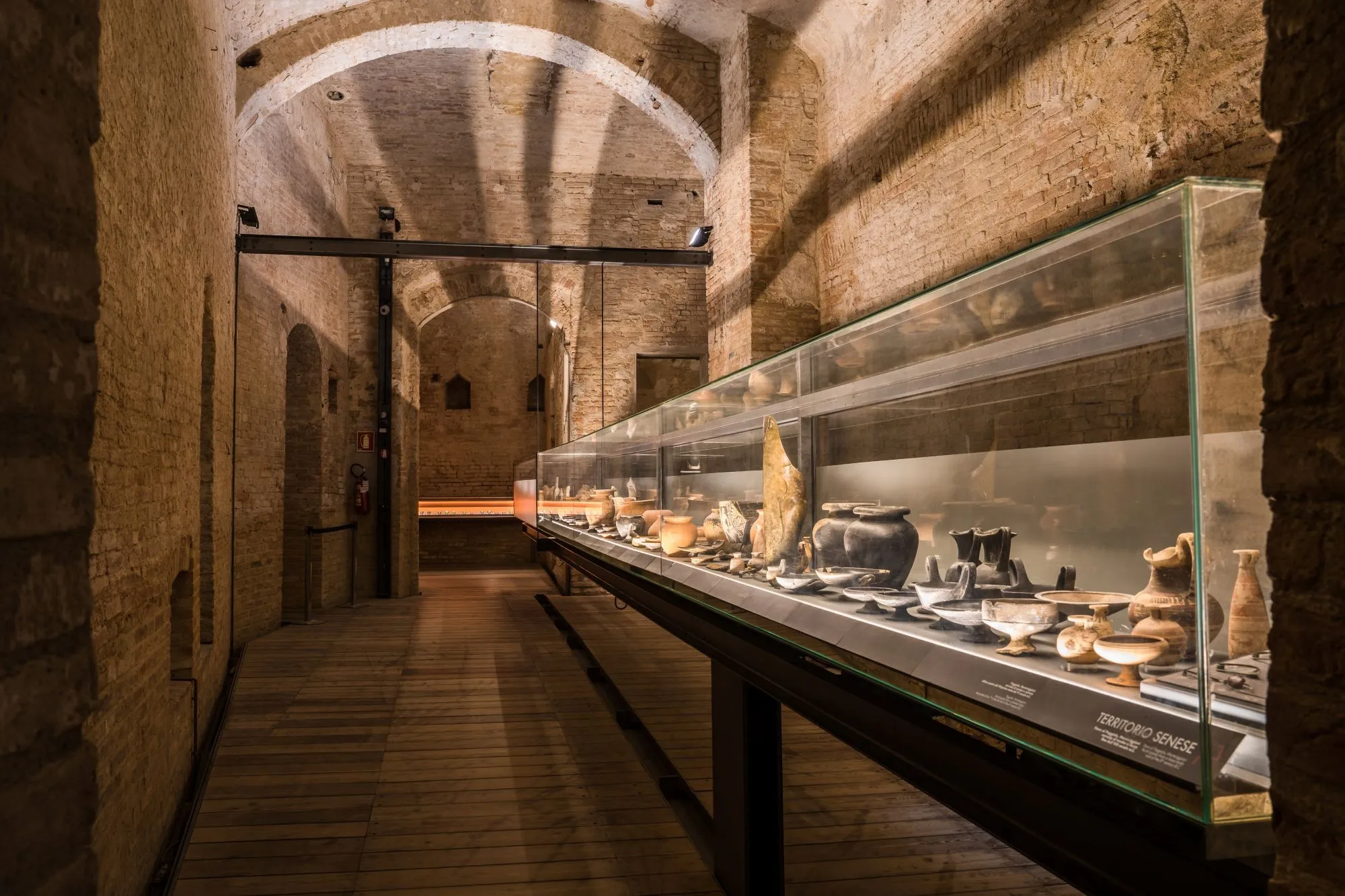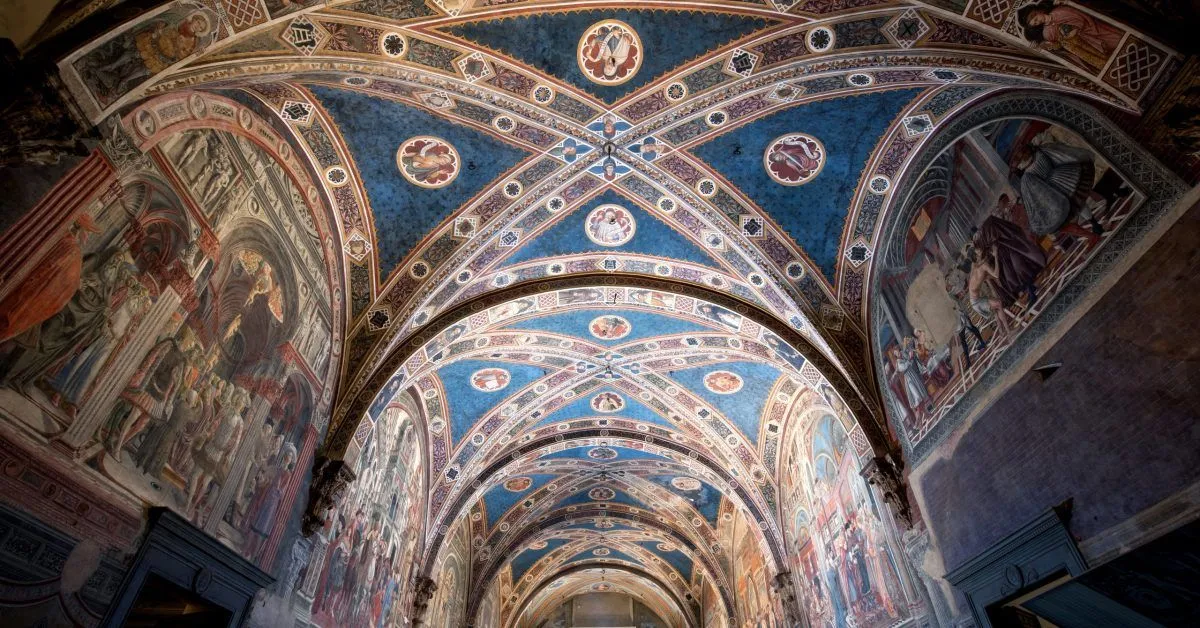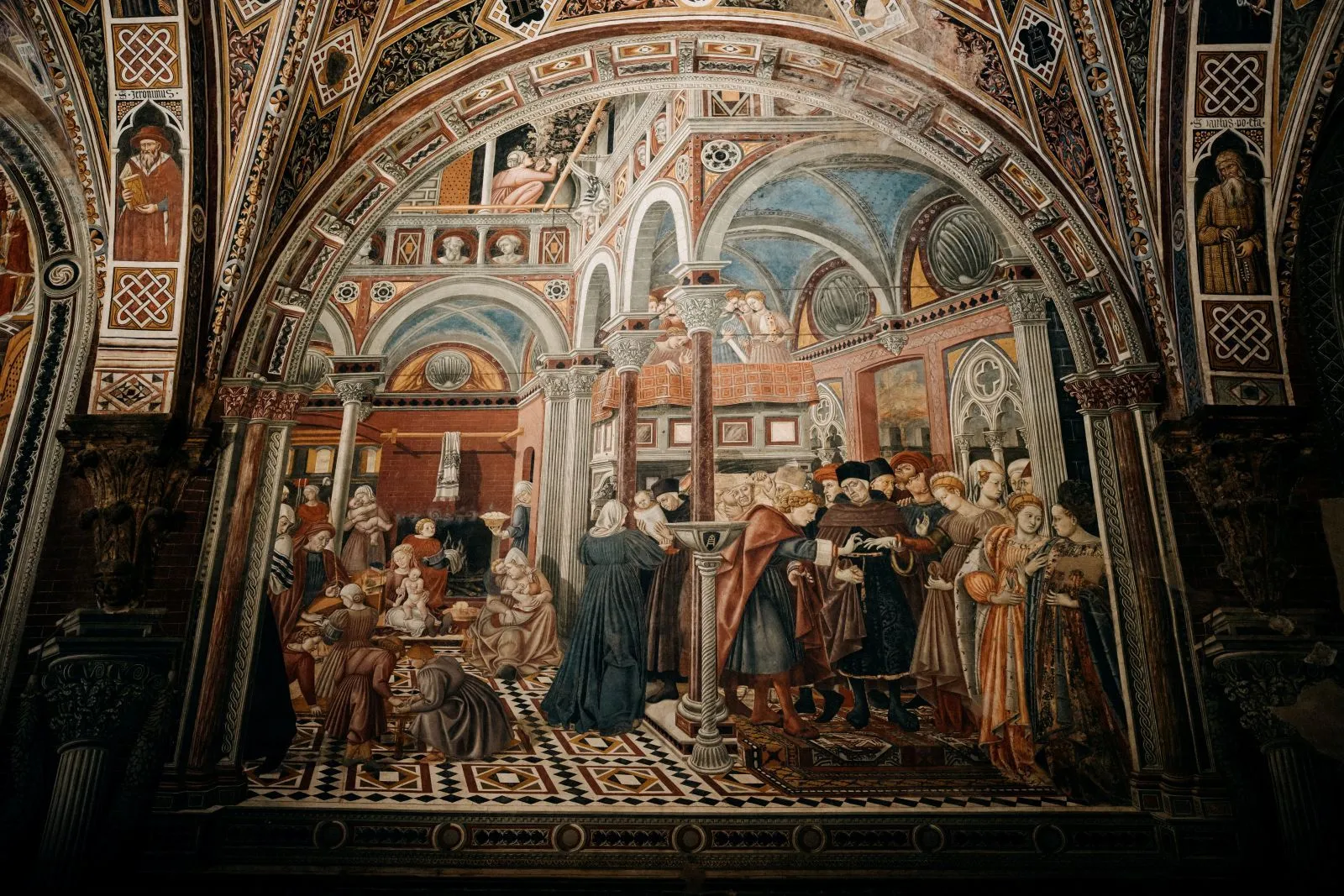
Santa Maria della Scala is not a museum in the simplest sense of the word. It is a complex, layered organism—almost a city within the city. It stands on the most symbolic spot in Siena, right opposite the facade of the Cathedral (Duomo), occupying the entire slope of the hill: from the level of Piazza del Duomo down to the valley behind, featuring a multi-level structure that still clearly reveals the building's long history today.
Originally founded as a medieval hospital along the Via Francigena, Santa Maria della Scala welcomed pilgrims, the sick, the poor, abandoned children, and travelers for centuries. For nearly a millennium, it was one of the city's most vital hubs, not only for its healthcare and welfare functions, but also for its religious, civic, economic, and artistic role in Sienese history. It was never a building separate from urban life, but rather one of its most active beating hearts.
Its greatness lies right here: in the fact that every space, every corridor, every courtyard, every chapel, and every hall bears witness to a function, a transformation, an era. Walking through Santa Maria della Scala means traversing centuries of city history, entering a space that has changed its purpose many times without ever losing its core identity.