The Palio di Siena

A Heritage that runs in the heart of the city

The breath of a tradition that never dies

When you arrive in Siena during the days of the Palio, 
you can't help but feel an energy pulsing in the air.

It's as if the entire city is holding its breath, waiting for something great to happen

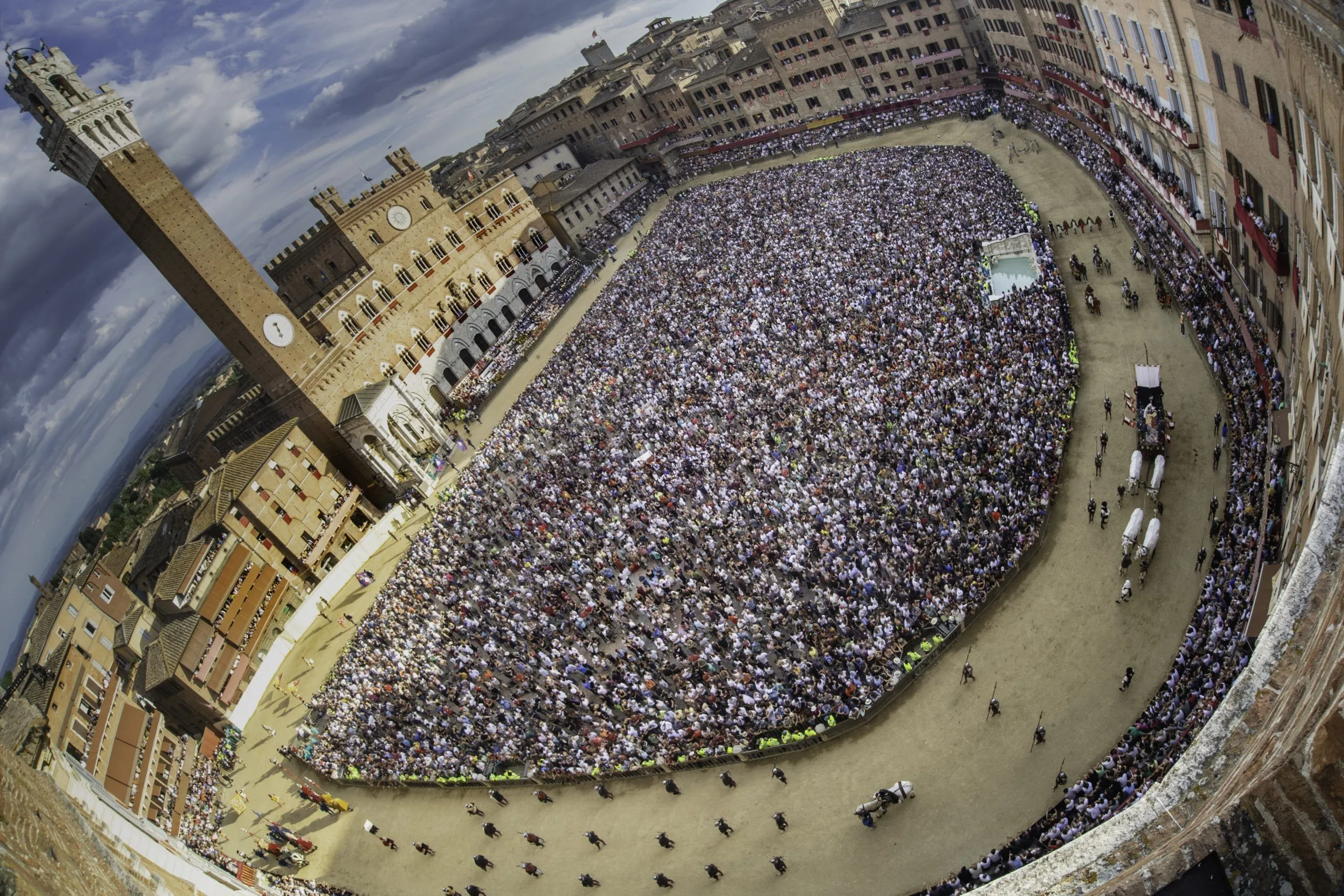
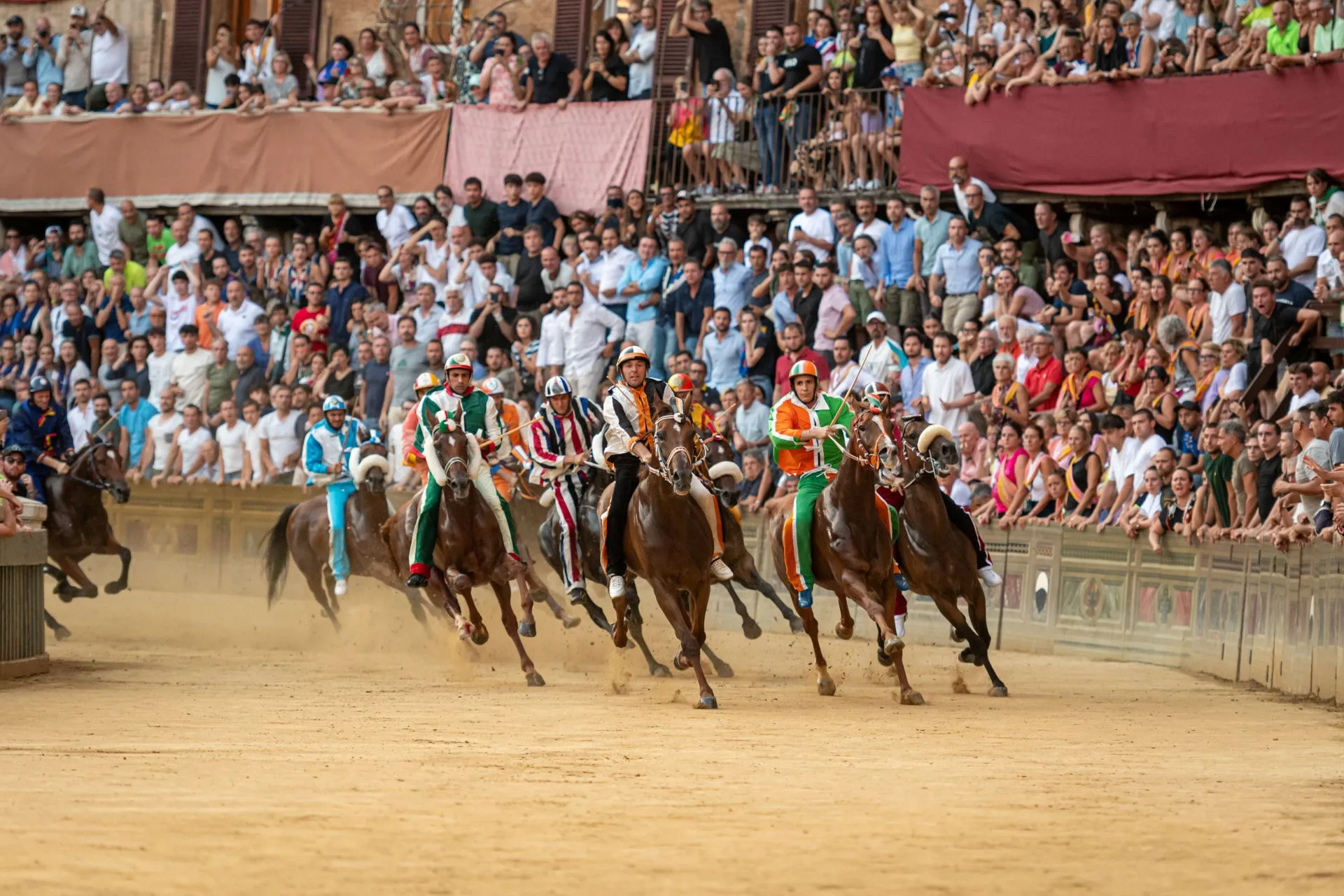
The Palio is one of the most famous popular festivals in the world. It's a horse race in which ten of the seventeen Contrade that make up the city of Siena participate. It takes place twice a year— on July 2nd and August 16th—in honor of the Madonna di Provenzano and the Madonna dell'Assunta in Cielo, respectively. 

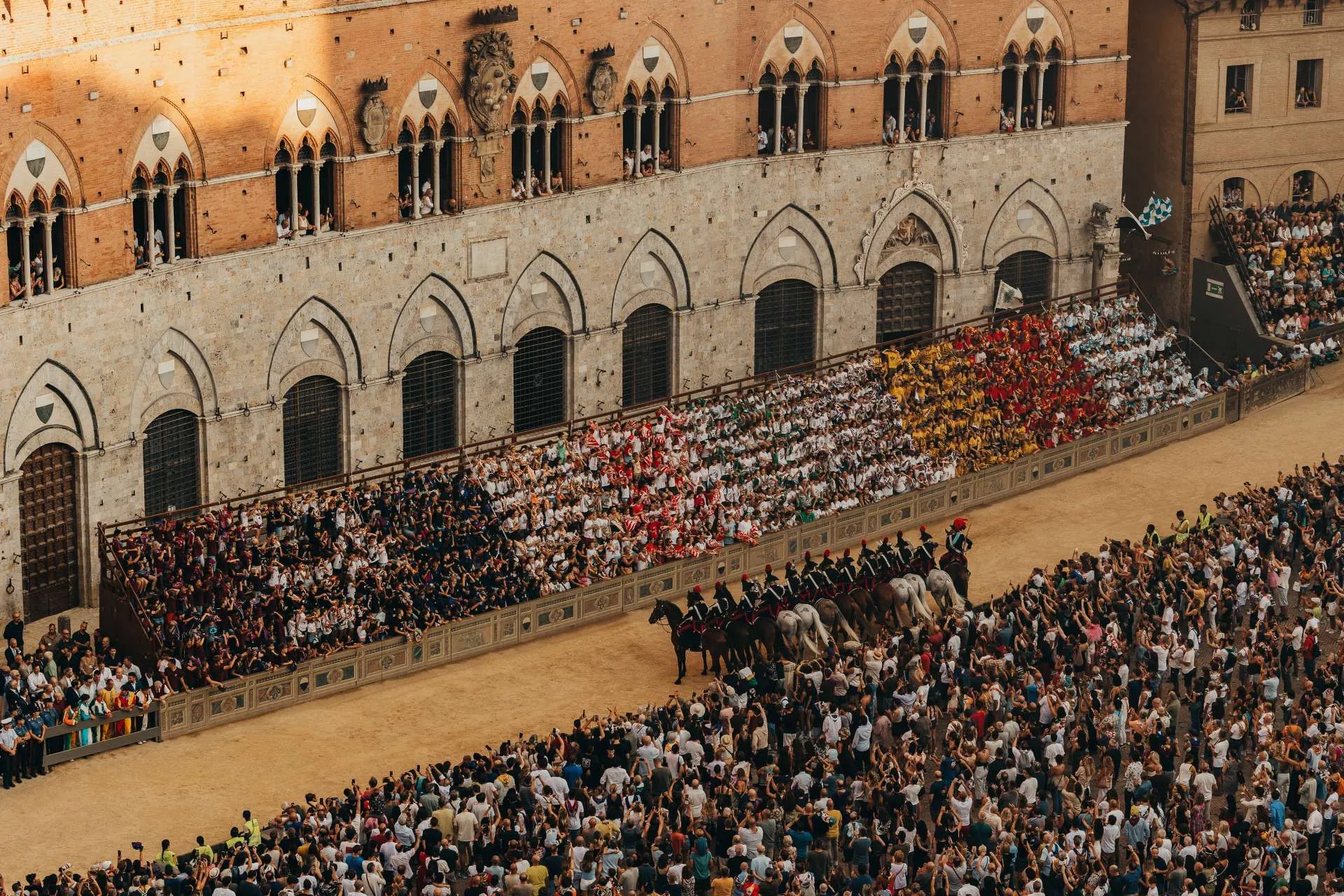
Per l'occasione, Piazza del Campo è il palcoscenico della festa: viene ricoperta da uno strato di tufo e i palazzi che vi si affacciano ospitano i palchi di legno da cui senesi e visitatori seguono le prove e la corsa vera e propria. Il centro della piazza resta invece libero dal tufo, a disposizione di chiunque voglia assistere gratuitamente.

Nothing is left to chance, but everything is governed by the Palio Regulations, which have been in force since 1720. The protagonist of the Carriera is the horse, assigned by lot to each Contrada in the preceding days, which can also win scosso, that is, without a jockey.
The Contrade
The beating heart of the city

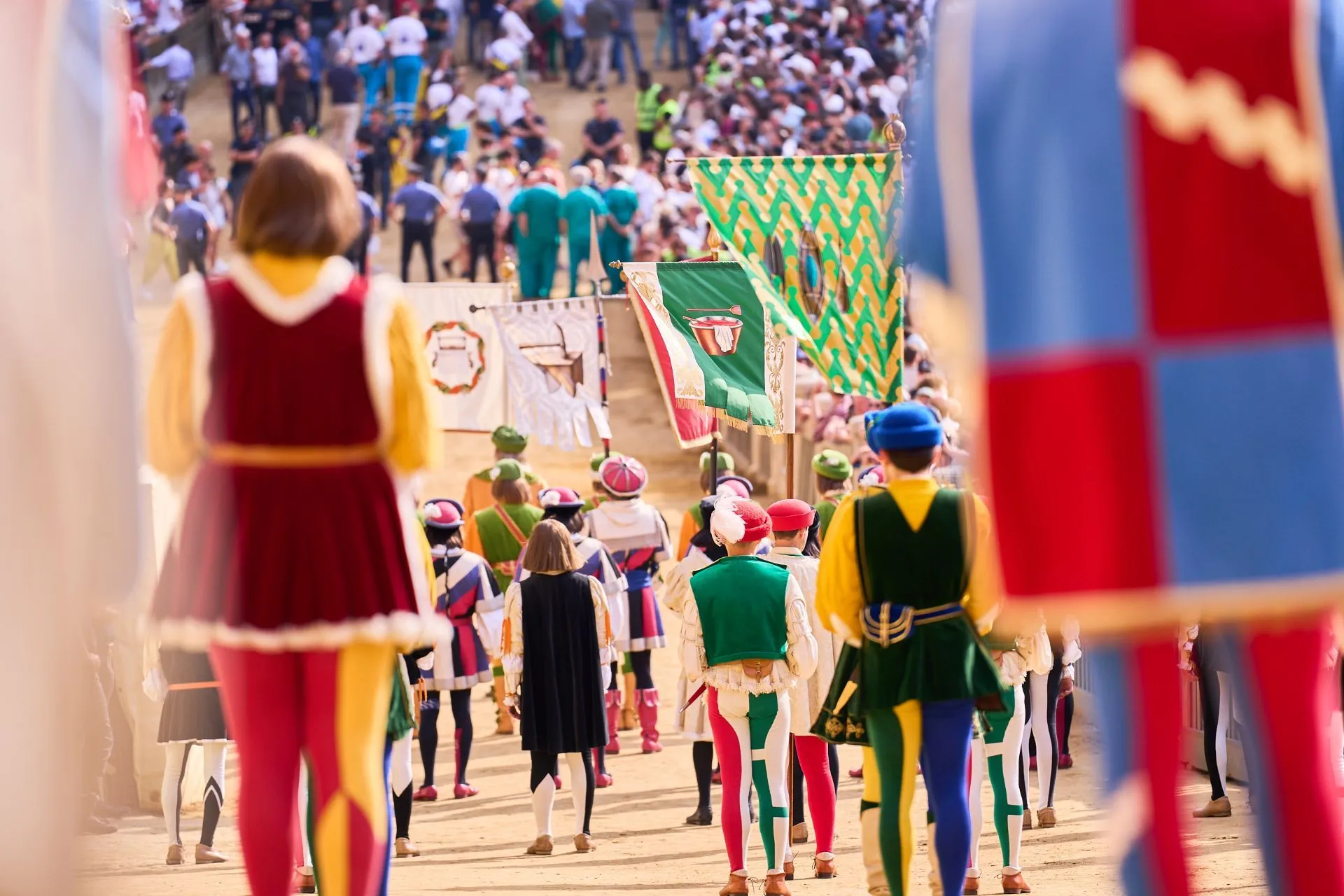
The city of Siena is divided into seventeen Contrade (districts) which, to non-Sienese eyes, might look like simple neighborhoods. In reality, they originated as mutual aid societies, each with its own territory, its own people, its own symbol, its own oratory, its own colors, and its own identity. The flags and coats of arms decorating every alley tell stories of bonds that transcend time.

The Contrade, also referred to as consorelle (sister districts), thrive on rivalries and alliances spanning decades—sometimes centuries—and are all united by their deep love for Siena. Strolling through the city, you immediately realize that every corner preserves a story of pride, passion, and tradition.

Membership in a Contrada is typically inherited through family and is consecrated by a "baptism"—a secular ritual held at each Contrada's fountain that seals one's lifelong belonging.

Each Contrada has its own Patron Saint, honored with an annual patronal festival: during those days, the streets fill with the Contrada's flags, colors, and braccialetti (traditional outdoor wall lamps/illuminations), alongside dinners, ceremonies, and other community gatherings.

The Contrada exists independently of the Palio, though the Palio remains the pinnacle of a contradaiolo lifestyle that lasts 365 days a year. Every day, the Contrade pass down ancient crafts, such as sewing silk flags and crafting drums. It is a moment of intergenerational sharing where elder contradaioli recount lived experiences to the younger generations, consolidating an invaluable bond for collective memory.

The 17 Contrade are: Aquila, Bruco, Chiocciola, Civetta, Drago, Giraffa, Istrice, Leocorno, Lupa, Nicchio, Oca, Onda, Pantera, Selva, Tartuca, Torre e Valdimontone. 

The rites of the Palio

Where every gesture is full of meaning

The race itself lasts just over a minute, but the days leading up to it are filled with rites that seem suspended in time.

The main events leading up to the Palio are:

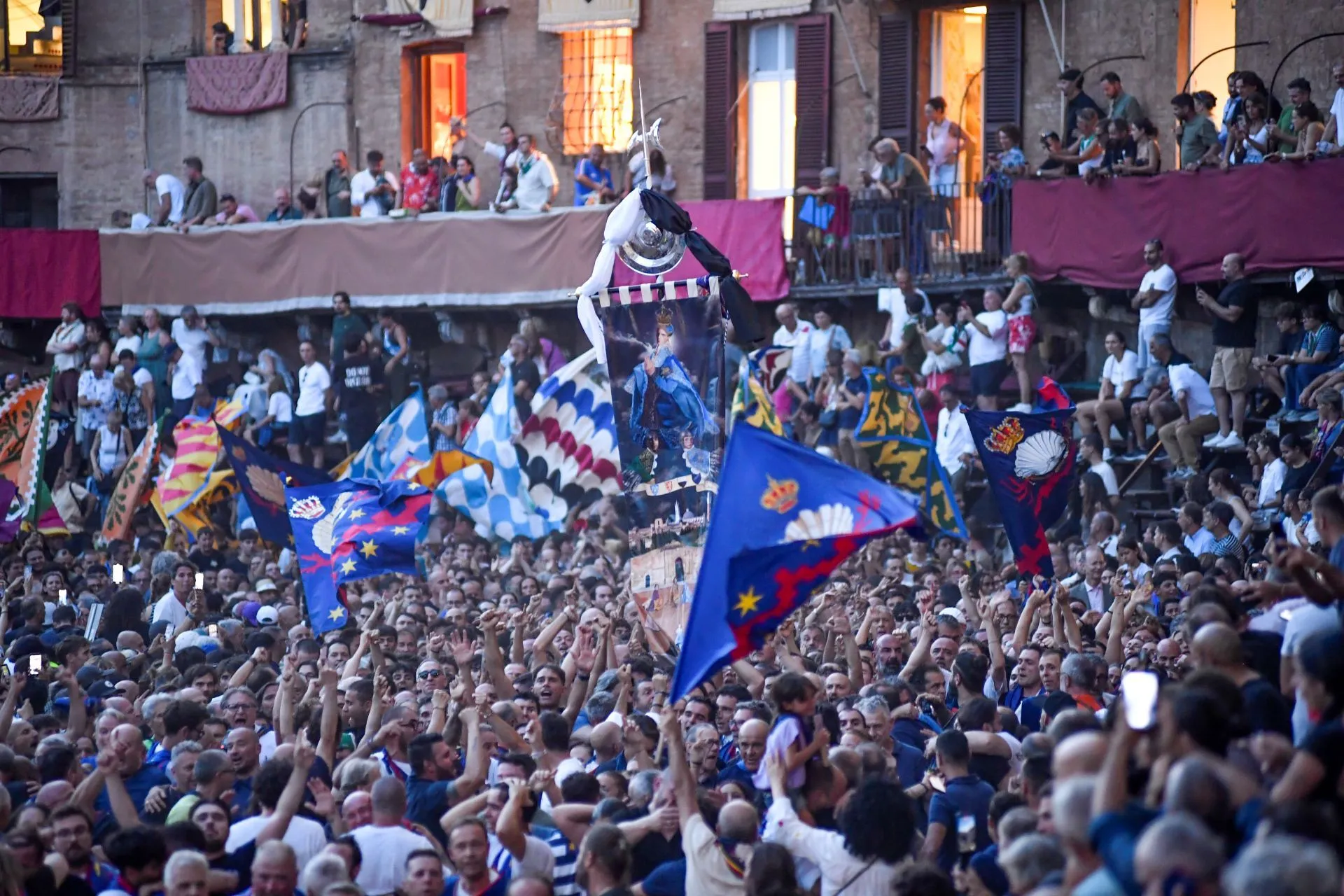
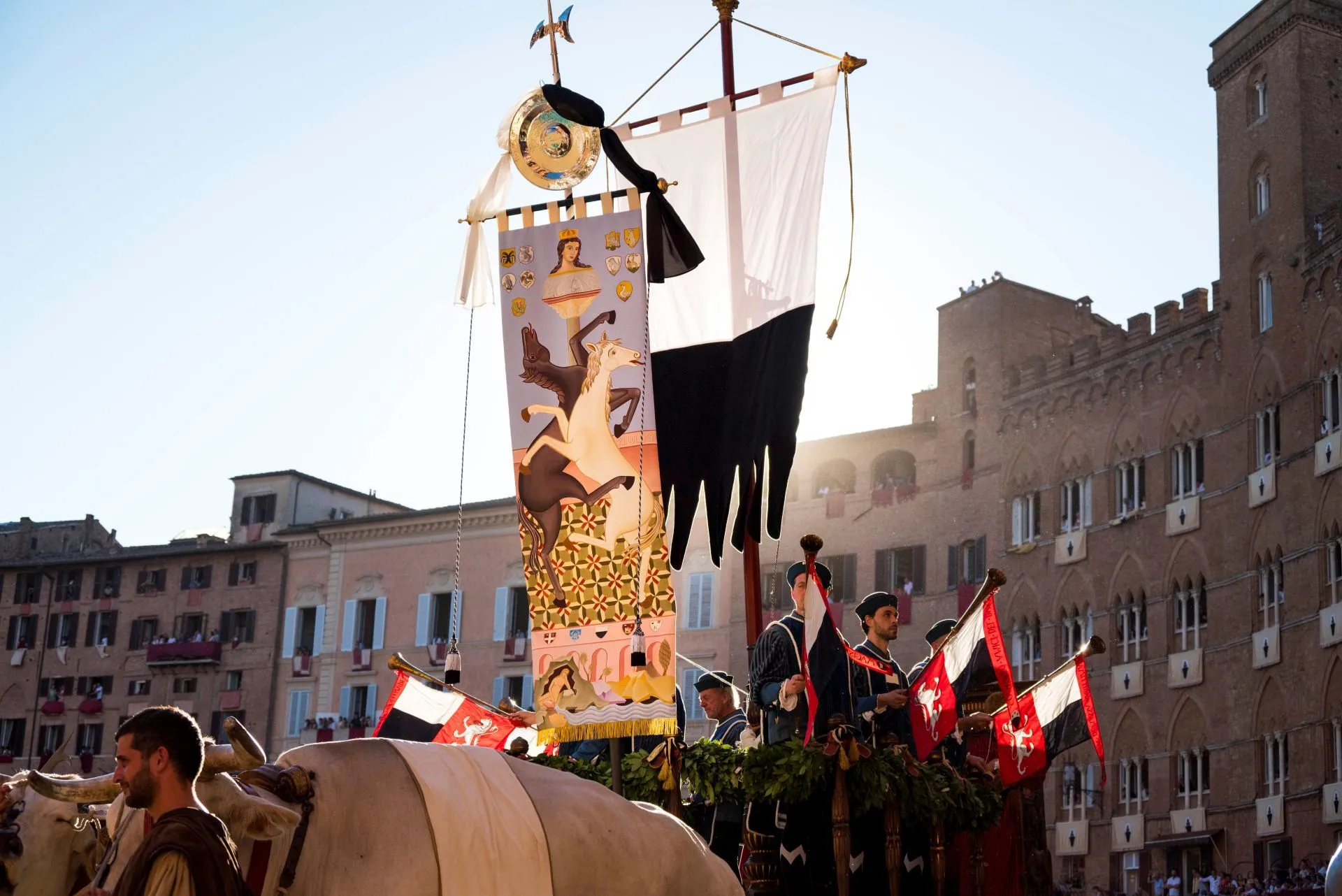
  • Presentation of the Drappellone: the moment when the Drappellone is unveiled to the public. Known as the "cencio" (the rag), this is the prize awarded to the winning Contrada. It is a large painted silk banner, created each year by Italian and international artists, which is preserved in the Contrada's museum once won.
  • Horse Assignment (Assegnazione dei cavalli): the ceremony where each Contrada is assigned by lot one of the ten horses that have passed the strict selection process of a veterinary commission made up of international professionals, followed by the captains' assessment.

  • Trial Runs (Prove): six trial heats are scheduled, allowing the horse and the jockey (chosen by the Contrada) to familiarize themselves with the track. The fifth heat is the "prova generale" (dress rehearsal) held the evening before the Palio; the final one, taking place on the morning of the race itself, is called the "provaccia".
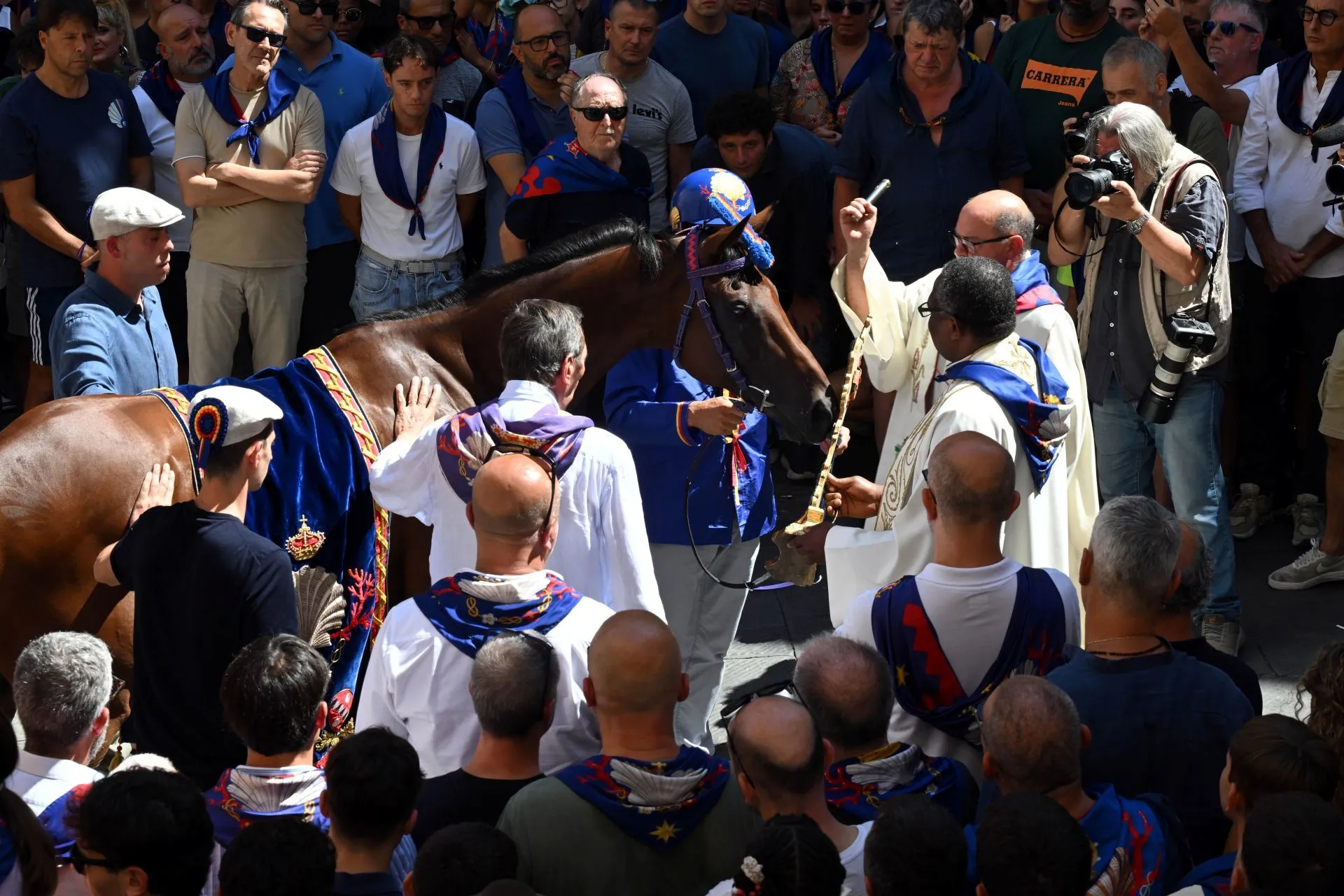
  • Blessing of the Horse (Benedizione del cavallo): held in the chapel/oratory of each Contrada on the afternoon of race day. It is an extremely intimate ritual for the contradaioli, sealed by the solemn phrase "Va' e torna vincitore" ("Go and return victorious")—a blessing embodying both hope and promise, and one of the most emotionally charged moments of the entire event.

The Day of the Palio

The day of the Palio is one of the most important days of the year for any Sienese. Following the Jockey’s Mass (Messa del Fantino) in the morning and the blessing of the horse in the afternoon, Piazza del Campo fills to capacity to welcome locals and visitors eager to witness the event live.

Preceding the race is the Historical Parade (Corteo Storico). This procession of nearly six hundred participants sees the Sienese immerse themselves in their most genuine and visceral identity, proudly attired in historical costumes that evoke the grandeur of the ancient Republic of Siena. A portion of the parade is dedicated to the Contrade, which, through flag-waving displays and the beat of drums, compete for the honor of the most gallant appearance—giving its name to the Masgalano award. Bringing the procession to a close is the Carroccio, the triumphal chariot of the Republic drawn by oxen, upon which the Drappellone is raised.

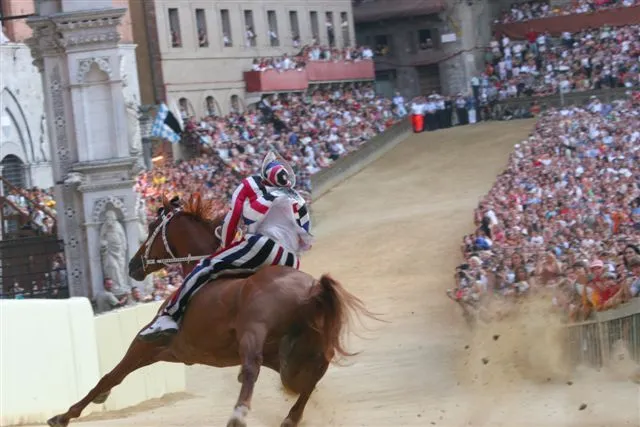
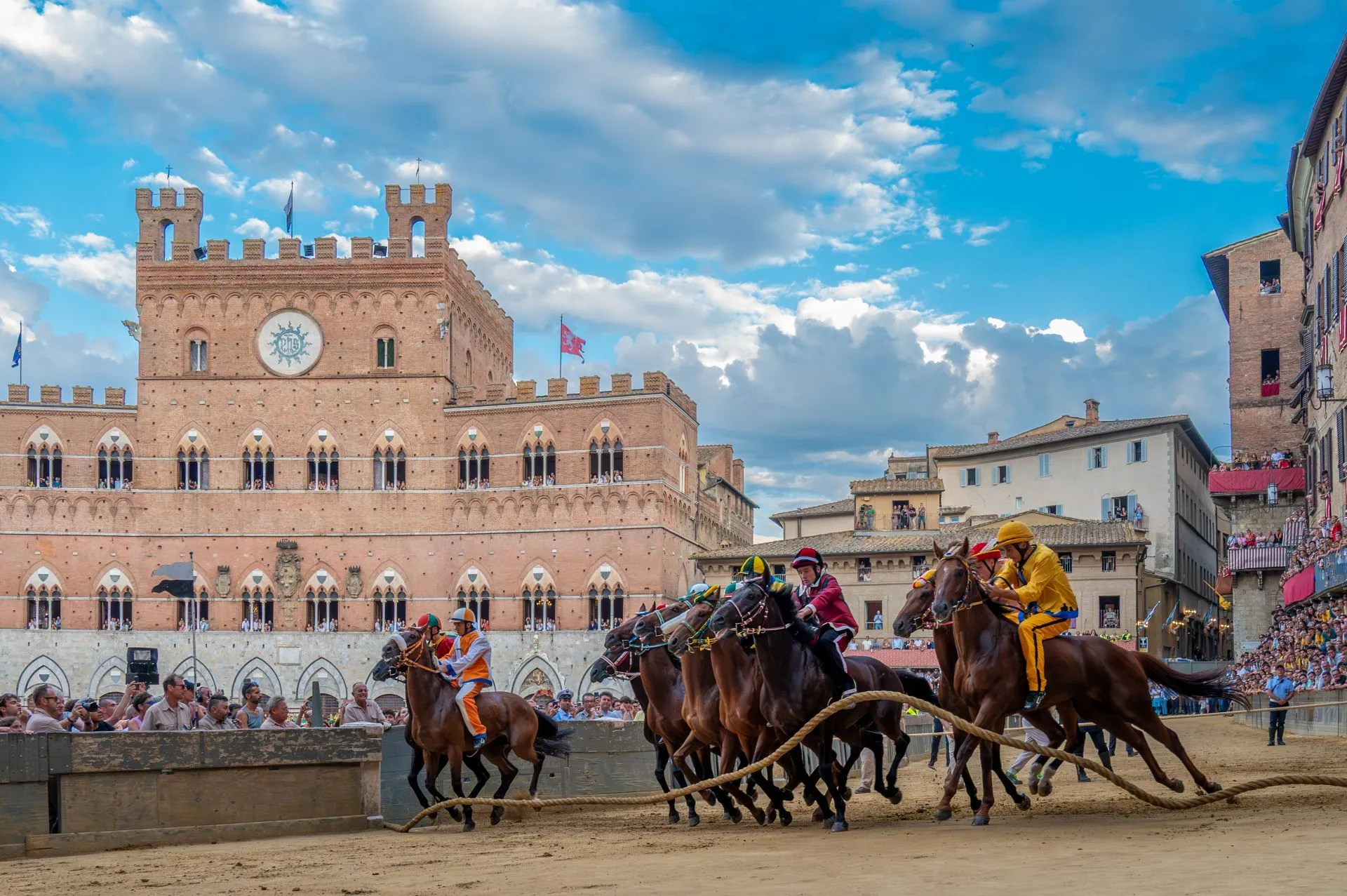
The race consists of three laps around the track and lasts just over a minute and a half. The start takes place at the Mossa, where two thick ropes (canapi) mark the alignment of the horses in an order determined by a draw; the starter (mossiere) is tasked with enforcing this order and ensuring a fair start. Nine horses line up between the ropes, while the tenth (the cavallo di rincorsa, or charging horse) triggers the start of the race. The first horse to cross the finish line wins, even without its jockey. From that moment on, the winning Contrada plunges into celebrations that last for months, filled with songs, celebratory dinners, and the Drappellone paraded in triumph through the streets of the historic center.

Le Contrade,
il cuore di Siena

Le Contrade
vivono tutto l’anno

Al di là dei giorni del Palio, le Contrade vivono tutto l’anno: i musei, gli oratori, le Società raccontano le storie di vita, di antiche rivalità e alleanze, di segreti che si nascondono tra le mura dei palazzi.

Ogni pietra conserva una memoria

Ogni pietra di Siena conserva una memoria, un ricordo di un momento che ha fatto storia, come se ogni angolo della città fosse un piccolo frammento di Palio che vive per sempre, anche quando la corsa è finita.

The Palio of Siena is a journey that never ends

It is a tradition that renews itself and continues to live, today as yesterday, the beating heart of Siena