Urban Trekking in Siena

A new way of experiencing tourism

The National Urban Trekking Day has now become a fixed date on Siena's calendar. Every year on October 31st, the streets of Siena, the national leader of the project, are filled with tourists and residents curious to discover hidden corners and interesting anecdotes about the city and its historical figures.

Urban Trekking was first developed in Siena as a new approach to slow tourism, designed to lead visitors away from the standard tourist circuits. It is an activity that combines sport, art, gastronomy, and the desire to explore cities through itineraries characterized by steep elevation changes and staircases.

It is a form of "vagabonding" tourism—free-spirited and full of surprises—suitable for all ages without requiring any special prior training. Through expertly crafted itineraries, urban trekkers have the opportunity to enjoy a unique travel experience, combining art, nature, and physical activity. In addition to benefiting body and mind, urban trekking is good for cities: it relieves congestion in areas overcrowded by traditional tourist flows, expands the reach of visits into suburban areas, and encourages longer stays.

Any time of year is ideal for trying Urban Trekking—day or night, summer or winter. Unlike traditional trekking through fields and woods, city trekking can be enjoyed along the proposed routes in any weather conditions and at any time of day.

Beyond its mental and spiritual benefits, urban trekking helps keep you fit. Brisk walking for at least 20 minutes burns around 150 kilocalories, reduces risks associated with hypertension and osteoporosis, and counteracts the effects of a sedentary lifestyle, such as stress, anxiety, and depression.

The routes offered by participating cities in recent years have an average duration ranging from one to four hours. This allows participants to burn anywhere from a minimum of 450 kilocalories (for a one-hour route) to a maximum of 1,800 kilocalories (for a four-hour route) per session.
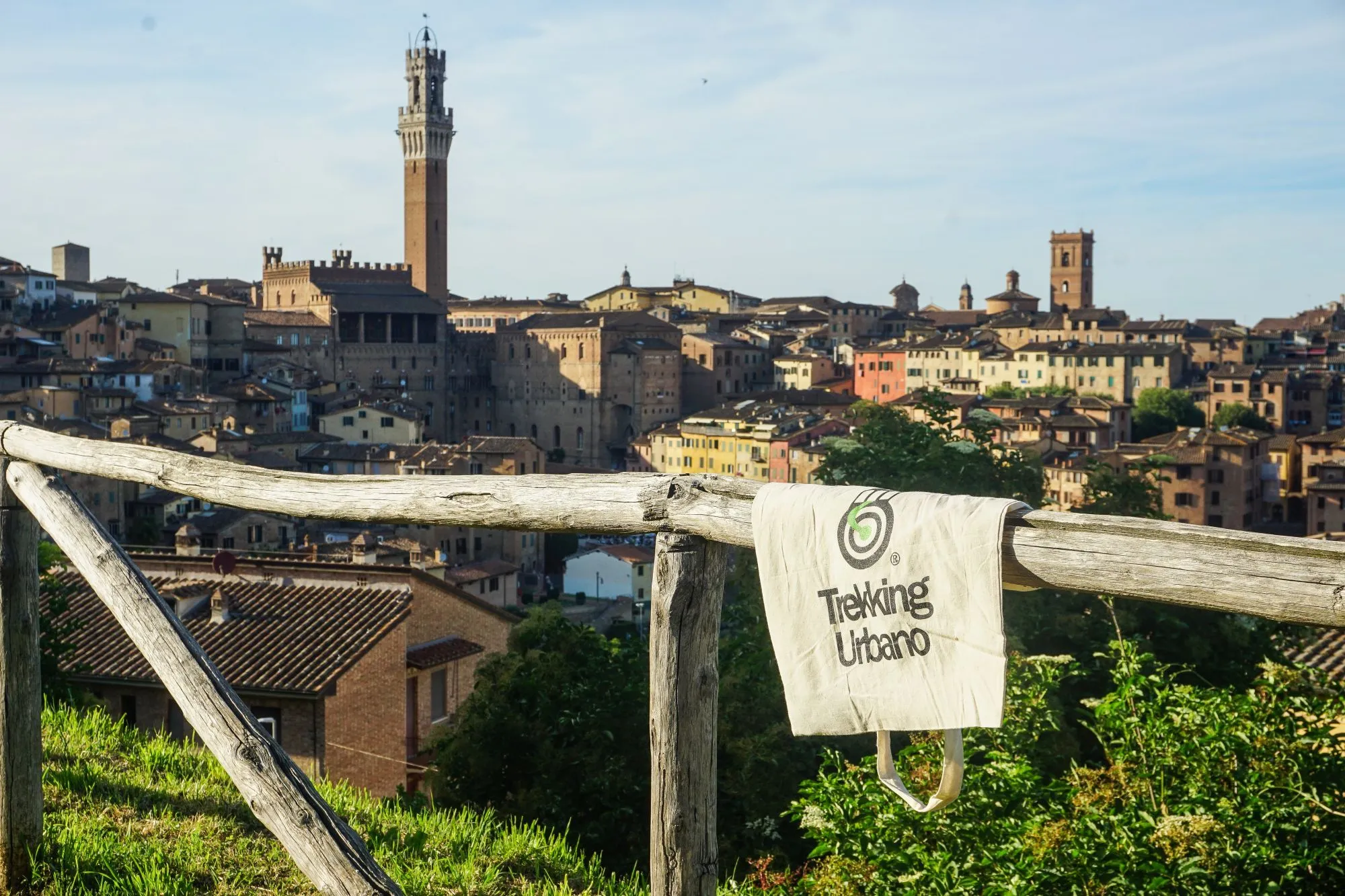
In-Depth Focus – Urban Trekking Siena 2026

To find the updated schedule, departure times, registration details, and useful information about the 2026 edition of Urban Trekking in Siena, visit the official website of Centro Guide Siena.

2026 Edition: In the Footsteps of the Franciscan Presence in Siena

The 2026 edition of Urban Trekking, scheduled for Saturday, October 31st, ties into the celebrations marking the eighth centenary of the death of Saint Francis. Siena presents a route rich in historical and spiritual significance, titled "Saint Francis 1226–2026: In Search of the Essential."

The itinerary invites visitors to read the city through the places that preserve its Franciscan memory, following a narrative thread that weaves together art, preaching, devotion, and tradition. The walk begins in Piazza del Campo, introducing Saint Bernardino—a key figure whose preaching deeply influenced both religious and civic life in Siena. From there, the path continues through several significant stops, including the depiction of Saint Francis painted by Lippo Memmi, the Basilica of San Francesco with its artistic and devotional treasures, and the Oratory of San Bernardino, home to works of great historical value.

The route concludes at San Francesco all'Alberino, a site tied to the earliest Franciscan presence in the city and to the memory of the so-called Testament of Siena, traditionally associated with the saint's final months. It is here that the journey reaches its deepest meaning, touching on themes of fraternity, poverty, and devotion that lie at the core of the Franciscan message.

From a practical standpoint, the route takes about two hours, covers 2.5 kilometers, and is rated as medium difficulty. Guided tours depart throughout the afternoon in staggered shifts.

This edition adds a quieter reflection on the meaning of places and what a city chooses to hold in its collective memory to the standard joy of urban exploration. Rather than a simple walk among monuments, it provides an opportunity to view Siena from a fresh perspective, following a theme that connects space, history, and values.

The Urban Section of the Via Francigena

Historically, the term Via Francigena (or Via Francigene) refers to a network of routes connecting the Frankish territories (modern-day France and Germany) to Rome during the Middle Ages.

This historical network gives rise to the saying "all roads lead to Rome." Medieval pilgrims traveling from their homes did not rely solely on the main road network of the time; they also used hidden trails to avoid attacks or accidents. It was along these lesser-known paths that they could find hospitality and shelter.

In modern pilgrimage terms, the Via Francigena follows the route of Sigeric, Archbishop of Canterbury, who documented his return journey from Rome after receiving the Pallium from the Pope.

This complete journey spans roughly 2,200 kilometers. The Italian section covers about 1,020 km, passing through Great St Bernard Pass, Aosta, Ivrea, Vercelli, Pavia, Piacenza, Fidenza, Cisa Pass, Sarzana, Massa, Lucca, San Gimignano, Siena, San Quirico d’Orcia, Bolsena, Viterbo, Rome, and Vatican City.

In Siena, pilgrims can walk the urban section running from Porta Camollia to Porta Romana. This 4-kilometer path inside the city walls stops at Siena's most scenic sites, showcasing its medieval history and the lives of the pilgrims and travelers on their way from Canterbury to Rome.

The walk starts at Porta Camollia, one of the city's oldest gates, bearing the famous outer arch inscription: Cor magis tibi Sena pandit ("Siena opens its heart to you wider than its gate")—a lasting symbol of Sienese hospitality. Continuing down Via di Camollia, past the Duomo and Santa Maria della Scala, the route leads to Via Roma and reaches Porta Romana.

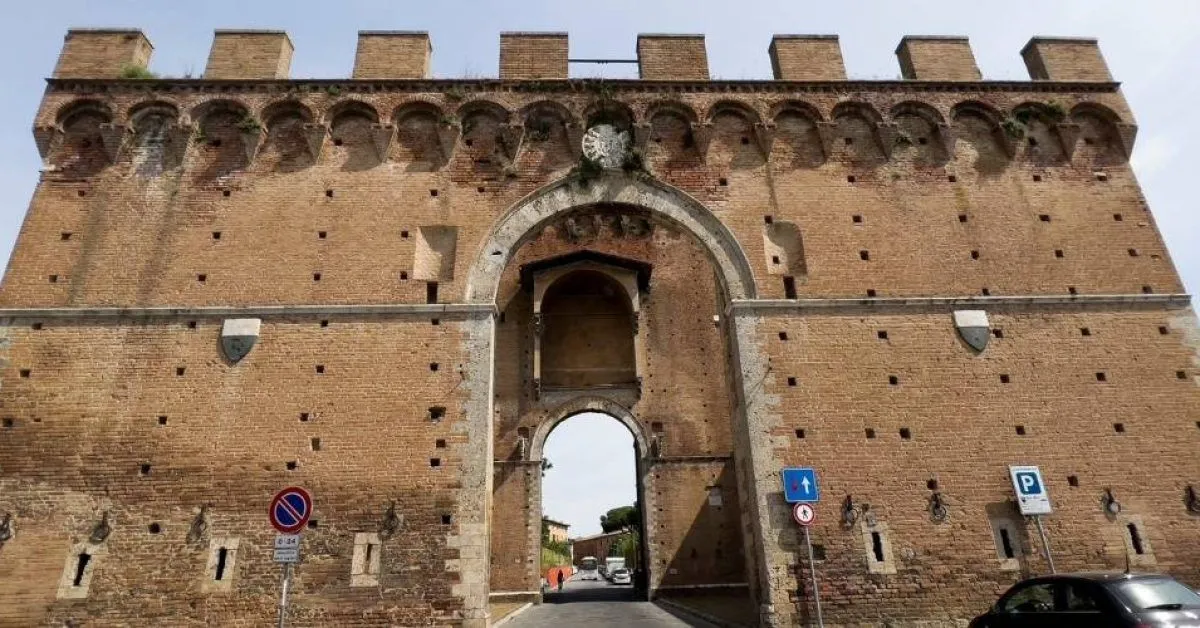
Originally known as Porta Nuova and built between 1327 and 1329, Porta Romana is the largest of the city gates. Historically, pilgrims entered Siena through this gate to connect with the Via Francigena. After leaving Porta Romana, their journey continued toward the Crete Senesi, where they could find rest and refuge at the Grancia di Serre di Rapolano.