History of the Basilica and the Servants of Mary
The Servants of Mary arrived in Siena around 1250 and founded their convent here, incorporating the ancient church of San Clemente, which had existed since the 12th century.
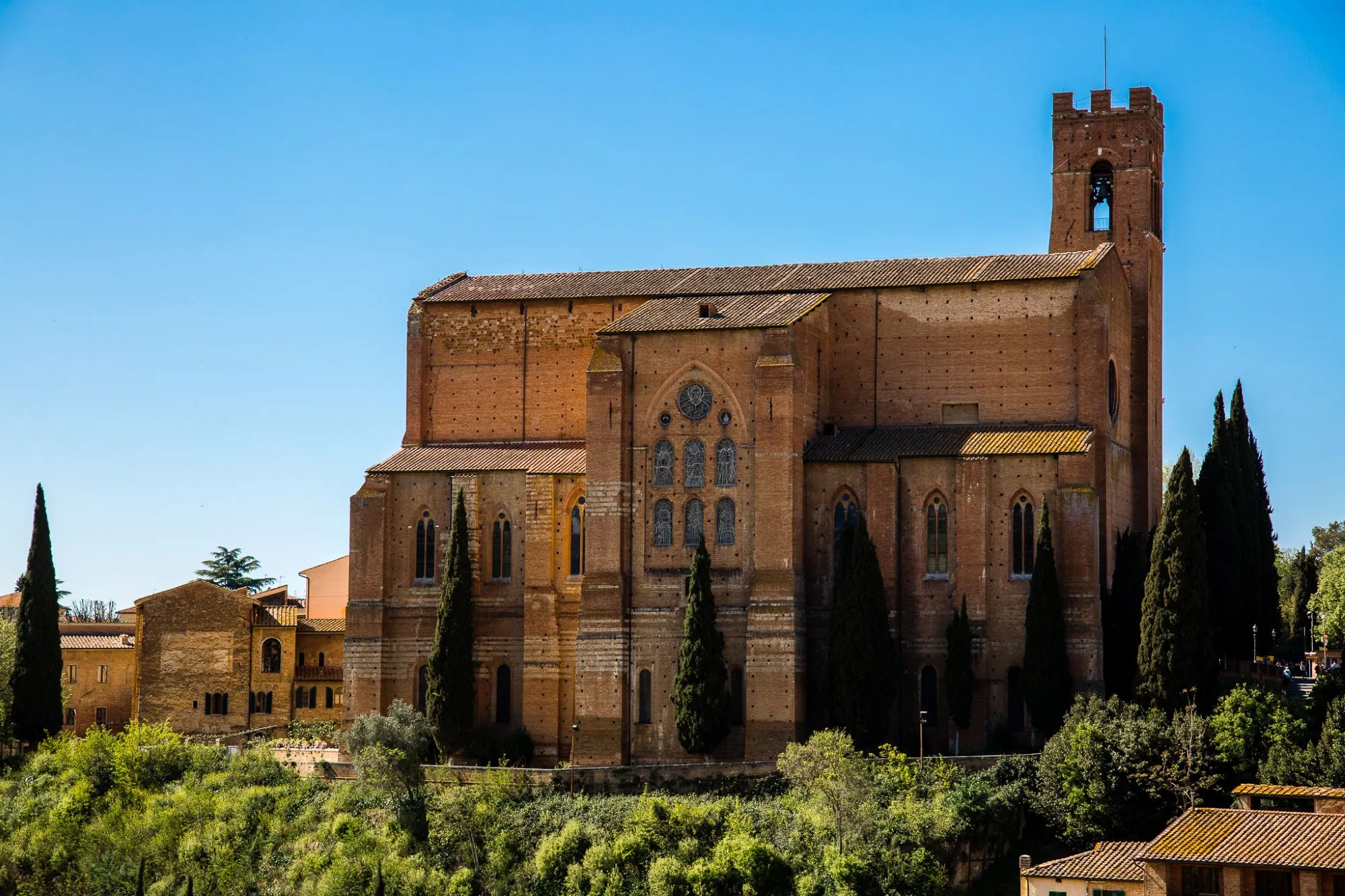
The construction of the basilica developed between the 13th and 16th centuries, giving rise to a layered building that combines Gothic, Renaissance elements, and 19th-century neo-Gothic restorations.
Architecture and interior of the church
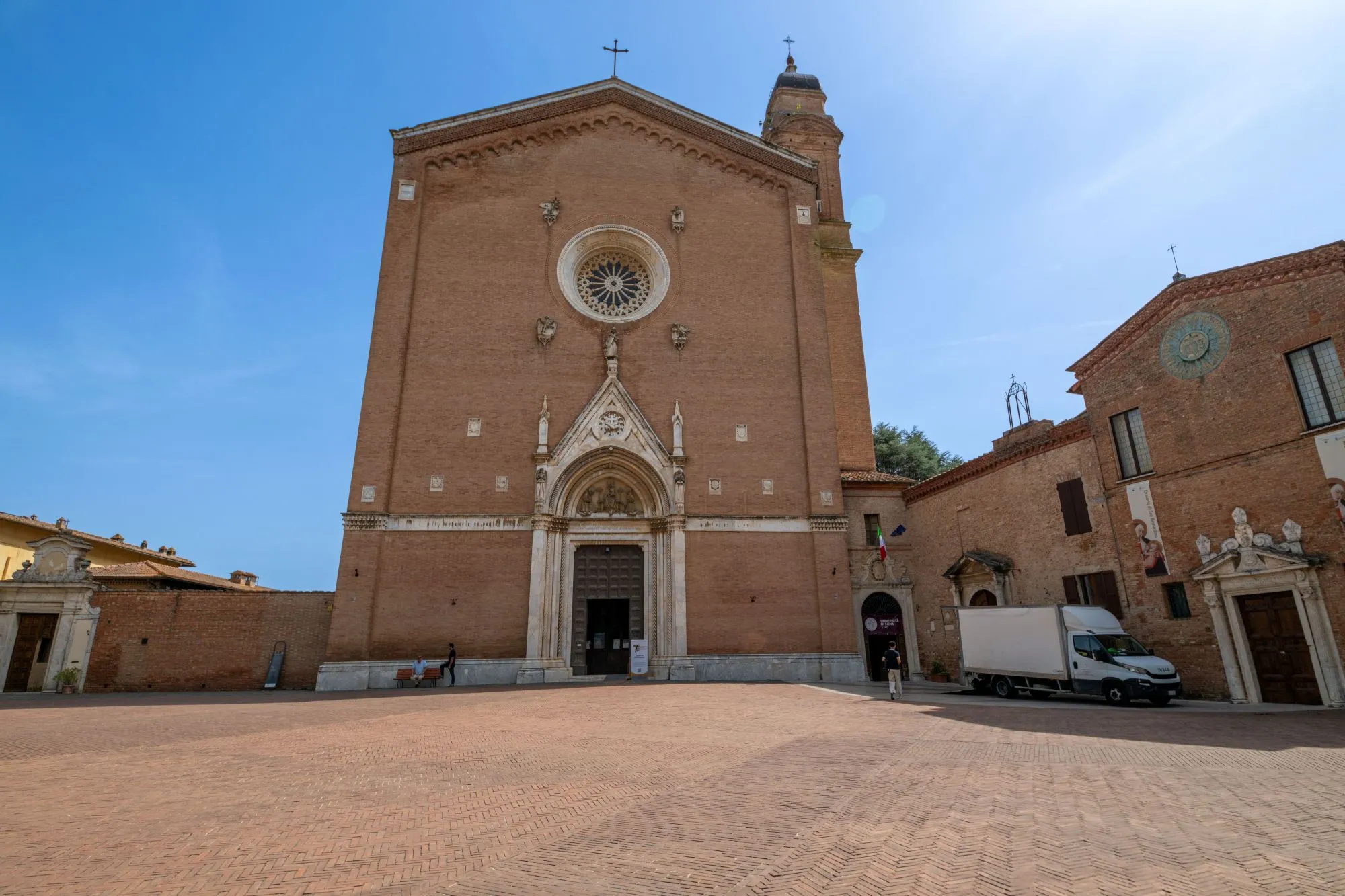
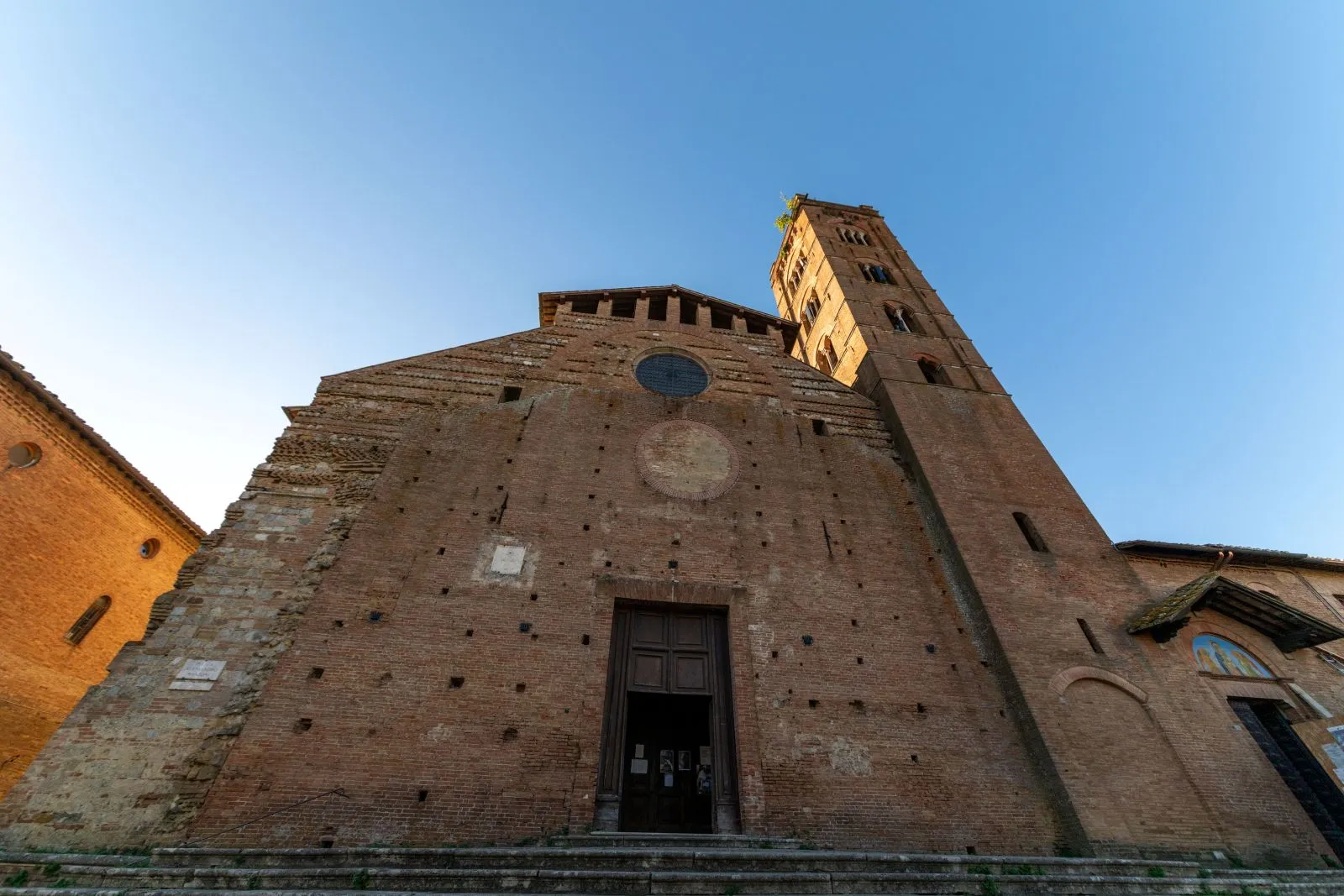
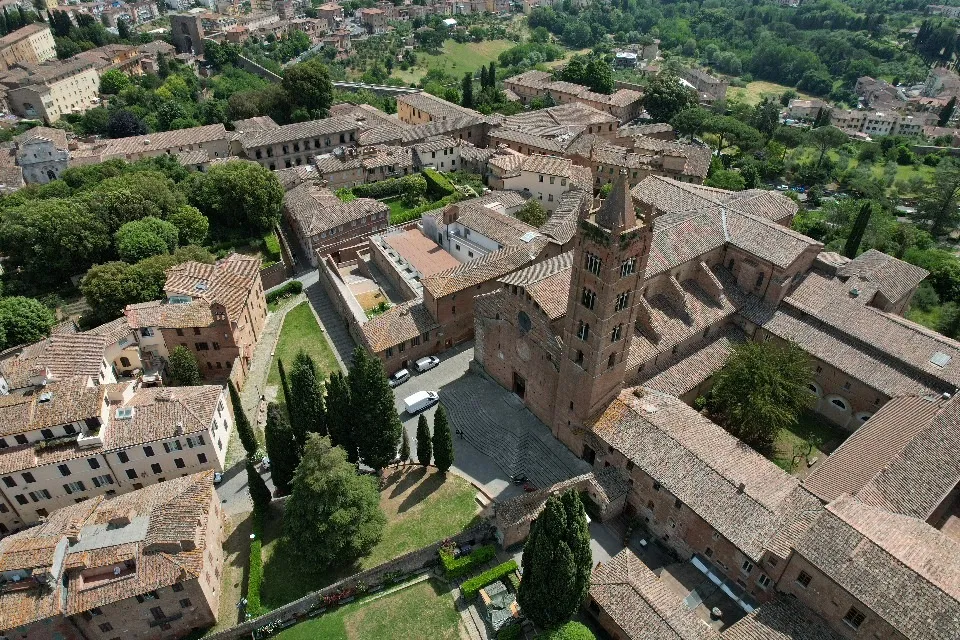
The sober and compact brick exterior features an unfinished 15th-century façade, typical of the late Gothic Sienese style, with simple lines and essential volumes.
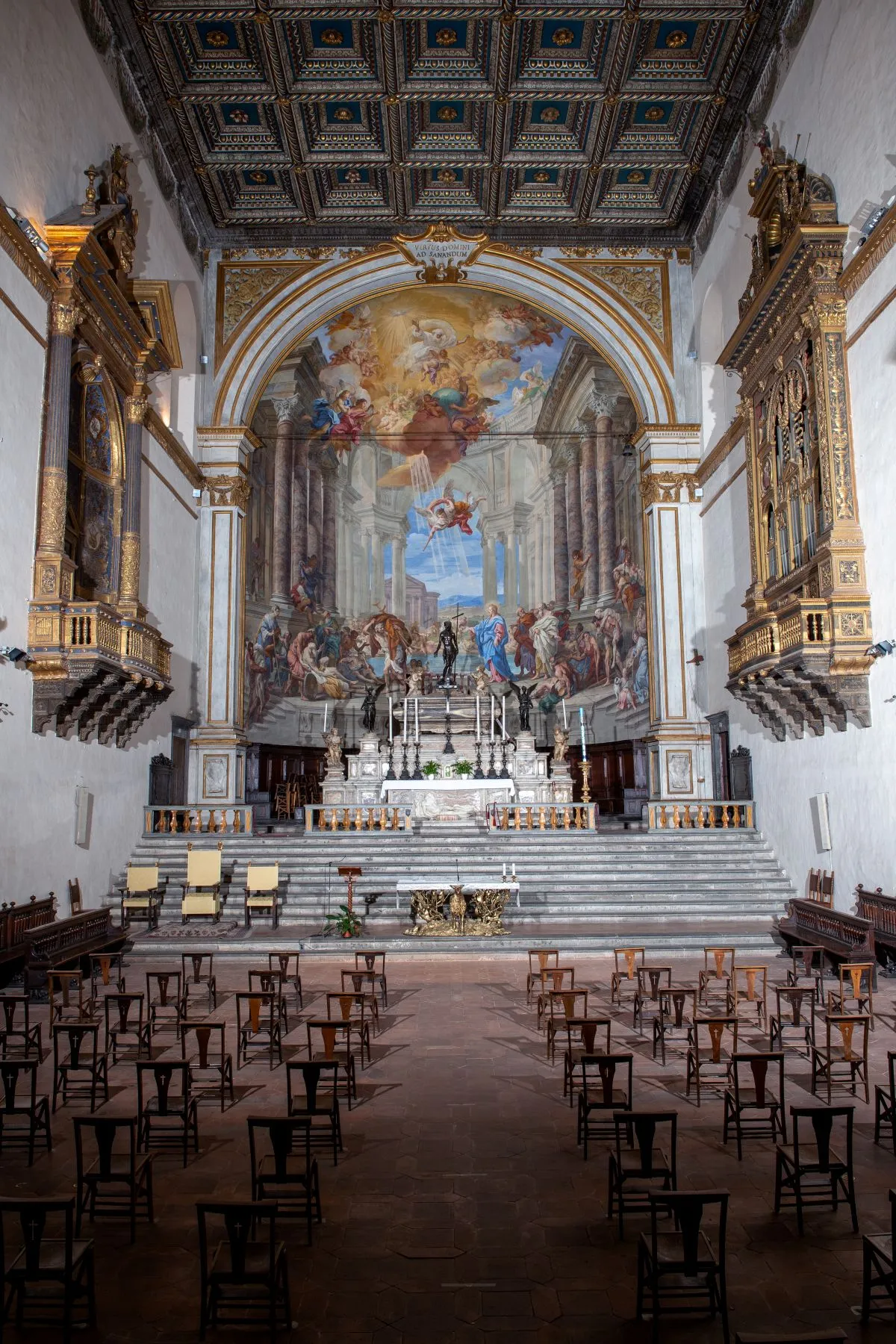
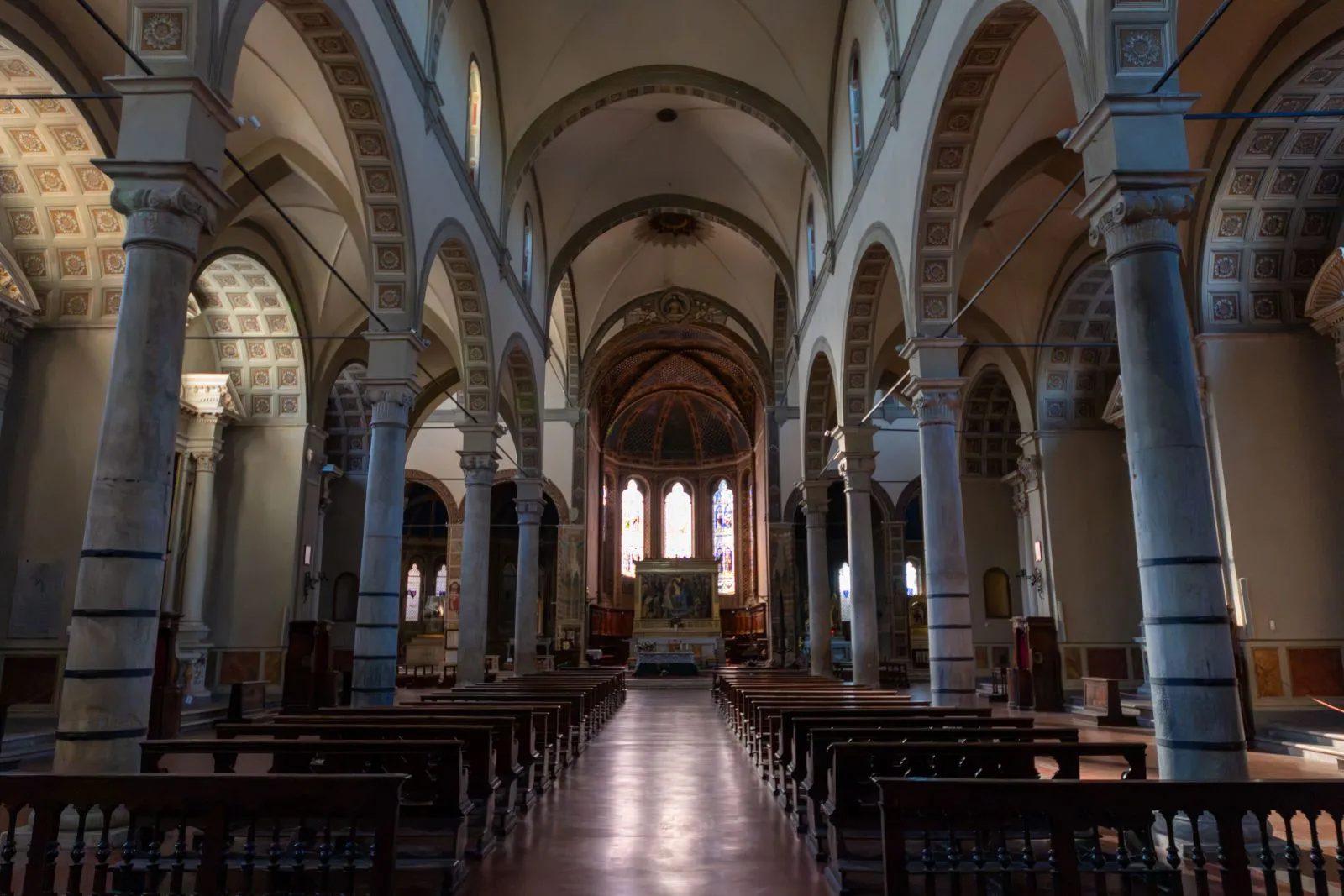
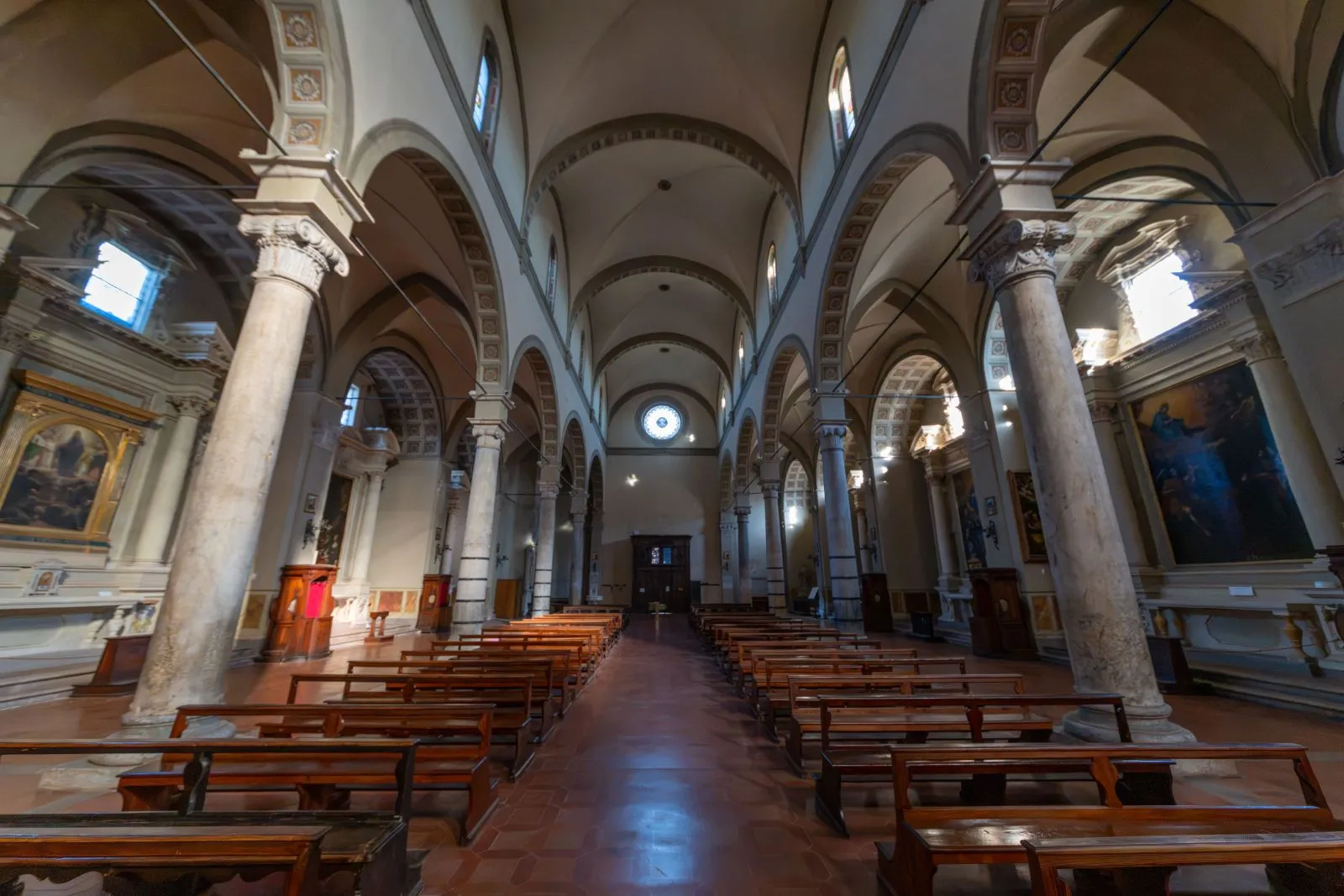
The interior, with three naves, preserves the original Gothic layout with pointed arches and wide spans, while the side chapels show Renaissance interventions in the frames and altars.
Works of art and Sienese school
Among the most important works stands out the Madonna del Bordone from 1261, by Coppo di Marcovaldo, a masterpiece of Italian painting of the 13th century.
There are also 14th and 15th-century frescoes from the Sienese school and works by masters such as Taddeo di Bartolo, Lippo Memmi, and Rutilio Manetti.
The bell tower and Piazza Manzoni
The 14th-century bell tower, made of brick and slender, is characterized by elegant biforas in the bell chamber, which lighten the structure and spread the sound of the bells over the valley.
Visible from many points in the city, the bell tower is an important reference in the urban profile of Valdimontone.
A natural terrace over Siena
Piazza Manzoni, wide and tranquil, allows you to admire the basilica and the bell tower in their entirety and offers a spectacular view of the historic center, from the Cathedral to the Torre del Mangia.
The square is also an ideal starting point for visiting the Valdimontone district, one of the oldest in Siena and home to one of the historic Contrade of the Palio.