Among the rooms of Palazzo Patrizi
At the corner of Via di Città, at number 75, the Cesare Olmastroni Gallery opens up, also known as G.O. Gallery Public. Entering means crossing a threshold where time seems to stretch: 200 square meters of exhibition space host temporary exhibitions dedicated to contemporary art, photography, and the enhancement of emerging artists. Every wall, every space, tells the story of the dialogue between Sienese artistic tradition and the most current languages.
The name that tells the story of an artist
The gallery is named after Cesare Olmastroni, a Sienese artist who passed away in 2017. His hands left a deep mark on the city: he was the author of two banners for the Palio, the one from July 2, 1982, dedicated to the centenary of the monument to Giuseppe Garibaldi and won by Valdimontone, and the one from August 16, 2013, created by Cecilia Rigacci and won by Onda. Olmastroni also oversaw numerous restorations, including the Maestà by Simone Martini in the Civic Museum. His name is thus an integral part of the space, and walking through the rooms of the gallery is somewhat like retracing his career and the history of contemporary Sienese art.
Temporary exhibitions: eyes, mind, and imagination
The exhibitions that follow one another change from season to season, yet they maintain an invisible thread that connects all the works: research, experimentation, the desire to surprise. Photographers, painters, and emerging artists find here a home, a space where their creativity interacts with that of others and with the spirit of Siena, a city where art is rooted in everyday life. Strolling through the rooms is an experience that stimulates the eyes and mind, leaving the visitor with the feeling of having seen something unique.
Where art dialogues with the city
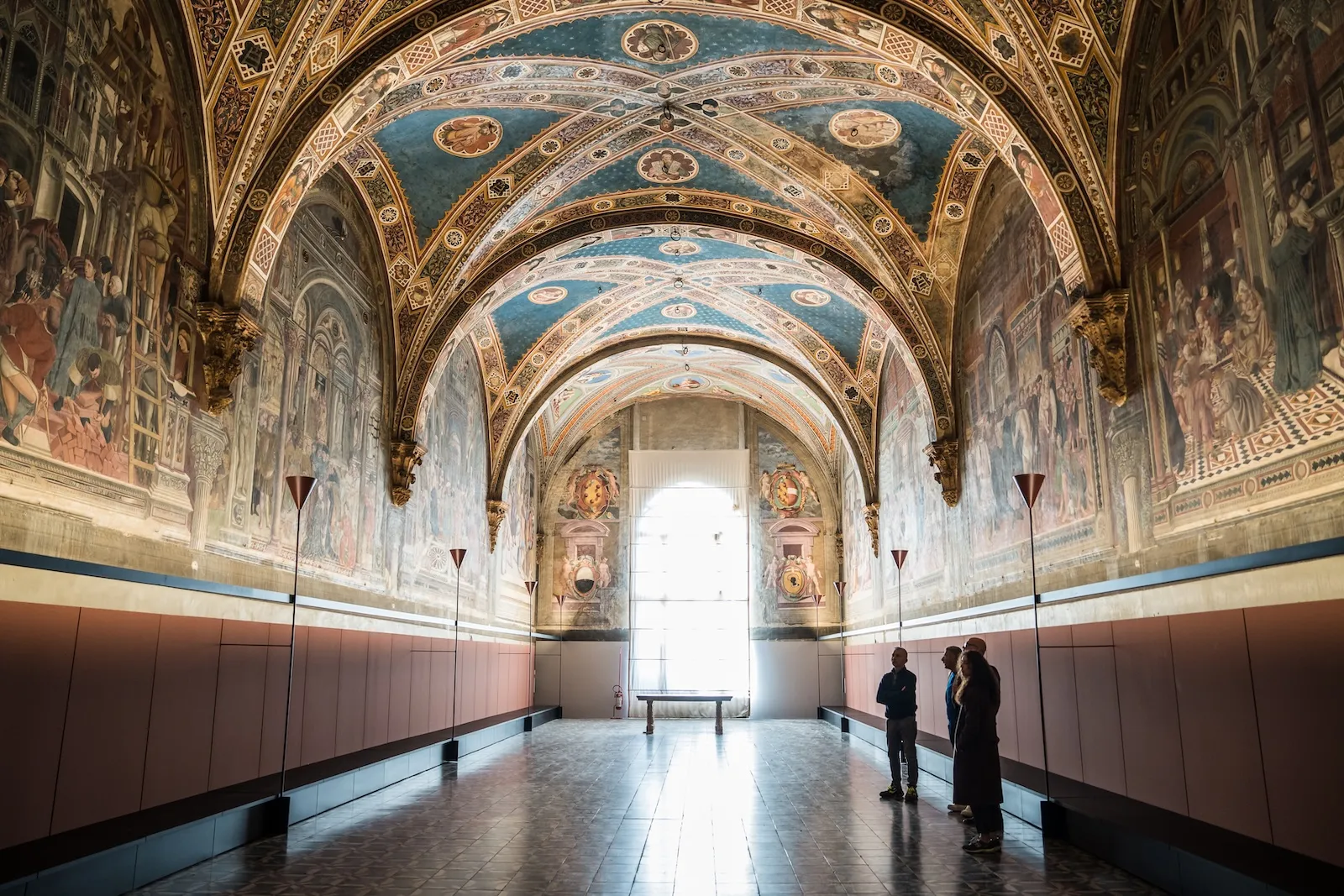
The gallery is not just a container of works: it is a place of meetings, reflection, and passion for art. Located in a historic building, with the discreet elegance of the rooms and the light filtering through the windows, the visitor immediately perceives the harmony between past and present. Here, every work finds its space without overlapping, and the history of the artist intertwines with that of the city, creating a profoundly cultural experience.