The white giant synonymous with quality
This breed stands out for its extraordinary size. The Chianina is the largest cattle breed of all, with males that can exceed 190 cm in height at the withers and weigh up to 1,700 kg. Females are smaller but still impressive, reaching over 155 cm at the withers and weighing 1,100 kg.
A connection to history
The Chianina owes its name to the Val di Chiana, a land rich in agricultural traditions. In the heart of Siena, during the historical parade that precedes the Palio race, four specimens of this breed pull the Carroccio, carrying the Palio, the painted cloth banner that will be awarded to the winning contrada. Their porcelain white coat stands out against the tuff of the square, making the oxen a symbol of strength and beauty.
Physical characteristics and breeding
The Chianina is easily distinguished by its white coat. Instead, the calves, up to six months old, have a “wheaten” color, a golden yellow. The horns are short, sturdy, and have black tips. The mucous membranes, that is, the internal membranes like those of the mouth and nose, are dark-colored, almost black. The head of the Chianina is light and elegant, with a more elongated shape in females compared to males. The dewlap is very small and almost absent, especially in females, and the hump is present only in bulls. The breeding of this breed mainly occurs in the wild, with cows grazing freely during the summer months. In winter, however, they are fed with hay collected in the warmer months. This traditional breeding method helps maintain the quality of the meat, which is a true gastronomic pride.
Chianina meat: a Tuscan delicacy
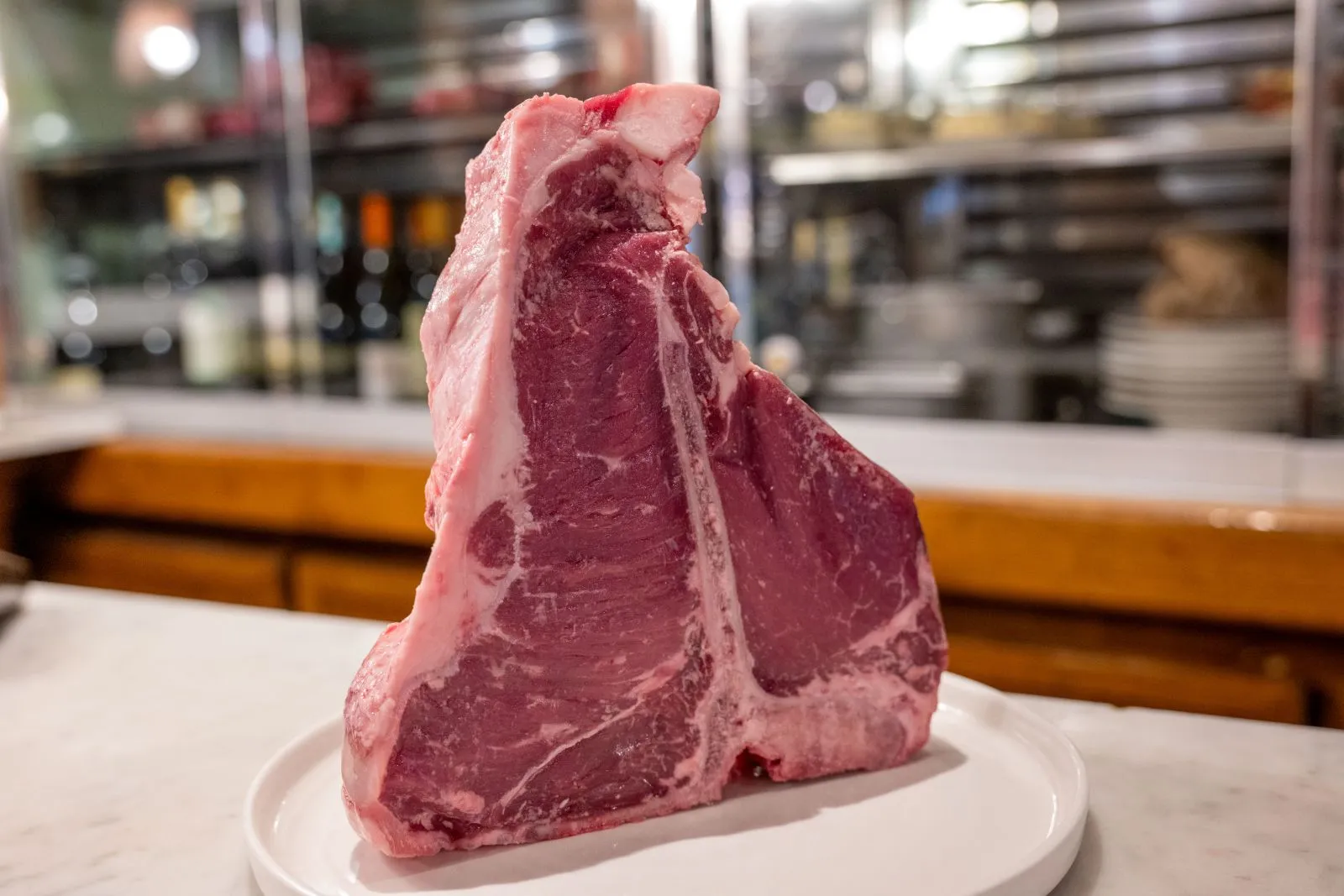
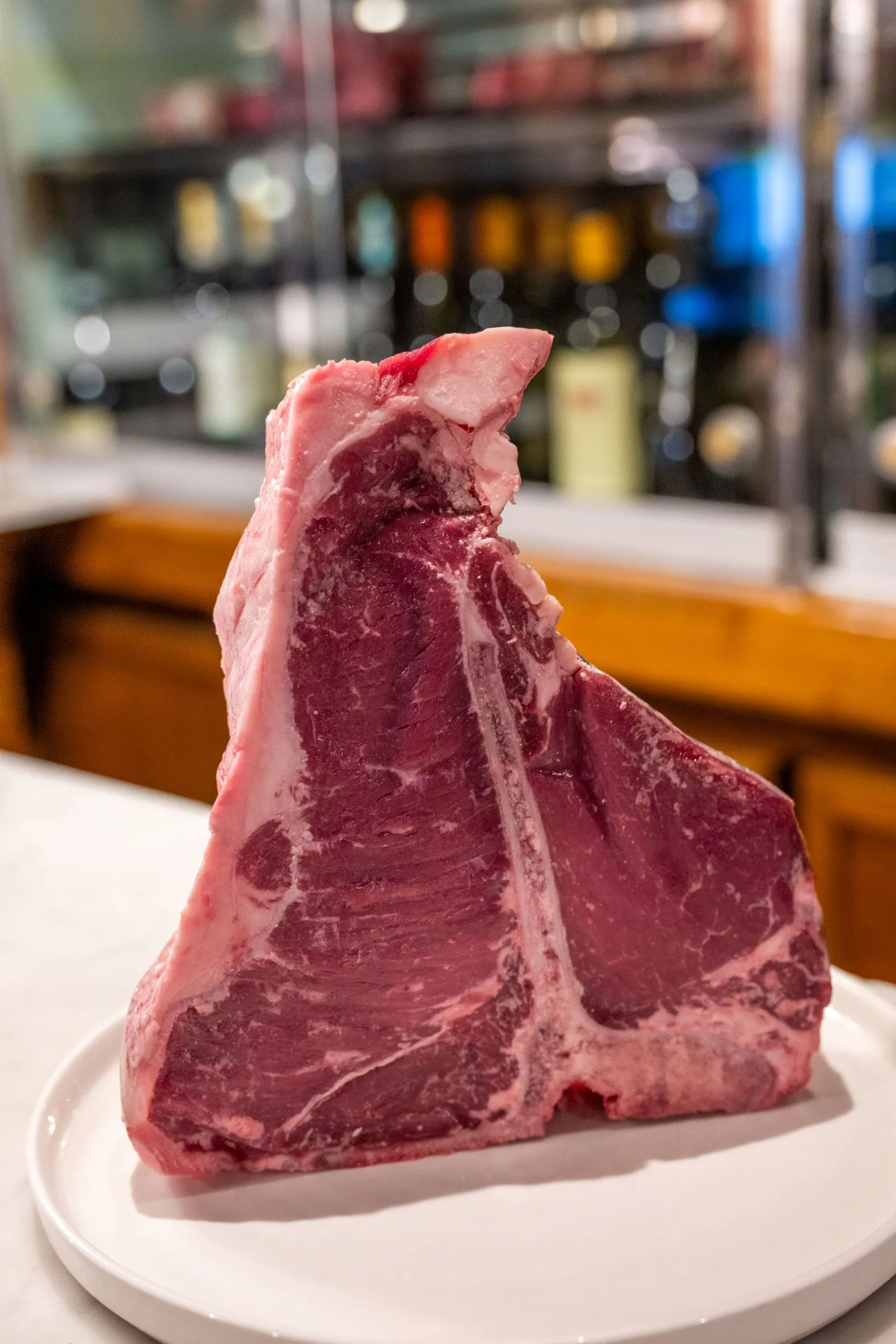
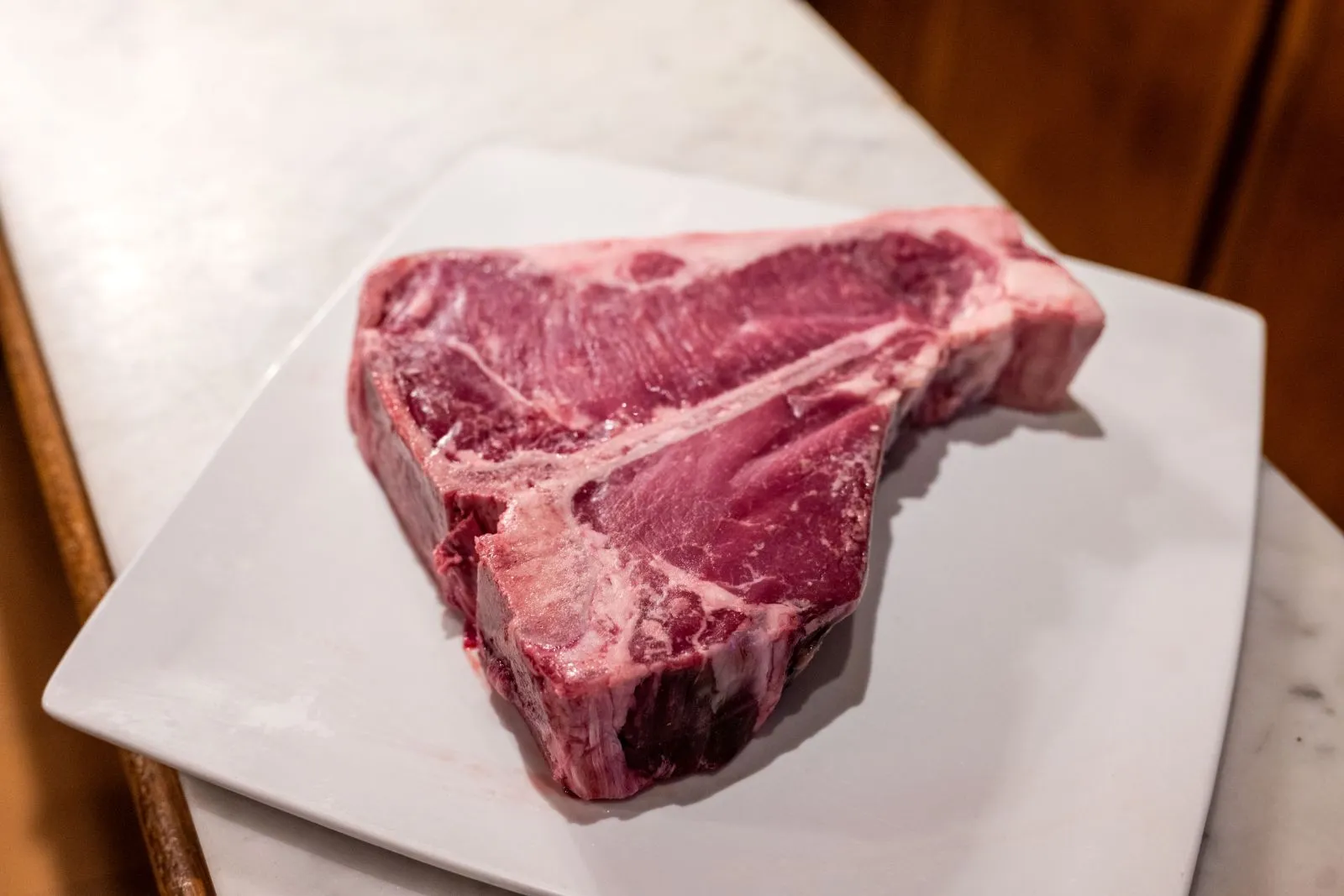
Chianina meat is famous for its tenderness and strong flavor. It is especially known for the preparation of the Florentine steak, a symbol dish of Tuscan cuisine.
A gastronomic heritage to protect
The Chianina is among the cattle breeds protected by the Consortium of the White Veal of the Central Apennines IGP. Today, this breed enjoys a noble and established image, recognized internationally, thanks to its prized meat and its importance in Tuscan gastronomic tradition.