From Roman origins to Lorenzetti's frescoes
A pig painted in the history of art
The Cinta Senese takes its name from the characteristic white band that crosses its dark coat like a natural belt. Its origins probably date back to Roman times, but the first certain mention comes in 1338, when Ambrogio Lorenzetti portrayed it in the Allegory of Good Government as a symbol of well-being, an integral part of the Sienese rural landscape. An animal immortalized in a medieval fresco: a sign that even then it was something special. The breed is native to the Montagnola Senese, a wooded area bordered by the valleys of the Merse River and the Elsa River, north of Siena, a landscape that has shaped the animal as much as the animal has shaped the local cuisine.
Almost extinct, then reborn: an extraordinary story
The revival and the DOP of 2012
In the twentieth century, with the industrialization of farming, the Cinta Senese came dangerously close to extinction. It was public entities and Sienese breeders who reversed the trend with a slow and passionate recovery. In 2012, official recognition arrived: the Protected Designation of Origin.
Farming: woods, freedom, and unmatched spaces
Four times more space than organic
The animals live in the wild or semi-wild in the woods of the Sienese Mediterranean scrub, among chestnuts, oaks, turkey oaks, and strawberry trees, where they find natural and abundant nourishment. But the real secret lies in the living space reserved for each animal: the regulations stipulate no more than 1,500 kilograms of live weight per hectare, about ten units: a space four times greater than that required for organic farming. No animal can be slaughtered before reaching one year of age. Here are the invisible ingredients that directly affect quality. And flavor.
The cured meats: intensity and character in every cut
From ham to lardo: pure excellence
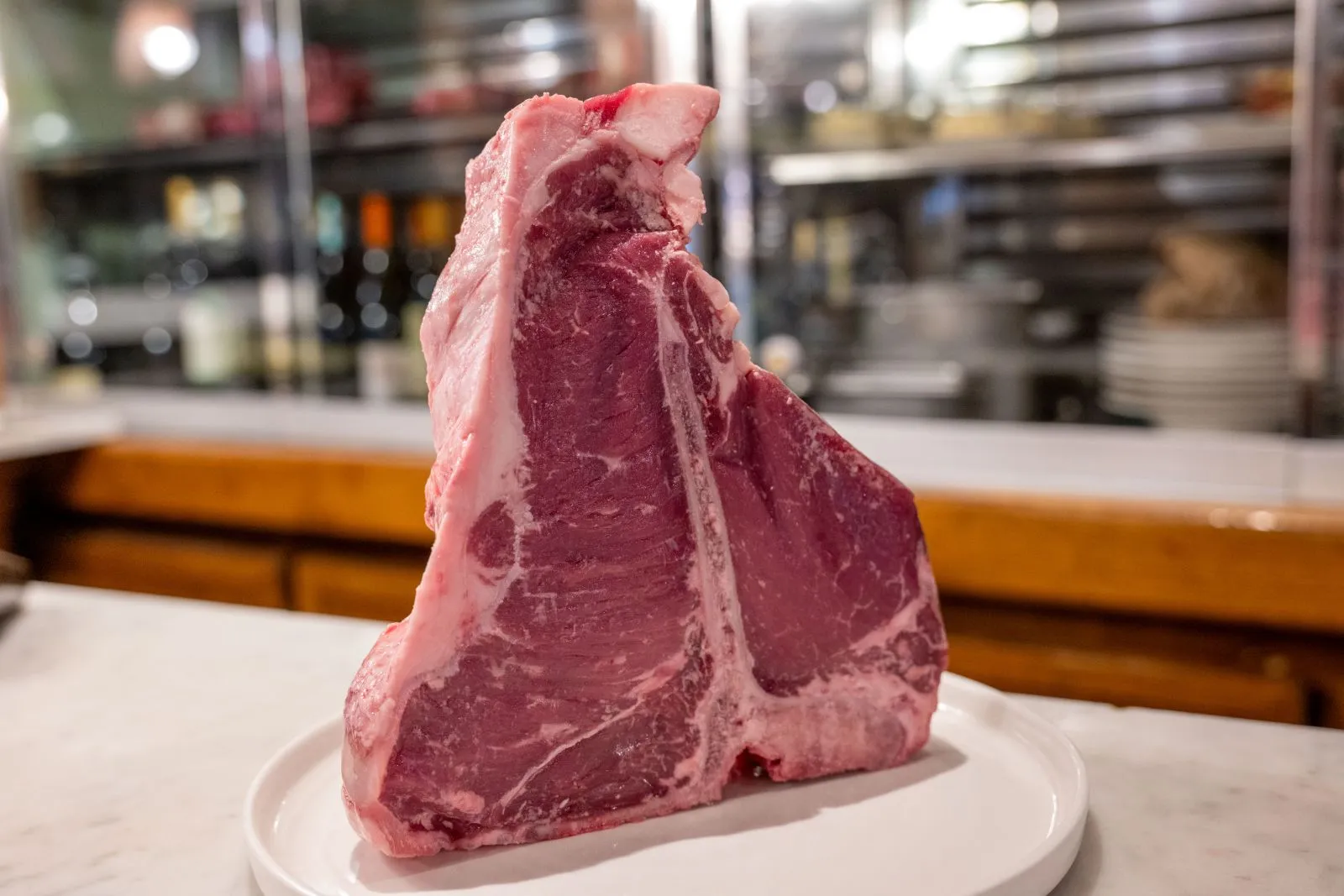
With the meat of the Cinta Senese DOP, exceptional cured meats are produced, with a distinctive flavor compared to other Tuscan products: ham, salami, sausages, fine lardo, and capocollo. The ham deserves a separate discussion: bright red meat tending towards dark, very white subcutaneous fat with slight pink marbling, intense and more pronounced flavor compared to a normal Tuscan ham. An aromatic complexity that arises from outdoor life, movement, and natural feeding. It is not simply a cured meat. It is the portrait of a territory.