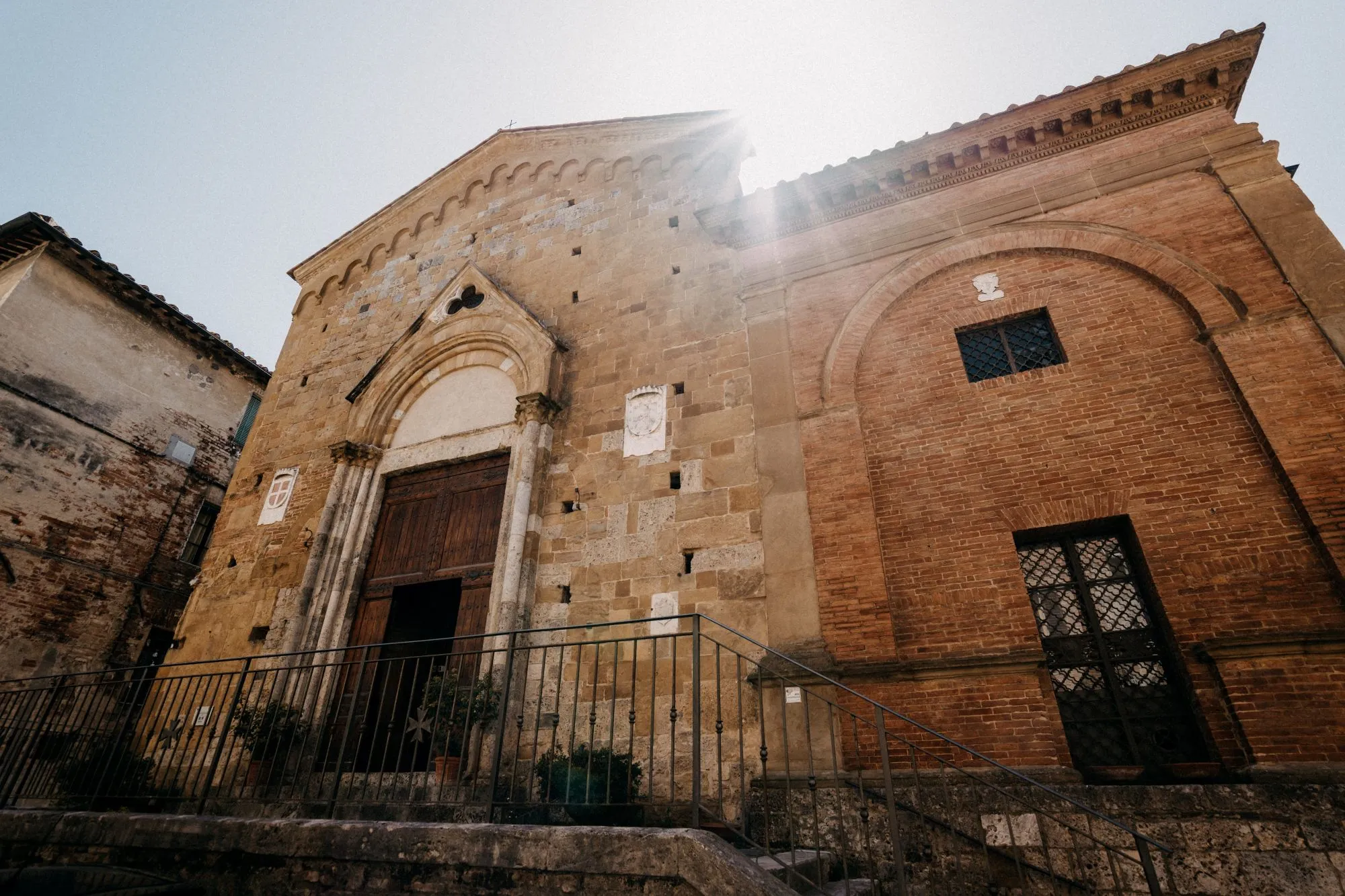
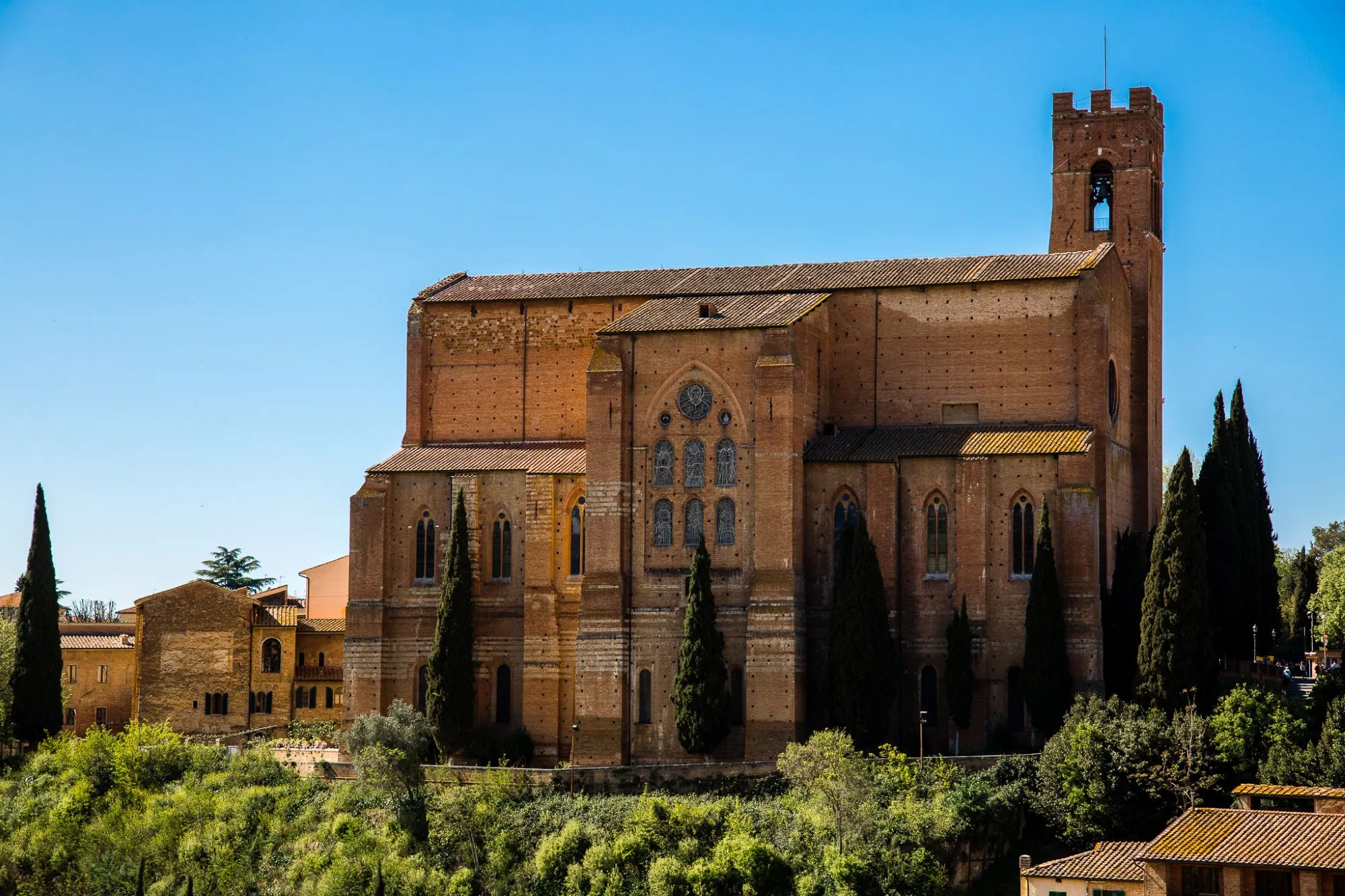
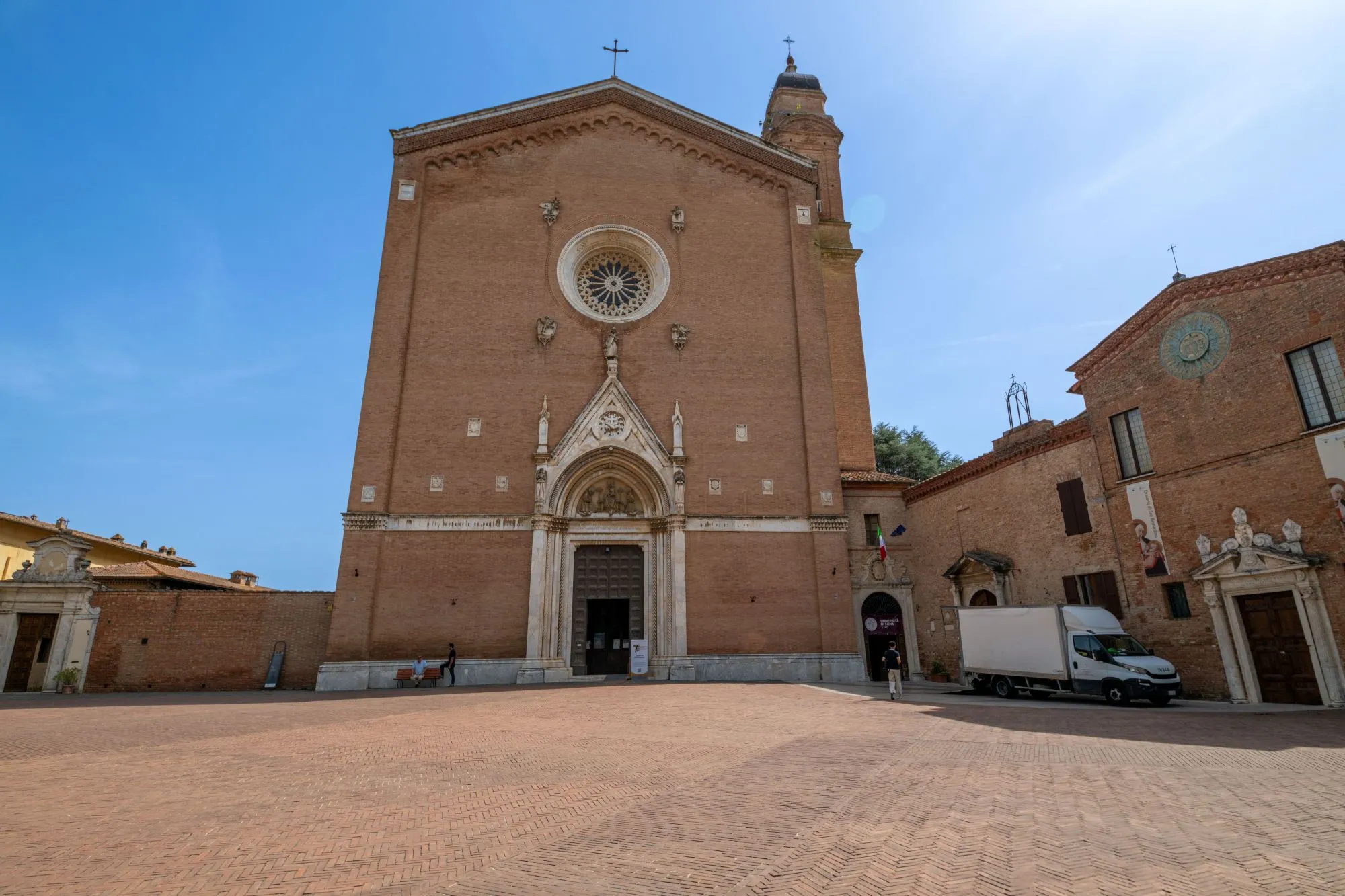
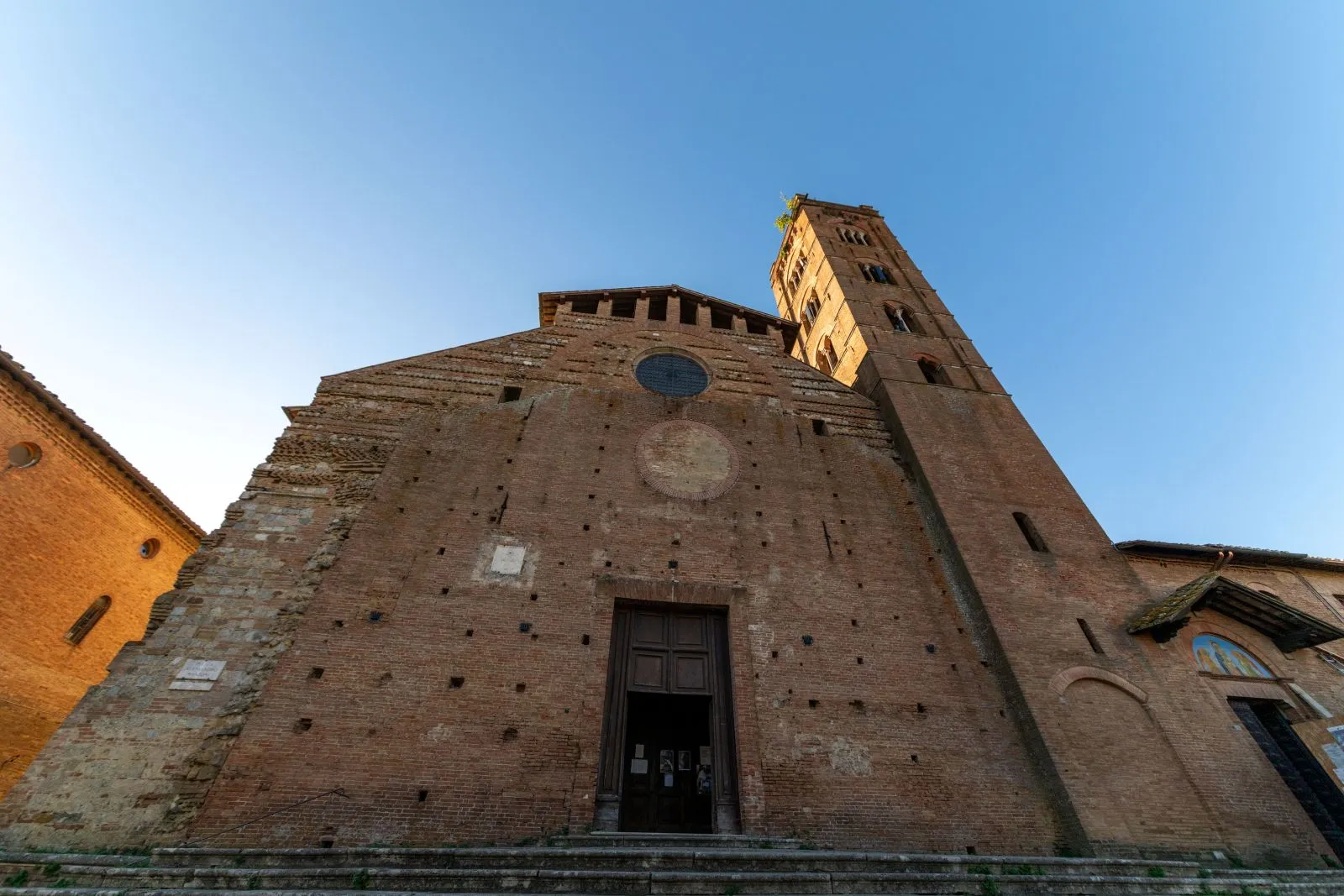
Among ancient stones and Templar symbols, the Church of San Pietro alla Magione tells centuries of faith, pilgrims, and knights, keeping silences that speak more than words. The church belonged to the Knights Templar from the 12th century and is among the few in Siena with documented direct Templar presence.
Inside, they established their headquarters, the “Mansio Templi”, and held a hospice for pilgrims, from which the church derives its name.
The history of the Church of San Pietro alla Magione:
In 1312, the church passed to the Knights Hospitaller, later being entrusted to the diocese, and still today it hosts the meetings and celebrations of the Sienese section of the Sovereign Military Order of Malta.
The Templars managed lands, protected pilgrims, and safeguarded goods and documents, and on the wall, one can observe the crosses of the order carved in stone. The strategic position and the slightly anomalous orientation of the building compared to the medieval urban grid suggest a symbolic link with Jerusalem or a specific point along the Via Francigena. Beneath and around the church were burials of knights and pilgrims who died on their journey, now lost to time. San Pietro was invoked especially as the protector of travelers and guarantor of the safe return of pilgrims.
History and Architecture
The Romanesque style of the building is essential and sober: bare stone, solid and “military” proportions, reflecting the protective and spiritual function more than decorative appearance. Some masonry blocks show signs of older workmanship, probably reused materials from nearby Roman structures.
On one side is the Chapel of San Donnino, built between 1523 and 1526 as a votive offering to thank for the end of a plague epidemic.
Art and Decorations
Inside the church are preserved fragments of medieval frescoes depicting scenes of the Crucifixion and biblical stories, works attributed to Cristoforo di Bindoccio and Meo di Pero. Among the most relevant works are the gothic tabernacle of the Holy Oil, fragments of 14th-century frescoes, the Madonna with Child by Bartolomeo Neroni known as il Riccio, the Madonna with Saints John the Baptist and Peter by Diego Pesco, and two 17th-century paintings dedicated to Saint Hugh and the martyrdom of San Donnino.
Visiting San Pietro alla Magione means immersing oneself in a place that preserves centuries of devotion, protection, and pilgrimages, amidst history, art, and spirituality.
Let yourself be guided by Templar symbols, listen to the silence of the stones, and discover the millennia-old history of the Magione.