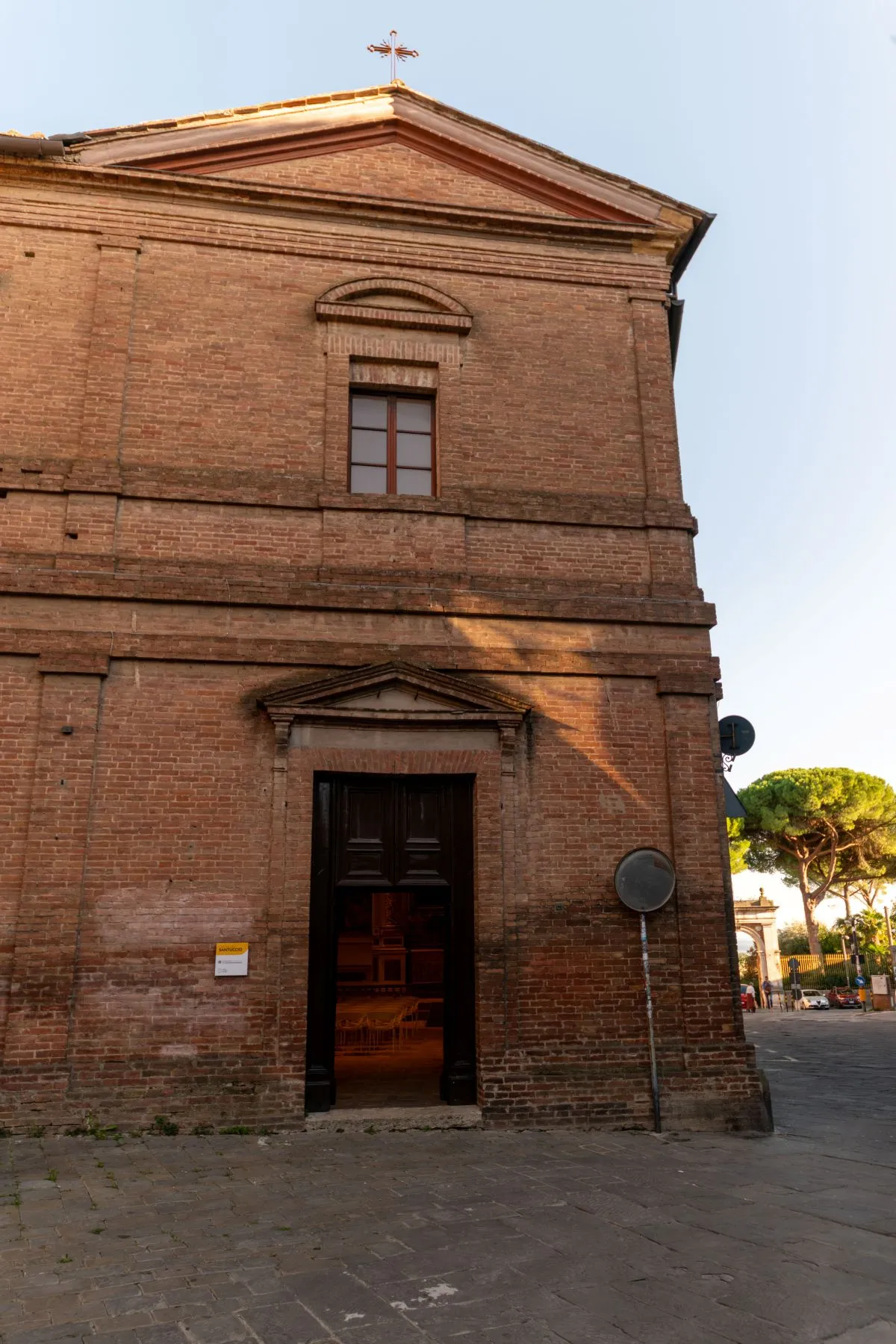
Origins and historical role
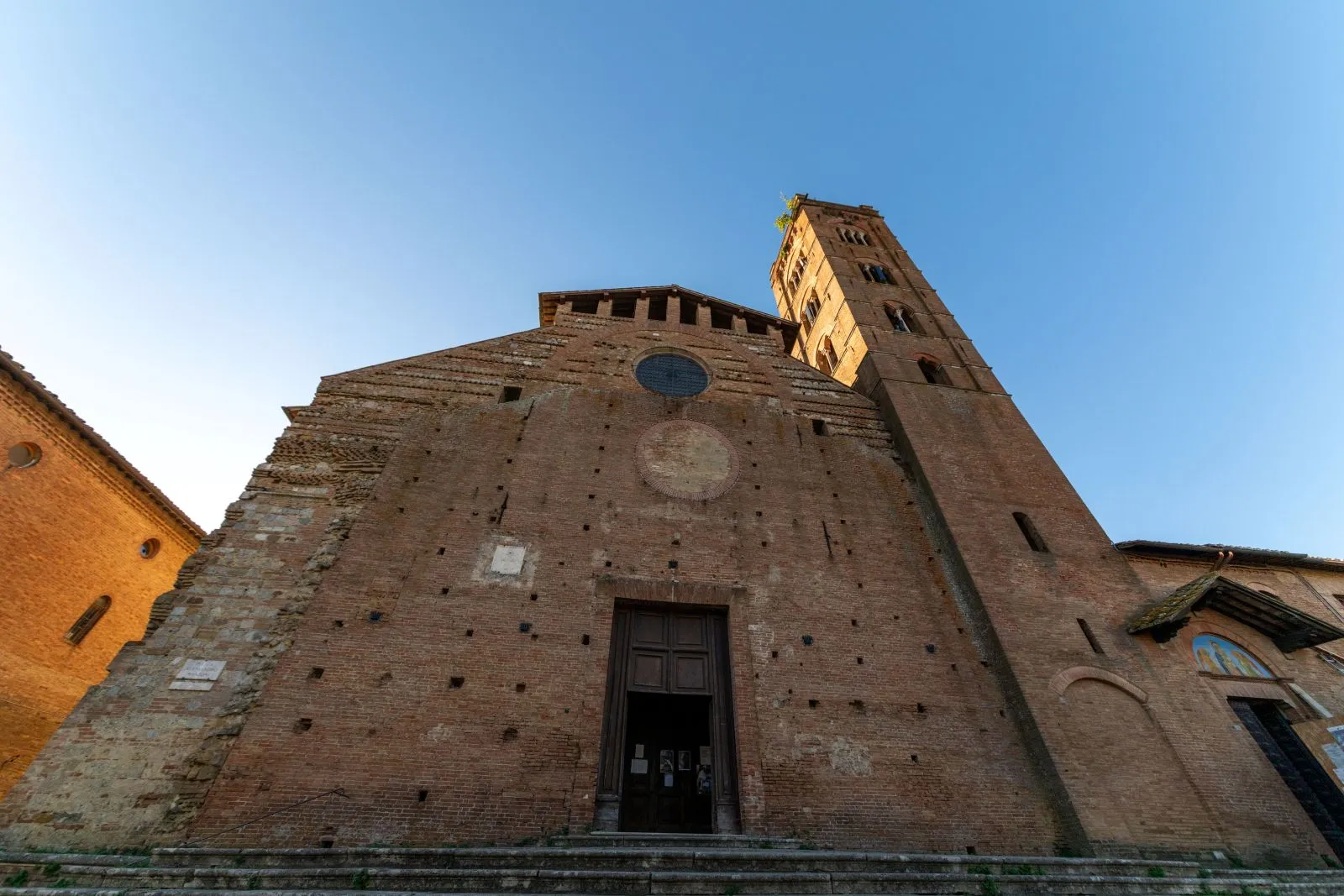
Founded between 1320 and 1352 by the nuns of the order of Santa Maria Maddalena, the church later merged with the sisters of Santa Maria degli Angeli in Valli. In March 1550 (1549 according to the Sienese year), a 13th-century reliquary containing the head of Saint Galgano was brought to the church, from which it seemed hair continued to grow. The nuns would cut the hair, believed to be capable of performing miraculous healings.
The nickname “Santuccio” seems to derive precisely from the presence of this relic, while another hypothesis links it to the Sienese family of the Santucci, who financially supported the foundation of the convent. The church also played a role in the history of the Palio: it served as a starting point for the “Palio alla lunga,” a historical version of the race before the introduction of the Palio as we see it today in Piazza del Campo.
The female convent was frequented mainly by girls from noble families in Siena. Many entered the convent not only for religious vocation but also for family strategies: it helped avoid divisions of estates or unwanted marriages. To support the convent, the nuns produced embroidery, fabrics, and sacred objects, which were also in demand outside Siena. They lived in strict cloister, communicating with the outside through grates and revolving wheels to pass objects without direct contact. In some historical periods, the complex was transformed and reused for civil and military purposes.
Art and renovations
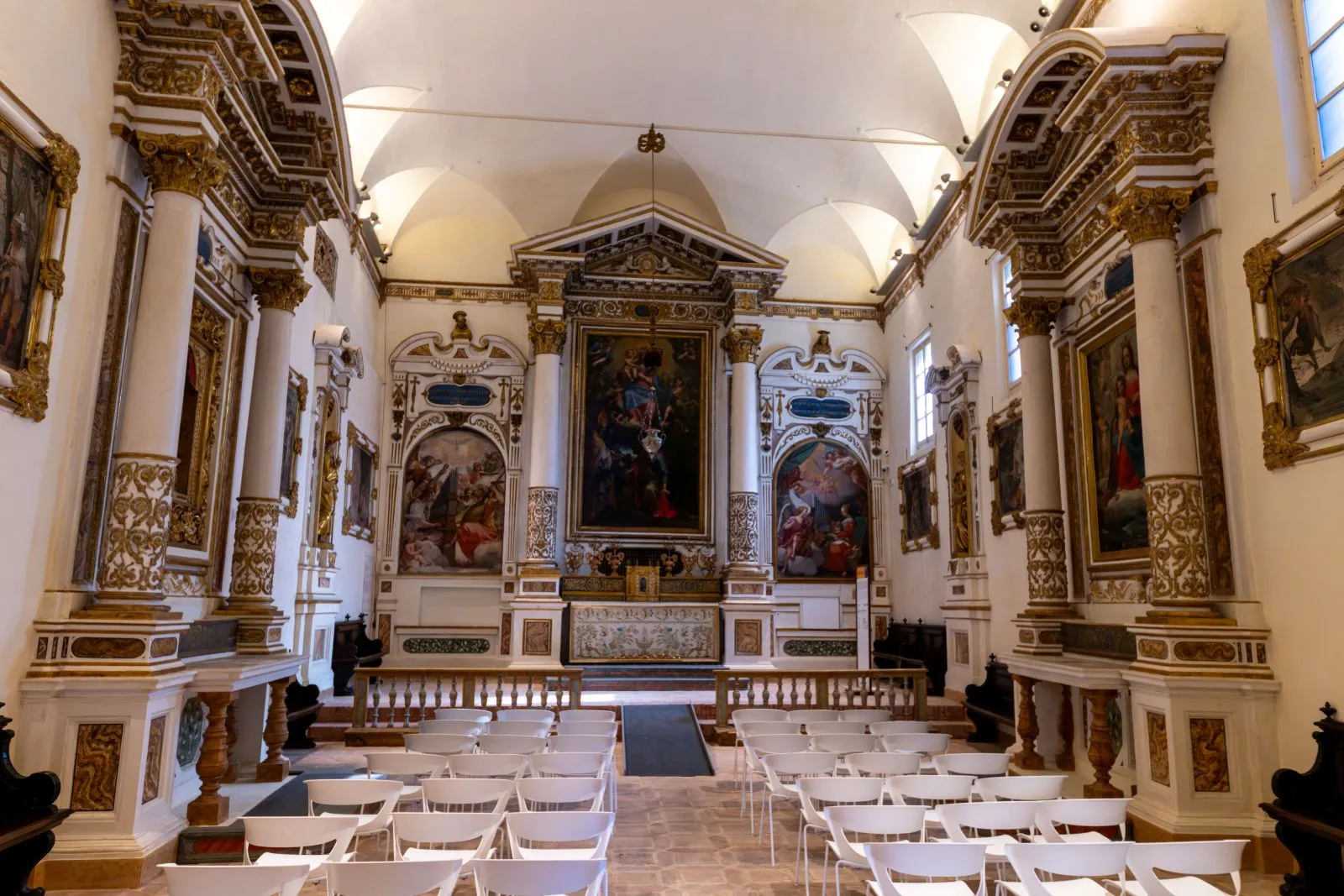
In the 16th century, the church was renovated: a grand altar was built according to the dictates of the Counter-Reformation. Inside, there is an organ, already present in 1531 and expanded in the 17th century, equipped with double mechanics to be played both from inside the choir and from the side of the church.
The artistic heritage includes works by the main Sienese masters: wooden sculptures by Jacopo della Quercia (now at the National Gallery), and the altar painting depicting the Madonna with Child and saints, started by Francesco Vanni in 1610, continued by Ventura Salimbeni and completed in 1614 by Sebastiano Folli. On either side of the altar are the painting by Antonio Buonfigli with Saint Cecilia playing the organ and the fresco The Concert of Angels by Ventura Salimbeni, who is also responsible for the cycle of frescoes that decorates the walls with the Stories of the Life of Saint Galgano (1612).