A small church that is unforgettable
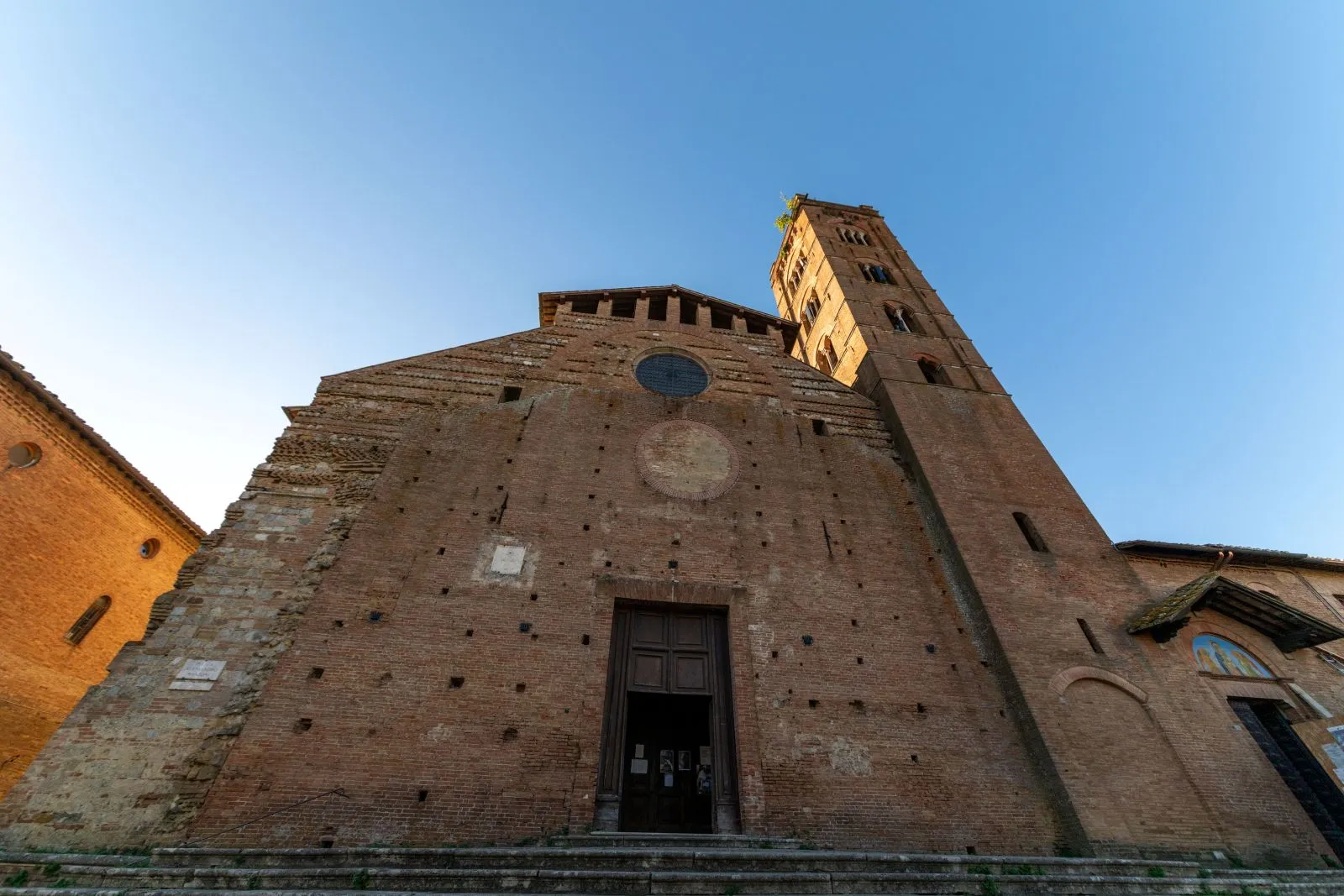
On Via Montanini, one of the historic streets connecting Porta Camollia to the center of Siena, there is a simple and elegant brick facade that does not demand attention. Yet, something holds the gaze: the stone portal, the central window, the balanced proportions of a building that knows exactly what it is. The Church of Santa Maria delle Nevi does not seek to impress from the outside. It does so from within, and it does so in a way that is not easily forgotten.
The origins: a bishop, a miracle, and an ancient devotion
Giovanni Chinugi and the Madonna della Neve
The story begins in 1477, when Giovanni Chinugi, bishop of the new diocese of Pienza established by Pius II, decides to found this private oratory linked to Marian devotion. The name "delle Nevi" recalls the miracle of the Madonna della Neve, connected to the Basilica of Santa Maria Maggiore in Rome: a story of snow falling in August, of visions and faith that has crossed the centuries. In that small church on Via Montanini, that devotion finds a collected and intimate home, designed for those who wish to pray in silence, away from the noise of the city. An atmosphere that has remained intact to this day.
Inside: where the Sienese Renaissance is shown without filters
The nave, the light, and the proportions that get everything right
Crossing the threshold, the single nave opens bright and harmonious, with the barrel vaults guiding the gaze towards the back without distractions. The proportions are balanced, typical of Sienese architecture of the Fifteenth Century: nothing excessive, nothing superfluous. Everything is designed to enhance the altar and the central altarpiece, as if the entire building had been constructed around a single work. And in a certain sense, it is exactly so.
The altarpiece by Matteo di Giovanni: a masterpiece that has never left this church
At the center of the main altar in marble, with its frames and classicizing details, there is the Altarpiece of the Assumption from 1477 by Matteo di Giovanni, one of the greatest painters of the Sienese Renaissance. Bright colors, elegant figures, a mystical atmosphere that is still felt today when stopping in front of the canvas. The Madonna is depicted in a mandorla of light, surrounded by angels, in one of those moments when painting stops being decoration and becomes something more difficult to explain. And then there is one thing that makes it even more precious: this altarpiece was commissioned specifically for this church in 1477, and since then it has never moved. A rare case in Siena, extremely rare in Italy. Those who enter the Church of Santa Maria delle Nevi see exactly what Matteo di Giovanni had in mind when he painted it.
A jewel that the city keeps to itself
The area of Via Montanini was once rich in oratories and small churches linked to noble families and confraternities. Most have lost their original identity over the centuries. Santa Maria delle Nevi is one of the few that has preserved it intact: pure Renaissance style, among the most refined in Siena, restored several times always with the aim of preserving that stylistic purity. Often overlooked by tourists, much loved by art enthusiasts. One of those churches that are found by chance and that continue to be thought about for days.