History and origin of the Marian cult
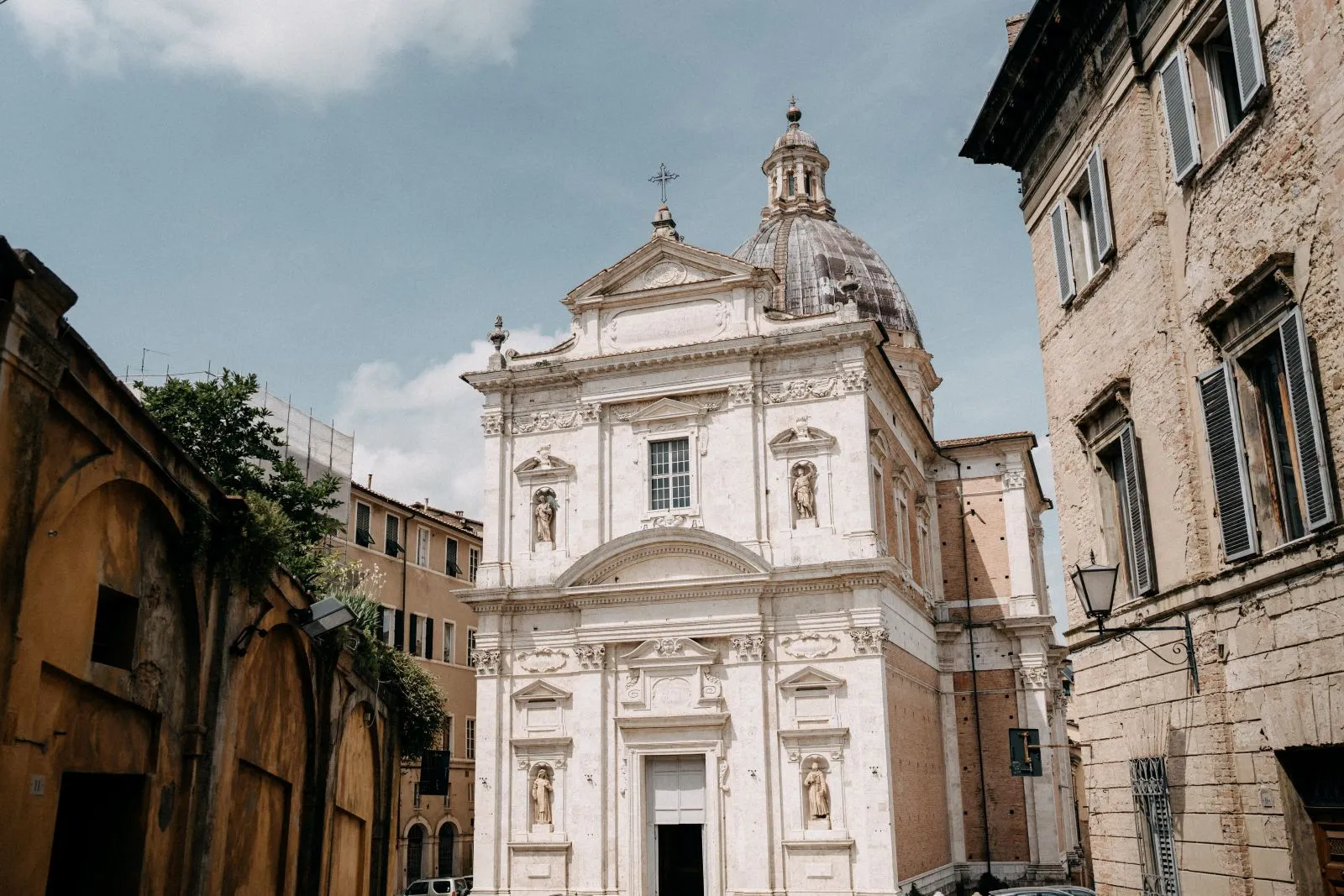
The construction of the church began in 1594 and was completed in 1604, during the full Mannerist period, based on a design by Flaminio del Turco and Damiano Schifardini. The consecration took place in 1611, when the building quickly became one of the main Marian sanctuaries of Siena.
The origin of the cult is linked to an event considered miraculous: in 1594, a gunshot hit an ancient image of the Madonna. From that moment, stories of healings and graces received spread, and popular devotion grew until it prompted the Municipality and the Contrade to build a monumental church to house the image, now placed on the main altar.
Architecture and artworks
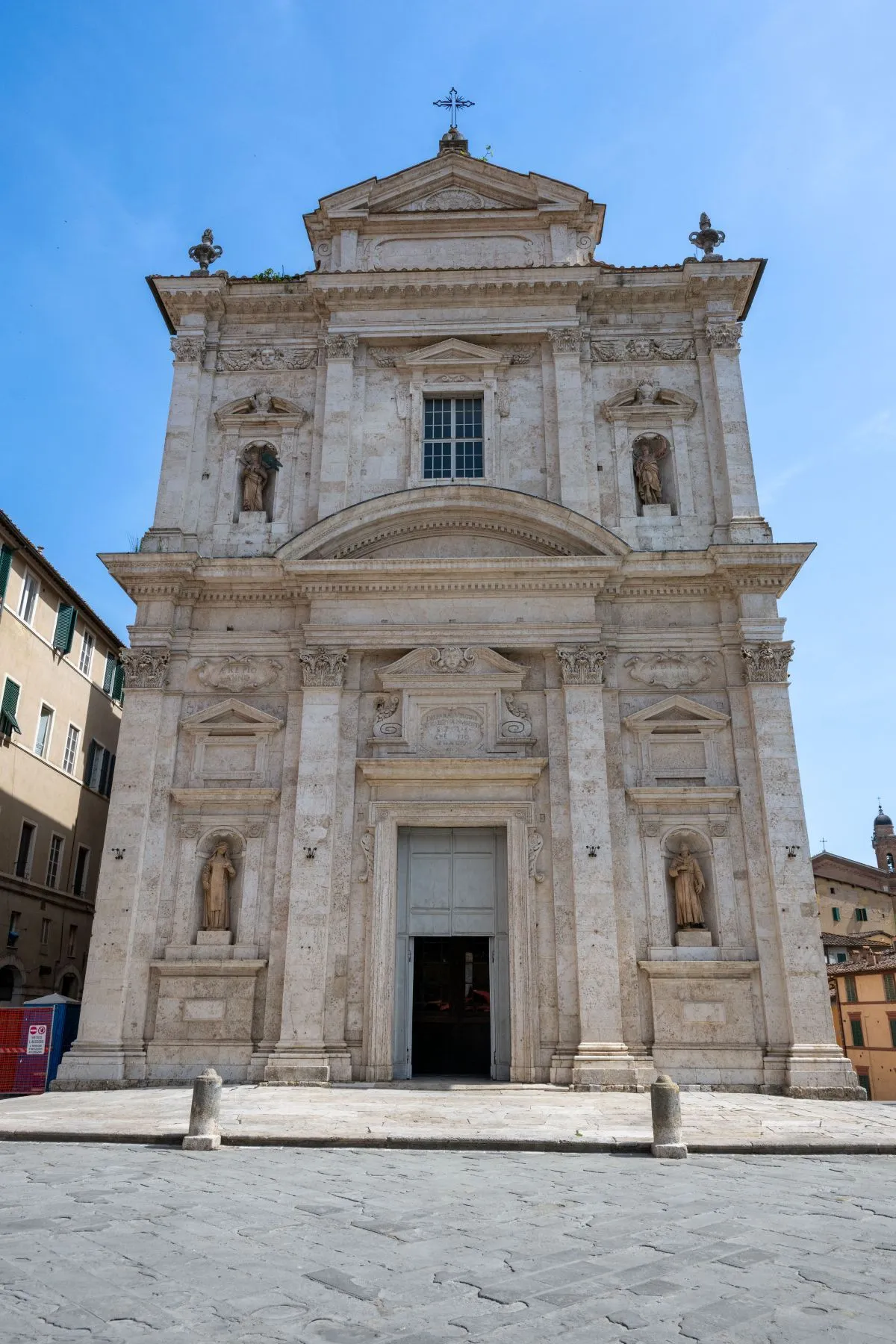
The travertine façade is one of the best examples of Sienese Mannerism: sober, elegant, and marked by niches that host 19th-century statues by Antonio Zini.
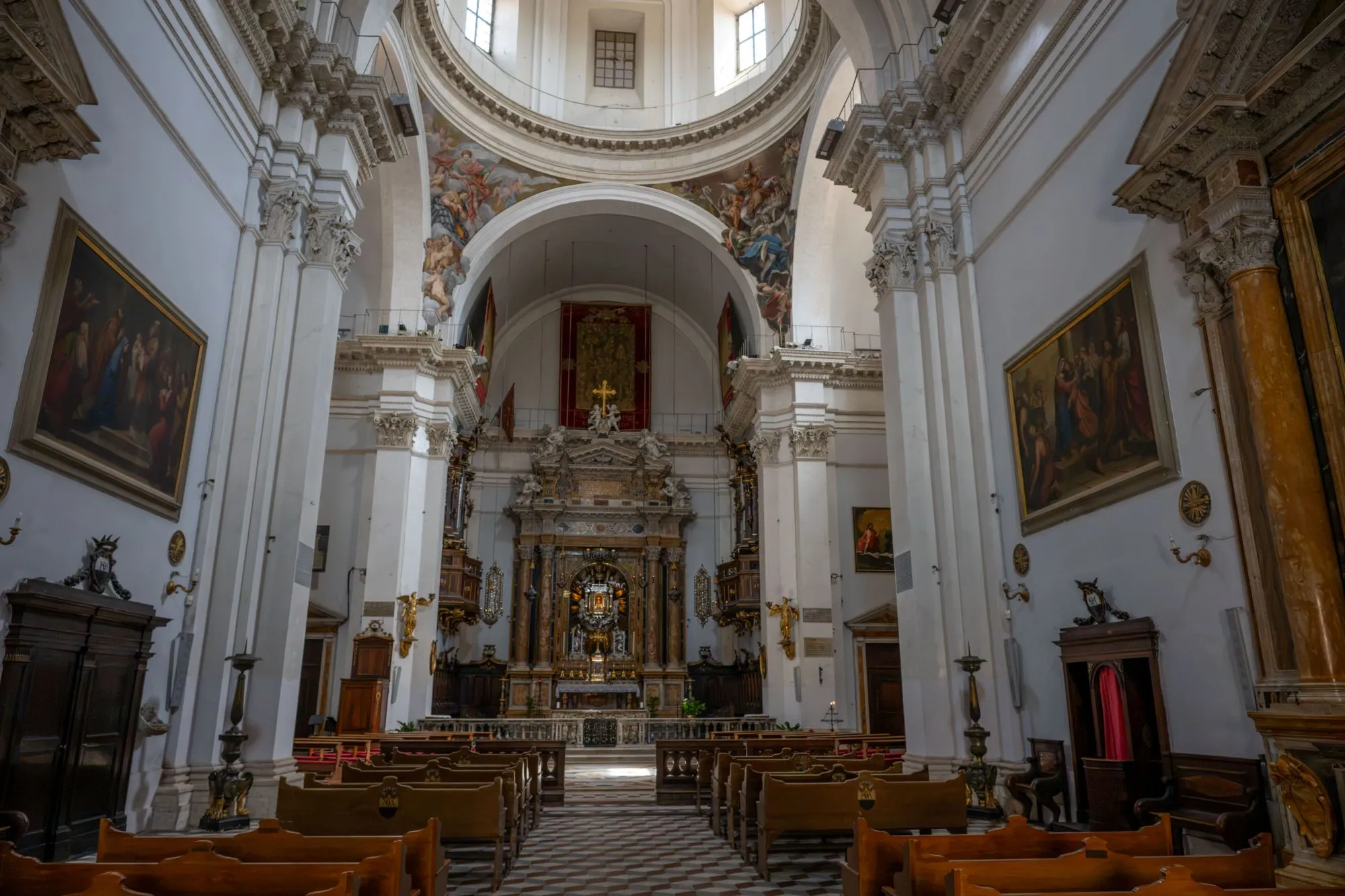
The interior is in a Greek cross shape, dominated by a large dome frescoed in the 18th century with the four patron saints of Siena: Galgano, Savino, Crescenzio, and Vittore. Among the most important works stands out The Mass of San Cerbone by Rutilio Manetti, one of the masterpieces of Sienese Baroque.
Numerous richly decorated side altars testify to the participation of the Contrade in the construction and embellishment of the church.
Santa Maria in Provenzano and the Palio of July 2
The church is closely linked to the Palio of July 2, dedicated to the Madonna of Provenzano. Every year, the Contrade bring candles and votive offerings as a sign of devotion.
And the Contrada that wins immediately brings the Palio just conquered to Provenzano, to pay homage to the Madonna to whom it is dedicated.
A place of protection and identity
The Madonna of Provenzano is considered the protector of the city in difficult times: epidemics, famines, and wars prompted the Sienese to turn to her for protection.
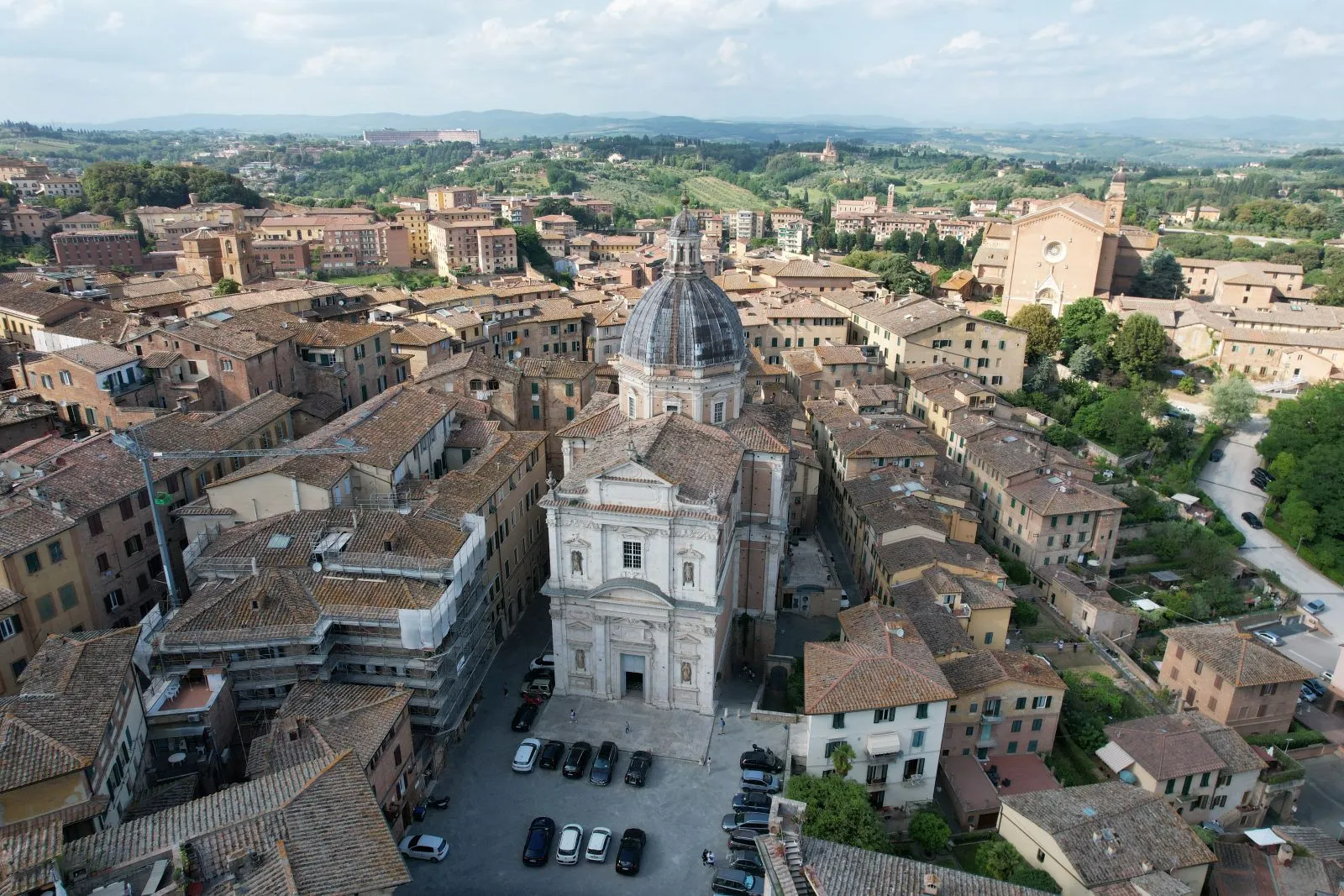
The square in front, once degraded, was completely redeveloped thanks to the construction of the church, becoming an elegant urban space.