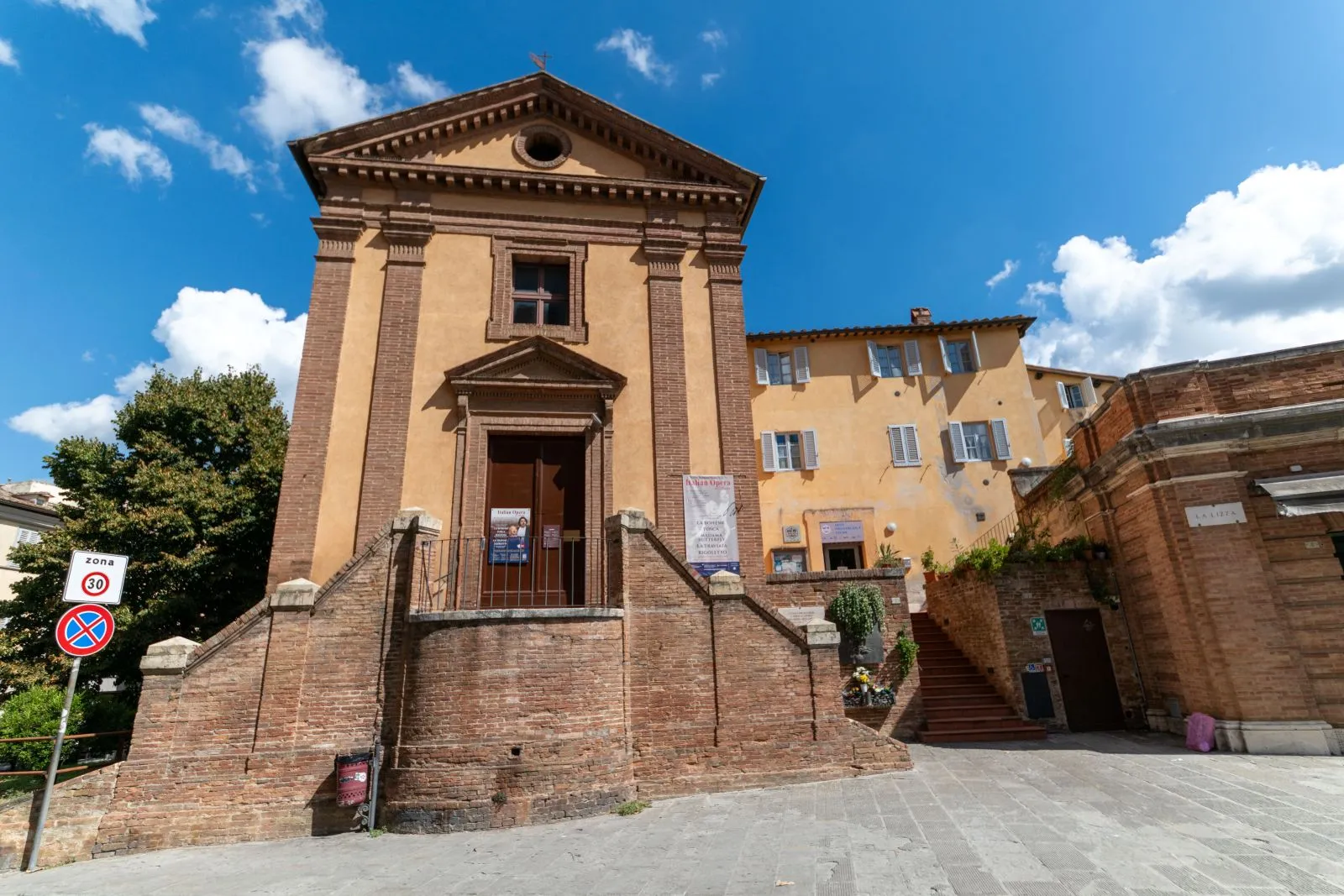
Set in the historic piazza della Lizza, the church of Santo Stefano surprises with its Baroque architecture and its ability to transform music and silences into emotions that traverse the centuries.
Documented since the 12th century, the building does not retain original Romanesque elements because it was completely rebuilt between 1671 and 1675 in a Baroque-classical style. It takes its name from the square La Lizza, so called because in the late 16th century it was used as a field for tournaments and equestrian exercises.
Today deconsecrated and no longer used for religious functions, the church is an auditorium for concerts and is the main venue of the Italian Opera Siena. Although it was not designed for music, the layout, the vaults, and the bare surfaces create a surprising natural resonance that envelops those who listen to the performances.
Works and decorations
Inside, Santo Stefano housed important works, now transferred to the Baptistery for conservation reasons. Among these are the Madonna with Child and Saints by Andrea Vanni with a predella by Giovanni di Paolo, The Visitation by Rutilio Manetti on the right altar, the Deposition of Christ by Antonio Buonfigli in the apse, and the wooden statue of Saint Bartholomew by Guido del Tonghio on the left altar.
The facade of the building features four brick pillars, a rectangular window, and is crowned by a tympanum.
For some periods between the 18th and 19th centuries, Santo Stefano appears very little in the parish records and is mentioned more as a building than as an active church. The bells were not only used for worship but were civil instruments for gatherings, alarms, and communications.
Let yourself be enveloped by the harmony of the centuries, listen to the history among the Baroque vaults, and feel the echo of music rising from the ancient bricks of La Lizza.