Located in the Terzo di Camollia, San Cristoforo has ancient origins, between the 11th and 12th centuries, and its role in the history of Siena is documented by medieval documents. Before the construction of the Palazzo Pubblico, the General Council of the Republic – also known as “di Campana” for the summons via a special bell, now preserved in the Civic Museum – met here.
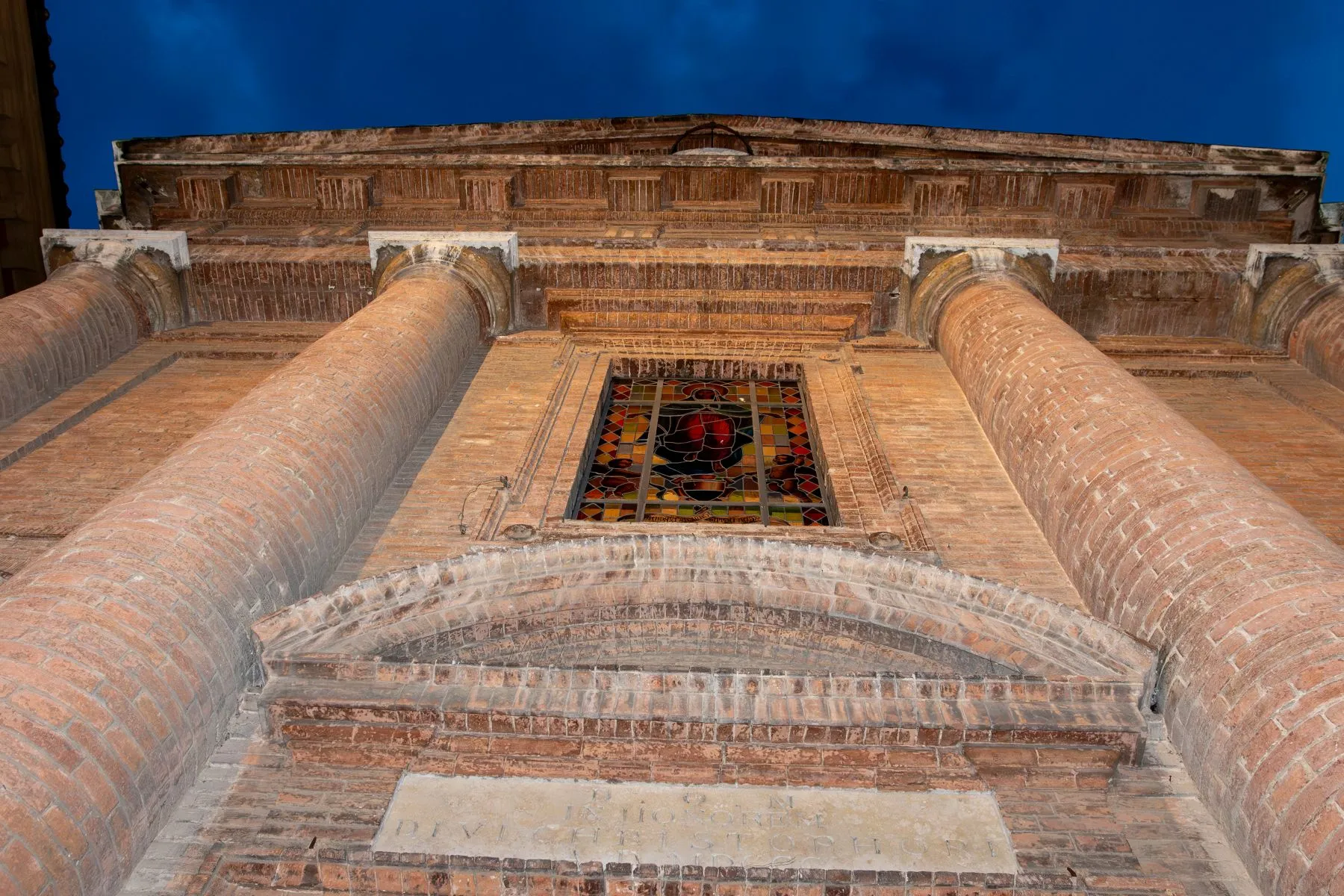
In 1260, the church was the scene of a historic decision: the Sienese decided to confront the Florentines, fighting and winning the famous battle of Montaperti. Centuries of events have marked the building: the earthquake of 1798 destroyed the facade, which today features an elegant brick front, marked by four columns and adorned with two statues, depicting Saint Catherine and Blessed Bernardo Tolomei, a work by Giuseppe Silini (1802). The empty niches on the facade are said to have been intended to host statues that were never made.
Architecture and curiosities
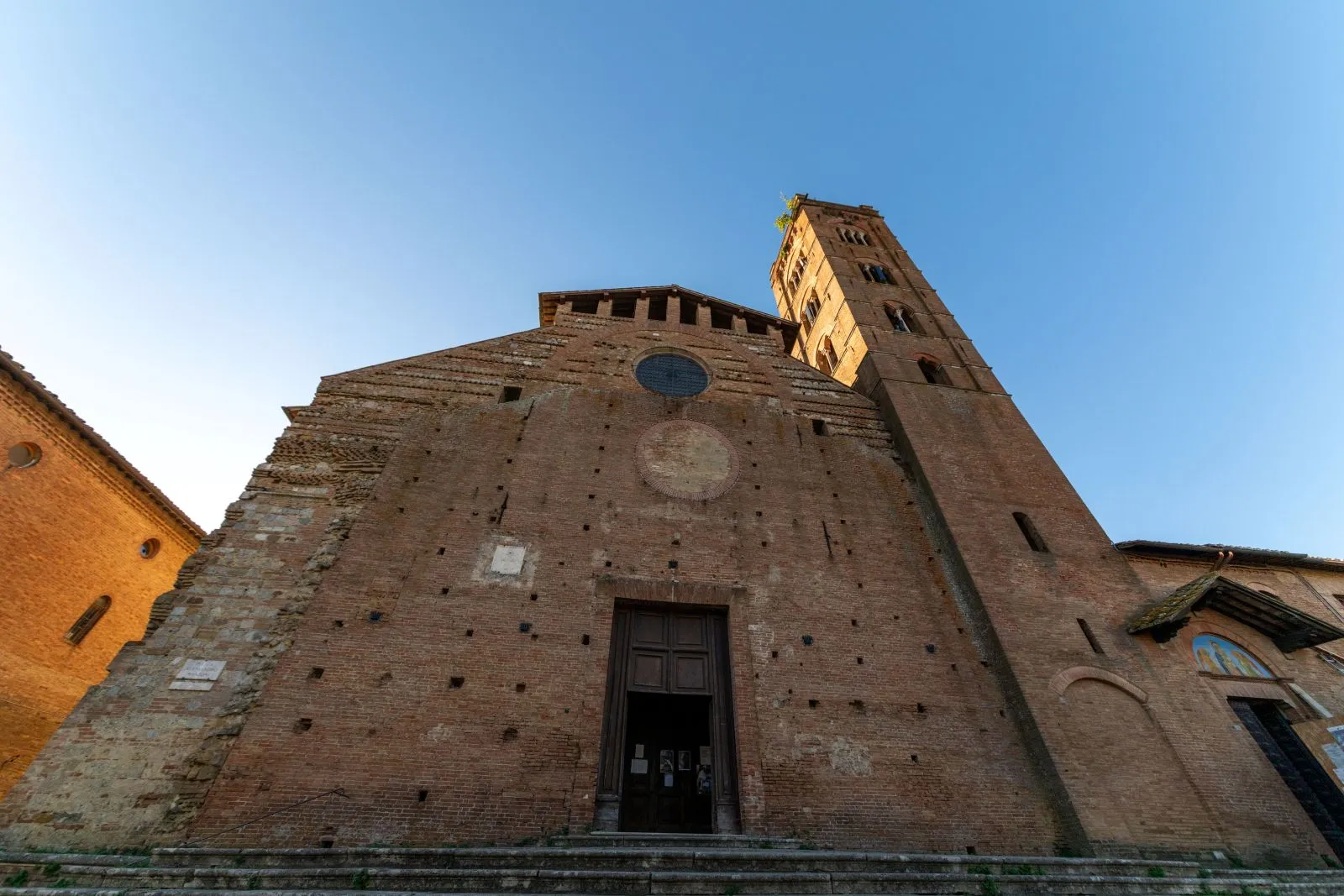
San Cristoforo is among the few Sienese churches with a detached bell tower, used according to some traditions also as a watchtower. The small Romanesque cloister, accessible from via del Moro, houses, according to a plaque, the remains of the Sienese poet Cecco Angiolieri.
During the wars between Guelphs and Ghibellines, part of the church's treasure was hidden in secret passages beneath the floor; some archaeologists believe that underground tunnels still connect the church to old cellars and nearby convents. Today the church is part of the parish of the Insigne Collegiata of Santa Maria in Provenzano and functions as an autonomous Rectory, cared for by the Daughters of the Church, intended for the liturgical and pastoral activities of university students.
Interiors and works of art
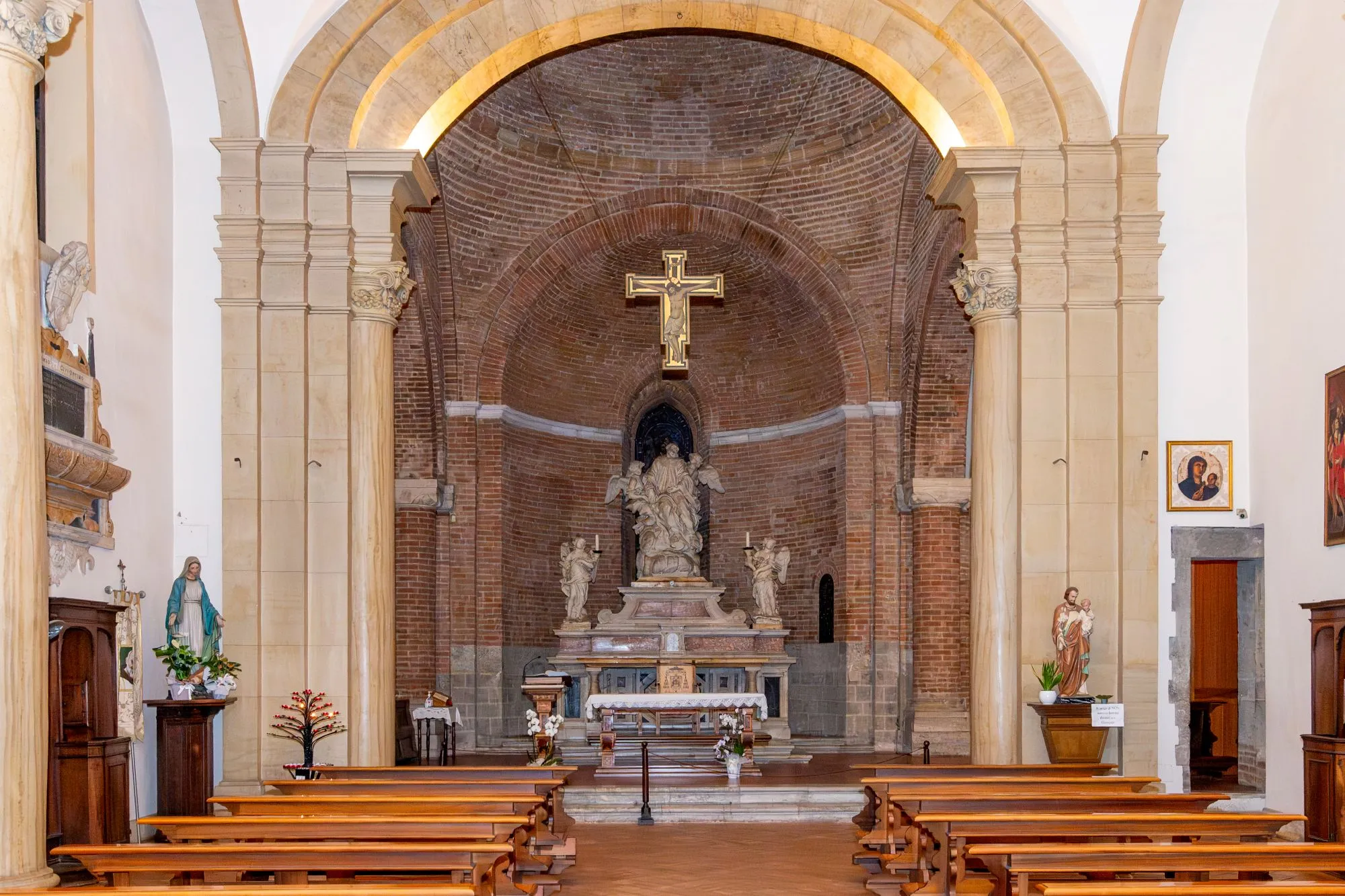
The interior has a single nave. On the left, there is the tomb dedicated to Germanico Tolomei, a work by Bartolomeo Mazzuoli, followed by the altarpiece by Girolamo del Pacchia depicting a Madonna with Child and saints. On the main altar is the Transitus of Saint Benedict (Giovanni Antonio Mazzuoli, 1693) and a Madonna with Child of Robbian style (15th century). The fragmentary frescoes from the 14th century depict the life of Saint Christopher and local saints, although many have been covered or damaged during restorations. Part of the church's works are now preserved in the Diocesan Museum of Sacred Arts.