History and legends of the church
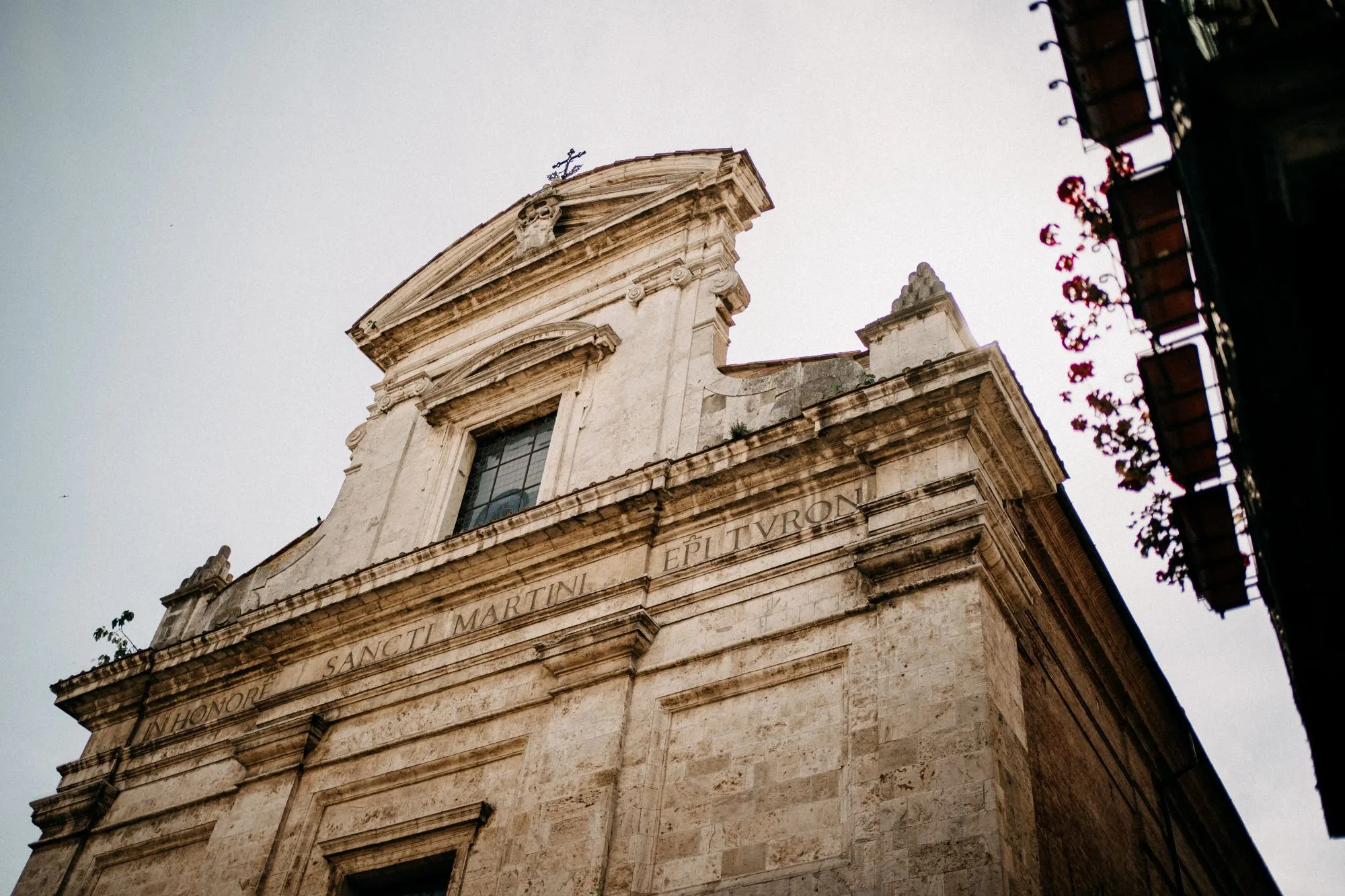
Mentioned as early as the High Middle Ages, the Church of San Martino has been renewed and expanded over the centuries, combining Gothic and Baroque elements. It was closely linked to local brotherhoods and artisans, particularly tailors and carpenters, and often served as a reference point for neighborhood processions.
A legend tells that the statue of San Martino moved its cloak by itself to protect a child who was about to fall from a ledge: since then, every year, children receive a special blessing during the saint's feast. Other minor miracles related to health date back to the 15th century.
It is also said that beneath the church there exists a hidden well, used in the past for ritual purposes or to protect precious objects during wars and looting, a curiosity much loved by the residents.
Architecture and interiors
The church features a simple structure with Gothic and Baroque elements. The interior houses frescoes from the Sienese school and paintings depicting San Martino. Remains of medieval tombs have been found, testifying to the ties with local nobles and brothers.
The pipe organ, dating back to the late 1500s/early 1600s and made by Cesare Romani, has been restored and still retains much of the original materials.
Main works Among
the most significant works of the church are:
Nativity of Jesus, Domenico Beccafumi (1524)
The Circumcision of Jesus, Guido Reni (1636)
The Martyrdom of Saint Bartholomew, Giovanni Francesco Barbieri “Il Guercino” (1637)
Madonna with Child, marble by Giuseppe Mazzuoli, placed on one of the side altars
Ceiling and dome decorated with frescoes by Annibale Mazzuoli
An experience in Siena
The Church of San Martino represents a place where art, history, and faith intertwine. Among frescoes, legends, and miracles, every visit becomes a journey into the most authentic Sienese tradition.