Origins and Construction of the Complex
The church was developed at the beginning of the Seventeenth Century within the welfare complex dedicated to the Povere Abbandonate, a congregation founded in 1580 to welcome and educate young people in difficulty. In 1601, the noble Sienese Aurelio Chigi promotes the construction of the church, which becomes the spiritual center of the Refugio. After his death, the project is carried on by Agostino Chigi and later by Fabio Chigi, future Pope Alexander VII, who supports its development.
Facade and Baroque Architecture
The marble facade, completed around 1660 and designed by Benedetto Giovannelli, represents one of the best examples of Sienese Baroque. The elegance of the lines and the presence of the papal coat of arms of Alexander VII define the solemn character of the building.
Interiors and Artistic Heritage
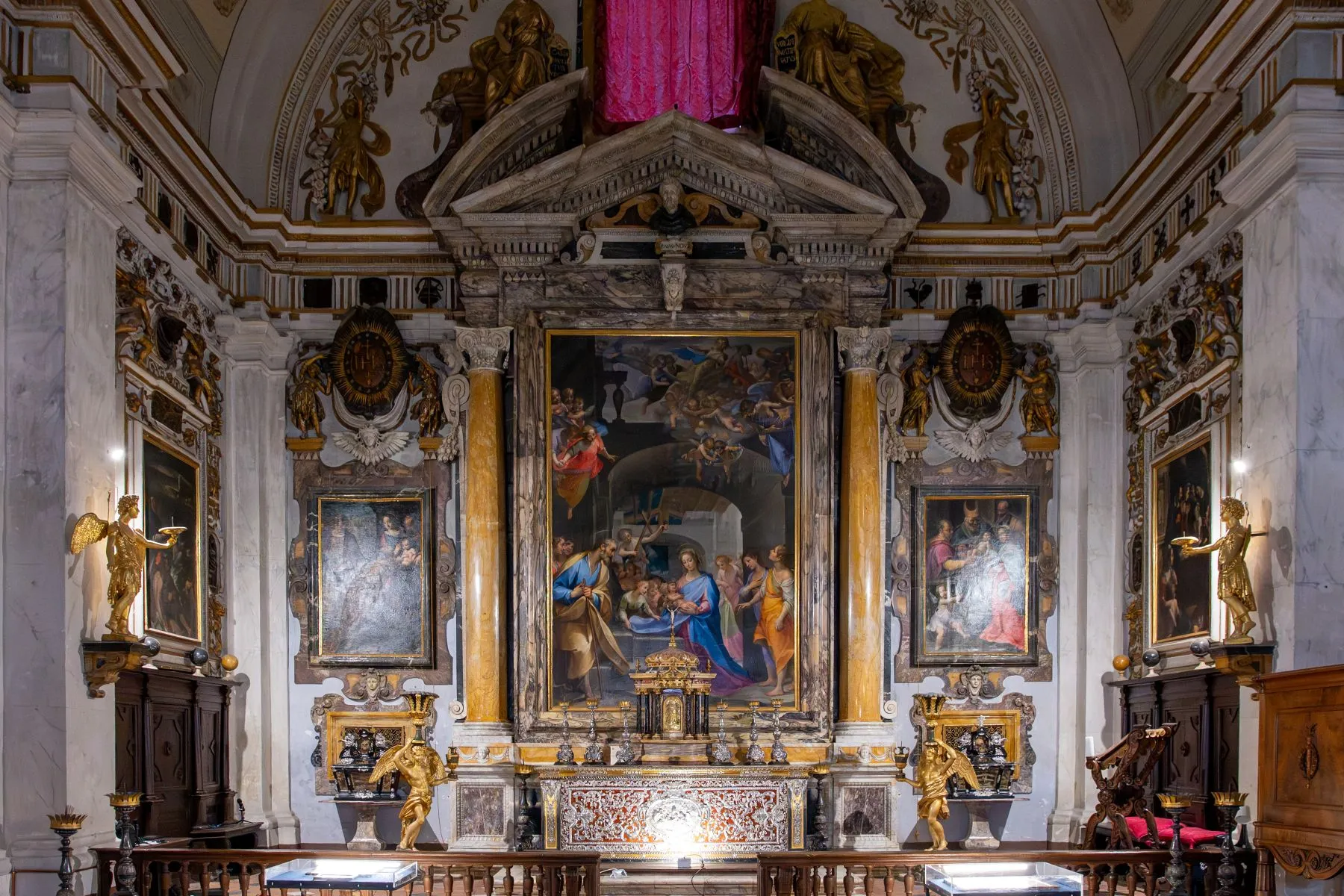
The interior houses works by the main Sienese painters of the Seventeenth Century, including Ventura Salimbeni, Francesco Vanni, Alessandro Casolani, Sebastiano Folli, and Rutilio Manetti.
The attached museum complex also preserves works from earlier periods, such as the Assumption by Domenico di Bartolo and a Saint Catherine of Alexandria attributed to Jacopo della Quercia.
Historical Value and Today
Today, the church and the historical environments are part of the Fondazione Conservatori Riuniti di Siena, which protects the heritage and allows visits through cultural and museum paths.
Its location near Porta Romana makes it a significant stop for understanding Baroque Siena and its system of welfare institutions.