Medieval origins and historical function
The church has been documented since 1175 and is mentioned in the Municipal Constitution of 1262. According to Pecci, a brief from 1284 by Bishop Rinaldo granted forty days of indulgence to those who contributed to the restoration of the church, which was already in a state of ruin.
Originally, it was meant to serve as a baptismal font and as a burial place for those who, due to wars, were far from their own reference churches.
Architectural transformations
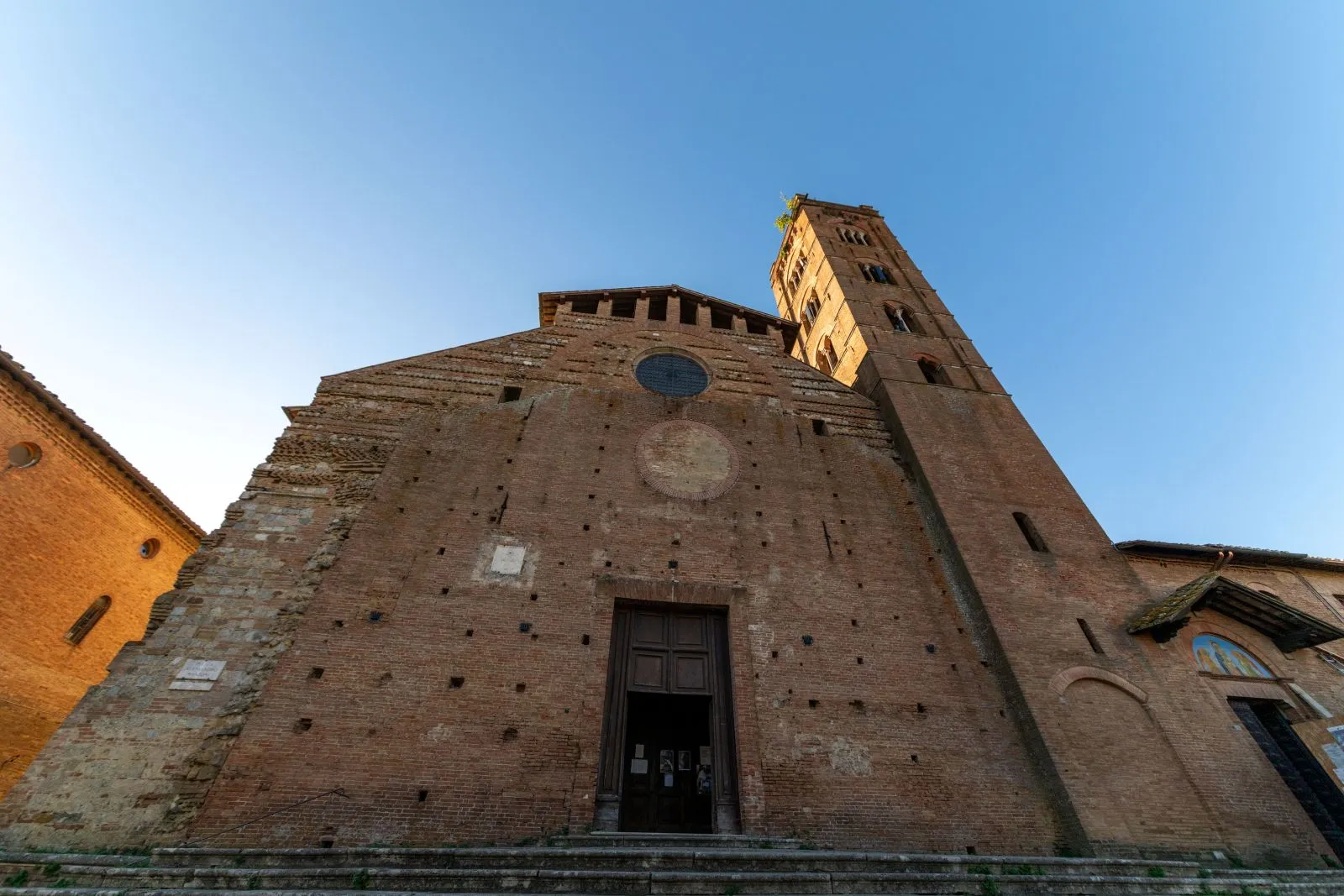
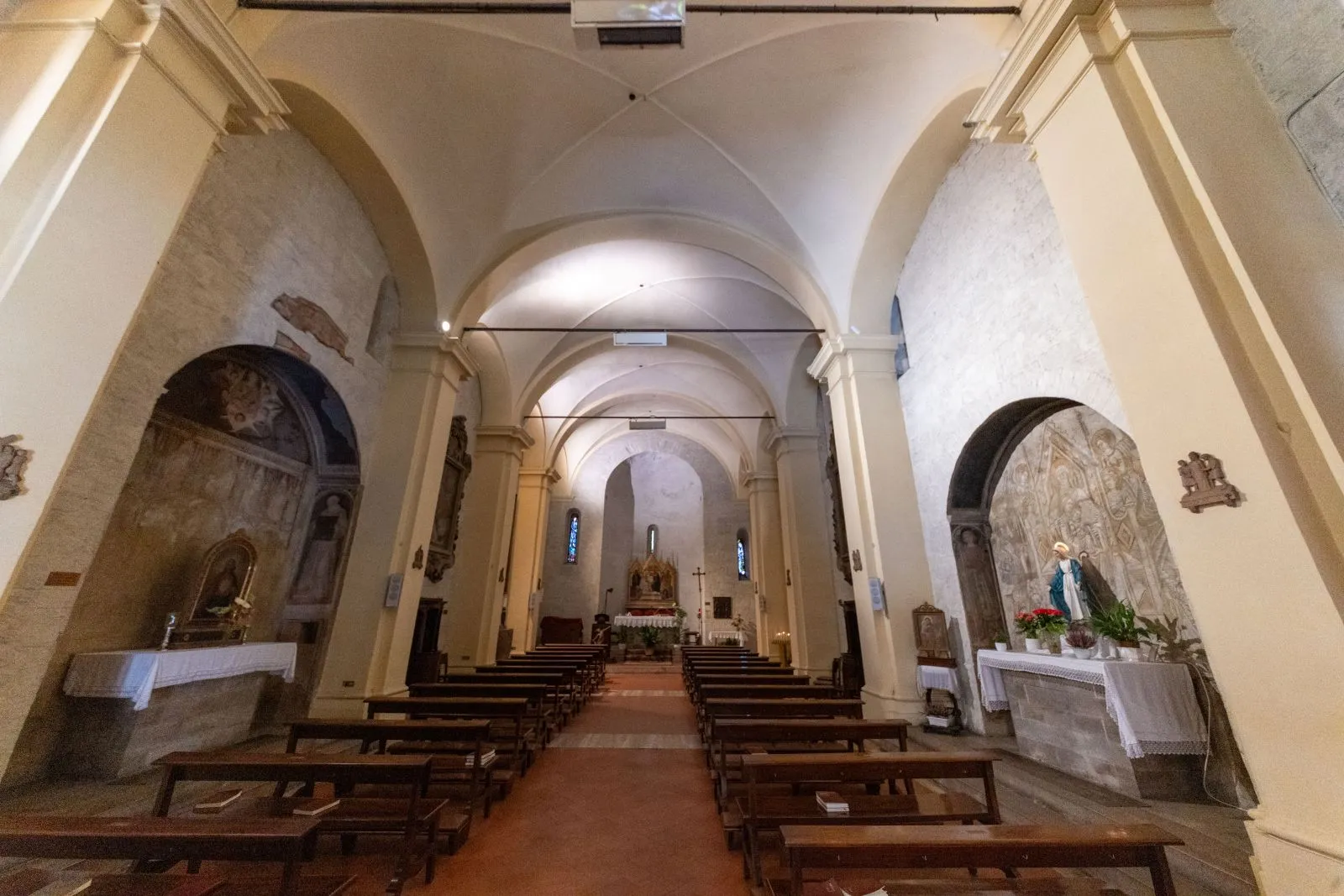
Over the centuries, the church has undergone numerous interventions, particularly in the eighteenth century and then between 1931 and 1961, when medieval structures were restored that significantly altered its appearance. Of the original structure, today mainly the apse remains, along with the Romanesque bell tower still preserved.
Artworks and artistic heritage
Inside, there are works from different eras. Among these is a Madonna with Child in stucco from the 15th century of Quercia school, a bronze Madonna, and the Baptism of Christ by Bruno Buracchini, the latter placed on the baptismal font and created in the twentieth century.
Of particular significance is the polyptych by Giovanni di Paolo from 1445, depicting the Coronation of the Virgin between Saints Peter and Andrew, located in the main altar. There are also fifteenth-century frescoes attributed to Martino di Bartolomeo, inserted in an arcosolium.
Urban context
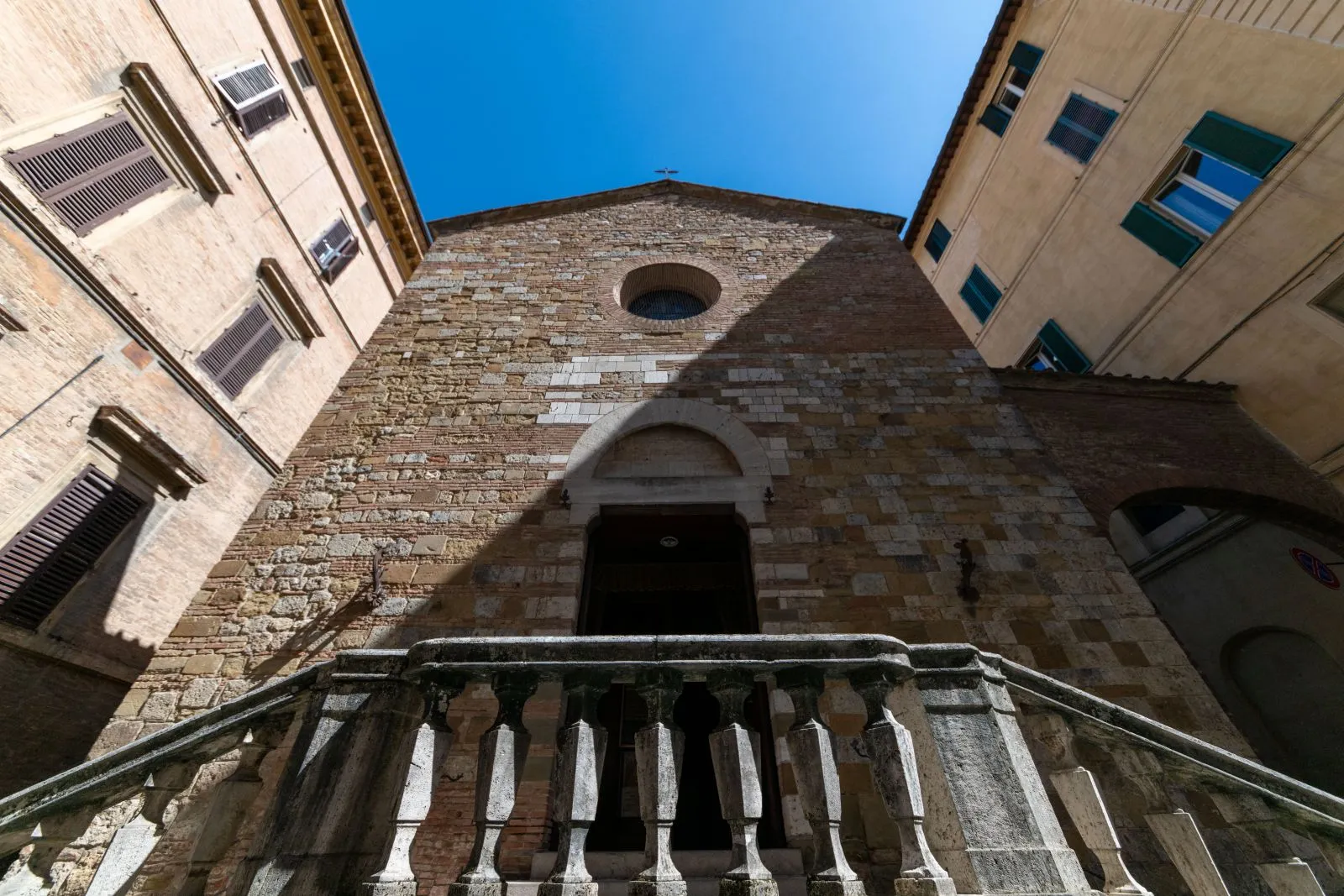
The church is located next to the chapel of Sant'Anna in San Onofrio and facing the Zondadari and Bernardi Avanzati palaces, in an urban context rich in historical stratifications in the Terzo di Camollia.