Origins and historical transformations
The Church of Santo Spirito was founded in the 14th century as a monastic complex of the Silvestrine Benedictines, later passing to the Vallombrosans and subsequently to the Dominicans in the 15th century.
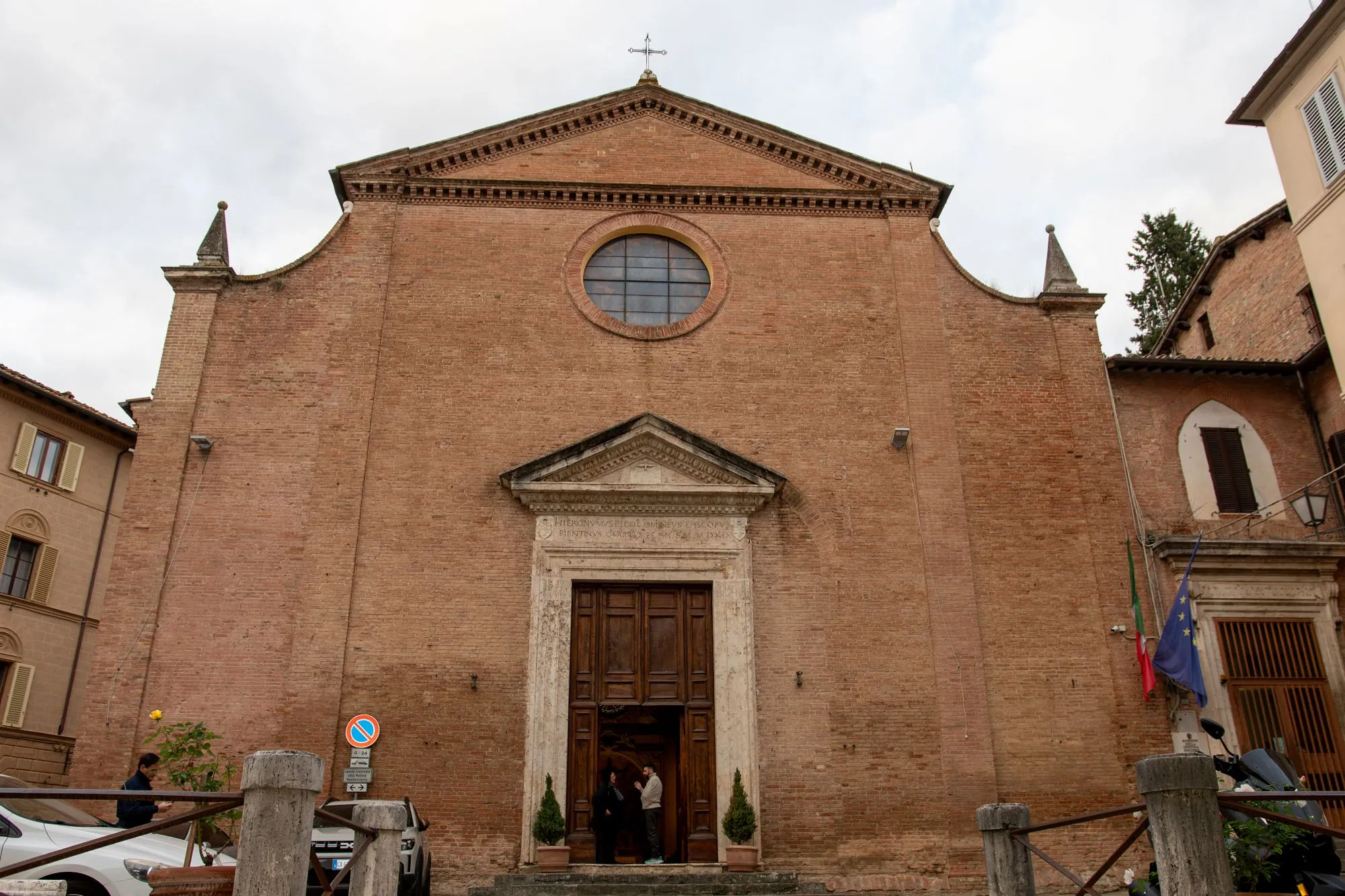
With their arrival, a nearly total reconstruction of the building began, which between 1498 and 1530 took on the Renaissance appearance still visible today.
In 1848 the convent was suppressed and transformed into a prison, with spaces adapted to cells and detention areas. Subsequently, with the cessation of its use as a prison, the complex returned to the diocese of Siena and was progressively restored.
Today the church is once again accessible thanks also to the efforts of the volunteers of the Noble Contrada del Nicchio, who manage its opening on certain days.
Renaissance architecture and structure
The brick façade in the shape of a hut reflects the typical sobriety of Sienese architecture. The Renaissance portal from 1519, attributed to Baldassarre Peruzzi, leads inside to a single nave with four chapels on each side, creating a collected and harmonious environment.
The dome with a drum, attributed to Giacomo Cozzarelli and dated 1508, integrates harmoniously into the complex, while the slightly protruding transept and the deep choir evoke the Sienese Renaissance taste. The side chapels retain Renaissance and mannerist decorations, although many works have been moved over time.
Historical identity and stratifications
Over the centuries, the church has changed its religious order multiple times, becoming a place traversed by different spiritual and community experiences. In the 16th century, the presence of the Spanish community is also documented, linked to the so-called “Chapel of the Spaniards”.
The transformation into a prison represented a sharp break from its original function, with the reconversion of the conventual spaces into detention environments.
Current value and enjoyment
Today Santo Spirito is a less known place compared to other city churches, but for this reason, it retains an authentic character. Its reopening is linked to a civic and contrada commitment that has allowed for its recovery and return to the city.