Origins and identity of the ciaccino
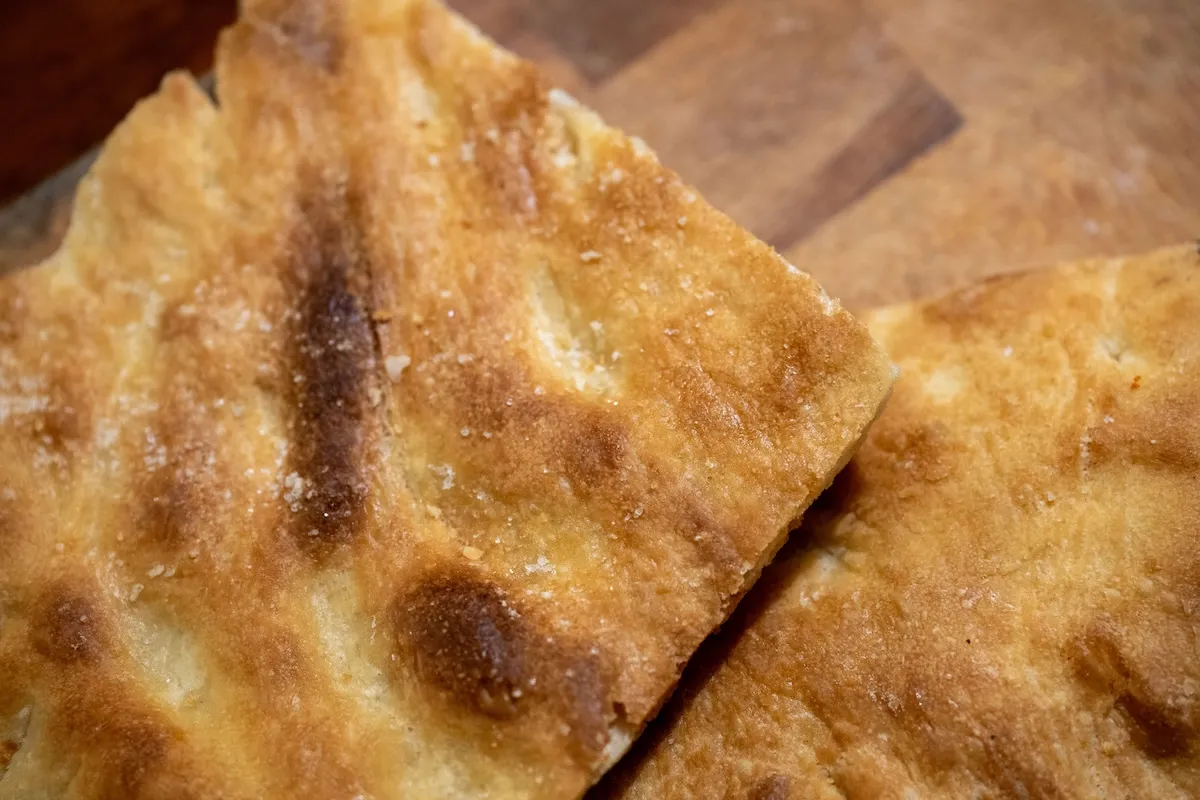
The ciaccino is a typical stuffed focaccia from Siena, made with flour, water, yeast, salt, and extra virgin olive oil or lard, which contributes to its soft and moist texture. The most common version is filled with cooked ham and mozzarella, considered by many Sienese as the “taste of childhood”.
The name derives from the Tuscan verb “ciacciare”, meaning to crush, referring to the flat shape of the dough.
Tradition and daily life
It is one of the most iconic street foods of the city, continuously produced by bakeries and pizzerias throughout the day. It is closely linked to the lives of university students, who consume it as a quick meal or snack between classes.
It is also very present during the festivals of the contrade and on Palio days, when ovens and shops are overwhelmed. The ciaccino is considered a symbol of Sienese social life: it is consumed standing, walking, and chatting during the “vasche” in the city center.
Variants and spread
The traditional cooking takes place in a wood-fired oven, which gives it a characteristic golden color and aroma. There are numerous local variants: with sausage, onions, vegetables, pecorino, or in a sweet version with raisins and nuts, celebrated also in a summer festival in Ciciano, in the municipality of Chiusdino.
Each bakery has its own recipe passed down through time, and the Sienese have very specific preferences for the “best ciaccino” in the city.
The product was born as a poor food of the peasant tradition, thought of as a simple, economical, and nutritious meal, and is now also widespread in the towns of the province.
Spread and recognizability
Its popularity has also grown thanks to television programs and chefs who have reinterpreted the recipe, helping to make it known beyond the borders of Tuscany. It is also often recommended as a snack after climbing the Torre del Mangia, to regain energy after the 400 steps.