Origin and history of black crostini
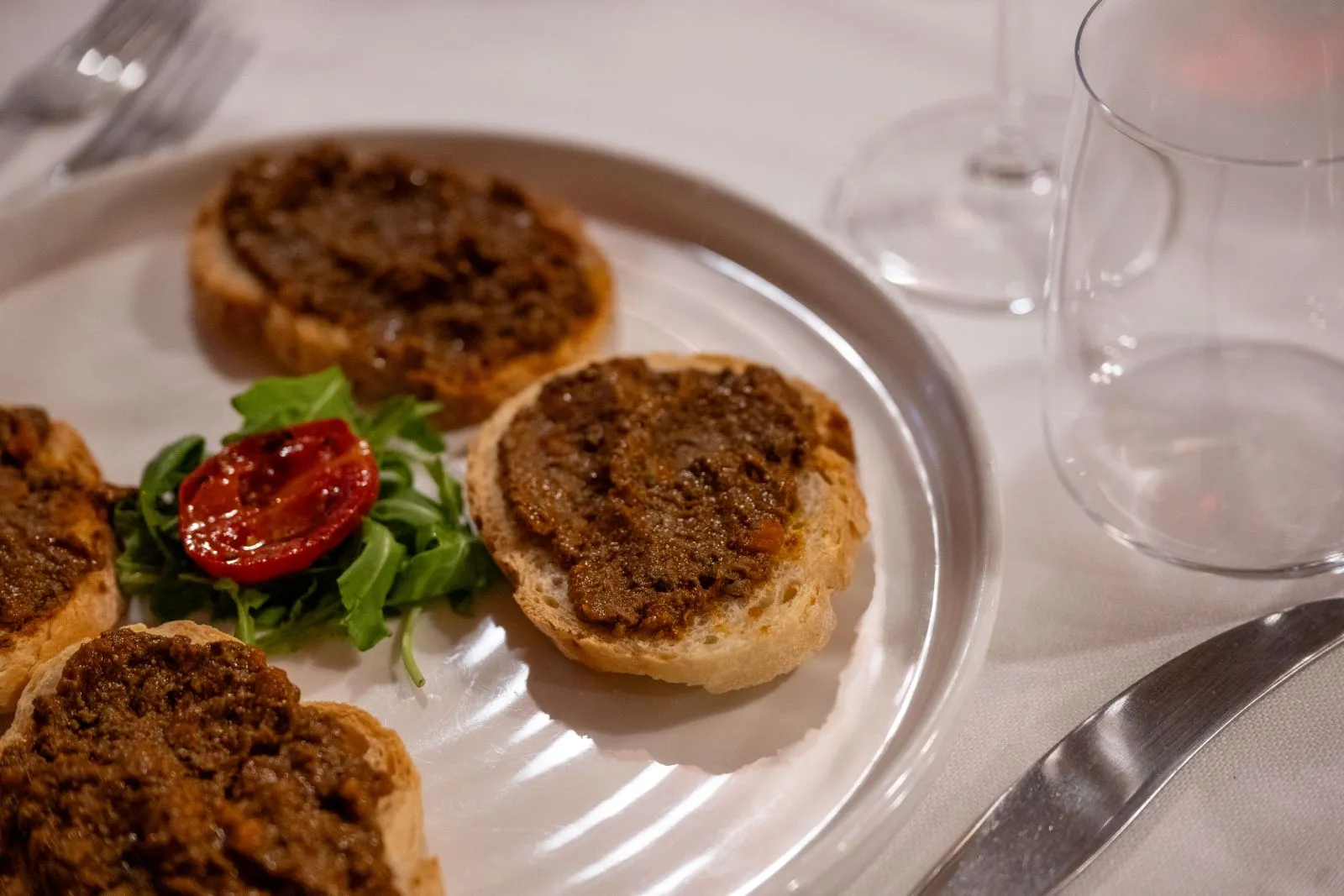
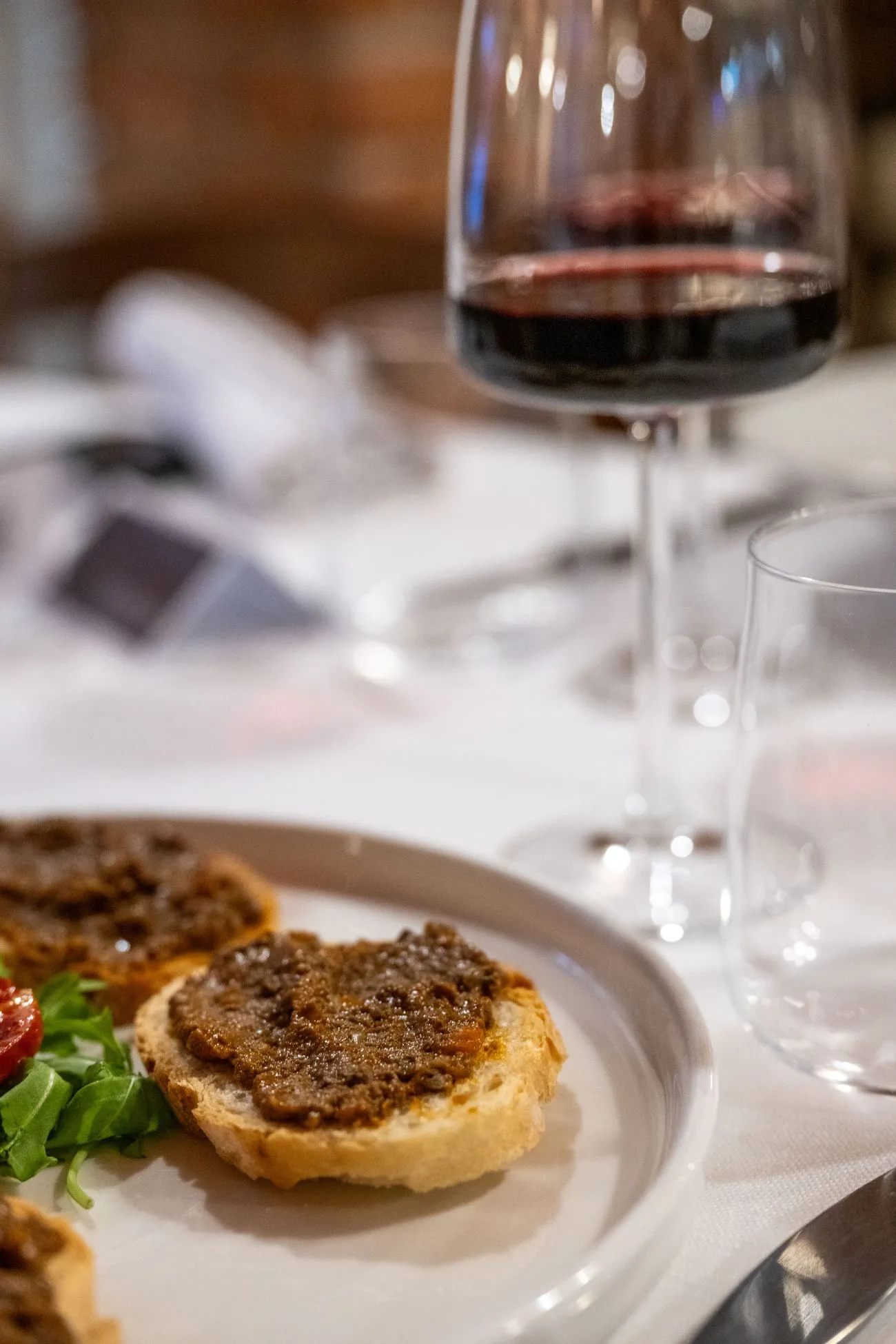
The recipe for black crostini developed between the Middle Ages and the Renaissance, when in noble kitchens the livers were enriched with salted anchovies and capers, expensive ingredients that added depth to the flavor. This meeting between poor elements and once-precious flavors well tells the dual soul of Tuscan cuisine: simple, rustic, yet intense. Their name derives from the dark color of the pâté, due to the cooking of the livers and the presence of anchovies and capers. The term “black” also serves to distinguish them from other crostini of Tuscan antipasto, such as those with mushrooms or those with green sauce.
Ingredients and preparation of the traditional recipe
The base is Tuscan bread, unsalted, whose neutrality enhances the strong flavor of the pâté and absorbs the fatty part well. In many Sienese families, the bread is slightly moistened in broth before spreading the pâté, to achieve a softer and tastier result.
The traditional pâté is prepared with chicken livers, onion, anchovies, capers, extra virgin olive oil, and a bit of broth. Some variations include a splash of vinsanto or a touch of butter for a creamier consistency.
A festive appetizer between Siena and Tuscany
In Siena and the Crete Senesi, black crostini are considered the quintessential appetizer, often served alongside cured meats, pecorino cheese, and white crostini with rigatino or sausage. They are regarded as a festive dish and appear at Christmas lunches, contrada dinners, and major family occasions.
The recipe is often passed down orally, with small differences from family to family. In some areas of Chianti, the pâté is served hot, freshly made, while in Siena it is more common to find it warm or at room temperature.
Black crostini continue to tell a tradition made of taste, memory, and identity, becoming one of the most authentic expressions of the Tuscan table.