The Majesty of Duccio di Buoninsegna: much more than a masterpiece
A silent procession, almost a city mourning
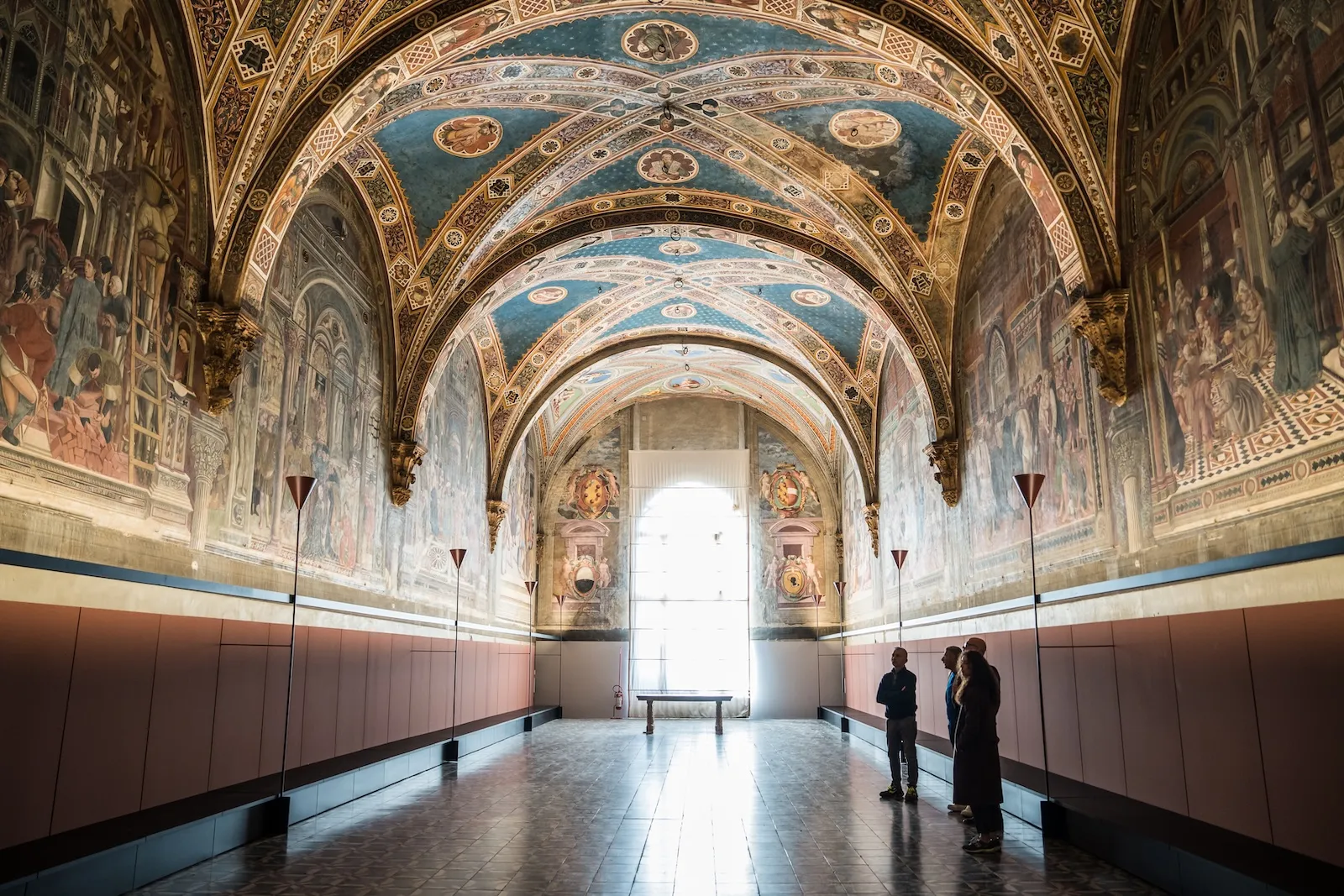
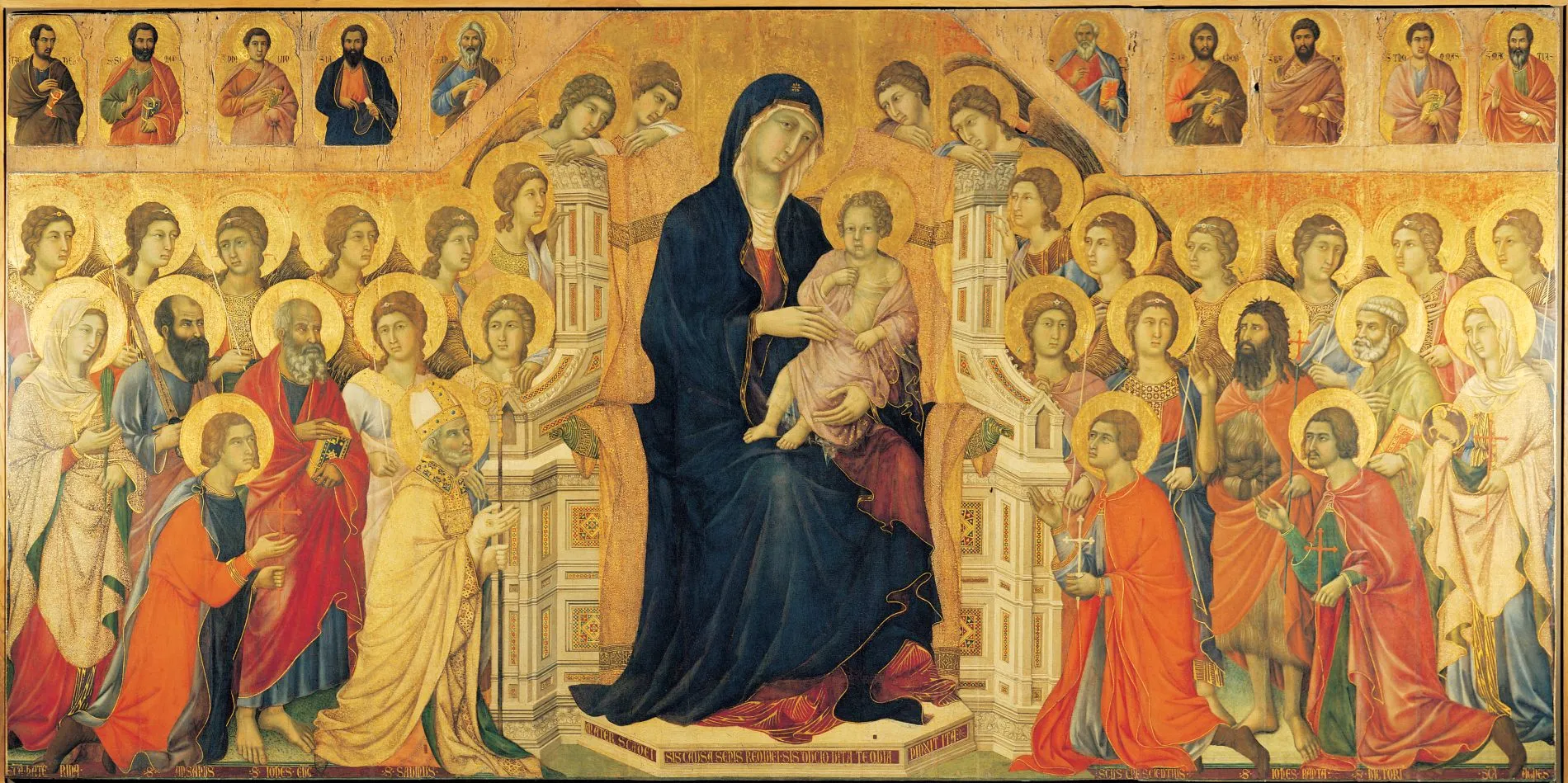
In 1506, the Majesty of Duccio di Buoninsegna was removed from the Cathedral. It was not a simple relocation: chronicles tell of a silent procession through the streets of Siena, almost a collective mourning. For centuries, that work had been considered a sacred protection for the city, not a painting, but a divine stronghold. Today, the Majesty is preserved on the first floor of the museum, and seeing it in person is an experience that no photograph can replicate. It is painted on both sides, the Virgin on the throne on the front, the life of Christ on the back. The faithful would walk around it, performing a physical, almost liturgical gesture, to see it in its entirety. A work that demanded participation, not passive contemplation.
The sculptures, the stained glass, and the Treasure: a journey through wonders
The statues of Giovanni Pisano: rejected, then rediscovered
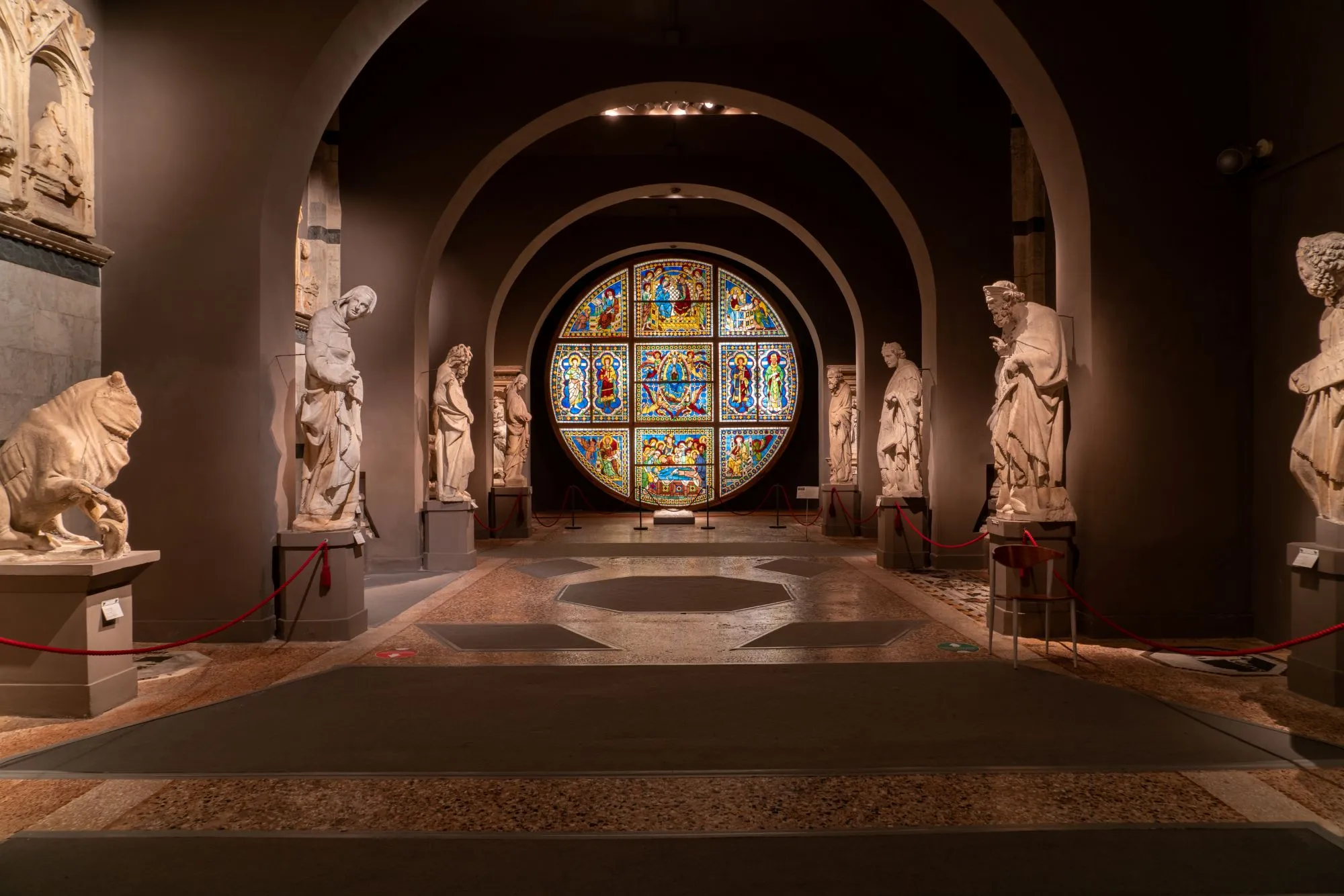
On the ground floor, you are welcomed by one of the most surprising collections of 14th-century Sienese statues, many of which are the work of the sculptor Giovanni Pisano: Sibyls, Prophets, and Philosophers of antiquity in white marble, which were originally placed on the facade of the Cathedral. The Renaissance taste had deemed them outdated. Today, they receive the admiration they deserve once again.
The stained glass of Duccio: six meters of medieval light
At the end of the hall stands one of the most astonishing works of the complex: the large stained glass of Duccio di Buoninsegna, six meters in diameter filtering light in a riot of colors. In the vertical band, three stories of the Virgin, the Burial, the Assumption, the Coronation. In the triangular spaces, the Evangelists on thrones and on the edges, the four patron saints of Siena: Bartolomeo, Ansano, Crescenzio, and Savino. A work that is not merely looked at: it is inhabited.
The Treasure Room: two hundred objects of absolute devotion
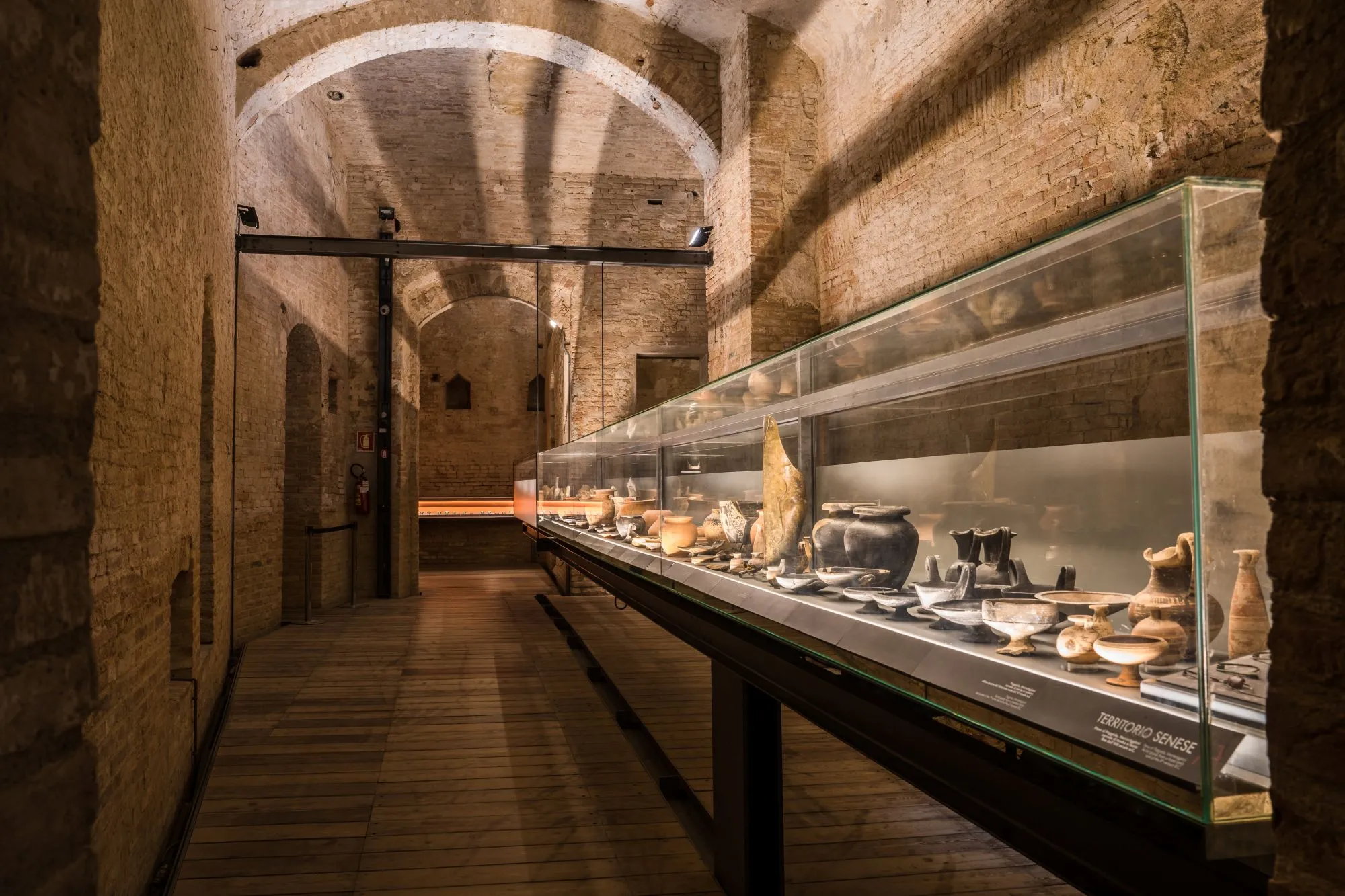
Over two hundred liturgical furnishings, chalices, reliquaries, and sacred objects of rare craftsmanship: the Treasure Room is one of the densest and most precious spaces in the entire museum. Rich and important is the section dedicated to chalices.
Wooden sculpture, illuminated manuscripts, and panel paintings
In the small rooms adjacent to the Majesty Room, a refined collection of medieval wooden sculpture and illuminated manuscripts reveals the richness of the lesser Sienese artistic production, lesser only in size, never in quality. On the top floor, three rooms host the collection of panel and canvas paintings of sacred subjects from the Cathedral: a silent and luminous epilogue to a journey that never ceases to amaze.
The terrace: see the Cathedral as the medieval masters saw it
A view reserved for centuries for a few chosen ones
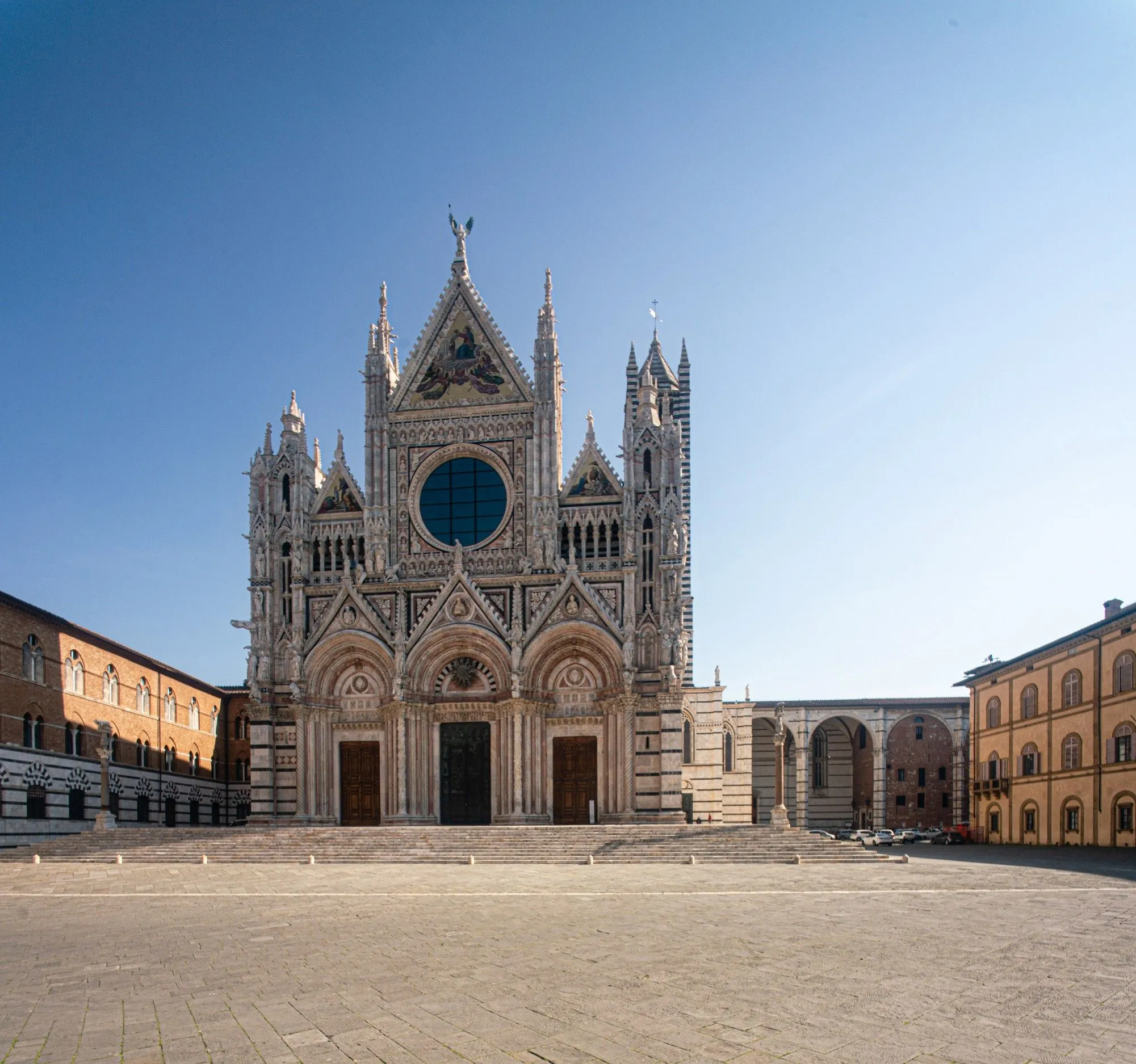
There is a privilege that the museum grants you, which for centuries was reserved only for workers and masters of art: to climb the terraces of the Museum of the Opera and find yourself face to face with the tall sculptures of the Cathedral's facade. From up here, the facade of the Cathedral of Siena reveals itself in all its complexity, details that remain invisible from the square, proportions that gain a new sense from above. It is one of those viewpoints that change the way you look at everything else.
Why the Museum of the Opera is a must-see in Siena
Seven centuries of history in a place still alive
The Opera del Duomo is one of the oldest secular institutions in Siena: it has existed since the Middle Ages and for centuries managed contracts, salaries, materials, and even fines for those who worked poorly. It is proof that beauty, in Siena, has always been a serious matter. Visiting this museum means coming into contact with that seriousness, that care, that collective devotion that made everything you see possible.
A place that was born to safeguard what seemed no longer useful. And that today safeguards some of the most precious things humanity has ever created.