History and architecture of the Rocca
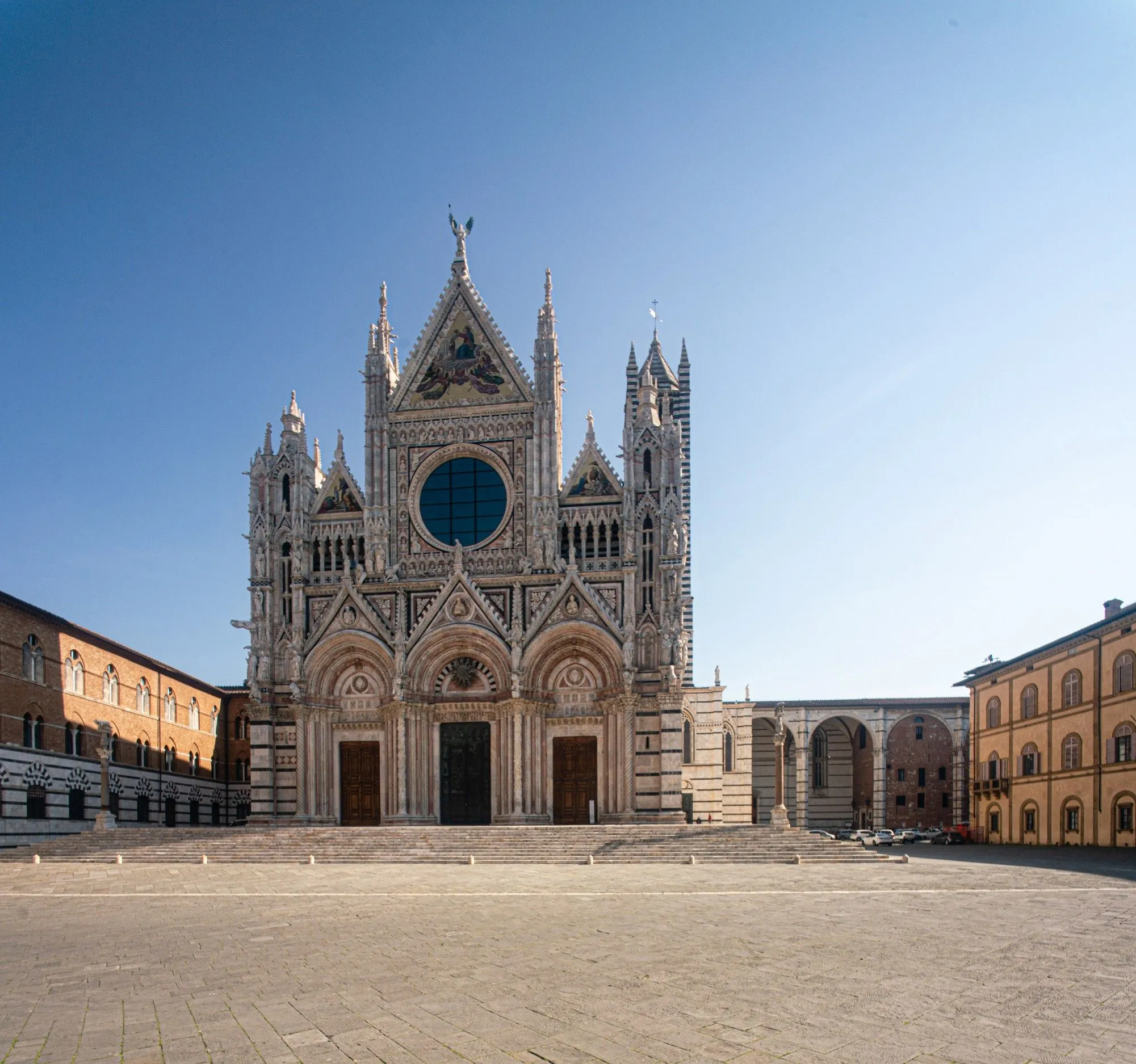
The Rocca Salimbeni was built between the 12th and 13th centuries as a fortress of the Salimbeni family, and still preserves the original tower, the medieval warehouse, and the signs of the defensive structure that dominated the district before the Republic of Siena took possession of it in 1419.
The current appearance is the result of the major 19th-century restoration by Giuseppe Partini, which transformed the entire complex into an elegant neo-Gothic ensemble, a symbol of solidity and history.
The Museum and the collections
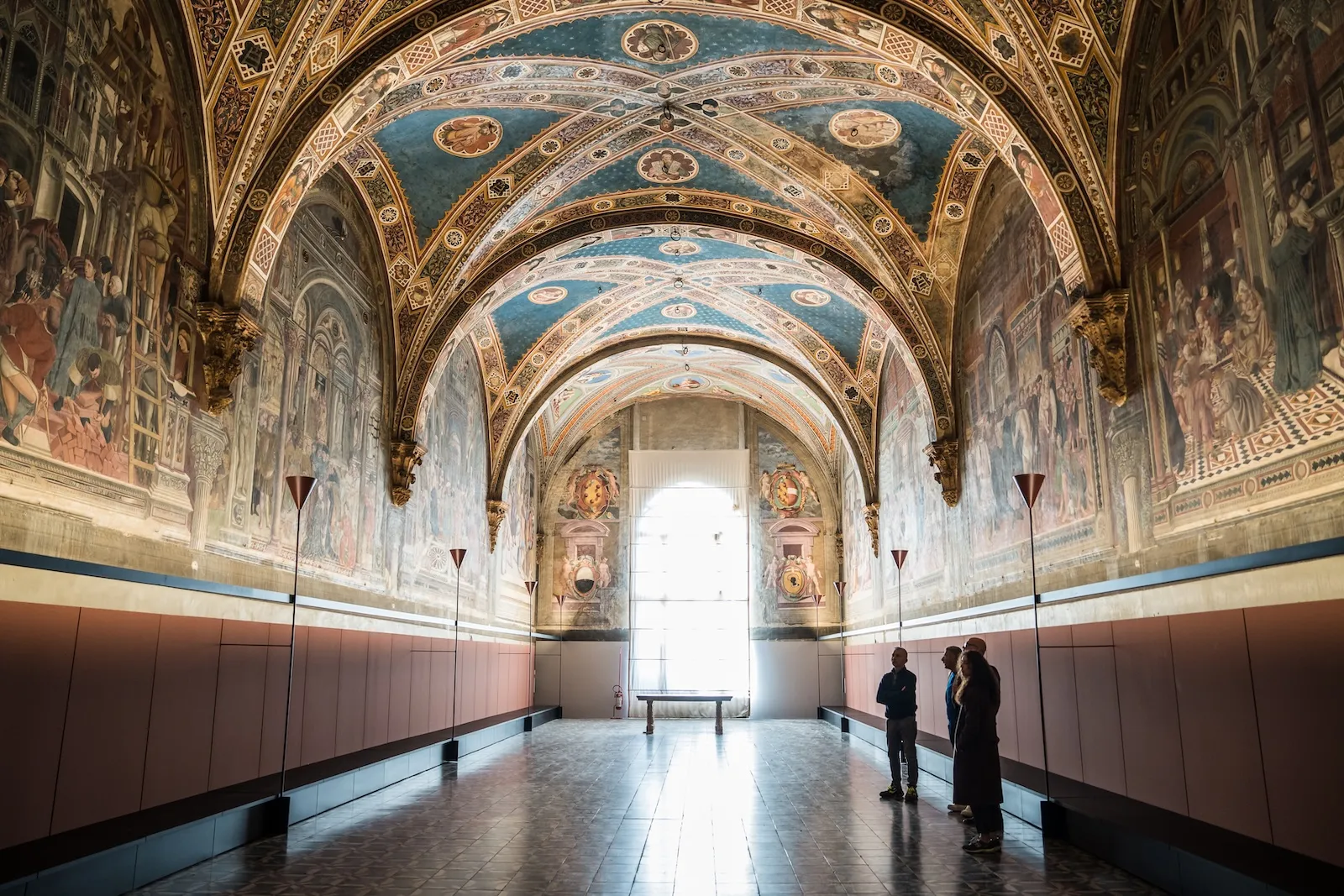
Inside the former church of San Donato, deconsecrated after the Napoleonic suppressions and acquired by Monte dei Paschi in 1925, the museum houses about 55,000 works including paintings, sculptures, sacred furnishings, illuminated manuscripts, and precious objects.
Among the masterpieces, works by Pietro Lorenzetti, Sassetta, Domenico Beccafumi, Arcangelo Salimbeni, Francesco Vanni, and Amos Cassioli stand out, narrating the artistic evolution of the city from the Middle Ages to the 19th century. Many works come from ancient churches, private collections, or targeted acquisitions, making the museum a true guardian of Sienese memory.
Spaces and paths
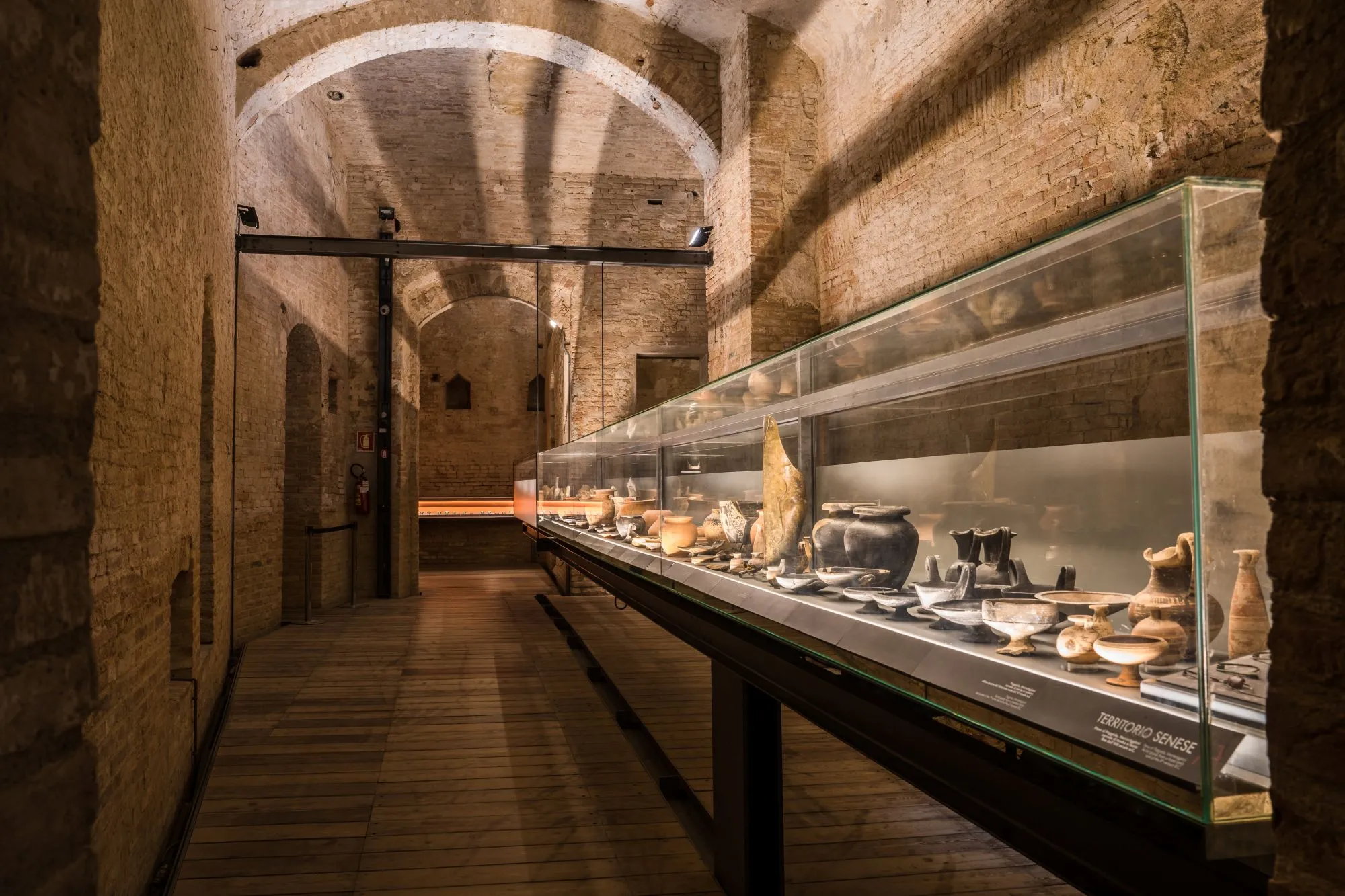
The visit also offers the opportunity to discover the architectural spaces of the Rocca: the medieval warehouse, the inner courtyard, and the scenic spiral staircase designed by Pierluigi Spadolini in 1959, where ancient and modern harmoniously dialogue.
The soft light, the restored vaults, and the silence enveloping the works create an immersive and contemplative experience, making each visit unique. The limited opening to a few dates each year transforms the visit into a rare and precious occasion, to be experienced slowly to savor every detail.