Before even tasting it, you see it
Looking at the landscape surrounding Siena, there is something that always comes back: the rows of vines, the cypress trees, the farms on top of the hills. And then there are the olive trees, with their twisted branches and silver foliage that changes color with the wind. The olive tree is not just a plant: it is a fundamental component of that landscape that has made the Sienese countryside recognizable all over the world. Cultivated in much of the province, especially in the hilly areas where it finds ideal conditions of soil and exposure, the olive tree of Siena carries with it a history that dates back to the Fall of the Roman Empire, when cultivation spread in monasteries and religious communities. From the Renaissance onwards, the agricultural policies promoted by the Medici gave new impetus to a tradition that has never stopped.
October arrives and everything changes
The harvest: one of the most important moments of the year
Between October and December, in the Sienese countryside, the rhythm slows down and focuses. It is the time of the olive harvest, one of the most important events of the agricultural year, when families, farmers, and producers return among the trees with nets and hands. An ancient gesture, repeated every year, that transforms olives into something precious. The air is fragrant with grass and wet earth, and in the cellars of the mills, the work begins that will give life to the new oil: thick, green, with a scent unlike any other.
The brands that guarantee quality
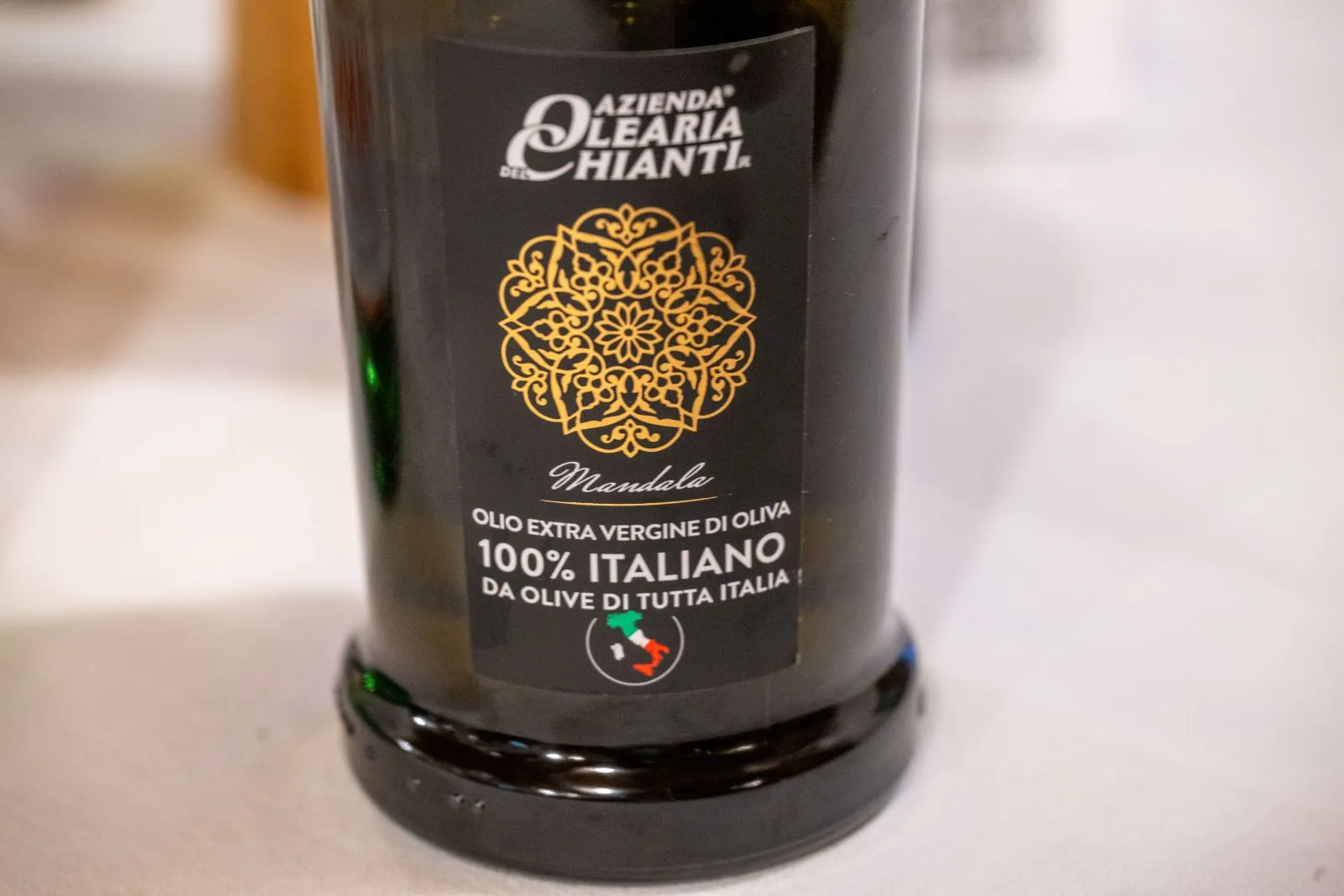
Not all oils are the same, and Siena knows this well. Among the local products stand out the DOP Terre di Siena, with the varieties frantoio, correggiolo, leccino, and moraiolo, the DOP Chianti Classico, and the IGP Toscano. Brands that protect a product that comes from a specific territory, from specific varieties, from hands that know each tree by name.
How it comes to the table
The Sienese oil does not hide behind other ingredients: it accompanies them, enhances them, completes them. It can be found on bruschetta with new oil, where just a slice of toasted bread is enough to understand everything. It is found in traditional soups, in vegetables and pinzimonio, in grilled meats. A green and fragrant thread that runs through all Sienese cuisine, from the simplest to the most elaborate.
Siena and oil: a bond that goes beyond the table
Siena is part of the national association of Cities of Oil, which brings together Italian municipalities linked to the olive-growing tradition. It participates in initiatives such as the Walk among the Olives and hosts experiences of visiting mills and tasting new oil that allow you to experience this tradition from the inside. Walking through Terzo di San Martino, you also encounter Via dell'Oliviera, whose name derives from the possessions of the ancient family of Olivieri or from the presence of a place for collecting and storing olives before pressing. A name that, as often happens in Siena, tells more than it seems.