Origins and medieval spirituality
The oratory dates back to the 14th century and is dedicated to Saint Ludovico of Toulouse and Saint Gherardo, two central figures of medieval devotion. Saint Ludovico, Franciscan bishop, represents humility and renunciation, while Saint Gherardo is associated with charity and assistance to the needy.
Its location, close to ancient areas of assistance and brotherhoods, confirms its original function: a place of prayer but also of service to the community and a point of reference for travelers entering from the southern part of the city.
Essential architecture and intimate space
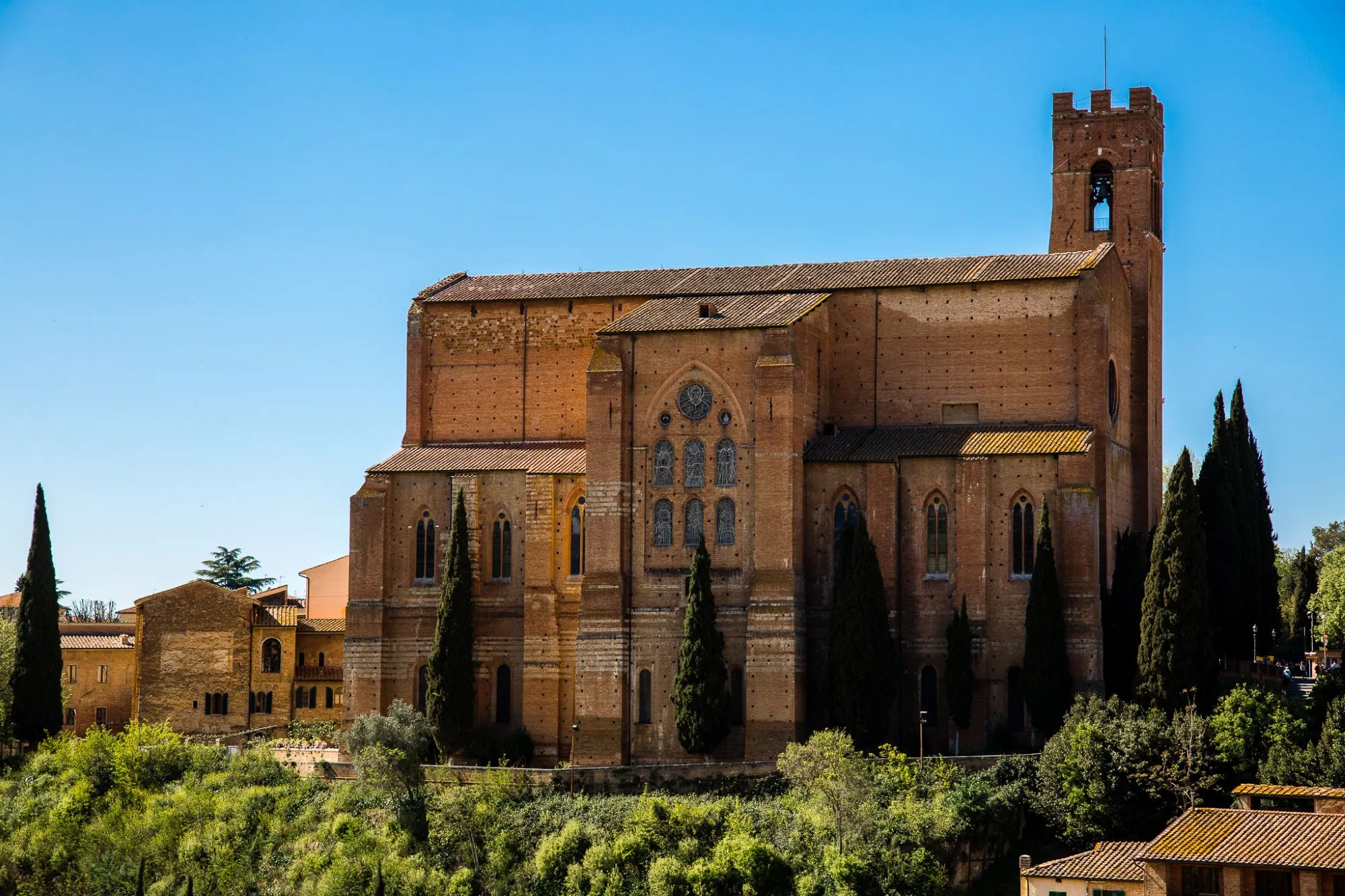
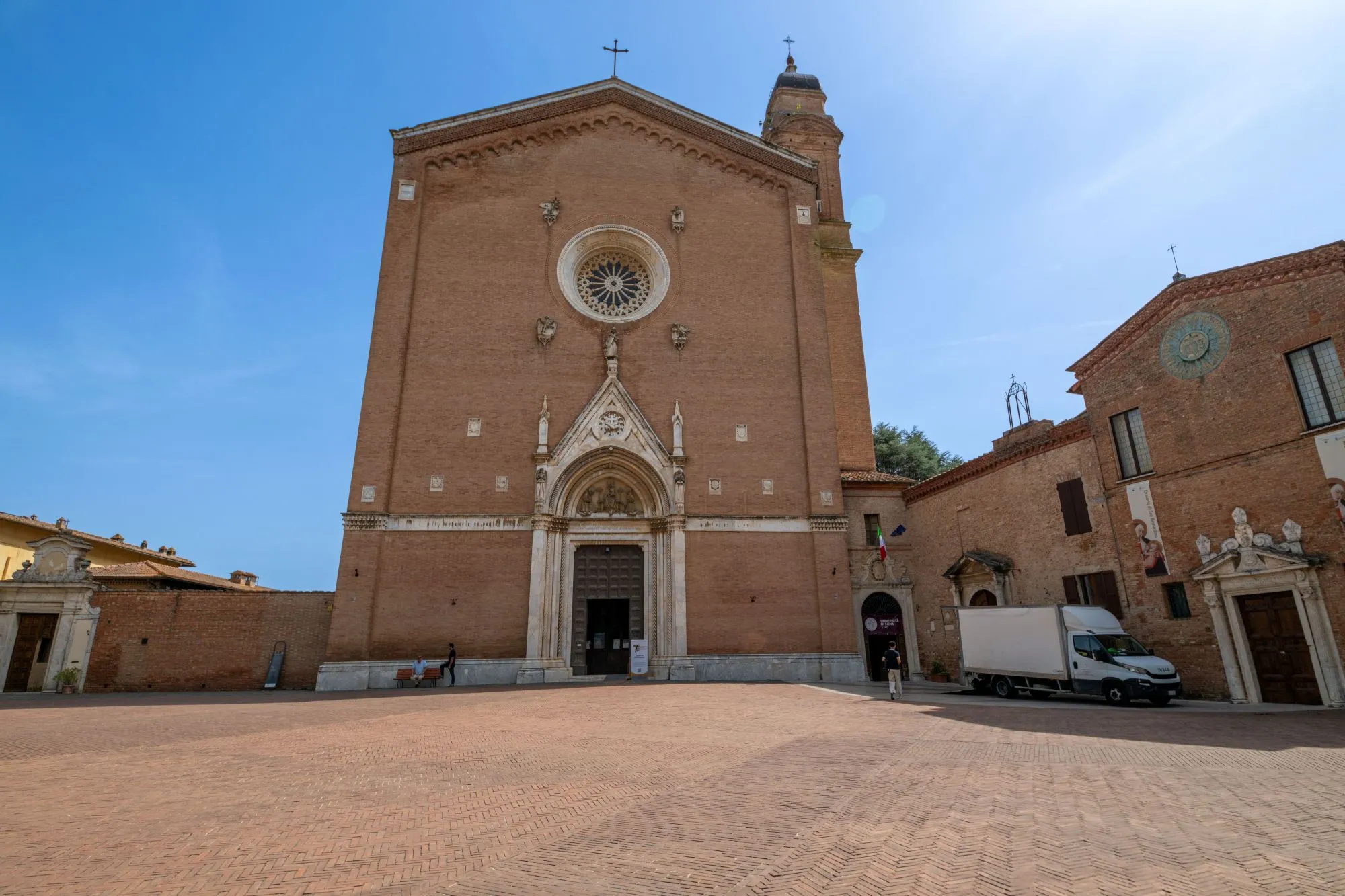
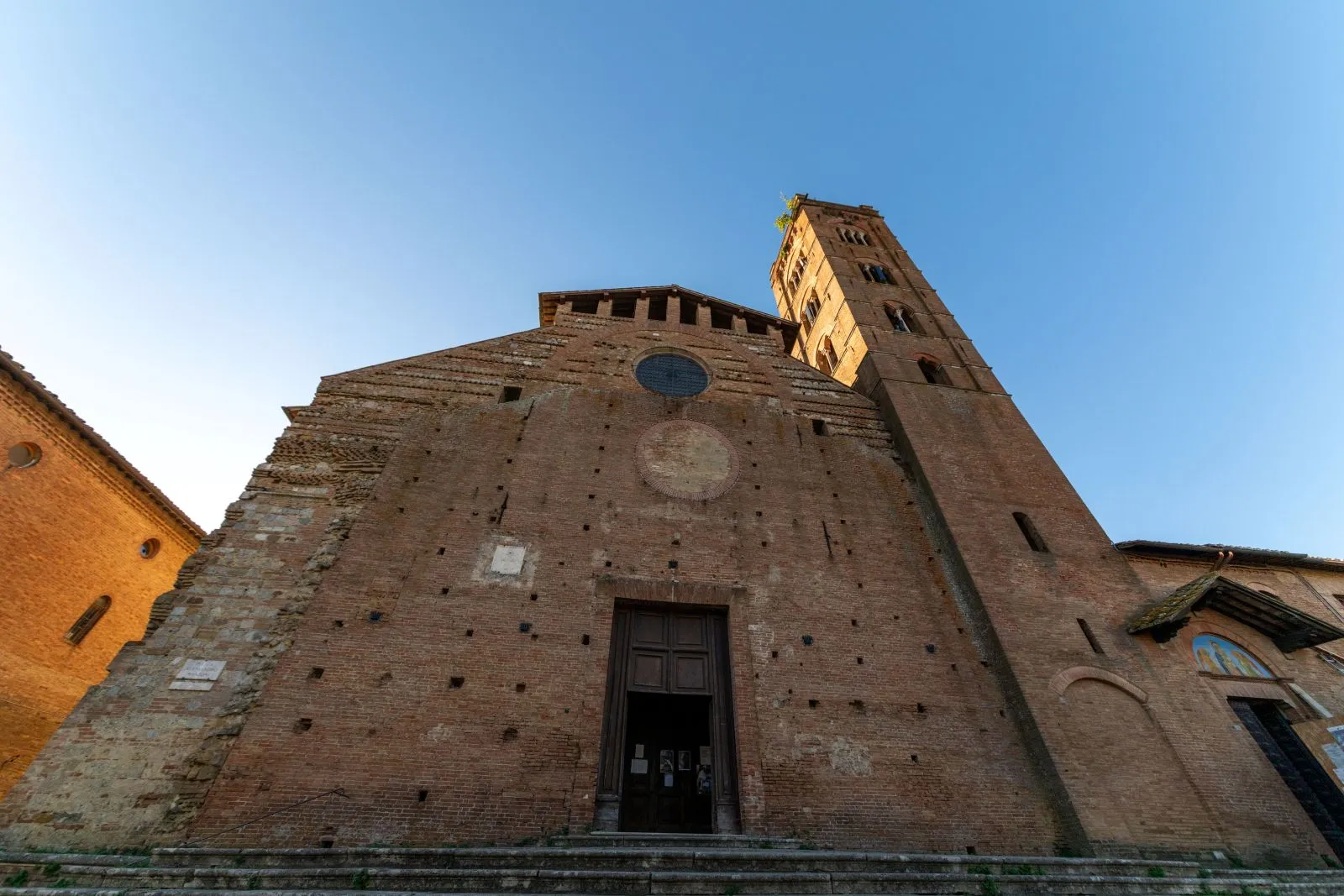
The building retains a simple and sober Gothic structure, with a brick facade, an undecorated portal, and a single nave interior. It is a collected and silent space, designed to welcome rather than to amaze.
Frescoes and traces of devotion
On the internal walls, fragments of frescoes from the 14th and 15th centuries are preserved, attributed to Sienese painters close to the school of Bartolo di Fredi, Taddeo di Bartolo, and Andrea di Bartolo. These are fragmentary images featuring saints, votive figures, and geometric decorations, testimony to the daily devotion of the faithful.
Over the centuries, the oratory has hosted Marian panels, images of the titular saints, and ex-votos left by the faithful. Many of these works are now preserved in museums or depositories, but continue to be part of the memory of the place.
Once, there were also decorated wooden altars, candelabra, liturgical objects, and embroidered fabrics from the brotherhoods, elements that tell of a simple and concrete community life.
Some frescoes were covered over the centuries and brought to light only thanks to modern restorations. Saint Gherardo was also particularly venerated by workers of the minor arts, who considered him a protector close to their daily lives.
Brotherhoods and community
The oratory was the seat of lay brotherhoods engaged in prayer, assistance to the poor, care for the sick, and burial of the dead. These entities represented true social networks of medieval Siena, long before the birth of modern contrade.
For centuries, the oratory has also been a gathering point for small neighborhood communities, linked to the daily life of the district.