From darkness to light, suddenly
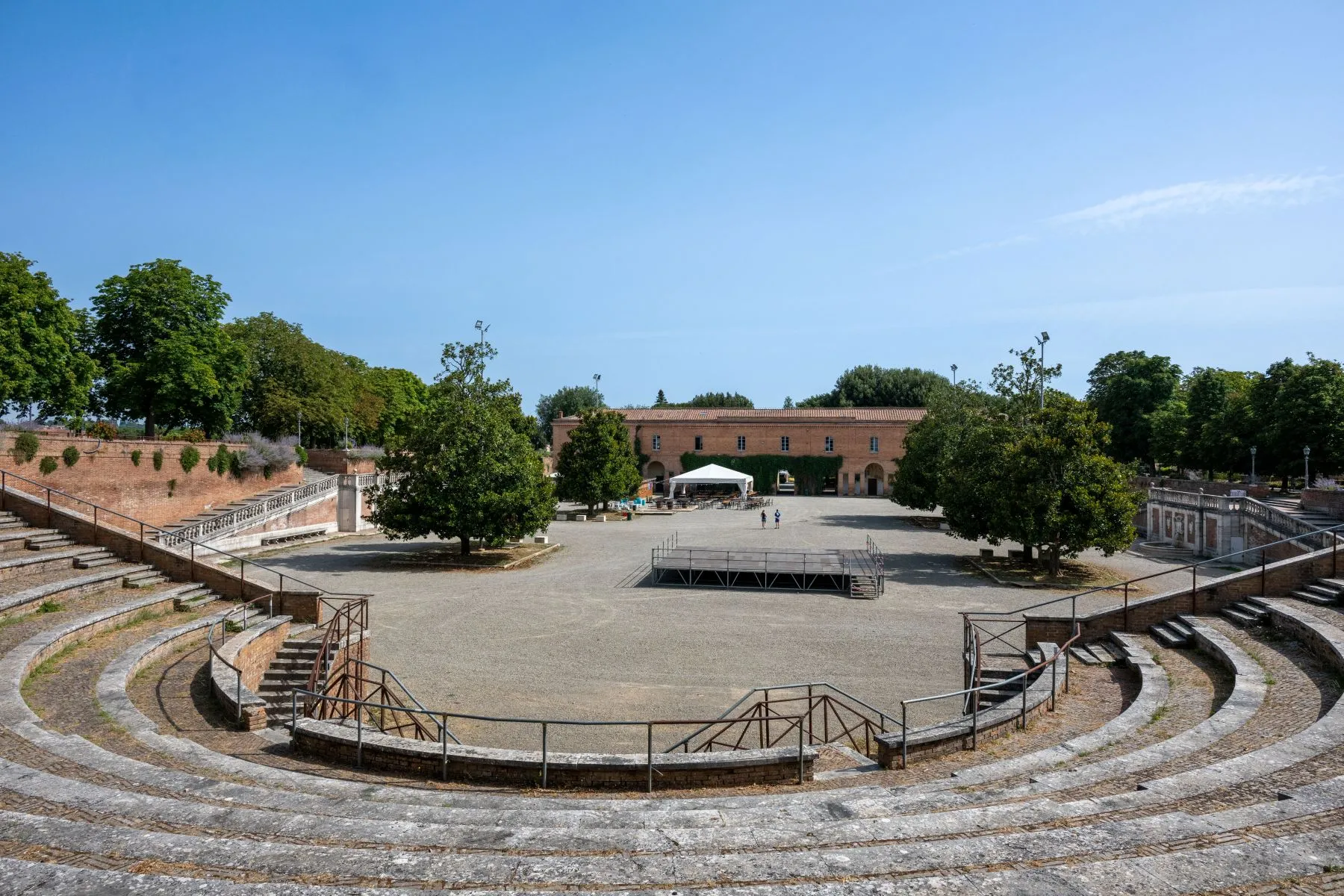
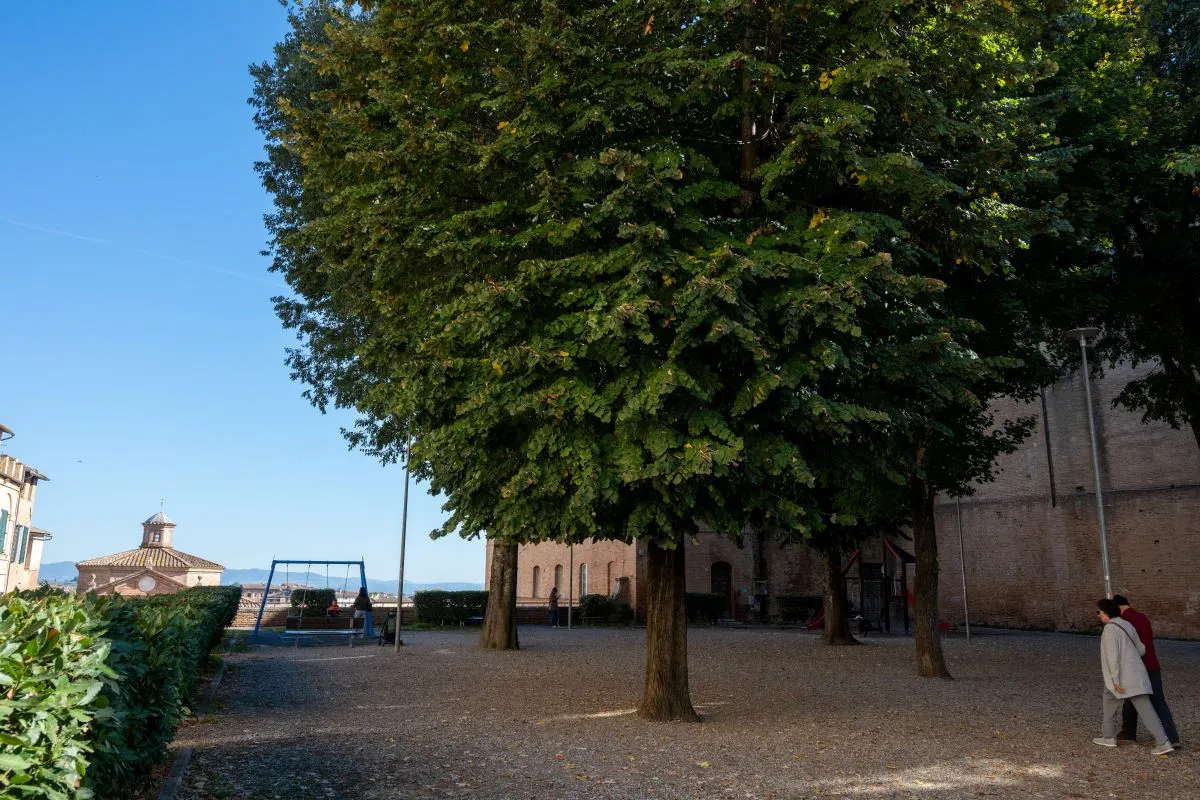
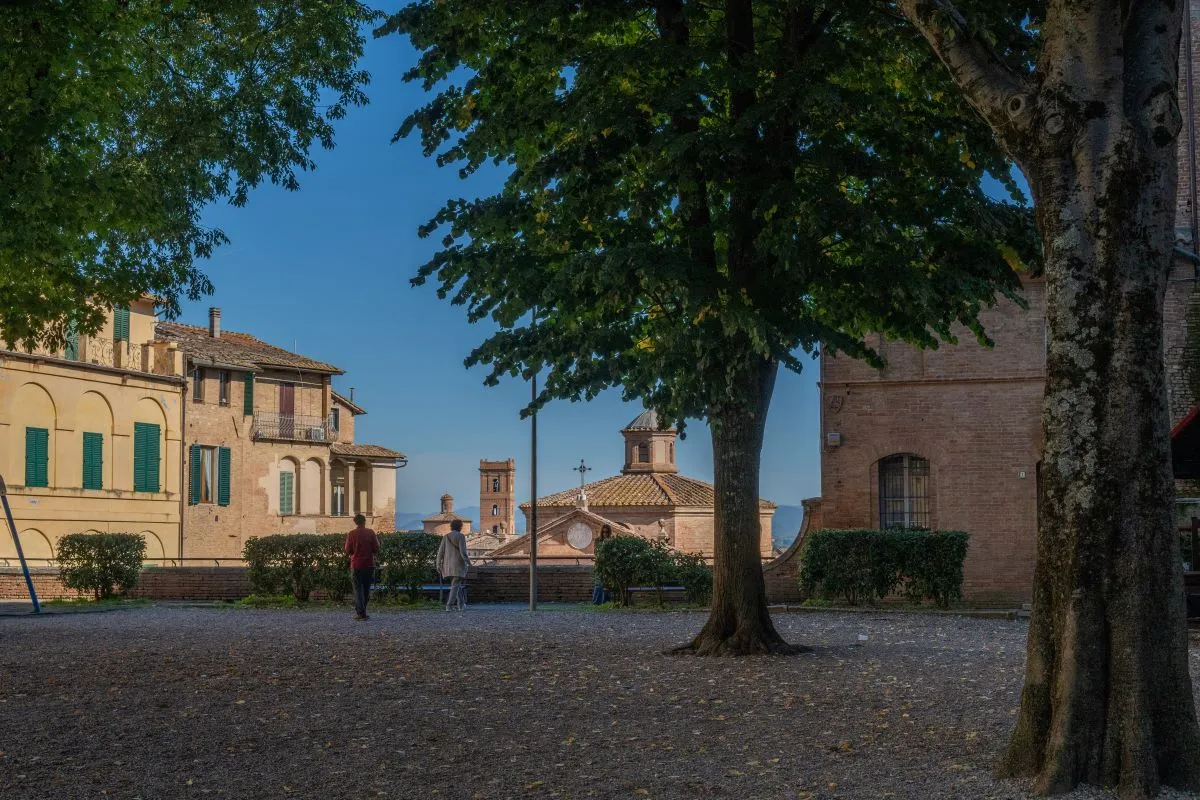
Walking through the narrow alleys of Siena, amidst sudden climbs and glimpses that close in on themselves, something unexpected happens. The space opens up. The light arrives all at once. The Prato di Sant'Agostino presents itself as an urban clearing, a large bright green space that still surprises those who visit for the first time. The poet Mario Luzi described this transition as a 'move from darkness to light': a sensation that words can only approximate, never fully convey. You have to go there and feel it.
A place with deep roots
From the medieval walls to the heart of the city
The roots of the Prato sink into the 12th century, when Siena built its second city wall. It was then an edge area, an open space between city and countryside, where the noise of the city faded before reaching the fields. With the third city wall, it was incorporated into the urban fabric, but something of that original nature has remained. You can still feel it today, walking through it: a green space that is neither entirely city nor entirely nature, a place suspended between two worlds that is experienced differently from everything else.
The heart of the Contrada della Tartuca
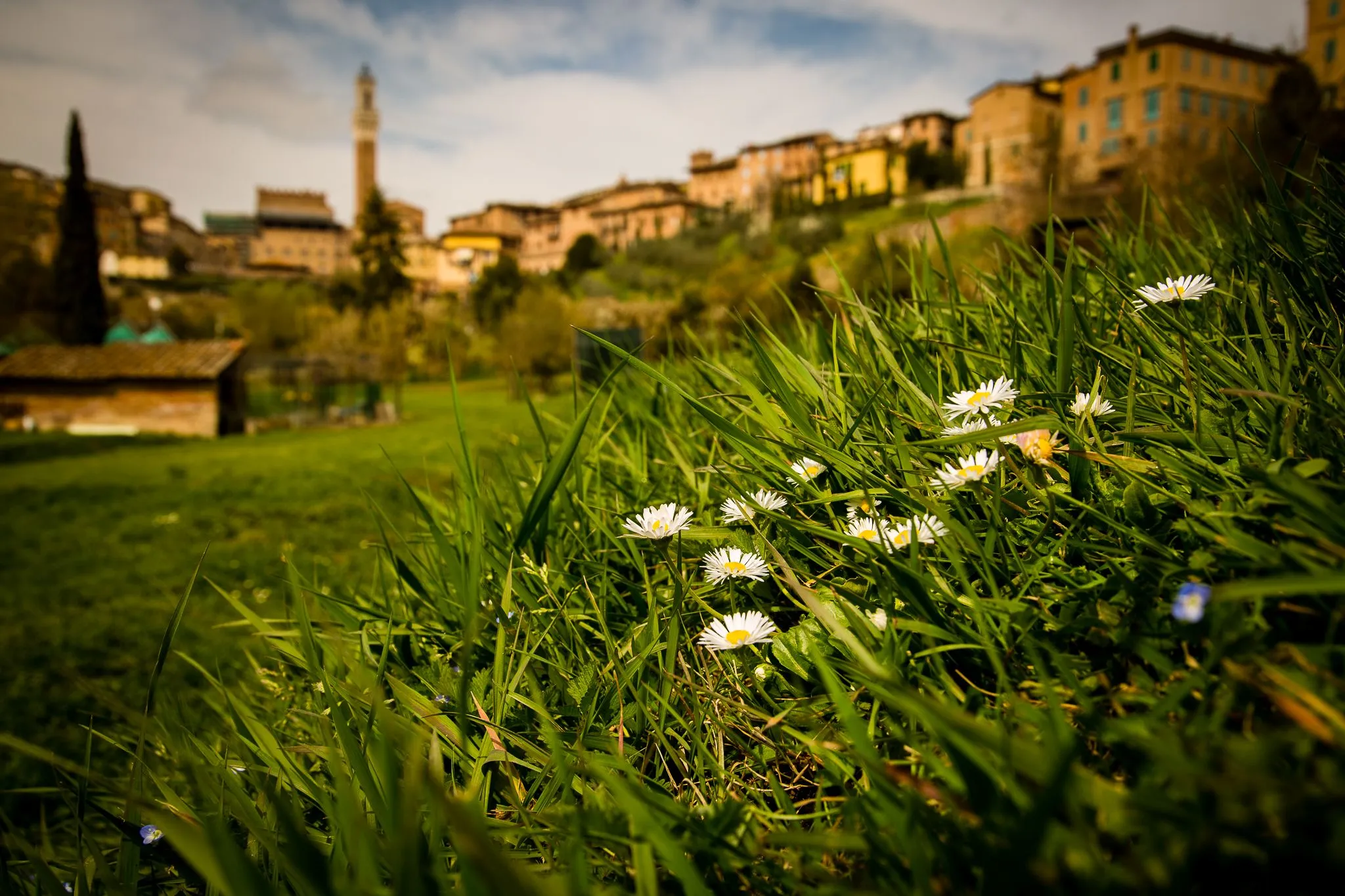
One sits on the grass and immediately understands that this place does not belong to everyone in the same way. The Prato is the heart of the Contrada della Tartuca, one of the oldest in Siena, and this is felt in every corner: in the voices that rise during the festivities, in the traditions that have been repeated for centuries, in the sense of belonging that crosses the walls and reaches even those who are not from the Contrada but are there, and feel it just the same.
The Church, the art, and the knowledge surrounding the Prato
Sant'Agostino: five centuries of art in a single space
Dominating the square is the large Church of Sant'Agostino, begun in 1258 by the Augustinians. In 1747, a fire changed everything: architect Luigi Vanvitelli completely redesigned it, and what emerges is an imposing and harmonious building that still takes your breath away today. The facade, simple and austere, is partially hidden behind the 19th-century portico of Agostino Fantastici, as if it does not want to reveal itself all at once. Crossing that threshold means finding oneself in front of Perugino, Ambrogio Lorenzetti, Sodoma, Rutilio Manetti, and Francesco Vanni: five centuries of Italian art coexisting in the same space, silent and imposing, side by side.
A crossroads of knowledge
Around the Prato, knowledge takes different forms. The Museum of Natural History of the Accademia dei Fisiocritici, one of the oldest scientific museums in Europe, silently watches over one side. The Istituto Musicale Rinaldo Franci brings notes into the air. The Liceo Classico Piccolomini, the Botanical Garden, and the university faculties of Law and Political Science complete the picture. Students walking quickly, professors discussing, young voices mixing with the ancient silence of the place. A crossroads that has existed for centuries and never stops moving.
The view that no one forgets
Sitting on the wall of the Prato di Sant'Agostino is one of those simple gestures that remain etched in memory. The gaze glides over the medieval walls, then over the ancient roofs, then over the gentle hills that embrace the city. At sunset, the bricks glow red and the landscape seems suspended in time, as if waiting for something that never arrives. A viewpoint that is not found on tourist maps but that the Sienese have always known: perfect for families, for those who love to photograph, and for those simply looking for a place to stop and breathe. Just like students did centuries ago. Just like Mario Luzi did. Just like it is still done today, on the same wall, with the same view in front.