The tradition is passed down in the shops of the historic center
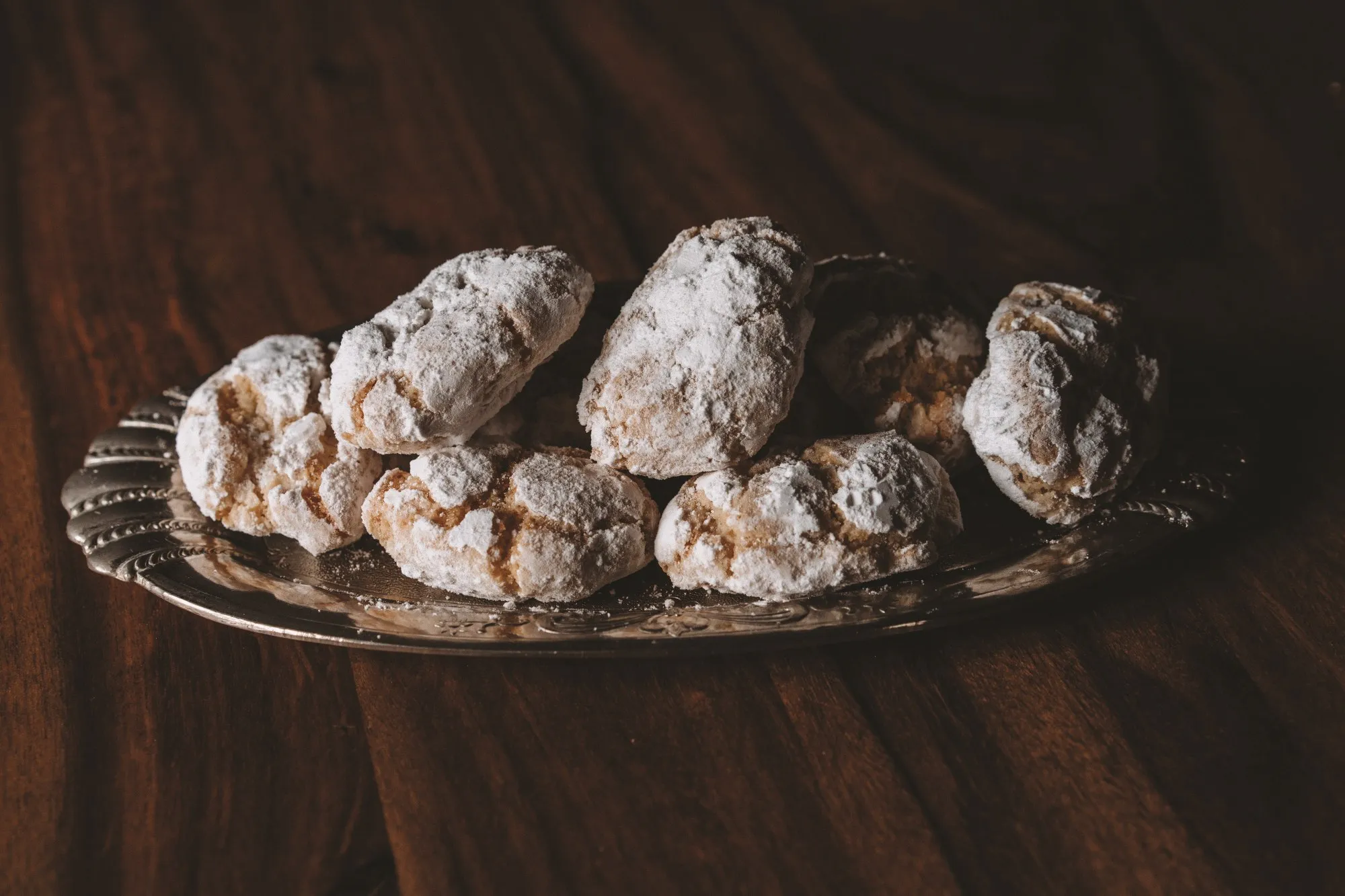
Walking through the historic shops in the center of Siena, at a certain point the air changes. A sweet and ancient scent of almonds and orange arrives, slowing down your steps before your mind even registers it. It’s there, in plain sight behind the window, next to panforte and cavallucci: oval, slightly flattened, with a white and cracked surface as if it were holding something inside. The Ricciarello does not announce itself. It makes its presence felt.
A legend in the shape of a slipper
Ricciardetto, the Crusades, and the East
Some say it was Ricciardetto della Gherardesca who brought them to Tuscany, upon returning from the Crusades, with that curled shape reminiscent of the slippers of Arab sultans. A legend, perhaps. But a legend that perfectly fits a sweet that still smells of spices and distant routes. The roots of Ricciarelli sink into the medieval marzipan of the 15th century, when Siena was a crossroads of trade and caravans brought almonds, sugar, and precious aromas from the East to the city. Expensive ingredients, reserved for noble families and important banquets. It was the Sienese apothecaries who transformed them into something the city would never forget.
What happens when you taste ricciarelli
The recipe that needs no explanation
The coarse almond paste, the candied orange peel, the vanilla: three elements that are found, worked, and awaited. The oval and flattened shape emerges from the hands of those who have always known this sweet, with the white and cracked surface that can be recognized at a glance in any Sienese pastry shop. It is brought to the mouth and the scent arrives before the taste. Then the taste arrives: soft, enveloping, with that note of orange that lingers and does not ask for permission. You understand why in the past they were considered a luxury sweet. You understand why they still are.
The official IGP recognition - Ricciarelli di Siena
In 2010, the certification IGP, Ricciarelli di Siena was granted, which protects ingredients, processing methods, and production area. A seal that puts in black and white what the Sienese have always known: these sweets are not made elsewhere. Not in the true sense of the term. The shape is the same, the ingredients too, but something in the result changes. Perhaps it’s the air. Perhaps it’s the history that ends up inside without anyone deciding it.
When to find them and why to take them home
Traditionally linked to Christmas, when the shop windows in the center fill with boxes and scents, Ricciarelli di Siena can now be found year-round in every historic shop in the city. They are the souvenir that never disappoints: you open the box at home, that scent of almonds and orange arrives, and Siena comes back in an instant. Exact, precise, recognizable.