A narrow street, a hidden story
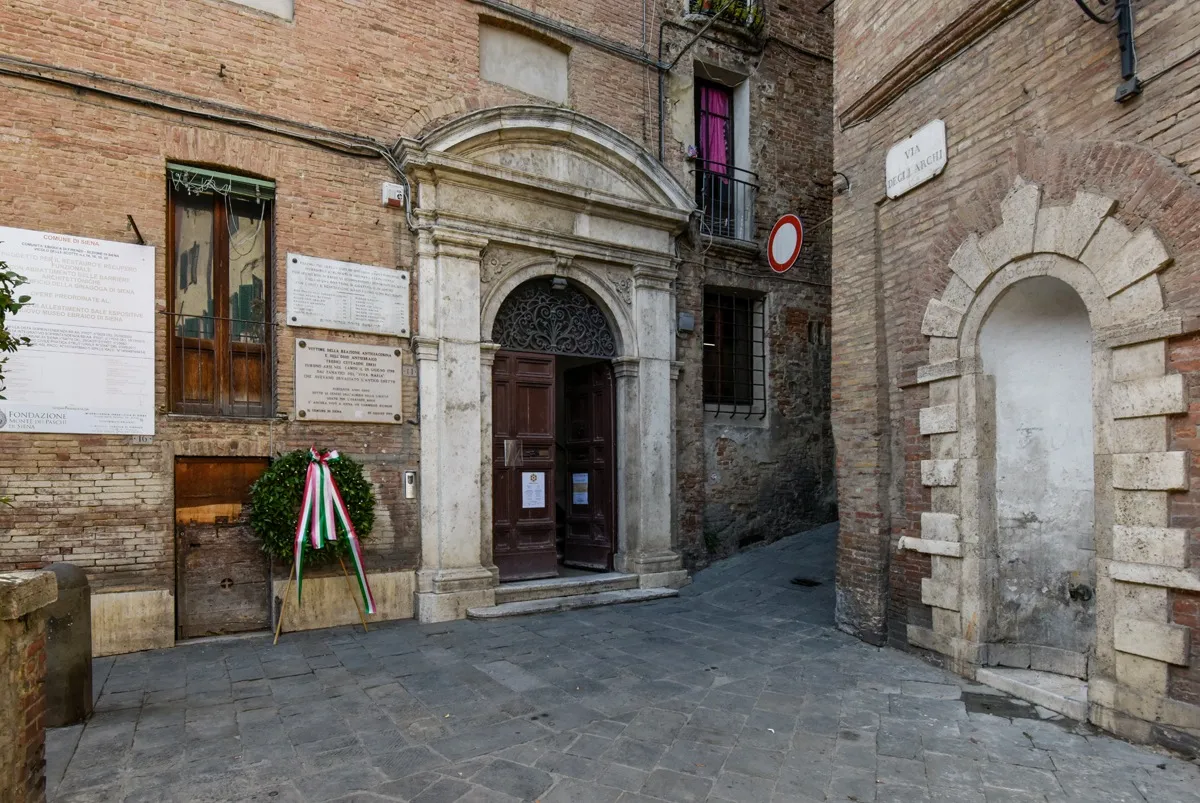
A few steps from the clamor of Piazza del Campo, in a silent alley that seems to hold its breath, lies one of the most touching places in Siena: the Synagogue of Vicolo delle Scotte. A simple, almost anonymous facade that reveals nothing of what it holds inside. And this is its first message: for centuries, Jews were not allowed to build places of worship recognizable from the outside. Beauty had to remain hidden, protected, reserved for those who knew where to look for it.
The Jewish Ghetto of Siena was established in 1571 by Cosimo I de' Medici and remained in operation until 1859: almost three centuries during which a vibrant, cultured, and indispensable community to the city lived in a confined space, closed every evening by gates, but open every day to the economic and intellectual life of Siena. The Sienese Jews were doctors, lenders, merchants: few, but extraordinarily educated, able to contribute significantly to the cultural and economic growth of the city.
The interior, a revelation
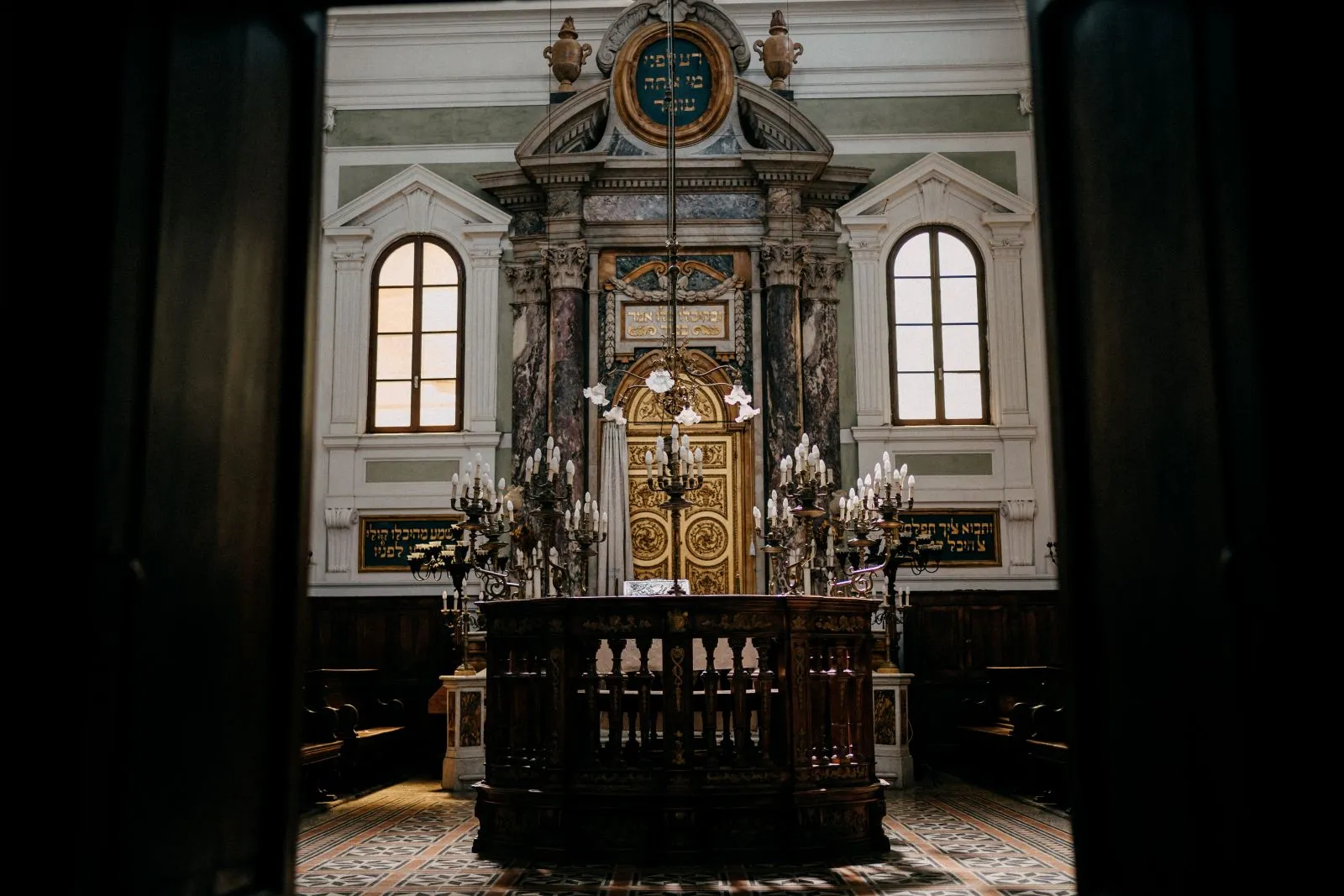
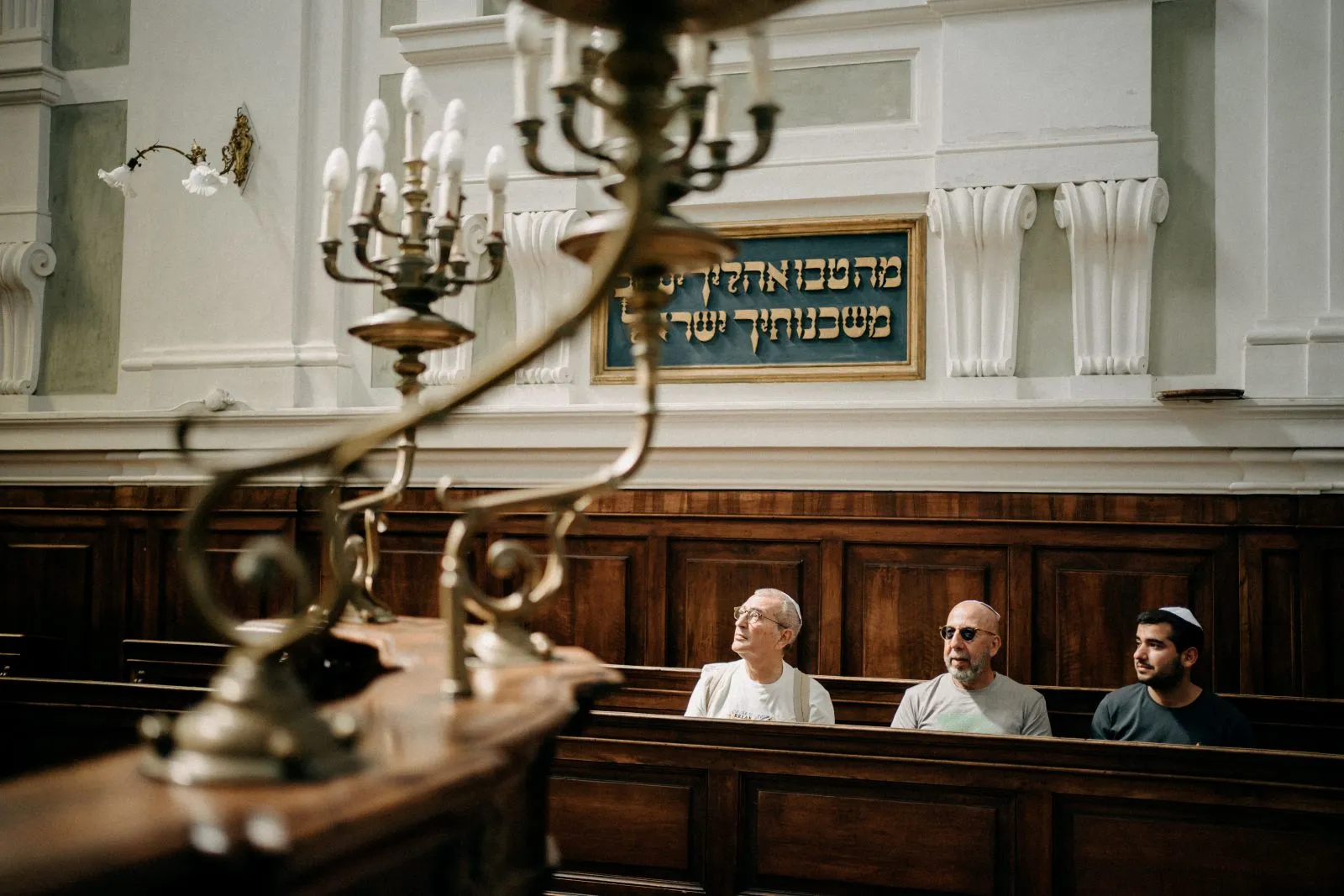
Crossing the threshold of the synagogue is an experience that surprises every time. After the sobriety of the facade, the interior opens up in all its refined brightness: a masterpiece of neoclassical taste with delicate rococo elements, the result of the expansion desired in May 1786 by the Florentine architect Giuseppe del Rosso, in full Enlightenment spirit.
At the center of the hall is the podium from 1756, enriched by nine ten-branched candelabra from the 18th century. On the back wall, neoclassical windows open in three arches, while in the center of the ceiling, the Tablets of the Law in white and blue stucco stand out. In front of the Holy Ark, decorated with marble columns topped by a curvilinear tympanum, the women's gallery overlooks: a balcony closed by a wooden lattice, intimate and cozy, from which women attended the services.
The Jewish Museum
A journey between memory and beauty
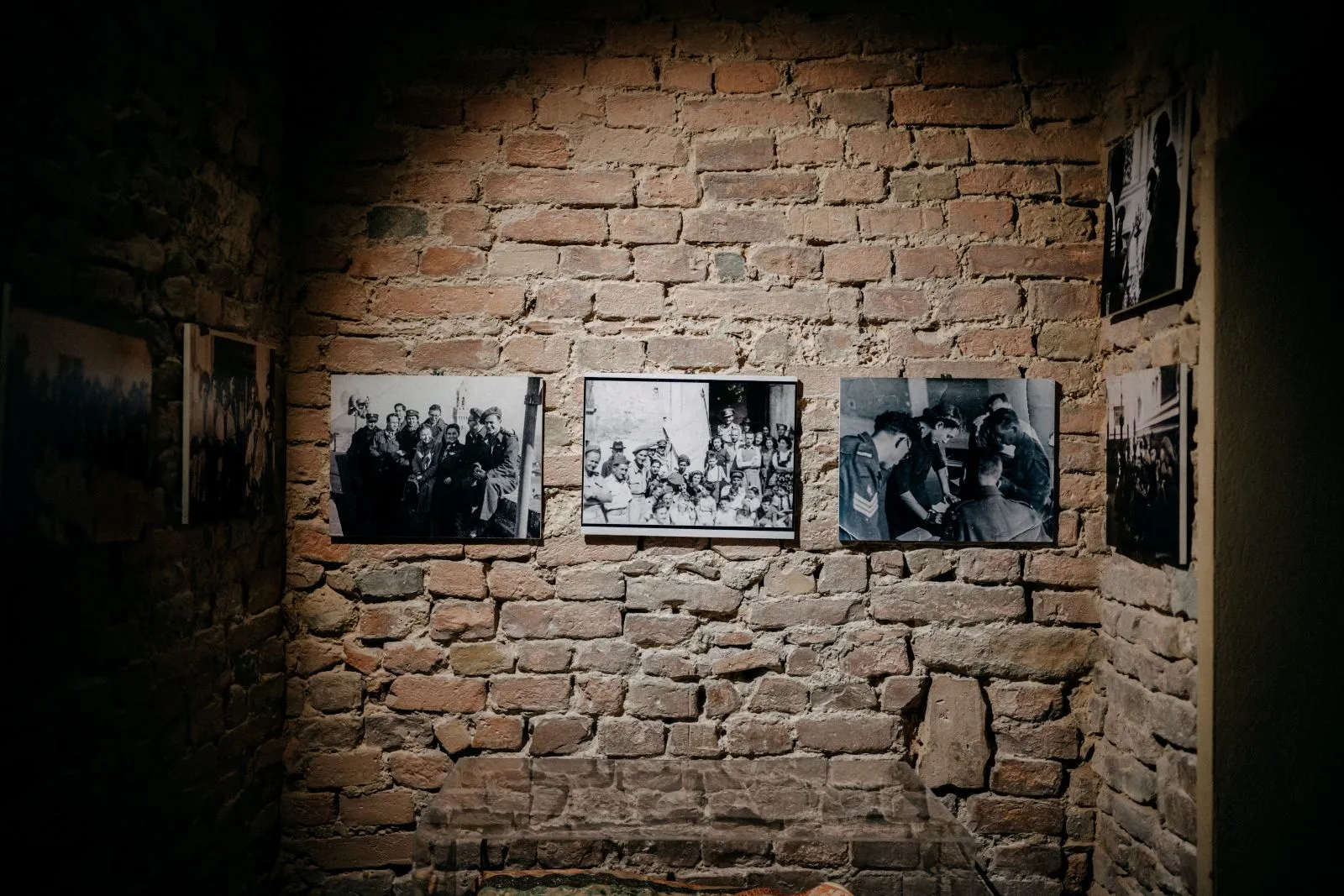
The women's gallery, no longer used for ritual purposes, houses the Jewish Museum: a place protected by wooden grilles pierced with floral motifs, suspended between the sacred and the everyday. The path winds through texts, images, prayer books, and liturgical objects that tell the long and complex Jewish presence in Siena.
The objects, the stories
Among the most significant pieces: the chair of the prophet Elijah, carved and inlaid wood, donated by Rabbi Nissim in 1860; the Aròn ha-Qodesh, the sacred cabinet of the Torah; the Bimà, the pulpit for reading. And then the tiny but precious liturgical objects: the rimonim, ornaments for the Torah, the yad, the silver pointer, the hand-embroidered fabrics. Many of these objects were hidden during the persecutions and recovered only after the war: each piece carries with it a story of fear, courage, and survival.
The fountain, the statue, the memory
In front of the synagogue is the Fountain of the Ghetto, originally adorned with a statue of Moses attributed to Jacopo della Quercia. Removed in 1875 at the request of Polish Jews, who considered it contrary to the prohibition of image representation, the statue was transferred first to the Museum of the Opera del Duomo and then to the Civic Museum, where it remains today.
The plaques, the duty to remember
Two commemorative plaques mark the most painful moments of Sienese Jewish history. The first, from December 5, 1948, remembers the fourteen Sienese Jews deported and killed in Nazi extermination camps during the Holocaust. The second, from June 28, 1999, commemorates the bicentennial of the 1799 burning, when thirteen Sienese Jews were burned alive during the devastation of the ghetto by supporters of Viva Maria.
Reading those plaques, in that silent alley, makes it clear why this place is not just a monument: it is a collective responsibility, an invitation not to forget.
Come visit
The Synagogue of Siena is open to visitors and offers a unique experience: history, art, spirituality, and memory in a few square meters of extraordinary intensity.