Characteristics of Aglione: Why It Is Different from Common Garlic
In the fertile countryside between Arezzo and Siena, among the rows and fields of the Val di Chiana, grows a bulb that deceives those who see it for the first time. Its size is imposing, almost intimidating. But just bringing it close to the nose reveals that there is nothing pungent, nothing aggressive here. The Aglione of Val di Chiana smells sweet and aromatic, as if it has decided to take all the best qualities of common garlic and leave out the flaws. It is not indigestible, it does not leave that persistent taste that frightens. This is why they call it "the gentle giant": large size, surprisingly delicate character.
Aglione Sauce: A Recipe That Doesn’t Need to Hide
The Ingredients (Few), Without Compromises
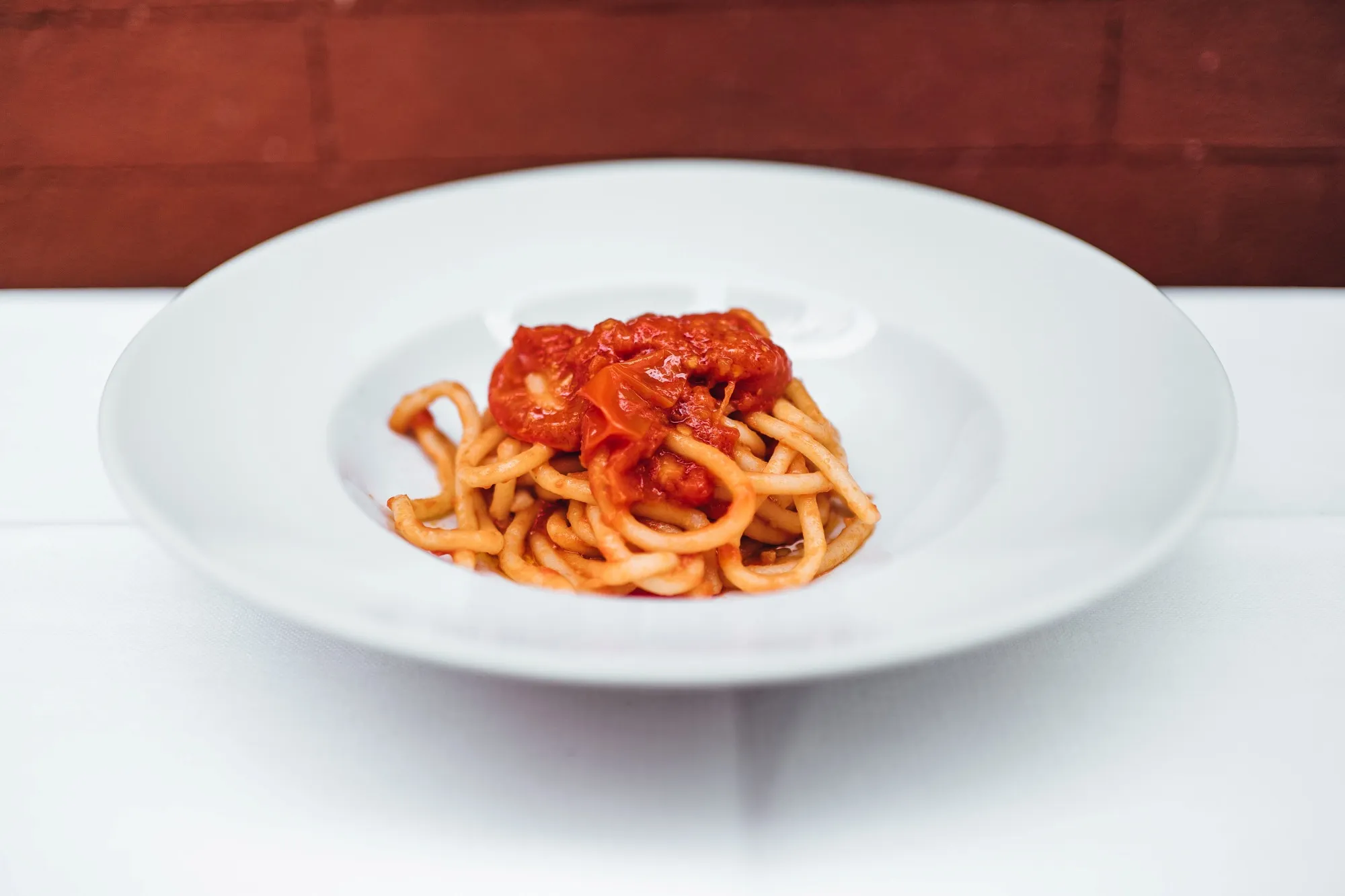
The Aglione Sauce is an example of that Tuscan peasant cuisine that has never needed to complicate itself. Fresh tomatoes or tomato puree, extra virgin olive oil, and aglione, slowly cooked until it becomes a soft and fragrant cream that envelops everything. You stay in the kitchen, you wait, you smell the aroma changing as the fire does its work. Then comes the moment when it is ready, and you understand that the wait was worth every minute.
Pici: The Pasta That Was Waiting for This Sauce
There are pastas that seem made specifically for a precise condiment. The pici with aglione are one of those cases. A typical pasta from the province of Siena, handmade, thick and rough enough to hold the sauce in every fold. When the two meet on the plate, the result is something that tells centuries of Sienese rural cooking in a single bite. Simple, almost brutal in its perfection.
The Story of Aglione, the Gentle Giant
An Agricultural Treasure Almost Forgotten
Botanically, the Aglione of Val di Chiana is not a garlic: it belongs to the leek family, and this explains the unexpected sweetness and digestibility that surprises those who taste it for the first time. An ancient variety, cultivated for centuries in the fertile lands between Arezzo and Siena, which risked disappearing quietly, overshadowed by more productive and less precious varieties. Today, the farms of the Val di Chiana open their doors to those who want to understand how it is born: tastings, visits to the fields, workshops dedicated to the cultivation and preparation of pici. You arrive curious. You leave with hands still fragrant from aglione.
Aglione: Where to Taste It and How to Experience It
Sitting in a farmhouse in the province, with a steaming plate in front and a glass of Chianti from the Colli Senesi or Nobile di Montepulciano in hand, is already an experience. The wine balances the sweetness of the sauce, the countryside outside the window tells where everything comes from. Those seeking Aglione Sauce are not just looking for something to eat: they are searching for the authentic Siena, the one that has existed for centuries in the fields and kitchens, and that has never needed to showcase itself for anyone.