 segreteria@nobilcontradadelbruco.it
 0577 286021
GENERAL INFORMATION
HEADQUARTERS: Via del Comune, 44 - Terzo di Camollia
SOCIETY: "L'Alba" - Via del Comune, 44
NAME OF THE CONTRADA MEMBERS: Brucaioli
MOTTO: "In the struggle, a noble contrada is altered by proud people"
COAT OF ARMS: a Caterpillar crowned in the Grand Ducal style, striped on a natural branch, leafed in green and adorned with a rose bud. It was chosen in memory of the silk workers and wool workers who lived in the Coste d'Ovile.
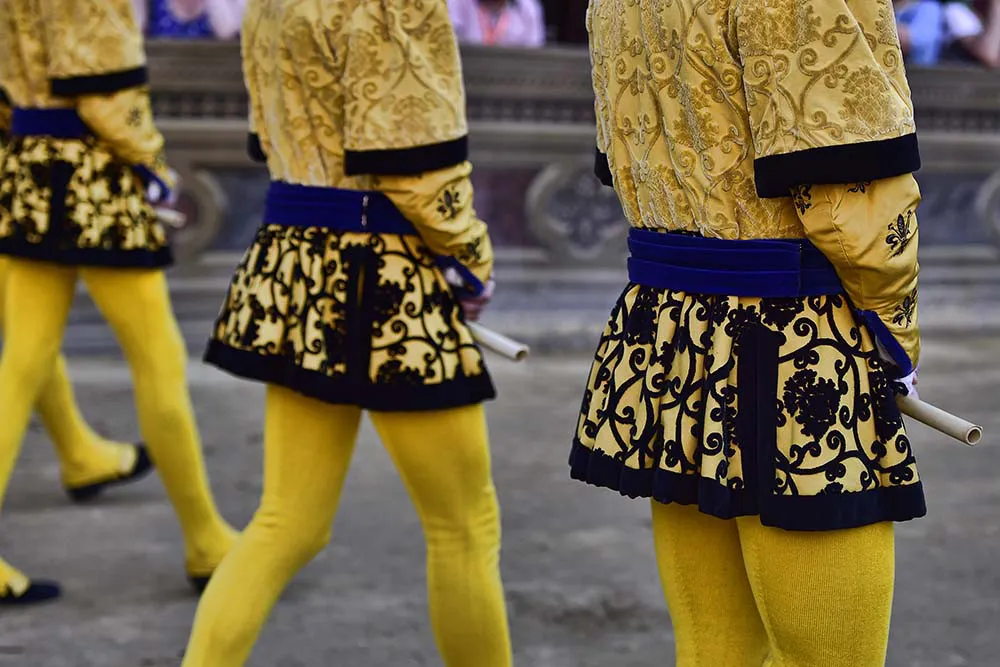
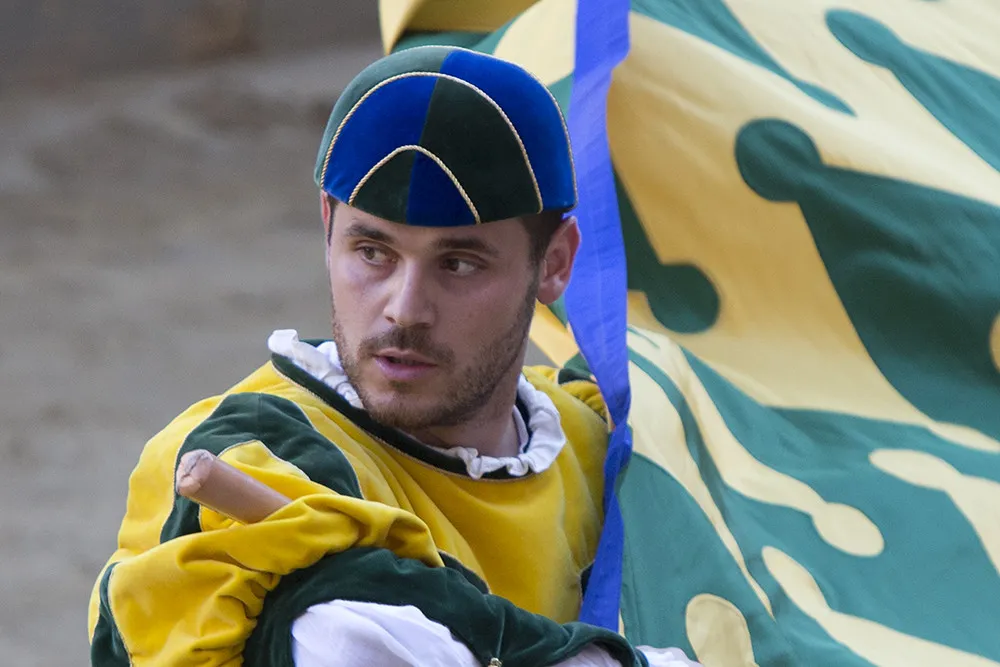
COLORS: yellow and green in equal parts striped or arabesqued with light blue
SYMBOLIZES: diligence
PLACES AND REFERENCES
CHURCH AND ORATORY: Church and Oratory of the Most Holy Name of Jesus
PATRON AND TITLE FESTIVAL: Visitation of the Virgin Mary to Saint Elizabeth, the anniversary is on July 2 but the feast is celebrated on the second Sunday of July
MUSEUM: Via del Comune, 30
FOUNTAIN: created in 1978 by Lorenzo Borgogni, it includes a sculpture by Angelo Canevari depicting Barbicone, the legendary leader of the Bruco, located in front of the top of Vicolo degli Orbachi.
RELATIONS AND ORGANIZATION
RELATIONS WITH OTHER CONTRADE:
allies Istrice, Nicchio and Torre
enemies None
CORPORATIONS: silk workers
MILITARY COMPANIES: San Pietro a Ovile di Sotto
HISTORY OF THE CONTRADA DEL BRUCO
The origins of the Bruco are closely linked to the administrative division desired by the Municipality of Siena, which chose to split the territory of the parish of San Pietro into two distinct districts: San Pietro a Ovile di sopra and San Pietro a Ovile di sotto. From this separation, two distinct contrade were born, that of the Giraffa and that of the Bruco.
The district of Ovile, mostly inhabited by battilana and wool workers, was a lively neighborhood participating in the public life of the city. During the 16th century, its inhabitants distinguished themselves by frequently participating in hunts and jousts, promoting festivities that often concluded with a palio, sometimes even raced with donkeys.
The contrada immediately demonstrated a solid internal organization: as early as 1542, it had established its own Statute regulating its activities and community life. Meetings were held in the church of San Biagio in the plain of Ovile, a reference point for the community that was later demolished at the end of the 18th century.
PALII AND RESULTS
PALII WON: 41 for the Contrada | 37 for the Municipality
PARTICULARITIES
TITLE: It bears the title of "Noble" for the merits acquired in defense of the popular ideals that inspired the ancient Republic of Siena. In particular for the participation of its people in the clash that took place in January 1369 at the Cross of Labor and the consequent defeat of the troops of Emperor Charles IV of Bohemia.