 cancelleria@contradadellachiocciola.it
 0577 45455
GENERAL INFORMATION
HEADQUARTERS: Via San Marco, 31 - Terzo di Città
SOCIETY: "San Marco" - Via San Marco, 77
NAME OF THE CONTRADA MEMBERS: Chiocciolini
MOTTO: "With slow step and solemn in the field, Chiocciola descends to triumph."
COAT OF ARMS: of silver, seeded with the letters U and M of blue (Umberto I and Margherita of Savoy), alternated by roses of Cyprus parted in red and white, snail in its natural state passing on green mantle.
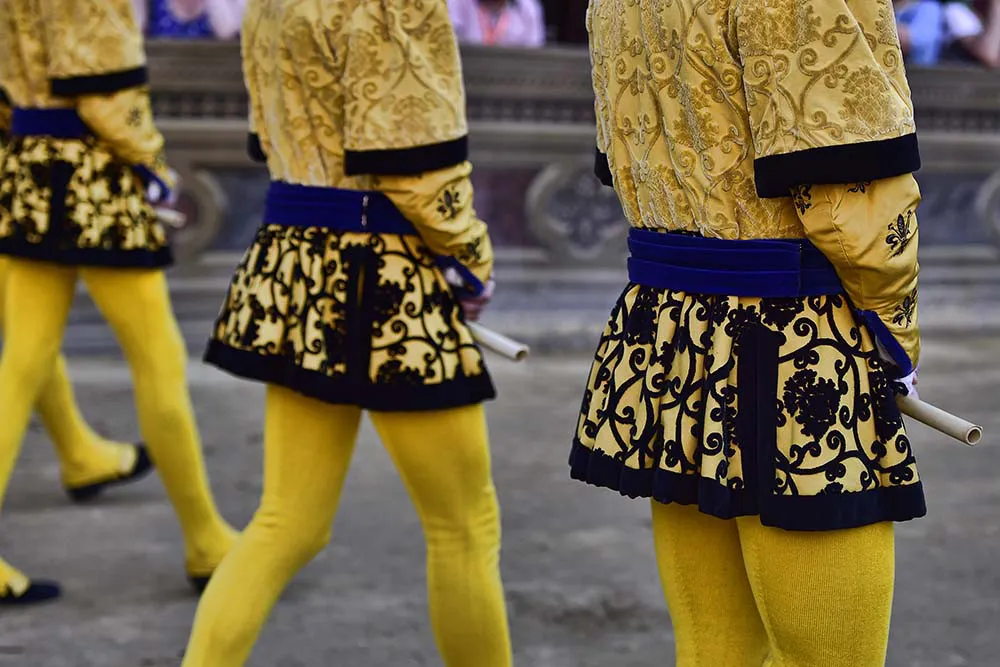
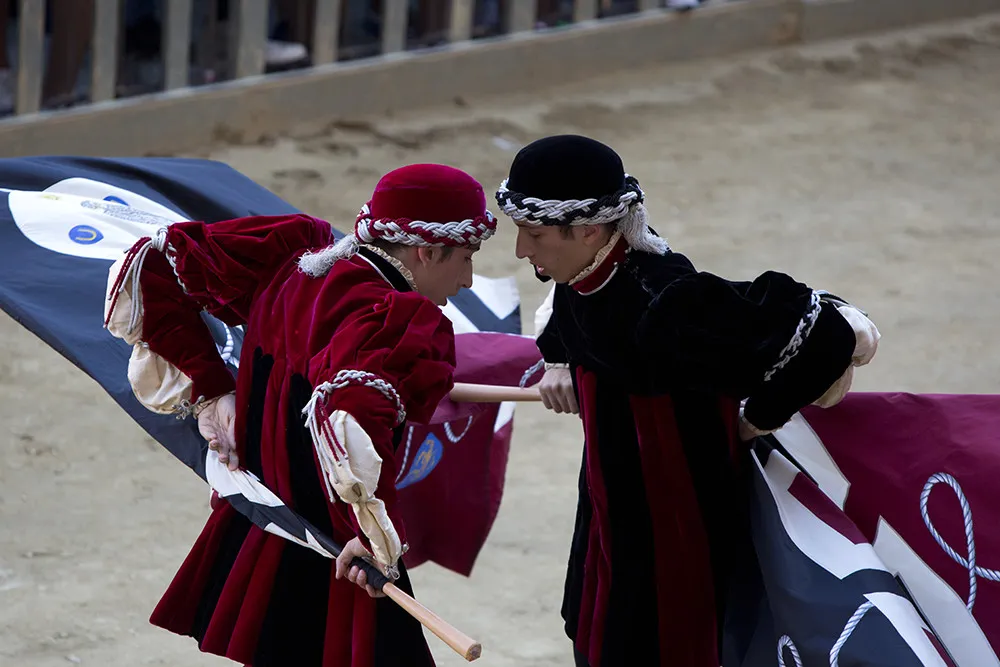
COLORS: white, featuring a snail in motion, decorated with Cypriot roses in shades of white and red, alternating with the Roman letters “U” and “M” in light blue.
SYMBOLIZES: prudence
PLACES AND REFERENCES
CHURCH AND ORATORY: Church of Saints Peter and Paul
PATRON AND TITLE FESTIVAL: Saints Apostles Peter and Paul - June 29
MUSEUM: Via San Marco, 31
FOUNTAIN: work of the sculptor Fulvio Corsini, it was the first to be installed in 1947. On the base the congratulatory inscription: "When victory smiles upon the Chiocciola, this fountain will pour good wine." It is located in front of the Oratory of the Contrada.
RELATIONS AND ORGANIZATION
RELATIONS WITH OTHER CONTRADE:
allies Istrice, Pantera, Selva
enemies Tartuca
CORPORATIONS: Leatherworkers
MILITARY COMPANIES: San Marco, San Quirico, Monistero
HISTORY OF THE CONTRADA DELLA CHIOCCIOLA
The Contrada della Chiocciola is one of the oldest in Siena. According to legend, the snail symbol dates back to Etruscan times, when the ancient inhabitants of the area are said to have attributed a particular religious significance to this animal.
The first documented historical reference dates back to 1466, when the residents of the village of San Marco donated several properties to the Monastery of Santa Marta, demonstrating that the Contrada already owned property of its own.
A key date is 1482, when the Chiocciola and the Giraffa built two wooden carts depicting their respective symbolic animals during a Gioco delle Pugna. This is considered the first documented evidence of the contrade being associated with their current names and animal symbols.
PALII AND RESULTS
WON PALII: 54 for the Contrada | 51 for the Municipality
PARTICULARITIES
TWINNINGS: Venice