It is not just a fountain
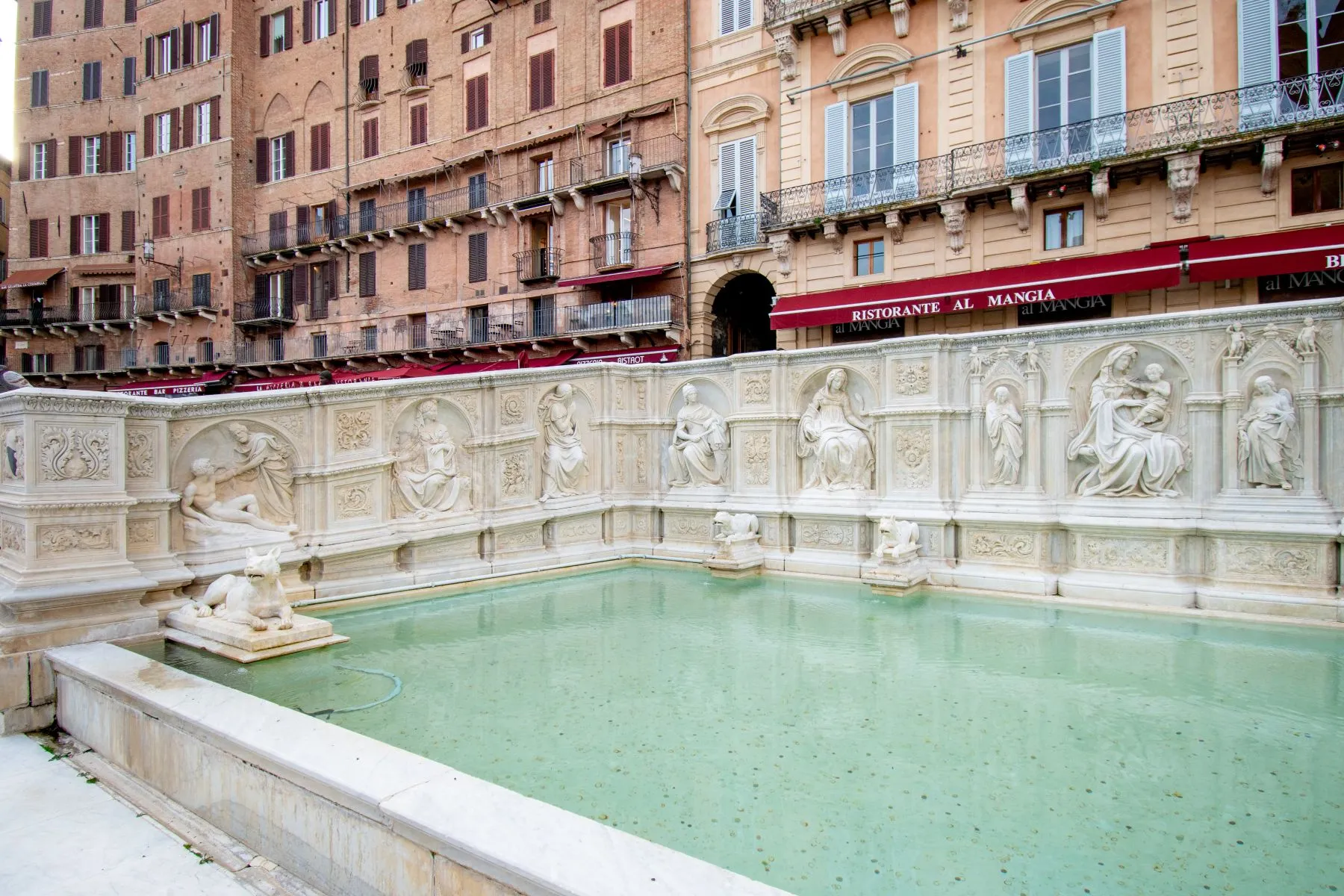
The pavement rises, the square widens, and at a certain point, the ear catches something: it is the sound of water. The Fonte Gaia is there, surrounded by its iron gate, silent and present as it has always been. It is not just a decorative element: it is a powerful symbol of civic wealth, autonomy, and public good, desired by the Municipality to tell the world who Siena was and how much it was worth. Commissioned to Jacopo della Quercia in 1419, after five years of meticulous work, it stands in the same spot where a medieval fountain already flowed, fed by the Bottini, the ancient system of underground aqueducts that still today brings water from the Montagnola Senese to the heart of the city, silent and invisible, as if time had never passed.
"Gaia": a name that hides more than it seems
A word that comes from the ancient
"Gaia" seems like an easy word. Joyfulness, happiness, the water that finally arrives. But the Sienese of the 1400s were not people who chose names by chance. In those years, the city breathed ancient myths, fueled by figures like Enea Silvio Piccolomini, who later became Pope Pius II, and Francesco Patrizi. And "Gaia" carried with it the name of Gaia Taracia, a figure from Roman myth who gifted the Campus Martius to the city. A precise, almost arrogant parallel: Piazza del Campo as an ancient Roman forum, Siena as the heir of Rome. All in one word.
An open-air altar
The symbols carved in marble
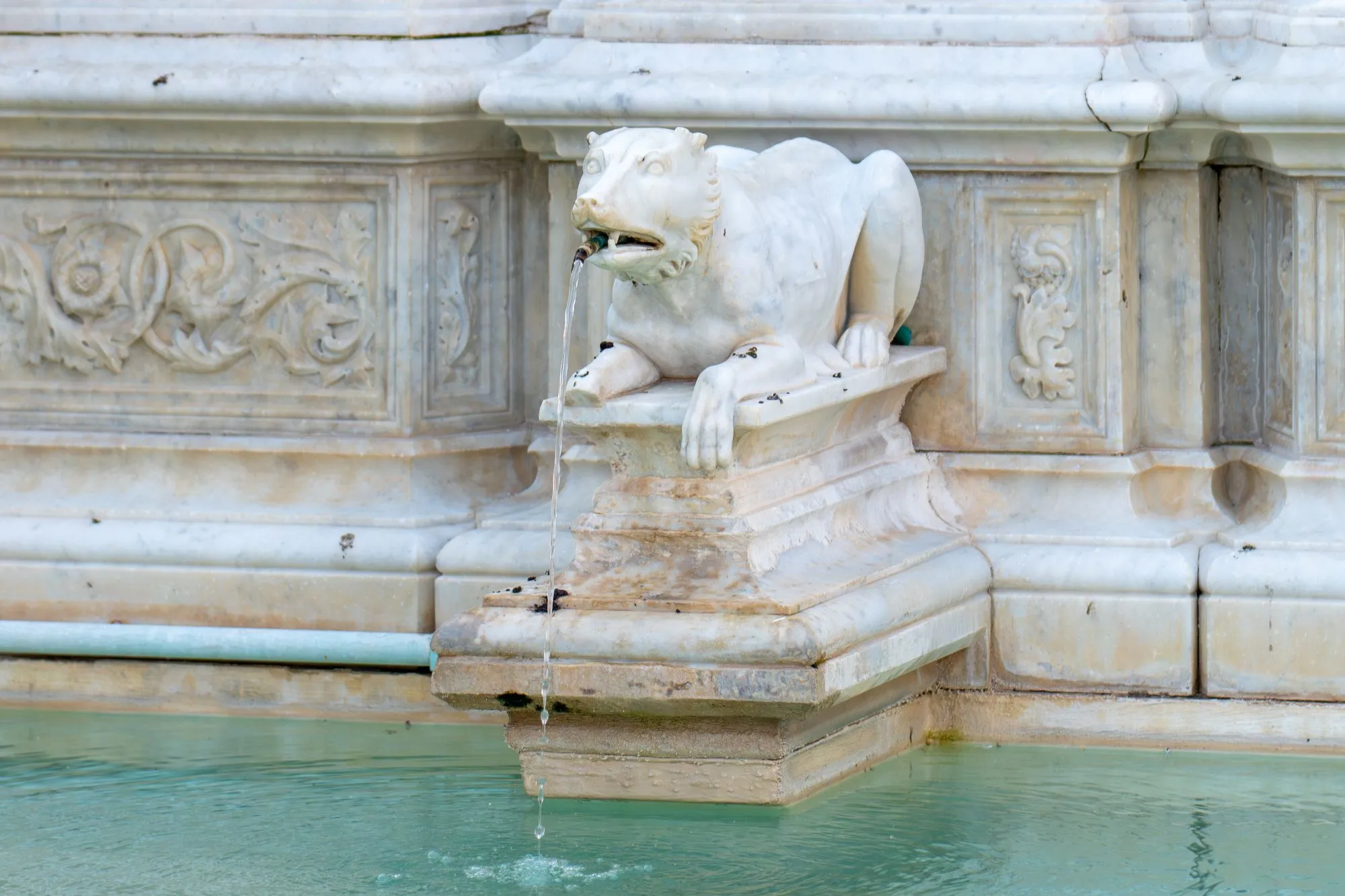
The closer you get, the more details emerge from the marble as if they want to be seen. The Fonte Gaia takes the form of a large secular altar, that same solemn shape that medieval public fountains in Siena carried with them. You don’t need to touch it to feel it; just a glance is enough to realize it tells a story: the creation of Adam and the expulsion from Eden, the statues of Acca Larenzia and Rea Silvia paying homage to the Roman origins of Siena, and the Madonna with Child surrounded by the allegories of Virtues, a visual echo of the concept of Good Government. Every figure was chosen for a reason. Nothing is left to chance.
A troubled history, an almost perfect copy
From the Palio to the 19th century
The original Fonte Gaia has lived through it all: glory, time, and moments that the marble has paid dearly for. In 1743, amidst the chaos of the Palio, Siena's most beloved festival, a spectator climbed onto the statue of Rea Silvia, breaking it, as if the marble were invisible in the euphoria of the moment. Then time did the rest, slowly, inexorably: the porosity of the material consumed the structure until it became irretrievable. In 1869, Tito Sarrocchi gave it a new life in Carrara marble, the one you encounter today in the square, polished and composed. The original by Jacopo della Quercia, marked and precious, has found refuge in the Complesso Museale di Santa Maria della Scala, just a few steps away, where it continues to guard its story away from the noise.
When it is worth seeing
The Fonte Gaia has no opening hours. But there is a moment when it speaks louder: early in the morning, when Piazza del Campo is still deserted and the sound of water is the only thing you hear. Or in the evening, when the lights transform it into something that seems to have come from another century. A perfect stop for families, for those traveling with their eyes wide open, and for those who want to return home with something that no photograph can capture.