A narrow street, an arch, a story that never ends
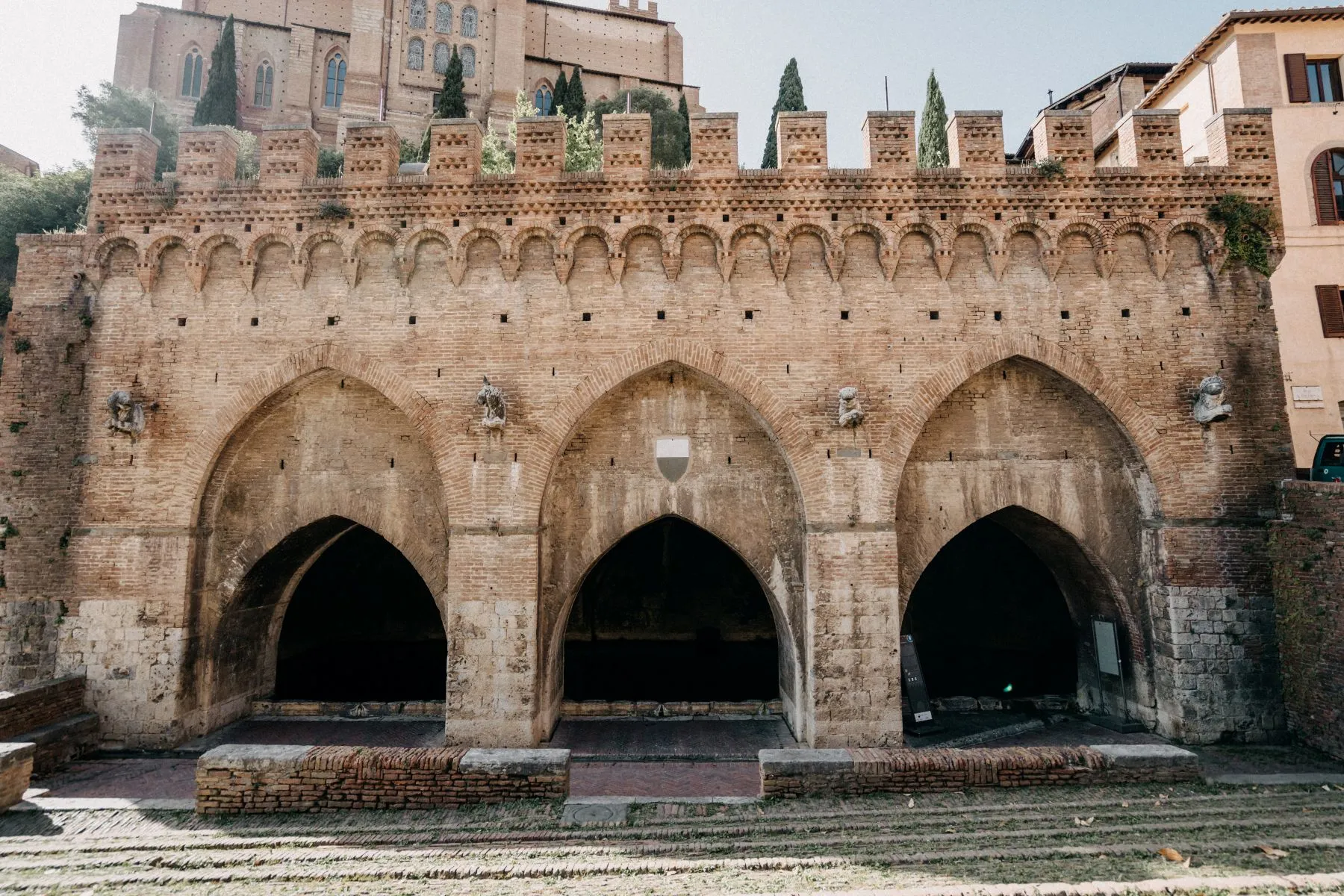
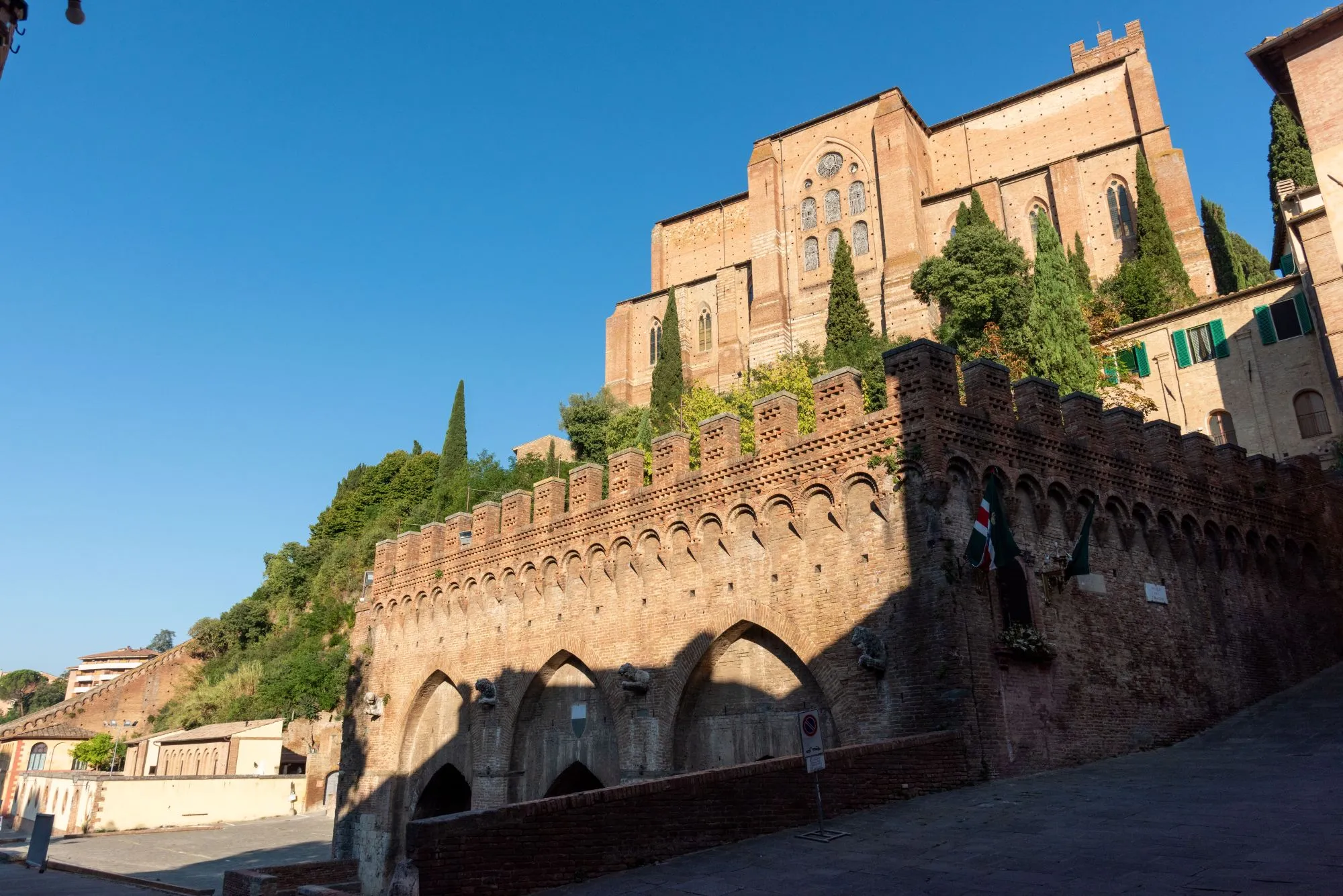
In the Third of Camollia, descending downwards, the air changes. It becomes cooler, more humid, and even before seeing it, one can hear it: the constant gurgle of water filling the silence of the alley. Fontebranda is there, with its Sienese brick, its Gothic arches, and its battlements, one of the oldest and richest monumental fountains of water in the city. It is not just a fountain: it is a place where the history of Siena can be felt in every brick, where the evocative atmosphere of warm days blends with the freshness of the crystal-clear water that still flows today as it did centuries ago.
A thousand years of history in three basins
A fountain that has changed its skin, but not its soul
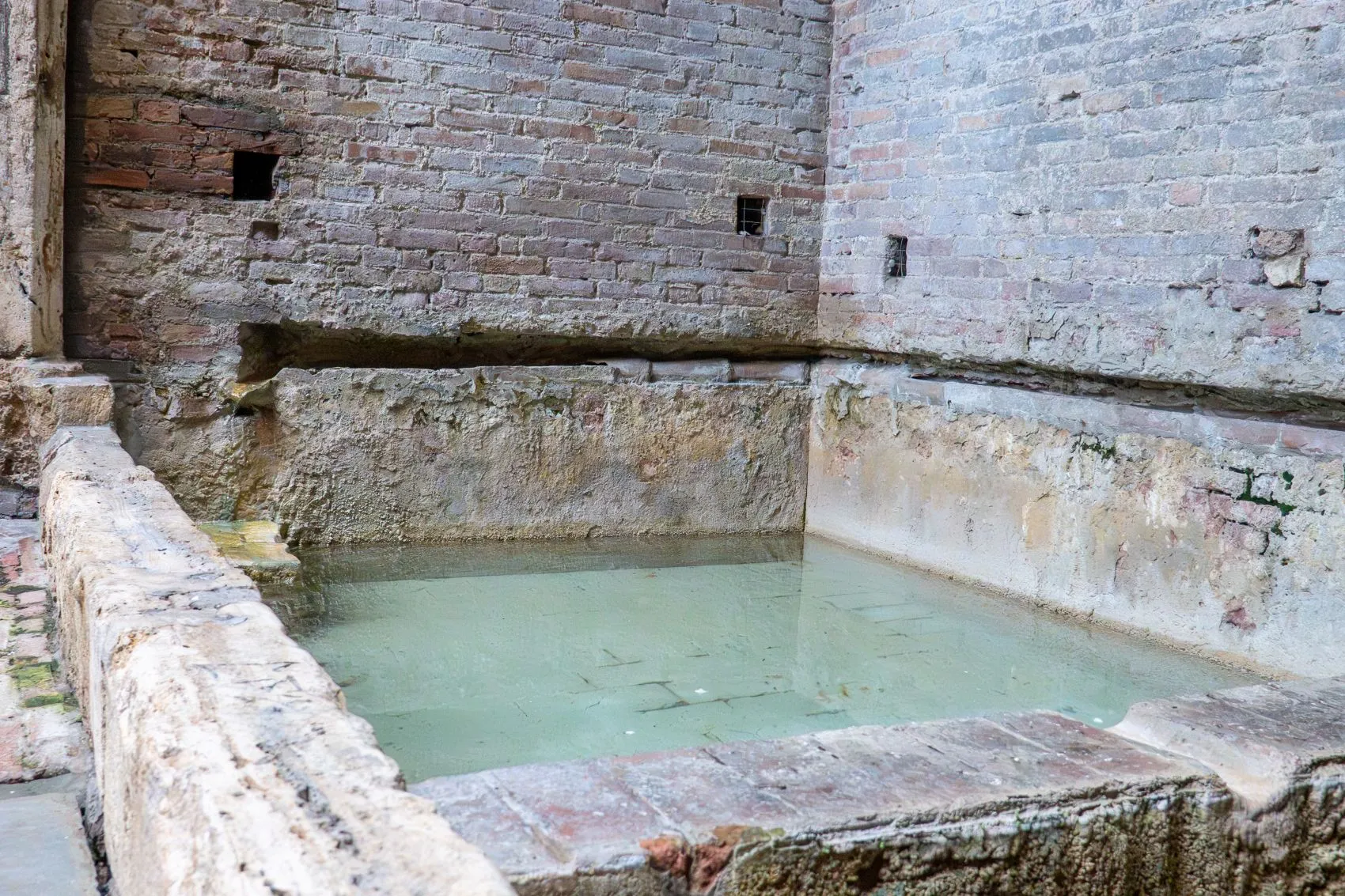
The arches rise against the sky and the lion-like figures gaze at passersby, with the "Balzana" at the center, a silent sentinel of Sienese identity. Approaching, the hand almost instinctively brushes against the stone, cold and worn by time. The plaque bears a name, Bellamino, and a date, 1193. But the fountain was already alive in 1081, as if the city had never felt the need to celebrate something it had always considered its own. Below, three basins fed by the Bottini divided the world into three: water for drinking, that for animals, and that for laundry. A precise, almost strict order that marked the day of an entire district, while dyers and tanners waited their turn as that water flowed for all.
The water that has written the history of Siena
Saint Catherine, Dante, and the madness of the Sienese
A few steps from the fountain, a house tells another story. It is the birthplace of Saint Catherine, daughter of a dyer from the district, who grew up a few meters from that water that fueled her father's work. The current Sanctuary House is still there, silent, as if those two places could not help but stay close. And then, moving up through the centuries, comes Dante: in the Inferno, in canto XXX, Mastro Adamo recalls Fontebranda with an almost physical nostalgia, stating that he would gladly give up the relief of that water just to see his instigators suffer with him. A Dantean plaque near the fountain still bears those words, engraved in stone as a reminder. And some say that that water has something strange about it: it would be responsible for the "bessaggine", or the madness of the Sienese.
Fontebranda after sunset: a stop for the whole family
Sunset transforms Fontebranda into something different. The Sienese bricks take on amber hues, the constant gurgle of water becomes the only sound, and the echo created at the height of the vaults provides an almost cathedral-like acoustics. Looking up, the Basilica of San Domenico illuminated from below seems suspended above the walls, as if silently watching over everything. An atmosphere that no photograph can truly capture. A perfect stop for families: children are enchanted by the carp and goldfish swimming in the basins, while the older ones get lost in history. It is worth visiting along with the Fonte d'Ovile and the other fountains, to truly understand how central water was to life in medieval Siena.