Between Sienese Gothic and Renaissance
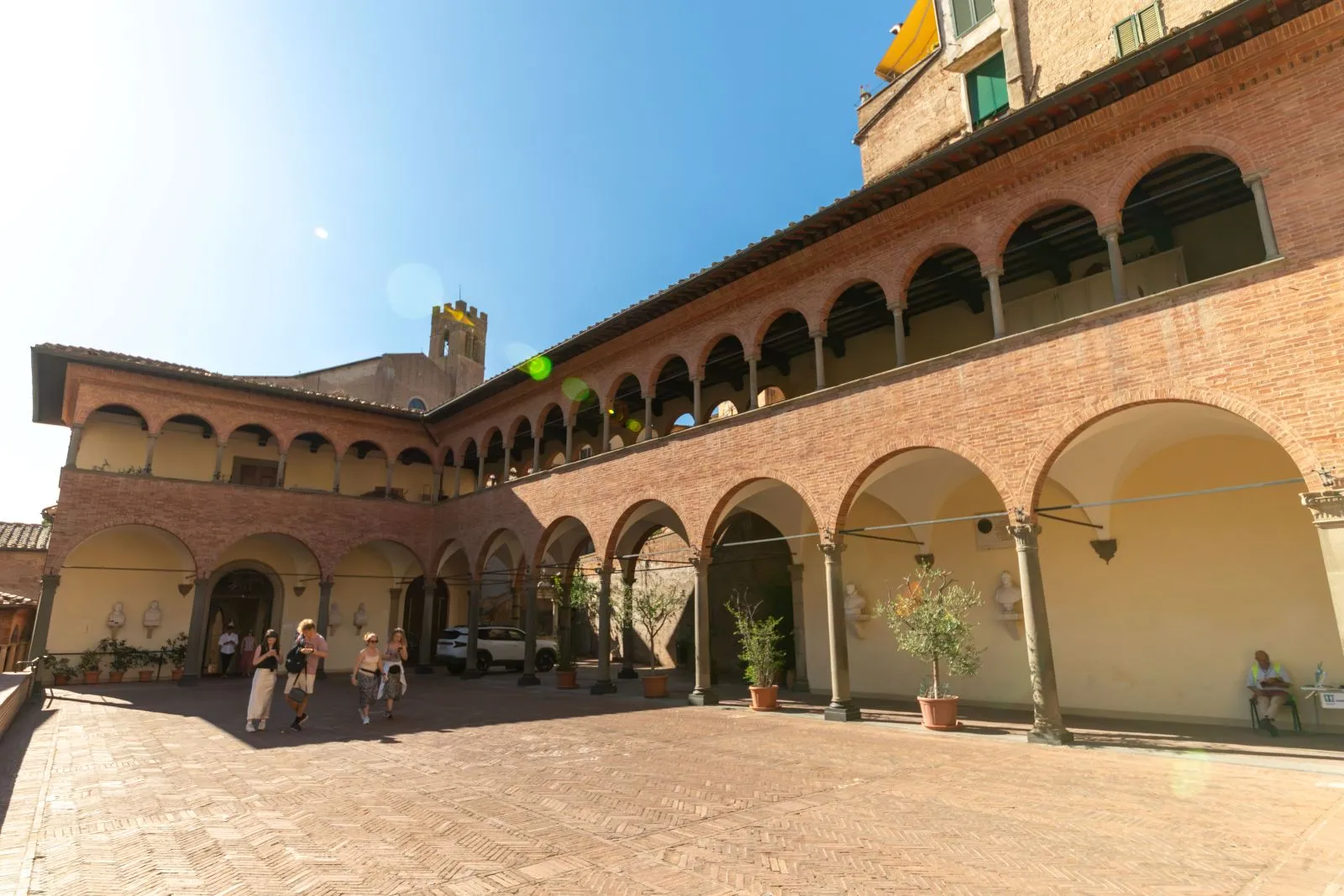
Built between the 15th century and the mid-15th century, the Logge combine the refinement of Sienese Gothic with the early suggestions of the Renaissance.
The wide arches, harmonious and imposing, open onto a space that once represented the nerve center of the city's economic life.
The Tribunal of Mercanzia
It was not just a simple passageway, but the seat of the powerful Tribunal of Mercanzia, where commercial justice was administered, disputes between merchants were resolved, and exchanges were regulated.
The Logge thus tell of an era when Siena was one of the most important financial centers in Europe, in dialogue with cities like Florence, Venice, and Lucca.
Statues, seats, and decorations
On the pillars, niches open that house five marble statues dedicated to the apostles Peter and Paul and the city's patron saints. The figures, sculpted by artists such as Vecchietta and Antonio Federighi, give the complex a strong symbolic and artistic value.
Under the arches are two refined marble seats, Renaissance masterpieces. The one on the right, decorated with scenes and figures from ancient history, still invites a suggestive pause today.
A scenic backdrop towards Piazza del Campo
Looking up, the ceilings decorated with frescoes and stuccos create an atmosphere capable of transporting the visitor to a distant time.
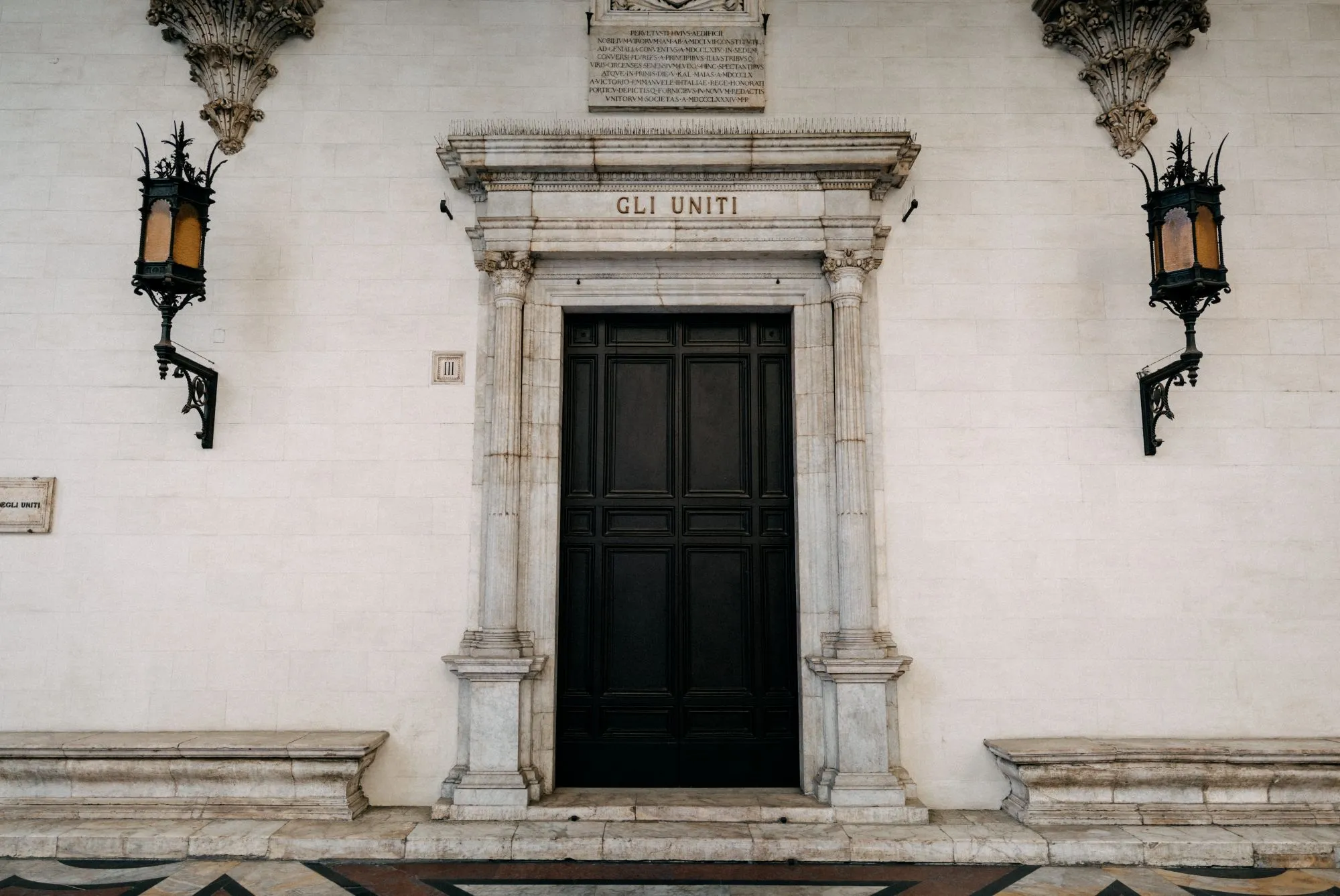
On the side facing Piazza del Campo, the loggia elegantly accompanies the entrance to the civic heart of the city. Above rises the palace that houses the Circolo degli Uniti, a historic aristocratic gathering founded in the 17th century and still today a symbol of prestige.