Palazzo delle Papesse, a new architecture in the heart of medieval Siena
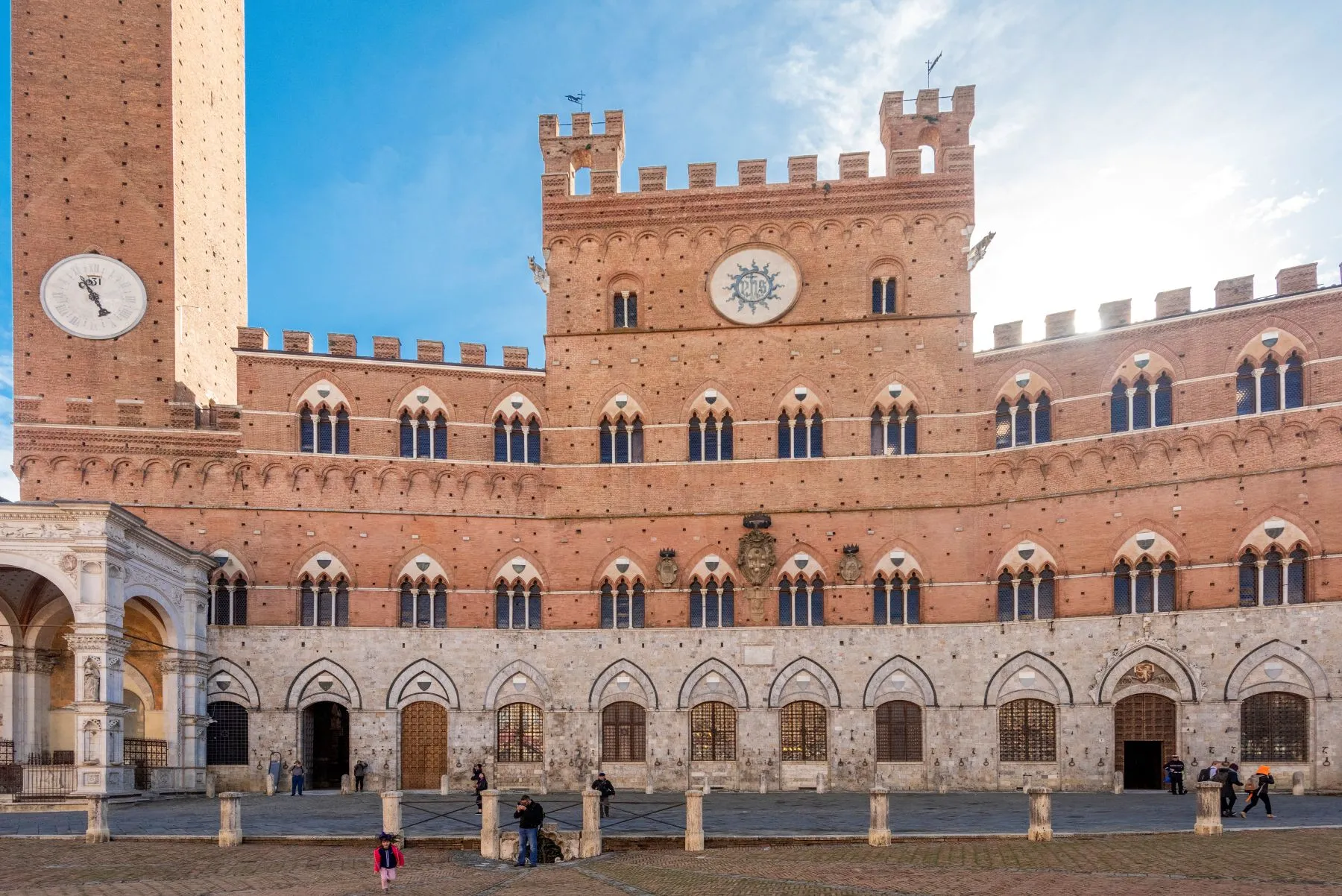
There is a place in Siena where the language of the city changes. The Palazzo delle Papesse brings a different, orderly, sober, Renaissance architecture into the medieval heart of Siena. Under the project of Bernardo Rossellino, the architect who played a key role in the transformation of Pienza, the Palace was built between 1460 and 1495 for Caterina Piccolomini, sister of Pope Pius II. A rare figure for the 15th century: she actively followed the construction site, overseeing expenses, materials, and labor.
The construction site between Rossellino, Federighi, and Urbano da Cortona
After Rossellino, the construction site passed to Antonio Federighi, who enriched the palace with sculpted frames and floral motifs, softening the severity of the original design. The completion was entrusted to Urbano da Cortona, who intervened mainly in the upper parts and in the altana.
The palace, the name, and its stories
The name “Palazzo delle Papesse” derives from the women of the Piccolomini family who lived in the building. The reference to the legend of Pope Joan is instead a product of popular imagination, but it has contributed to fueling curiosity and stories around the palace. The stone facade, with rustic ashlar on the ground floor and Renaissance bifore on the upper floors, must have appeared to the Sienese of the 15th century as an unusual presence: a strong aesthetic sign, linked to the prestige and power of the Piccolomini family.
Between courtyard, altana, and hidden traces
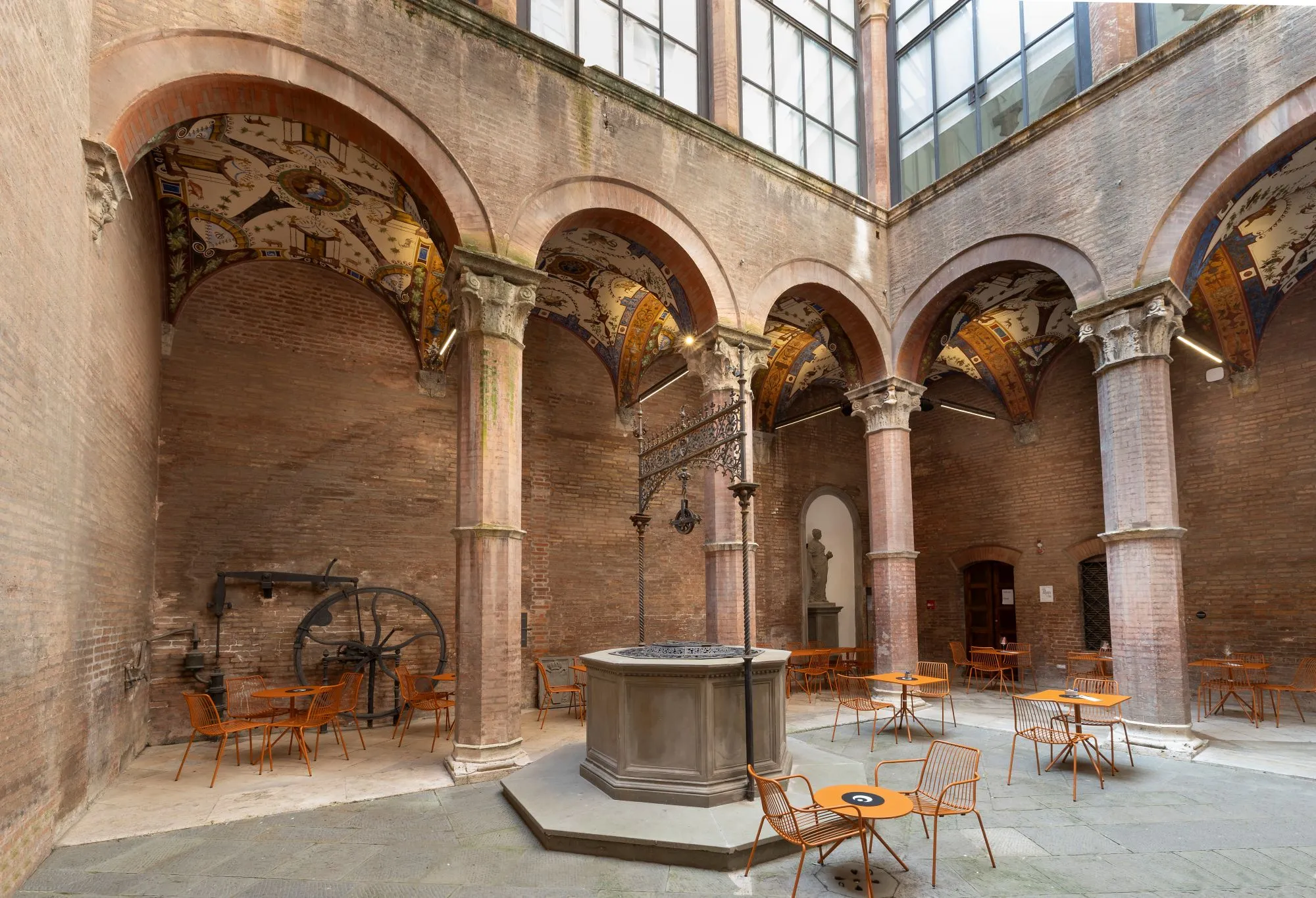
Inside, the courtyard preserves a Renaissance well attributed to Federighi's circle, decorated with shells, rosettes, and floral motifs. According to popular tradition, this space would have been a place for private meetings between emissaries and political figures.
The internal rooms hold traces of interventions by Sienese craftsmen between the 15th and 16th centuries, including decorators linked to the workshop of Giovanni di Stefano, an artist also active in the Cathedral and in the Piccolomini Library.
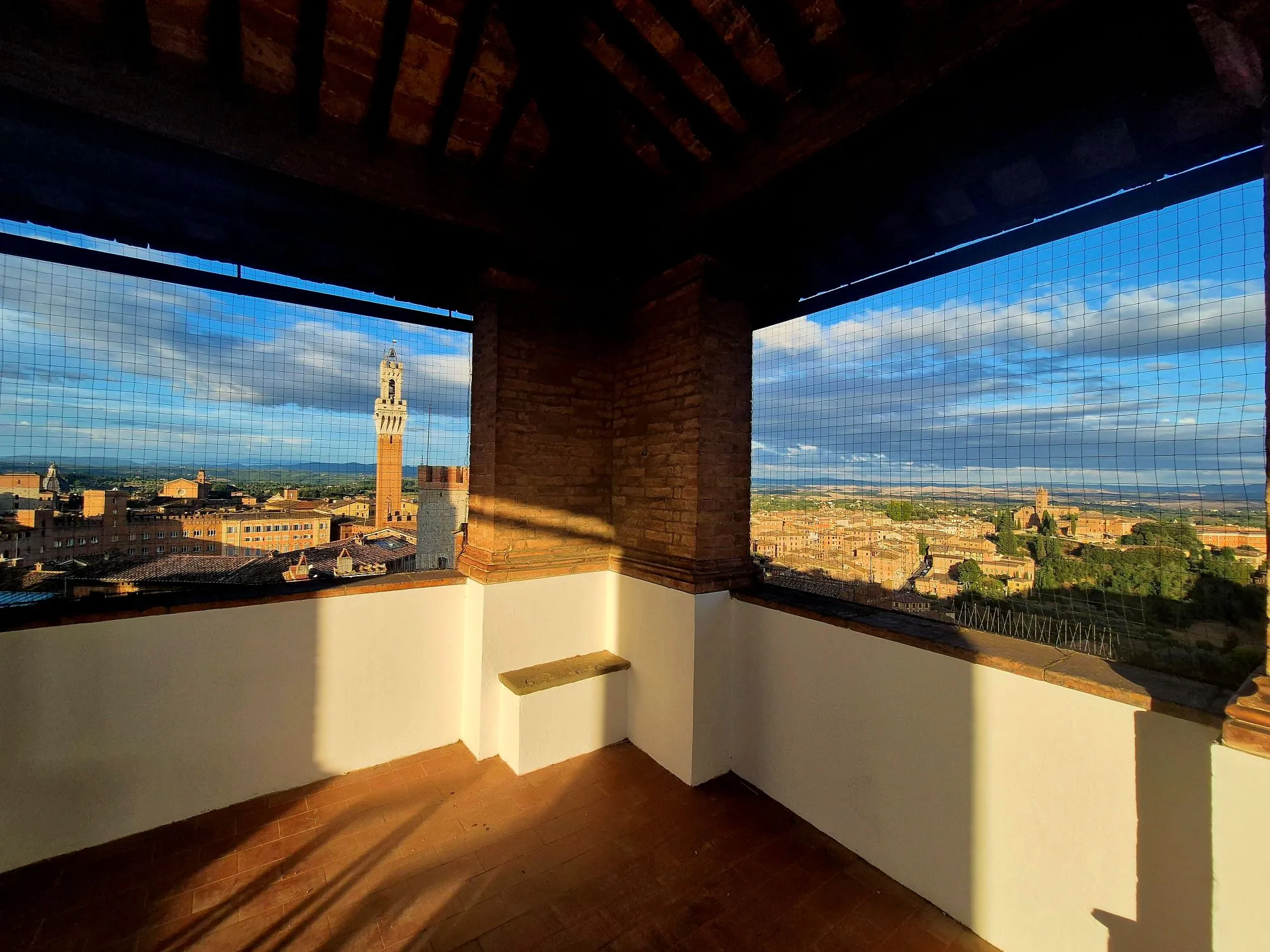
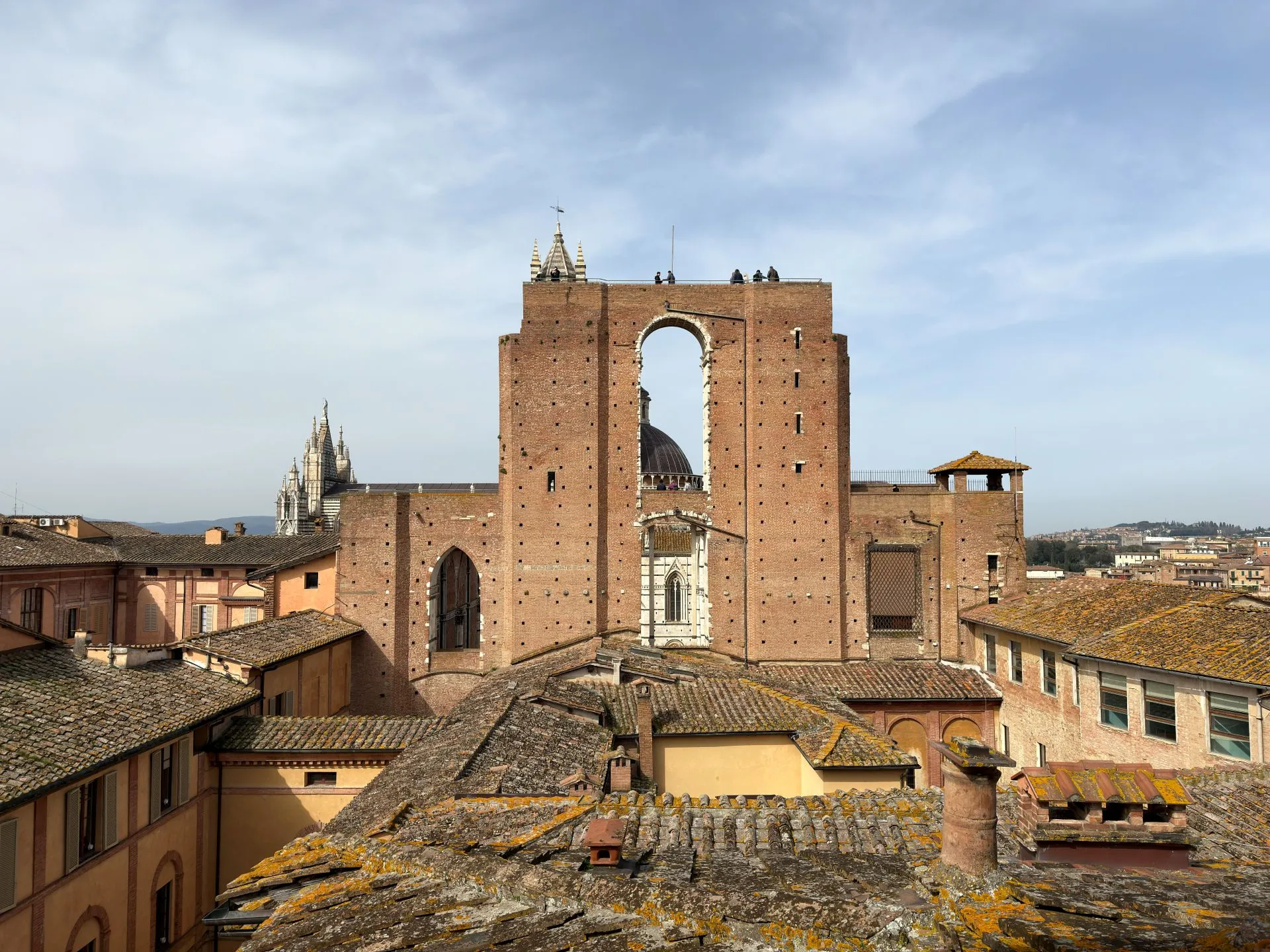
What makes the palace even more special is the panoramic altana, already planned in the original project. From here, the view opens up over the medieval roofs of Siena, the Torre del Mangia, and the dome of the Cathedral: a rare elevated observation point in private Sienese residences, which also reflects the Piccolomini's desire to visually dominate the city.
From the Bank of Italy to contemporary art
In the 19th century, the palace was purchased by the Bank of Italy, which transformed it into an institutional headquarters with vaults and reserved archives. The restorations were participated in by Giuseppe Partini, a Sienese architect known for the neo-Gothic restorations of the Cathedral and the Palazzo Pubblico.
In 1998, the Palazzo delle Papesse was transformed into a contemporary art center thanks to the work of curators such as Fabio Cavallucci and Enrico Crispolti, who inserted installations and exhibition paths in dialogue with the Renaissance spaces.