A name that tells a trade
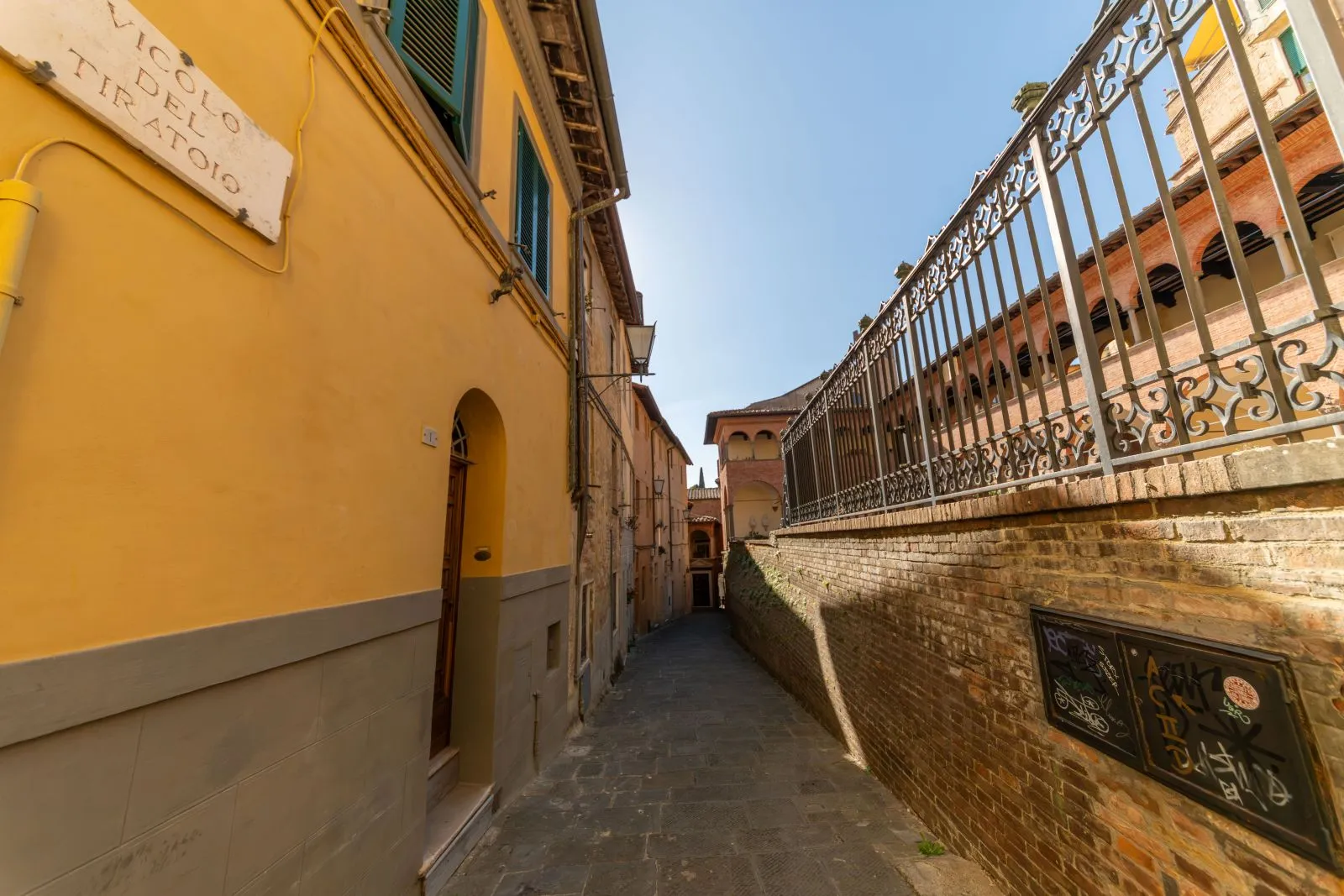
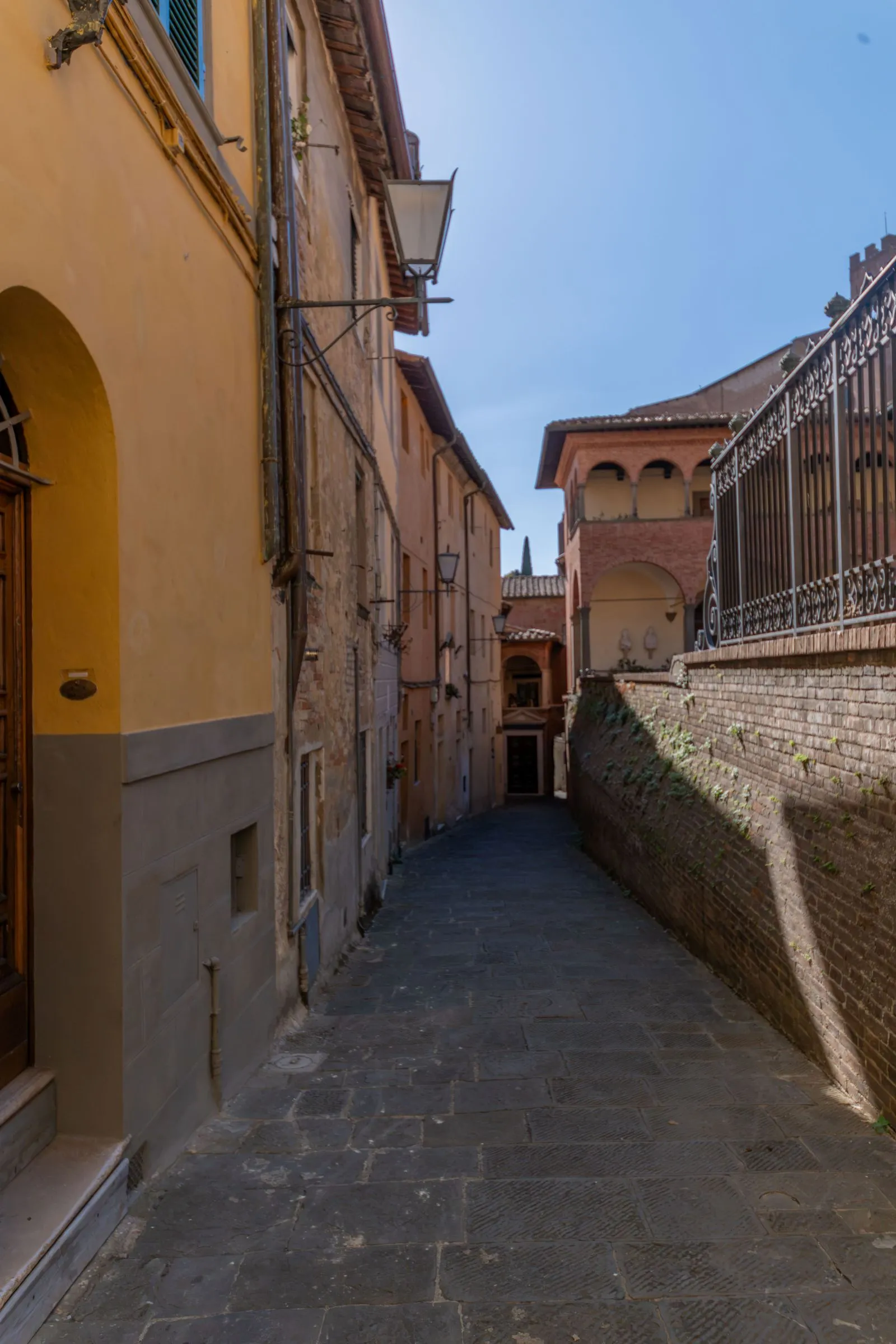
In the Third of the City, in the territory of the Noble Contrada dell'Oca, there is an alley that carries the memory of a vanished job in its name. The Alley of the Tiratoio connects the area of Fontebranda to Costa di Sant'Antonio, passing by the birthplace of Catherine of Siena, and owes its name to one of the most important phases of medieval wool processing: the one in which fabrics were spread and "pulled" on large wooden structures to dry after washing.
A simple, concrete name that says everything about what this area was in the Middle Ages: not a noble neighborhood, not a center of power, but a working district, of water, of hands engaged every day.
The water of Fontebranda and the art of wool
The area of Fontebranda was perfect for textile activities thanks to the great availability of water, essential for all processing. In the Middle Ages, Siena was one of the most important centers in Europe for wool production, and this area was dense with shops and workshops: dyeing, fulling, wool merchants, and other artisans who contributed to the economic wealth of the city.
This passage represented the last phase of the production cycle: after weaving, the cloths were washed, fulled, and finally dried in the tiratoi. Originally managed by private individuals and corporations, in the 1300s they came under the control of the Wool Guild, one of the most powerful corporations in Siena. Between 1344 and 1346, a large building was constructed specifically for this function, still visible along the alley, although transformed over the centuries. Today it houses the nuns of Santa Caterina and a kindergarten: the continuity of use of a place that has never ceased to be alive.
Dante, Master Adamo, and the thirst of Fontebranda
In the alley, there is a commemorative plaque that connects this place to the Divine Comedy by Dante Alighieri. The reference is to the XXX canto of Hell, where Dante encounters the forgers and describes Master Adamo, punished for counterfeiting coins. The damned man is depicted in a state of eternal thirst, so much so that he desperately desires the water of Fontebranda, a symbol of his punishment and his distance from the world of the living.
A literary bond that transforms a simple alley into a fragment of great Italian poetry: a few meters of stone that touch Dante, water, sin, and memory.
Come and discover it
The Alley of the Tiratoio is a silent place but rich in history: the Siena of work, of water, and of artisan ingenuity, the one that is not seen from the main squares but has built the wealth and identity of the city.
Walk to Fontebranda, enter the alley, look for the Dante plaque. Certain passages tell Siena more deeply than any monument.
Area of Fontebranda, Third of the City, Siena, in the territory of the Contrada dell'Oca.