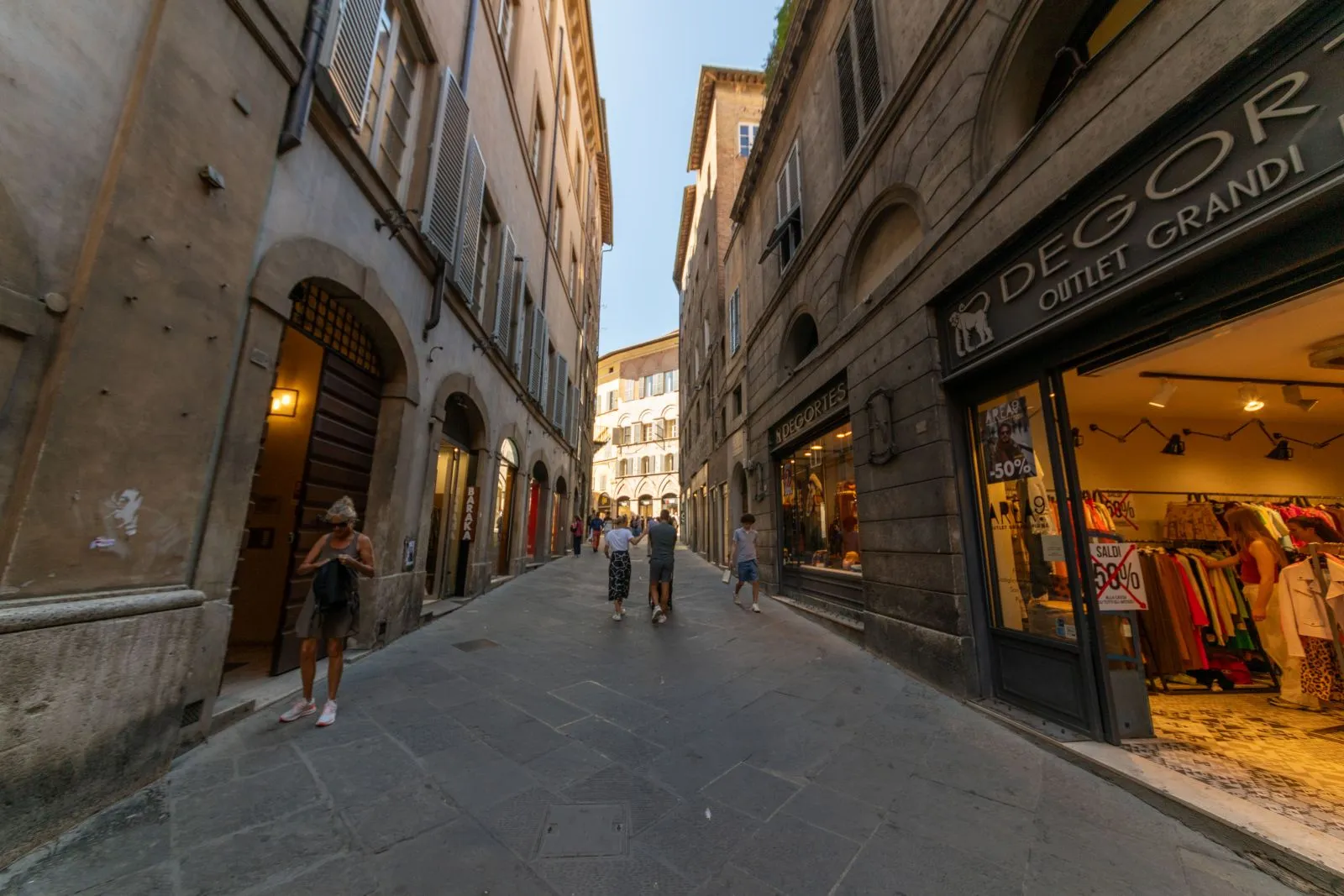
The street that does not show itself
If Via Banchi di Sopra is the elegant, bright street, the one that poses, Via Banchi di Sotto is the one that whispers. It runs lower than its twin, following the natural slope of the city, and this already says something: it is a street that descends, that immerses, that leads to a more ancient, more intimate, almost secret Siena.
In the Middle Ages, it was a fundamental stretch of the commercial axis that connected Porta Romana with the Campo. Pilgrims, merchants, students of the Siena Studio, and citizens looking for less lavish but more authentic shops passed through here. It was the street of the "minor banks": the small money changers, artisans, sellers of simple fabrics. A world less rich, but more alive.
The buildings that speak softly
Palazzo Piccolomini and the Biccherne
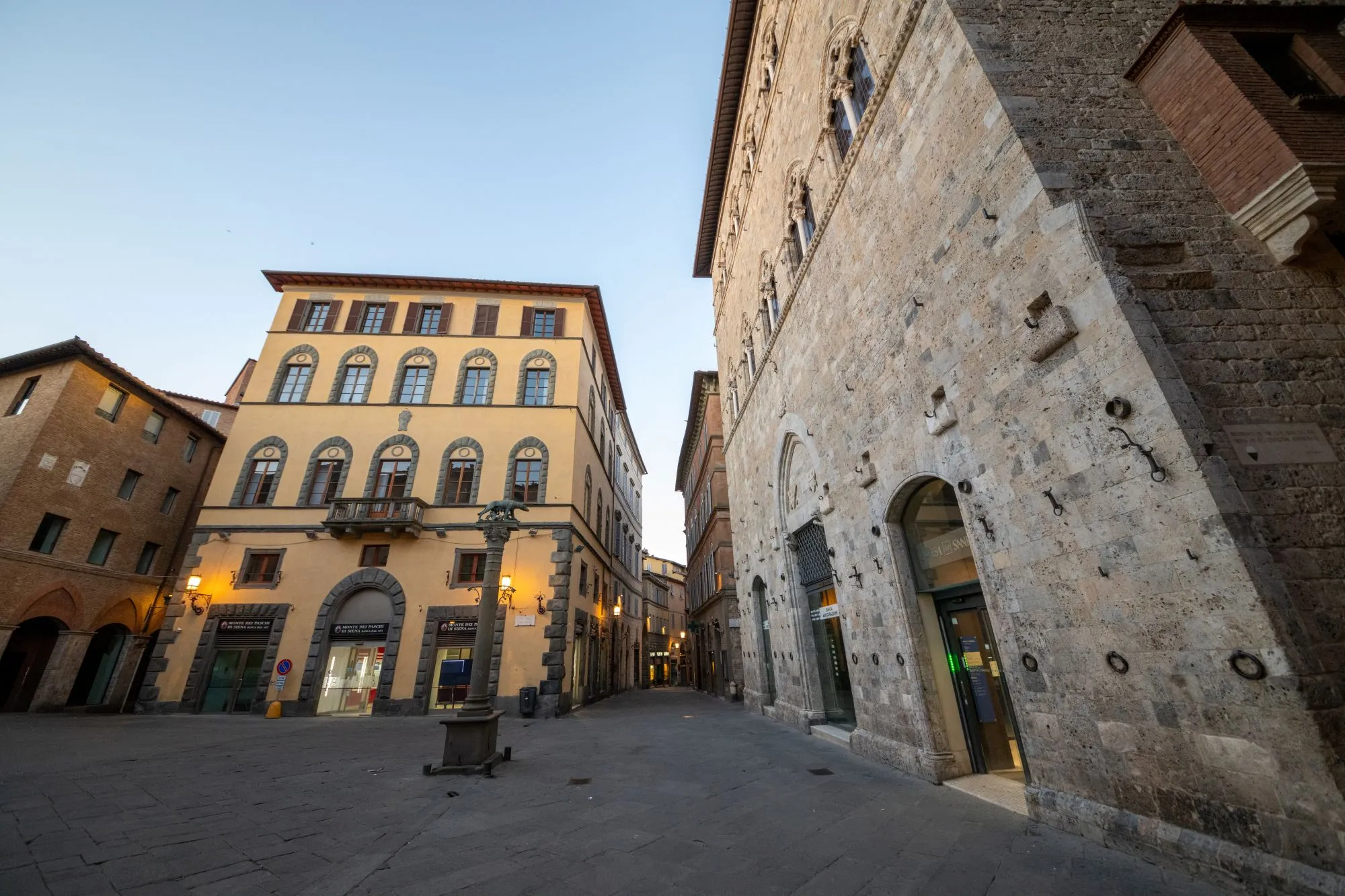
Along the street, one encounters buildings that do not shout their beauty, but let it be discovered. The Palazzo Piccolomini, elegant and austere, is linked to the family of Pope Pius II and today houses the State Archive, keeper of the famous Biccherne: the painted tablets that for centuries have told the administrative and artistic history of Siena.
Palazzo Salimbeni and the Church of San Martino
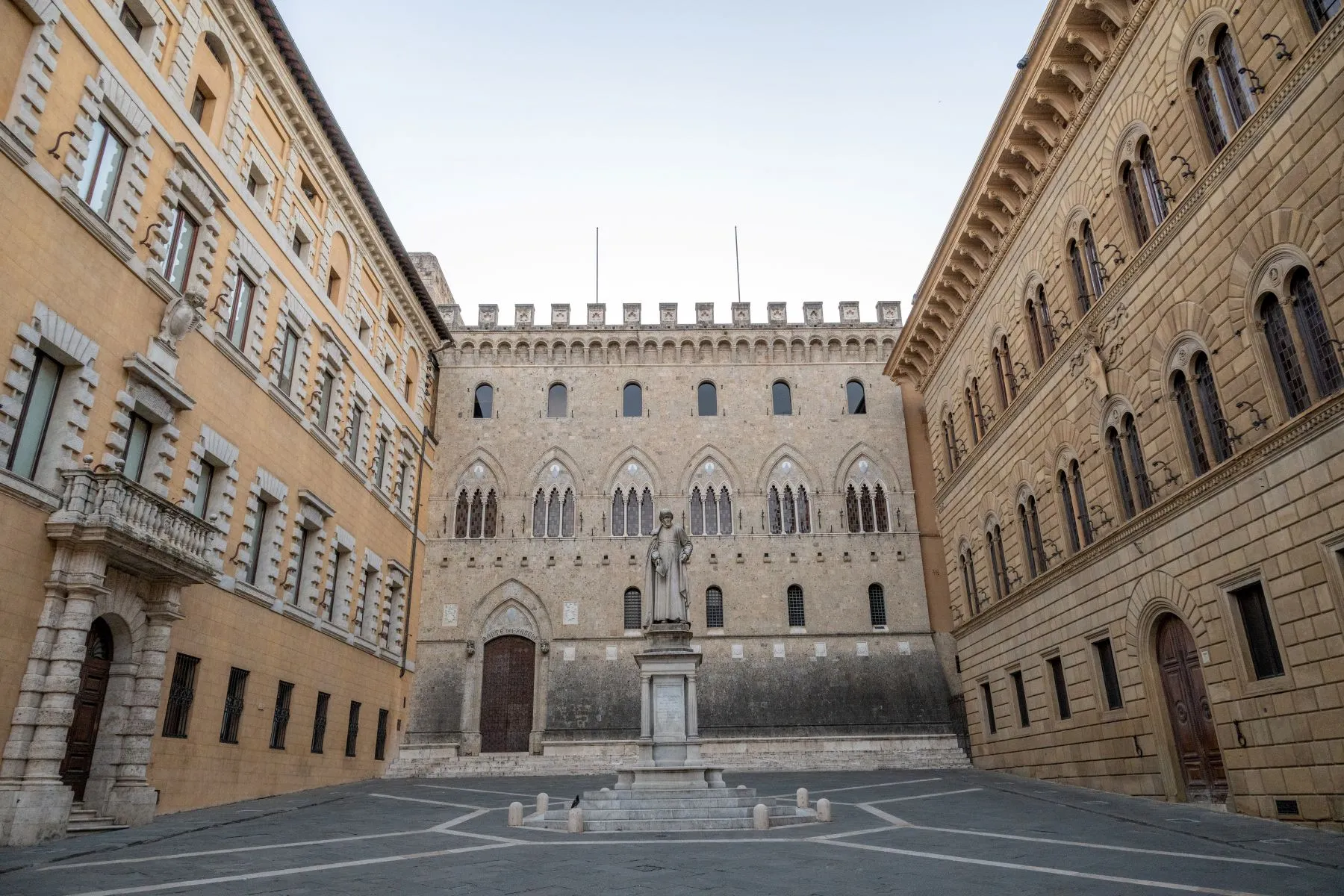
A little further on, Palazzo Salimbeni "minor" recalls the vast and turbulent heritage of one of the most powerful families of the Republic. And then there is the Church of San Martino, discreet yet precious, which houses works of art and a long history of popular devotion. Every door seems to guard a secret, every window a family story.
The students, the Palio, and the legends
It is said that in medieval times, Banchi di Sotto was the favorite street of students of the Studio, because here one could find cheaper taverns and shops to buy parchments and inks without spending a fortune. A student tradition that somehow still survives today.
Some say that on summer evenings, when the street empties, one can hear the distant sound of a lute: the echo of an ancient minstrel playing for passersby. A legend, of course. But on certain evenings, in certain alleys, one believes it.
During the Palio, the street transforms into a corridor of emotions: contradaioli moving between the Campo and the headquarters of the nearby contrade, air vibrating with songs and quick steps.
Come walk
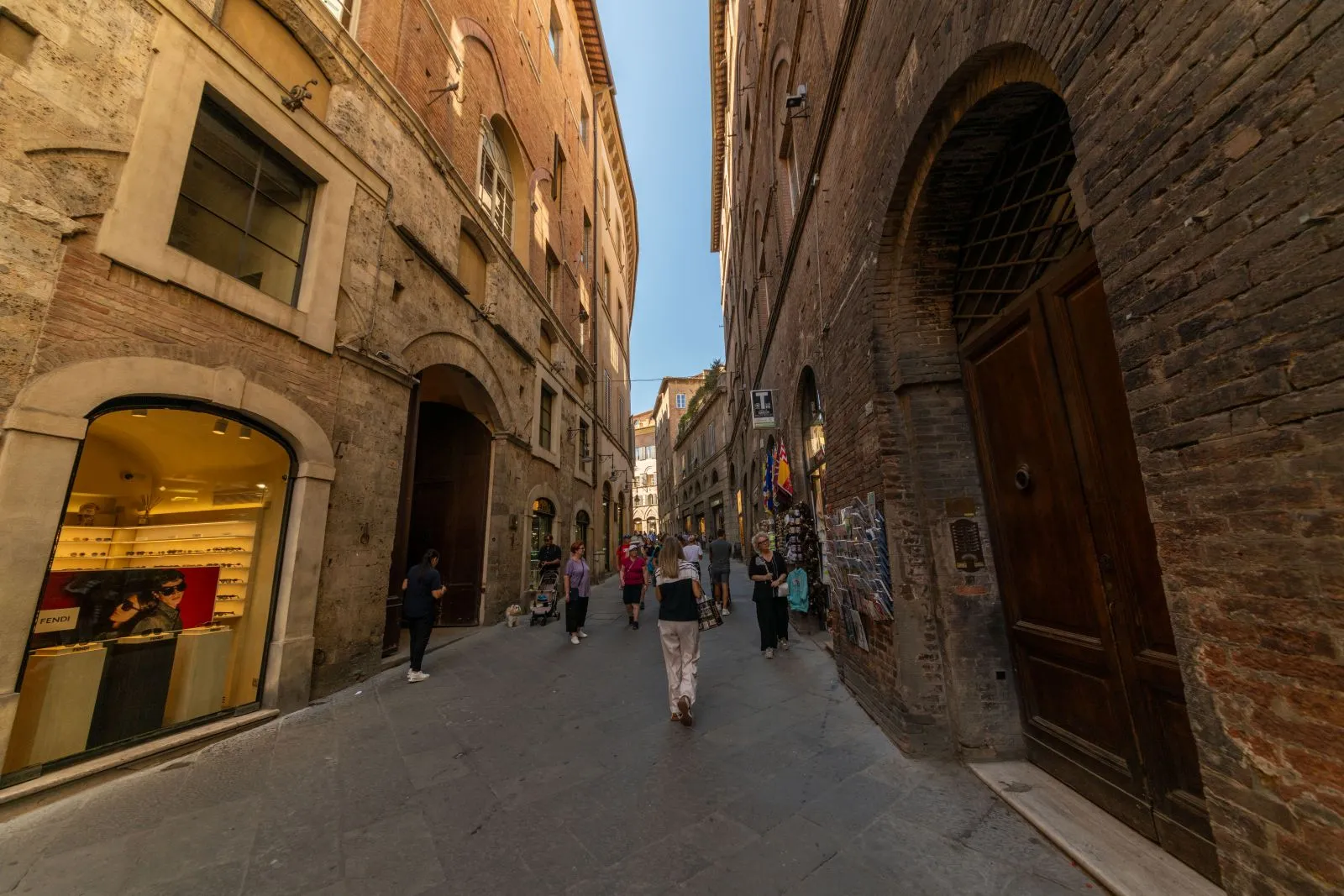
Banchi di Sotto is not the street of large shop windows. It is the one of small glimpses: an arch opening onto an alley, a stone worn by time, a smell of cooking wafting from a slightly ajar door.
Third of San Martino, Siena, between Porta Romana and Piazza del Campo.