A street that tells you about Siena before you even ask
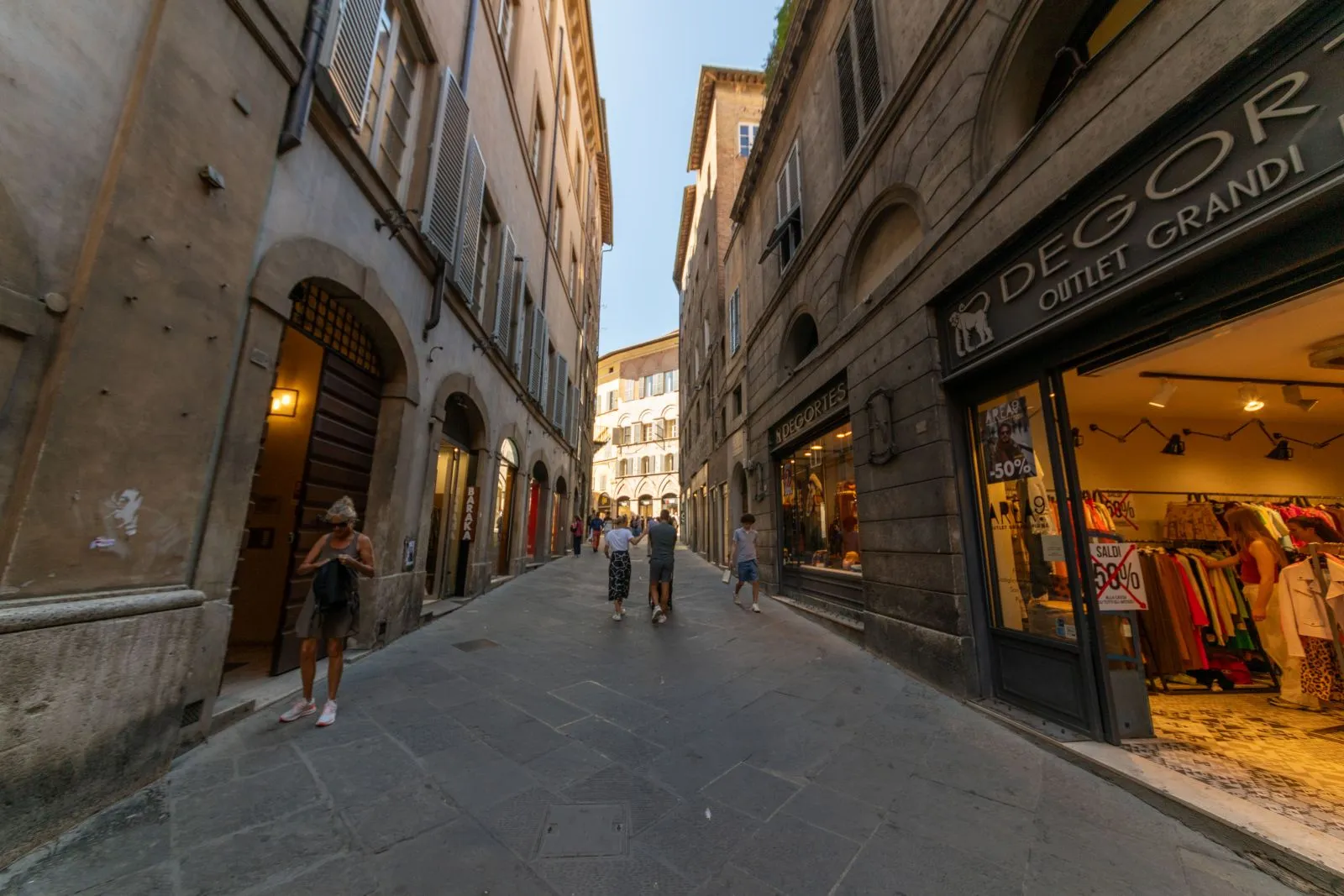
As you set foot on Via Banchi di Sopra, you immediately feel that this is not an ordinary street. Born as the central stretch of the great road axis that crosses Siena, it has been for centuries the point where trade, business, and destinies intertwined among merchants from all over Europe, like threads in a fabric that only this city knew how to weave. The very name reveals itself as you walk: it derives from the benches of money changers, who displayed foreign and local coins here, turning every cobblestone into a piece of medieval financial history. During the peak period of the Republic of Siena, this street was the beating heart of economic life, the place where family fortunes were decided in hushed tones, between a glance and a handshake. You can almost still hear it, the clinking of coins coming from the palaces that silently watch over passersby.
An open-air museum, palace by palace
Palazzo Tolomei
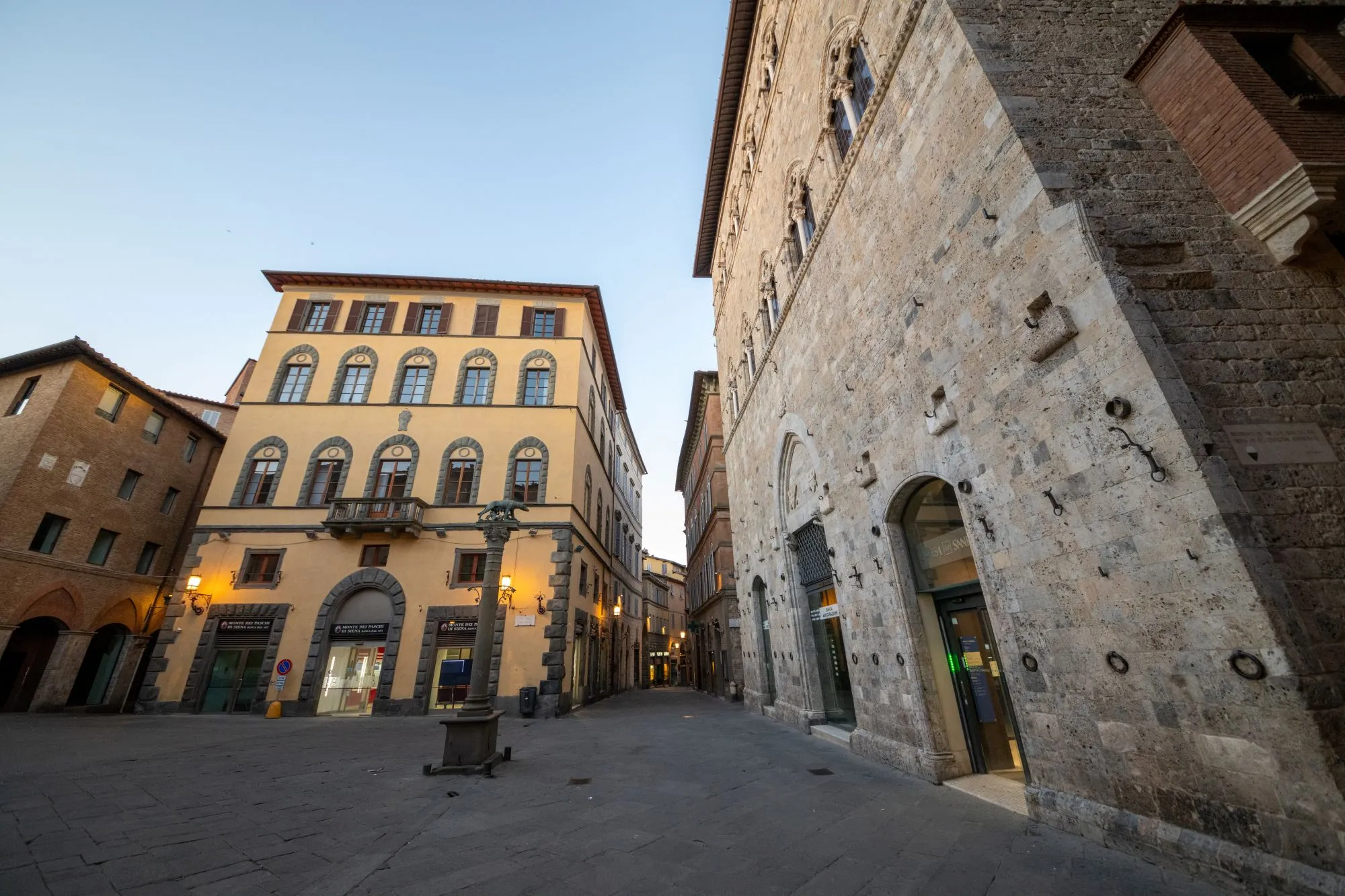
The first to catch your eye is Palazzo Tolomei. You feel its imposing presence even before you raise your eyes: its stone facade stands tall and proud, as if still defending the name and power of one of the most influential families in the city. You approach and realize that it is not just a building. It is a declaration of power, etched in stone, for centuries.
Palazzo Salimbeni
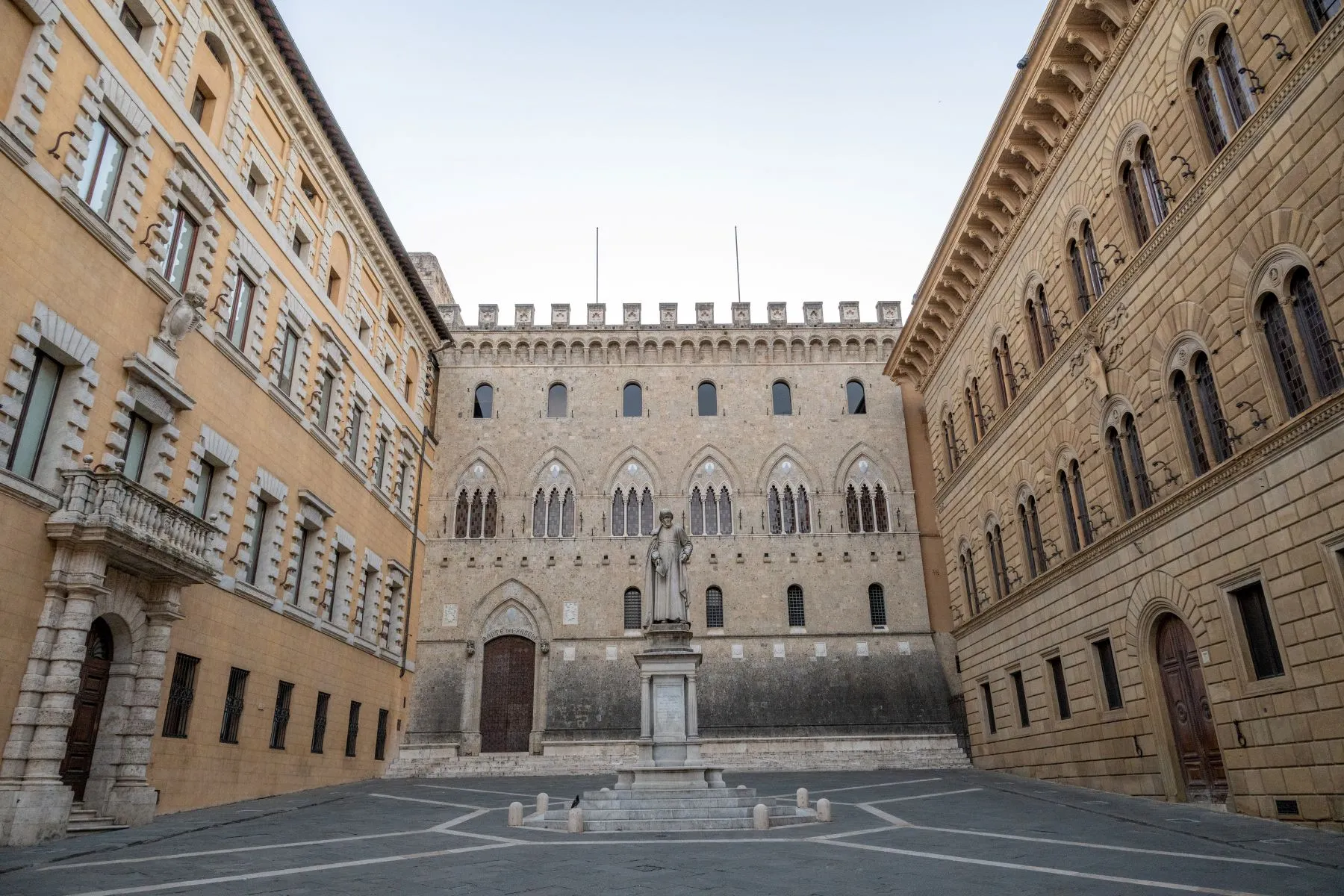
Just beyond, Palazzo Salimbeni appears elegant and composed. Today the headquarters of Monte dei Paschi di Siena, the square behind creates an almost theatrical setting, with three palaces conversing with each other through different styles. Stopping for a moment to look at them, it feels like witnessing a centuries-old conversation between stone and stone, continuing since long before any of us were born.
Palazzo Spannocchi
Finally, Palazzo Spannocchi invites you to slow down. Its Renaissance loggia seems made to stop the passerby and encourage them to observe the carved details, one by one, without haste. Indulge it.
Rivalries, secrets, and superstitions
The street of luxury and warring families
In the Middle Ages, this street was considered the "street of luxury": shops of goldsmiths, apothecaries, and merchants of fine fabrics displayed goods that arrived from Florence, Venice, and even from the East. But beneath the elegant surface, the families Tolomei, Salimbeni, and Piccolomini, all with palaces overlooking the same street, lived in constant tension made of political and personal rivalries. It is said that the Salimbeni created internal passages to move unseen, ghosts within their own walls. Who knows how many plots have unfolded right here, among these very stones that still tell everything today.
The devil's stone
As you approach Palazzo Tolomei and lower your gaze, you look for a dark slab in the pavement. It is the so-called "devil's stone", which popular tradition links to malevolent presences and mysterious nighttime events, as if something ancient had stopped there, unable to leave. Over time it has become a small city superstition. Whether you believe it or not, the thrill of stepping over it is guaranteed.
The details that make this street unique
Anyone who ventures onto this street eventually notices: it changes name three times while remaining the same, a detail that the Sienese love to proudly mention, smiling at their tendency to complicate what elsewhere would be simple. The crests carved on the facades silently watch over, small stories in stone that testify to marriages, alliances, and ancient family ambitions, mute guardians of tales that no one has ever fully written. Looking at the original bifore and trifore that filter light in a characteristic way, you breathe in the intimate atmosphere of the street. History continues even underfoot: the serena stone pavement, which, although redone over time, maintains the historical layout and gives back that sense of continuity that makes Siena so unique. The slight irregularity of the path is not a mistake: Siena follows the profile of its hills, and Via Banchi di Sopra still preserves today the sinuous elegance of medieval streets.