A place that stops you before you even realize it
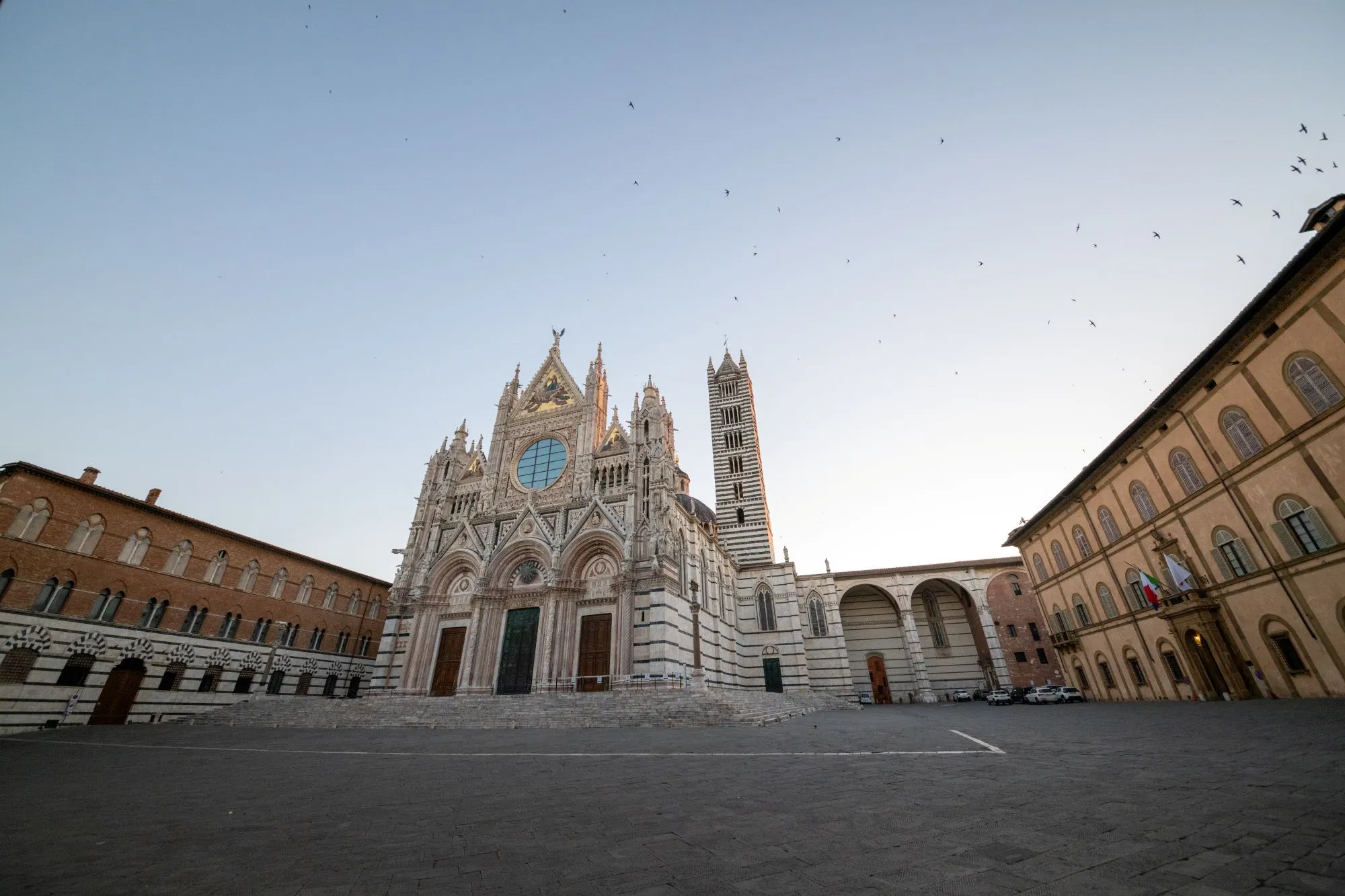
As you climb towards the highest part of the city, something changes. The road opens up, your breath expands, and in front of you lies one of the most fascinating and symbolic spaces in Siena. The Cattedrale di Santa Maria Assunta dominates everything, silent and majestic, as if waiting for someone to finally notice it. Around it, the monumental complex that includes the Baptistery, the Opera Museum, and the ancient Hospital of Santa Maria della Scala encloses the square like a stone embrace. Stopping and looking up, you sense a feeling suspended in the air. As if the square is waiting for something that never arrived.
The greatest ambition of Christianity, halted by the plague
The Cathedral that was supposed to change the world
In 1339, Siena had an extraordinary plan: to build a cathedral so immense that the current Duomo would become merely the transept of a building that would have been the largest in Christianity. You can still feel that weight as you walk through the square. The ambition was cut short by the Black Death of 1348, which decimated the population, and by severe structural collapses. What remains is the Facciatone, the skeleton of the new facade that was never completed, an interrupted dream that still rises above the square as a silent warning. Climbing to its summit reveals one of the most spectacular views of Siena. Up there, you understand what it could have been, and the silence says the rest.
The white line that divides two worlds
Before entering the cathedral, looking down, you come across something unexpected. In front of the steps of the Duomo, there is a thin line of white stones embedded in the floor: an ancient, almost invisible boundary that divided the jurisdiction of the Bishop from that of the Hospital of Santa Maria della Scala, one of the oldest in Europe, created to welcome pilgrims and travelers along the Via Francigena. A frontier between two powers that time has not erased, forever imprinted in the pavement you are walking on.
What not everyone notices, but that changes everything
The hidden symbols between sacred and profane
The Duomo holds symbols that intertwine the sacred and the profane, if you know where to look. Moving to the outer left side, you come across the Square of Sator: trying to solve it seems simple, but no one will ever succeed. And that’s precisely the point. For centuries, it has fascinated scholars and enthusiasts of esotericism, mute and challenging like the first day. The internal floor hides another secret: the Sibyls, pagan figures carved in stone, included to represent the prophecy of the coming of Christ even in the ancient world. Vasari called it the most beautiful and magnificent ever made. You can admire it only for short periods of the year. If you are there at the right moment, don’t let it slip away.
The legends that walk with you
The black cross and the she-wolf you don’t expect
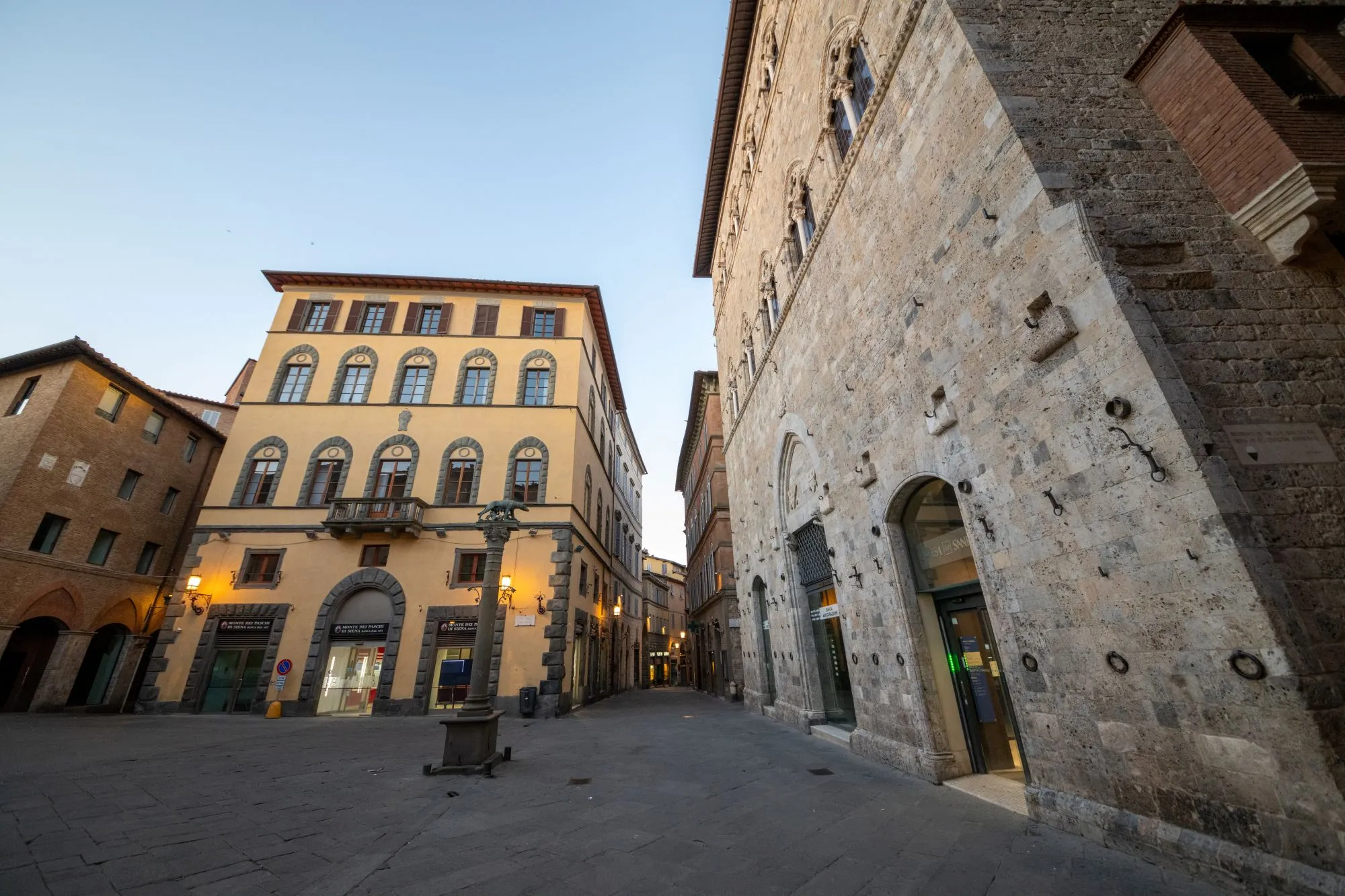
The staircase leading to the Baptistery holds a secret: a small black cross on the floor, a silent witness to a story that the Sienese have passed down for centuries. Tradition has it that Saint Catherine fell right there, pushed by the devil to prevent her from praying. A story that is still felt in the air as you walk. Looking up, you search for the she-wolf nursing the twins, which appears in various spots in the square and the cathedral, proud and motionless as if still watching over the city. According to the myth, Siena was founded by Senio and Ascanio, nephews of Romulus, who fled from Rome with the she-wolf stolen from the temple of Apollo. Stories of faith, power, and legendary origins that walk with every step on the square.