Piazza Chapel, the artistic and spiritual miracle of medieval Siena
It was 1352. Siena was still licking its wounds after the devastating Black Death four years earlier: decimated, but ready to rise again like a phoenix. Thus, the Piazza Chapel was founded as a thank you to the Virgin Mary for the end of the plague, as a sign of hope and rebirth, as a symbol of the fusion between civil power and Sienese spirituality. The building tells centuries of history: from its origins as a portico with three arches, to its transformation into a sacred chapel with a ribbed vault between the 13th and 14th centuries, up to the placement of the wooden choir for the relics of Constantinople in 1359.
Architecture and sculpture: a mosaic of Sienese mastery
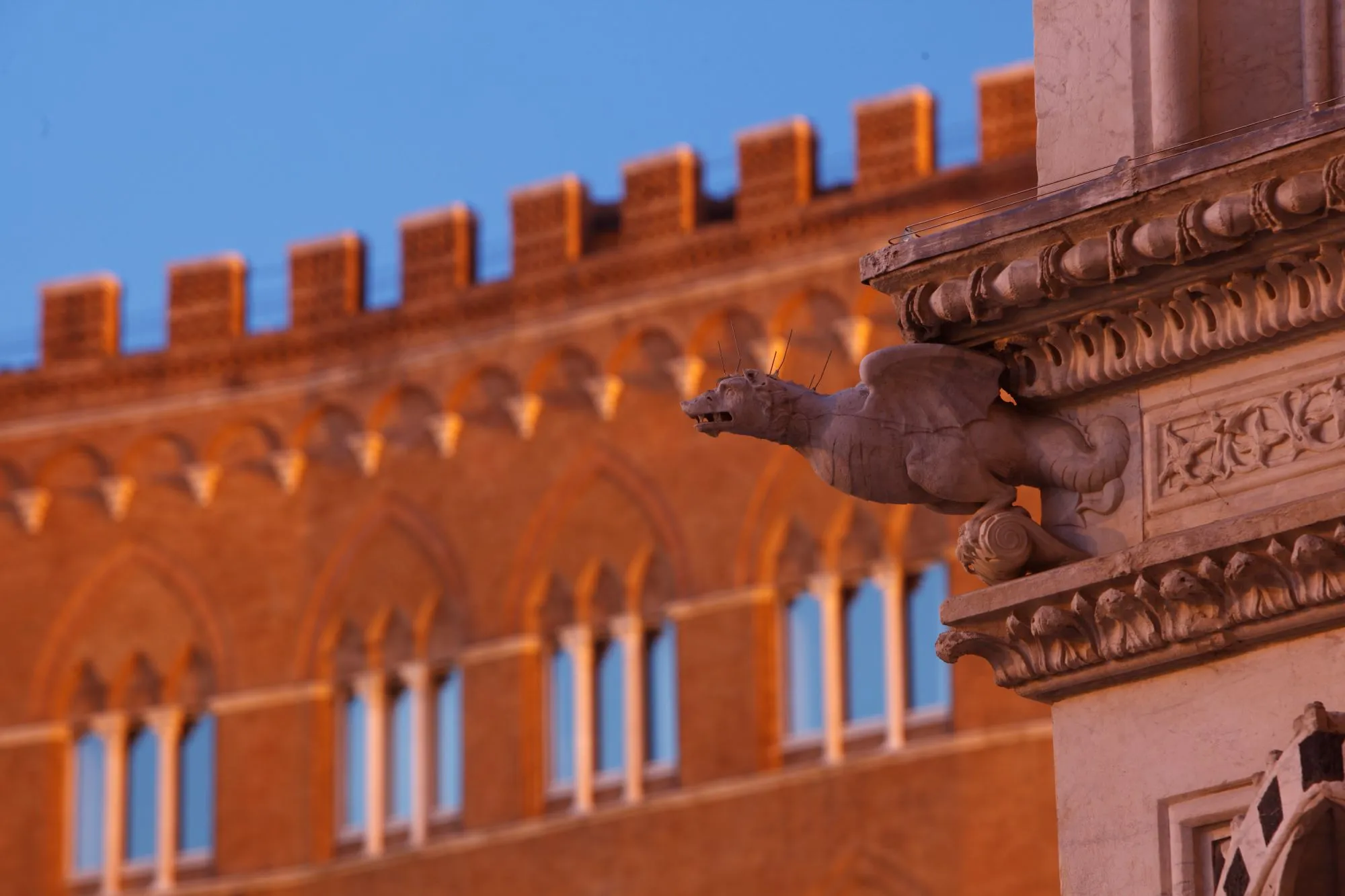
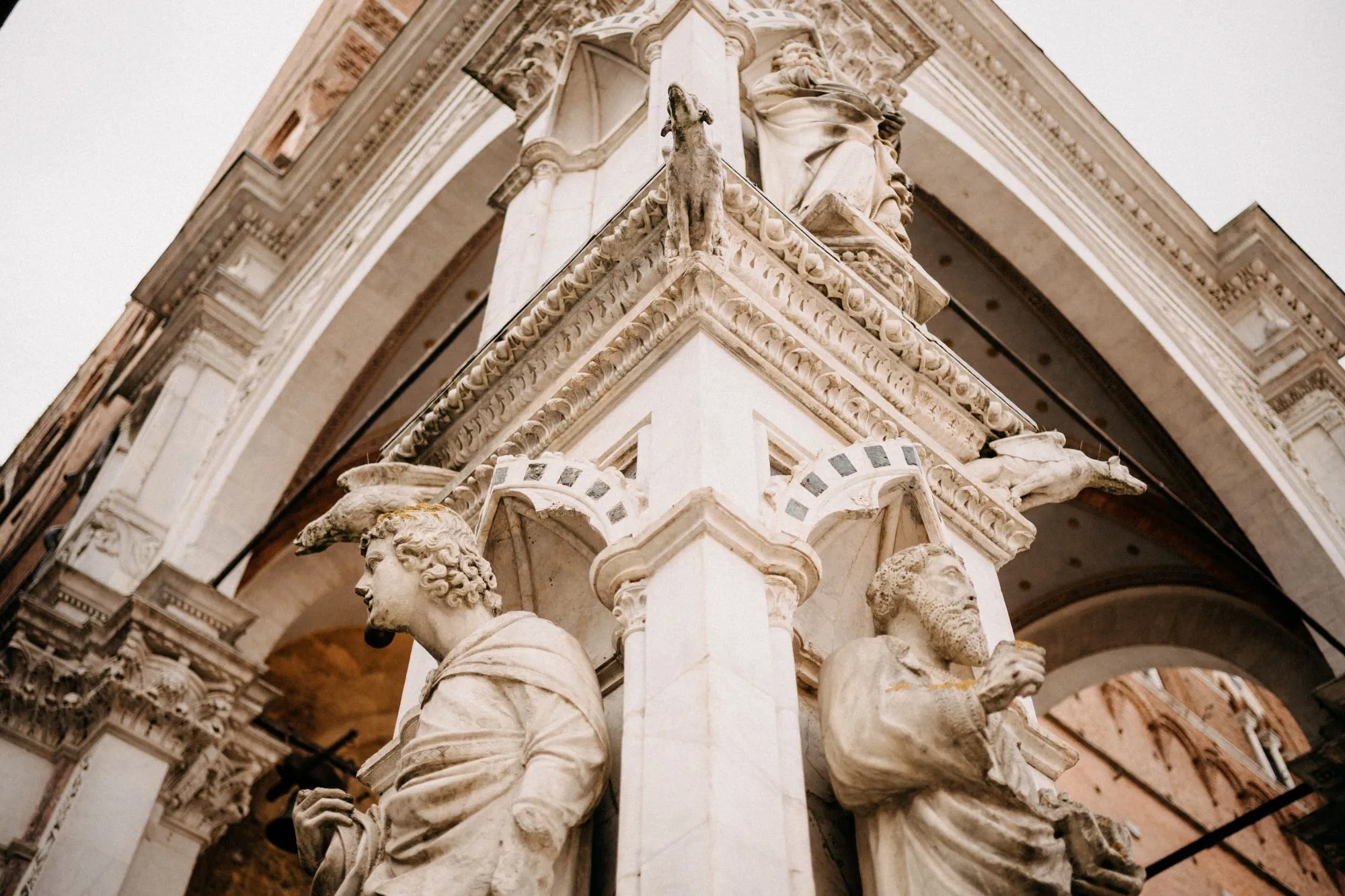
Between 1461 and 1468, Antonio Federighi revolutionized the structure with a vault supported by semicircular arches and refined “antiquizing” details. The facade, completely redone in 1846 by Enea Becheroni, joins the precious marbles of the 13th century, perhaps from the Cathedral, creating a unique historical and artistic mosaic. The niches of the pillars house imposing statues of saints (1378-1382), created by Mariano d’Angelo Romanelli and Bartolomeo di Tommé, while the wrought iron grilles of the 14th century, crafted by artisans Conte di Iello Orlandi and Pietruccio di Betto, protect the ancient sacred space.
From the Majesty to Sodoma: art that speaks of faith
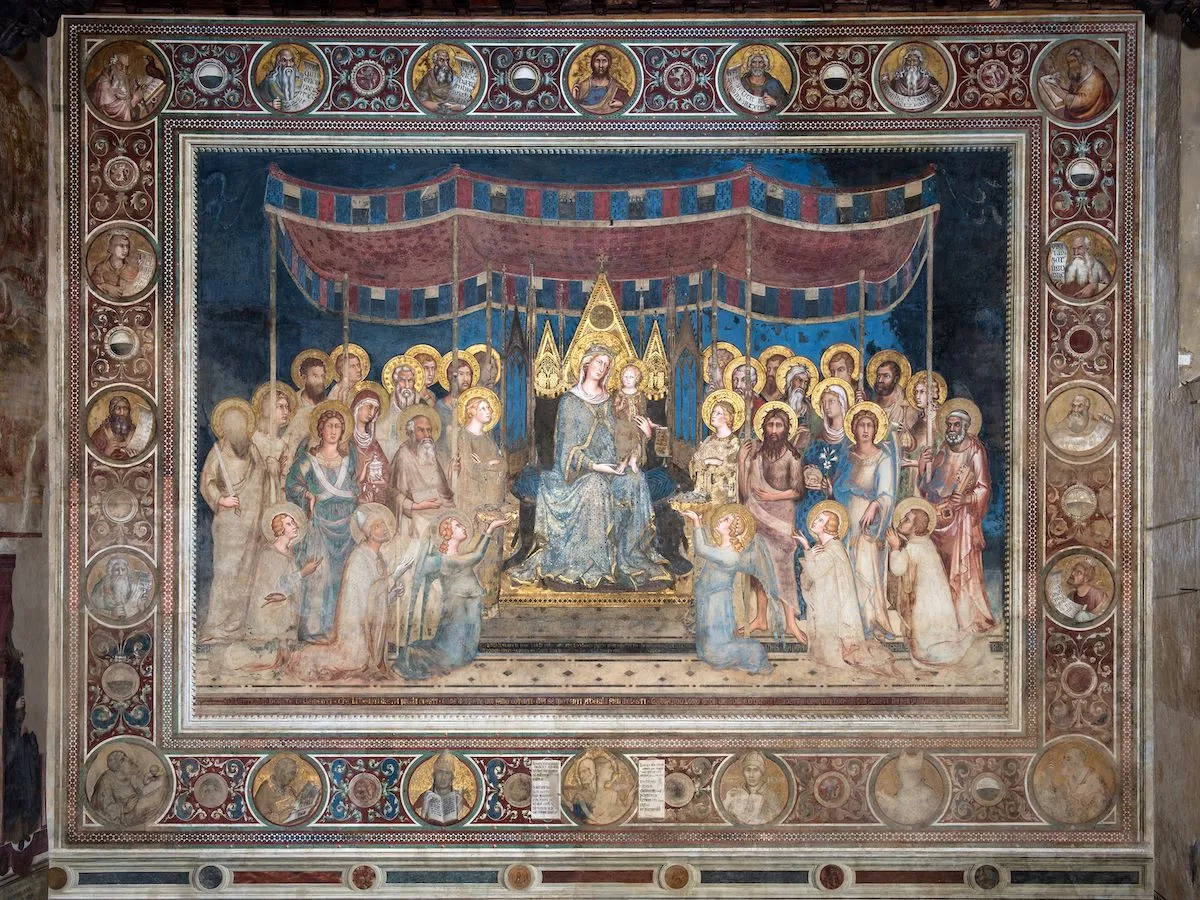
Between 1537 and 1539, Giovanni Antonio Bazzi, known as Il Sodoma, enriched the altar with the fresco of the Madonna with Child and God the Father. The remains of this extraordinary work are now preserved in the Civic Museum, a tangible testimony to the mastery of the Sienese school. Each fresco and detail narrate the devotion, art, and history of a city that knows how to transform faith into lasting beauty.
Piazza Chapel, a place of hope and collective identity
The chapel maintains its role in city life: every morning of the Palio, the Archbishop celebrates the Mass of the Jockey, blessing the protagonists and the Contrade. In 2022, illuminated in blue and yellow, it expressed the city's solidarity with the Ukrainian people, confirming its vocation as a symbolic place of hope, solidarity, and collective identity.