The original nucleus of the city
Several elements place here the first urban nucleus of Siena: archaeological finds, the strategic position at the highest point of the city, the layout of the roads surrounding the area, and the configuration of the ancient castrum.
Numerous discoveries testify to the Etruscan presence and indicate Castelvecchio as an oppidum, or public square. The most accredited theory traces the name of Siena to an Etruscan noble family, Seina or Saina.
From the Etruscans to the Romans
With Emperor Augustus, in the first half of the 1st century, Siena became a Roman colony under the name of Saena Julia. The Romans enhanced the Etruscan fortifications, transforming them into the first walled enclosure of the city.
According to tradition, Castelvecchio housed the offices of the magistrates of the Roman colony, then of the Lombard gastald, and finally of the Frankish count. Here, the first bishops of Siena would also have had their residence.
The still visible traces
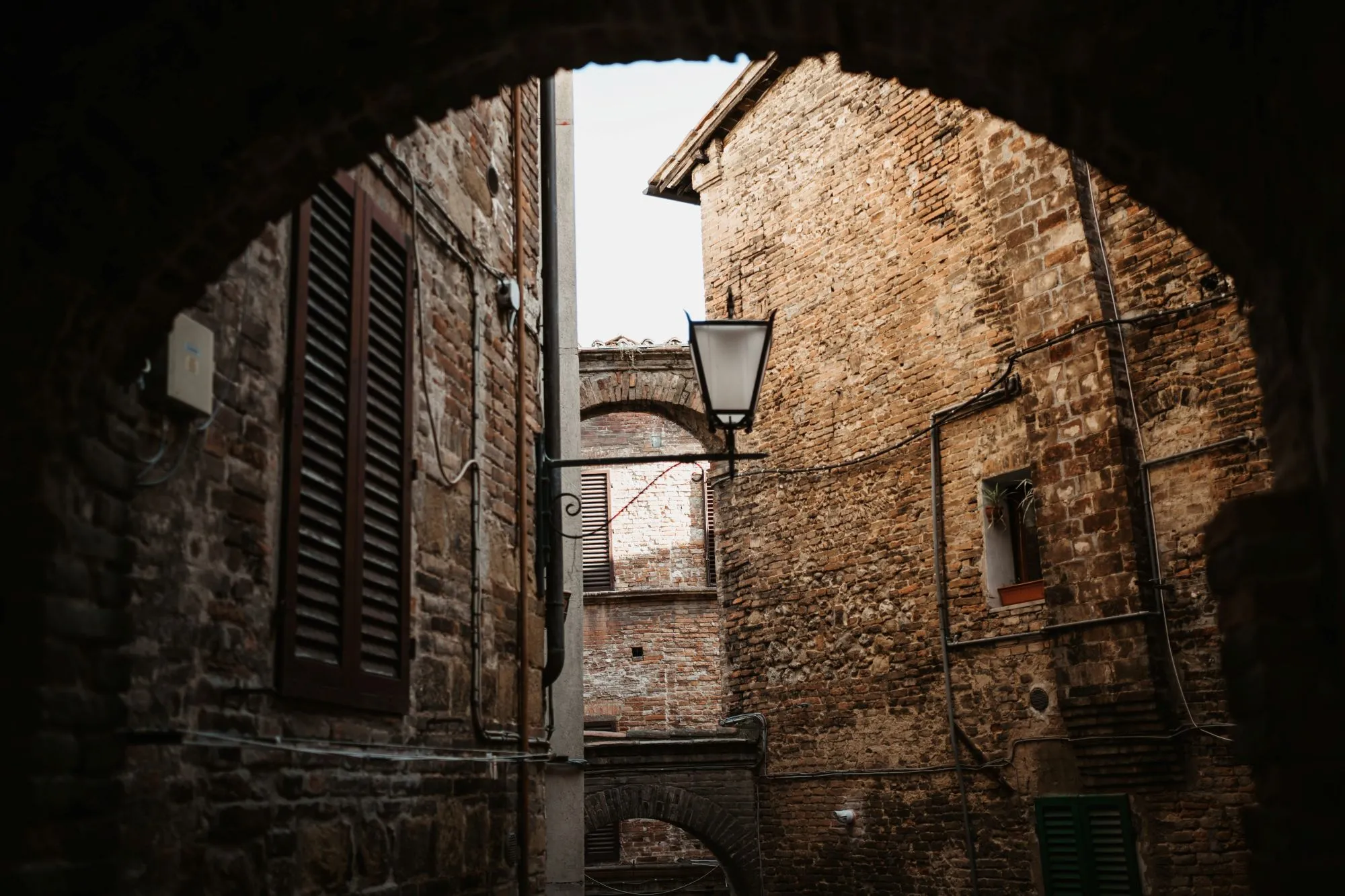
Despite the changes that have occurred over the centuries, Castelvecchio still retains the memory of its ancient layout. This is told by the internal streets, such as Via e Vicolo di Castelvecchio and Via San Quirico, the perfectly preserved raised courtyard, and the remains of the towers, including the Torre Voltaia, behind Piazza del Conte.
The legend of Senio and Ascanio
According to the legend, Castelvecchio was the landing place of the twins Senio and Ascanio or Aschio, sons of Remus, who fled after their father's murder by Romulus.
The twins, riding two steeds, one very white and one very black, arrived in Siena and built a temple dedicated to Apollo to guard the shrine of the Capitoline Wolf stolen from their uncle. The community elected them as leaders and built a castle called Castelsenio, a term later transformed into Castelvecchio.
A curiosity on via Castelvecchio
At the beginning of via Castelvecchio, there is a plaque from 1704 against prostitutes, with the inscription: “no prostitute, whether married or unmarried, may dwell in this street under penalty of ten scudi.”