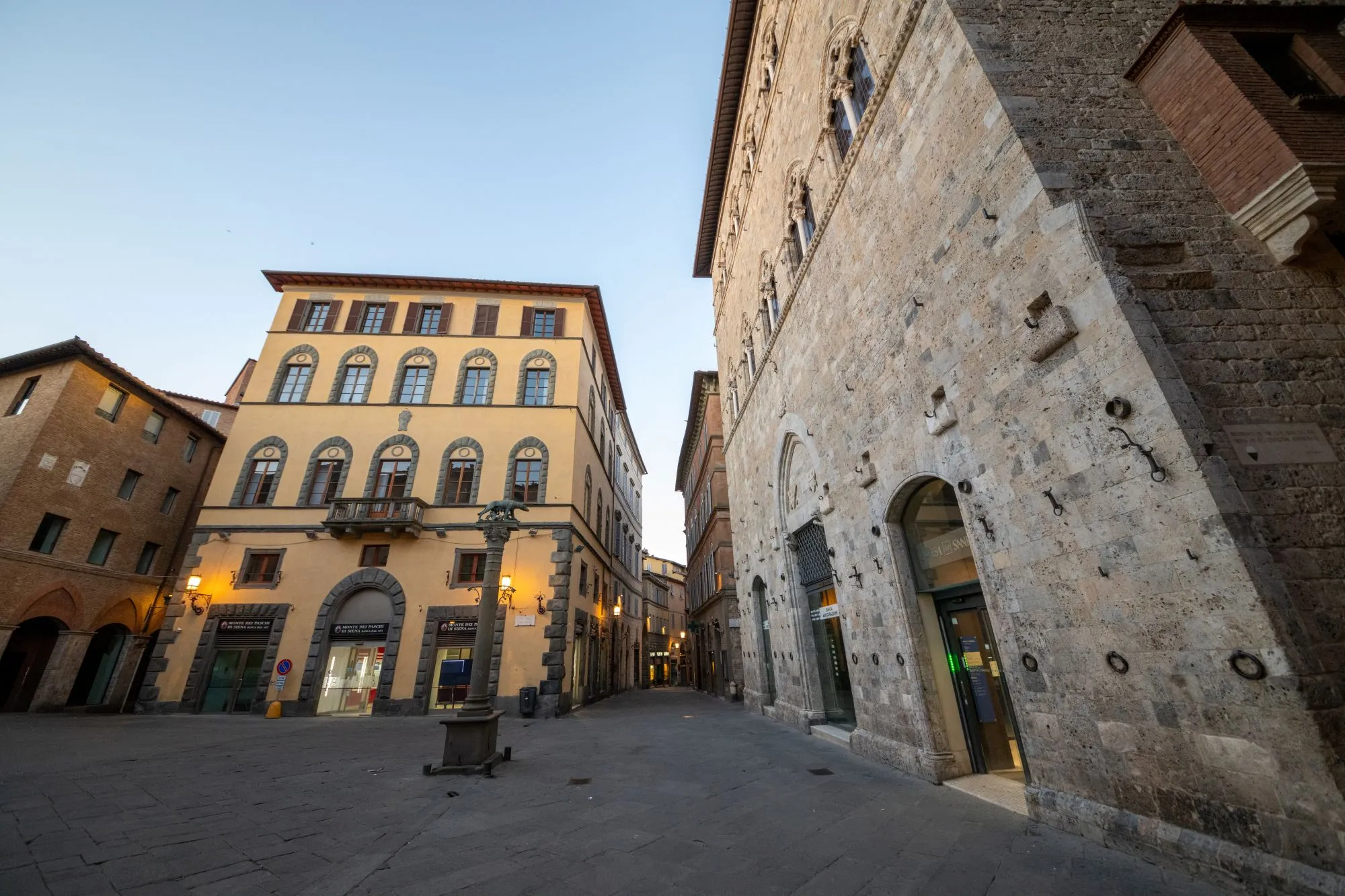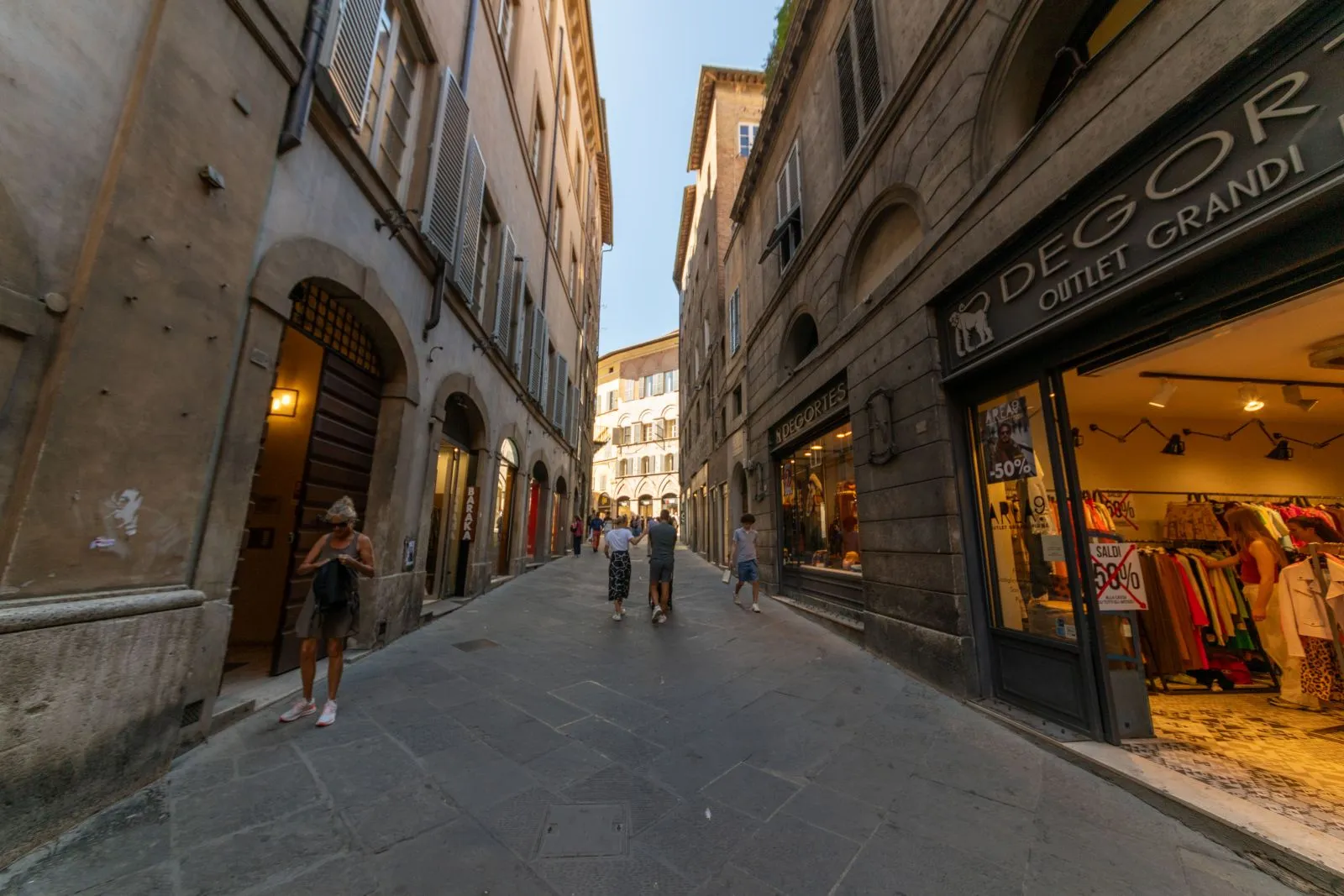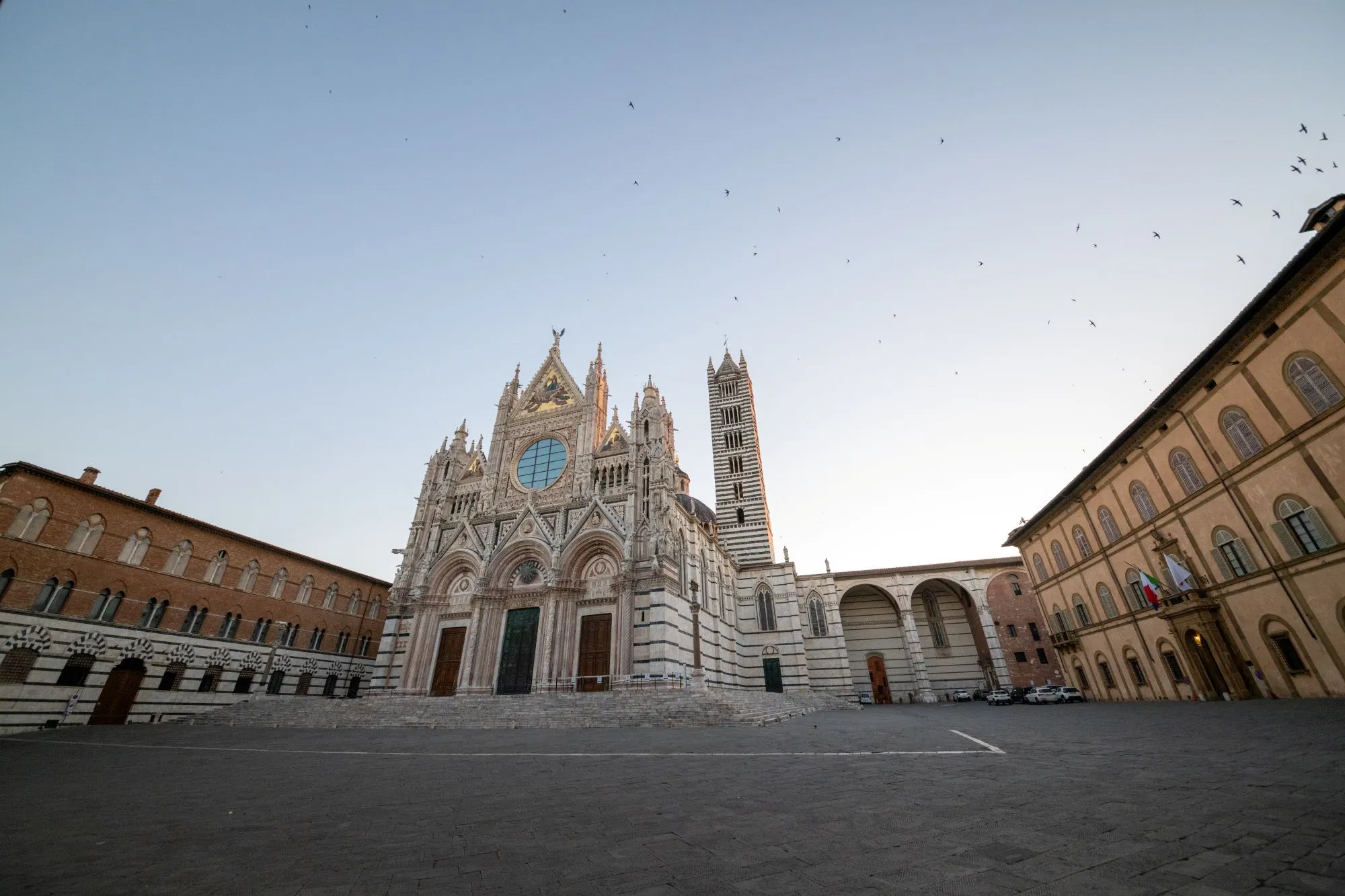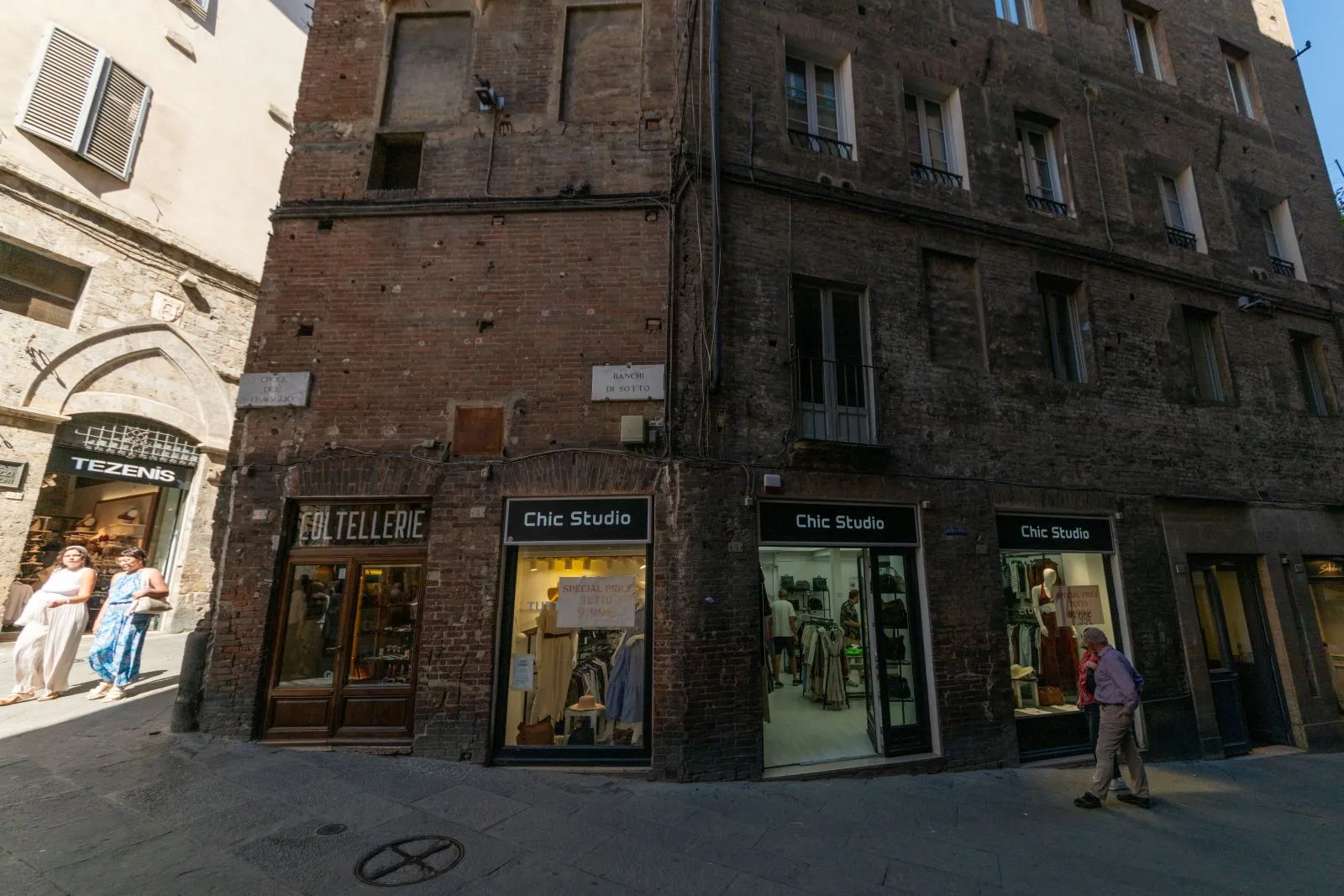
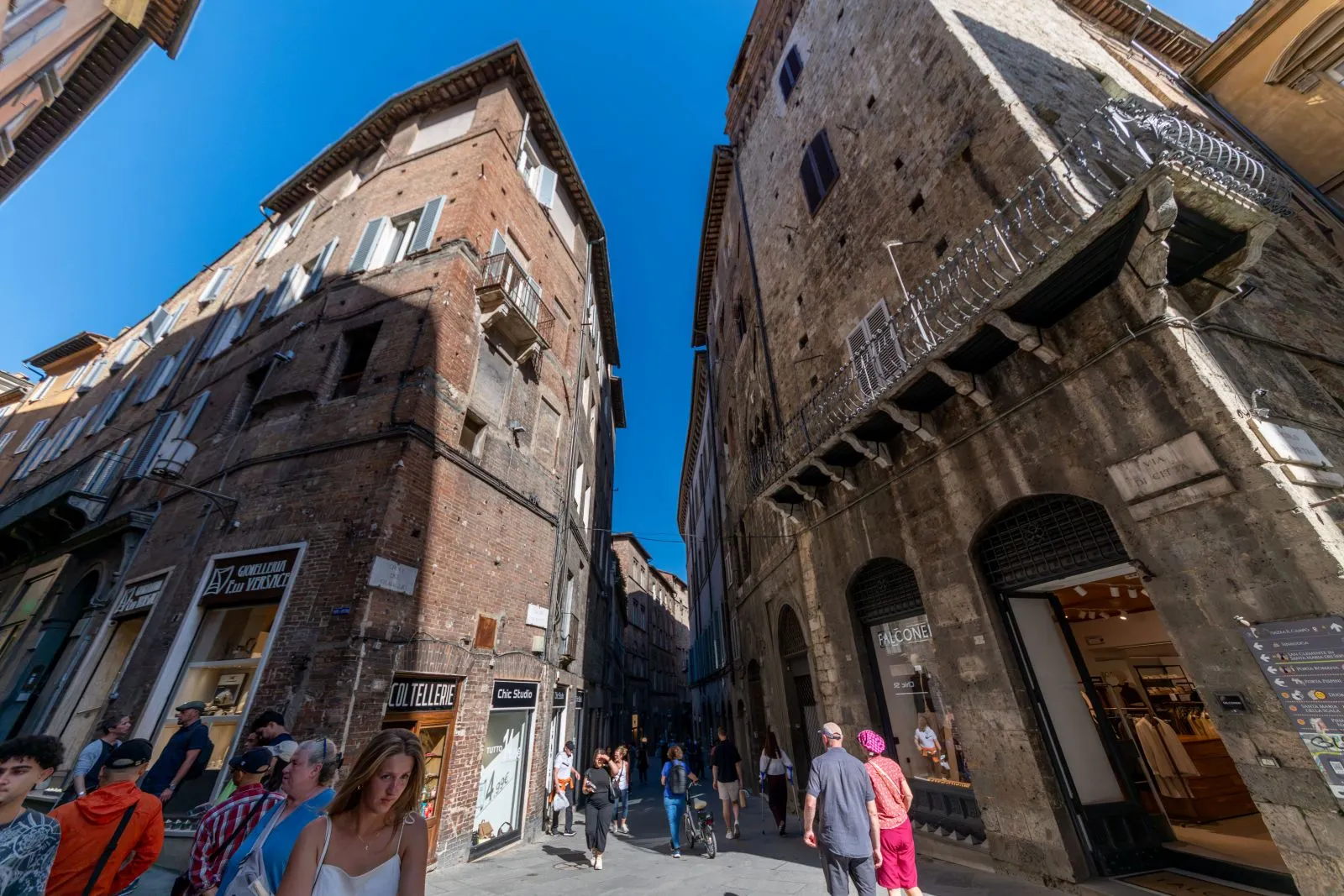
The medieval heart of the city
The Cross of the Travail is a column with a marble cross located at the intersection of Via di Città, Banchi di Sopra, and Banchi di Sotto. For centuries, it has represented one of the most important crossroads of Siena, the beating heart of commercial and political life.
The term “travail” is not related to the pain of childbirth, but derives from the Latin tripalium, a structure with three posts used in the Middle Ages as a place of justice or control. It is from this origin that the idea of a point dedicated to public announcements, oaths, and the reading of edicts, but also to minor punishments, arises.
In this context, the cross took on a value of protection and authority, reminding citizens that they were in a “sacred” space of the community, where the laws of the Municipality regulated civil life.
A place of public and symbolic life
Here, the edicts of the Municipality were read, often accompanied by the sound of trumpets, and citizens gathered to hear news, taxes, prohibitions, and political decisions.
Being a central crossroads, the area was also a meeting point for the contrade, a place of passage and exchanges, but also of agreements and informal disputes. In the medieval era, moreover, swearing near the cross had a sacred value, and many commercial agreements were sealed right here.
The Cross of the Travail functioned in a sense as an urban reference, almost a signal indicating the heart of city life.
The monument and its identity today
The cross visible today is not the original medieval one, but a subsequent reconstruction. The place remains one of the most photographed in Siena, often without its name being known.
Its position is so central that even today it is used as a reference point by the Sienese, giving rise to the saying “See you at the Travail.” In the past, it was also a checkpoint for merchants entering the city.
Dominating the area is the Loggia della Mercanzia, built by Sano di Matteo between 1417 and 1428, in a style transitioning between Gothic and Renaissance, the most important architectural element of the crossroads.