The project of the New Cathedral and Siena's ambition
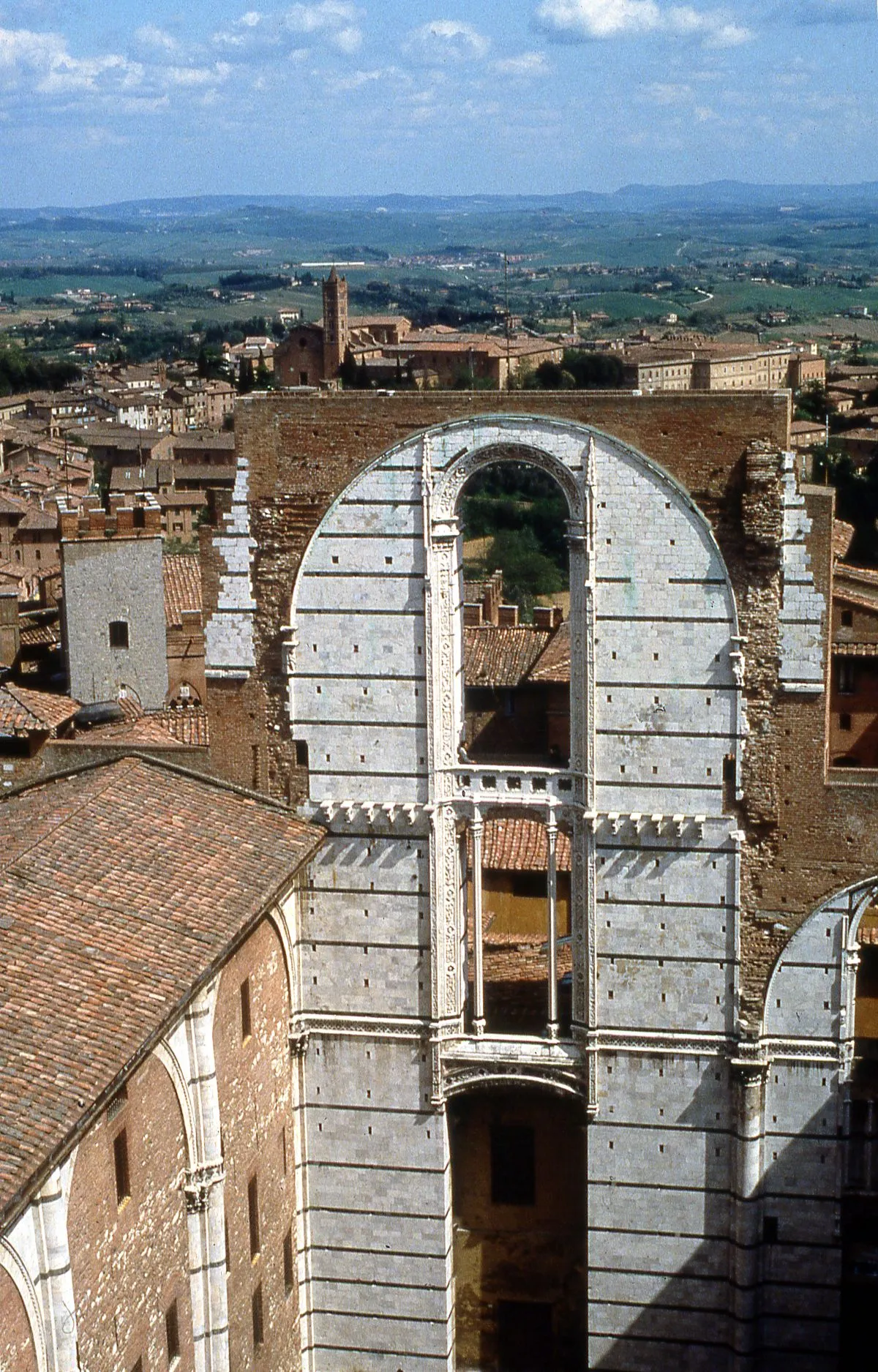
The wind passes through the arches, the city opens up from above, the Cathedral seems to reveal its unfulfilled shape: climbing the Facciatone of Siena is like entering an interrupted dream. According to a popular tradition, from up here one can feel the weight of a tremendous ambition. Siena had dared too much, and fate seemed to present the bill. In 1339, Siena envisioned the New Cathedral: a cathedral destined to become the largest in Europe, more imposing than those of Florence and Pisa. It was not just faith; it was the way the city wanted to tell the world who it was. The Facciatone of the Siena Cathedral was meant to be the new main façade. Where today there is a panorama, the central nave was supposed to rise.
The dream shattered by the plague
In 1348, Siena was devastated by the Black Death, losing almost half of its population. The construction sites stopped, never to restart. The Facciatone remained there: a façade without a church, an unintentional monument to the fragility of great human dreams. According to a widespread tradition, even the foundations were not suitable to support the weight of the building. During the works, cracks and concerning settlements would have appeared. Thus, the dream of a huge cathedral turned into an unfinished presence.
From failure to the birth of a symbol of Siena
For centuries, the Facciatone was seen as a failure. There were even attempts to demolish it, but only secondary parts collapsed. The main structure stood firm, almost refusing to disappear. Only in the 19th century did Siena begin to look at it differently. The Facciatone of Siena became the symbol of a city capable of ambition, tragedy, and resilience. No longer just what was missing, but what remained. To look at it today means to see, together, what Siena has built and what it could not finish.
The Facciatone among stories and legends
Around the Facciatone of the Siena Cathedral, historical narrative blends with popular legends. It is said that, climbing up there, with the wind passing through the arches, one can perceive the exact point where Siena's ambition met fate. The same suspended atmosphere also fuels darker stories: according to tradition, the souls of some workers who died during the construction or due to the plague would have remained bound to the unfinished building. On nights of strong wind, some claim to hear footsteps and the sound of chiseling among the arches.
There is also a belief that the Facciatone has accompanied the fate of the city: whenever it was neglected or damaged, Siena would go through difficult times, marked by wars, famines, and epidemics.
Climbing the Facciatone: the Siena that could have been
Today, the Facciatone of Siena is one of the most evocative viewpoints in the city. From up there, one understands how the current Cathedral would have been only a part of the original project. To look at it today means to see, together, what Siena has built and what it could not finish.