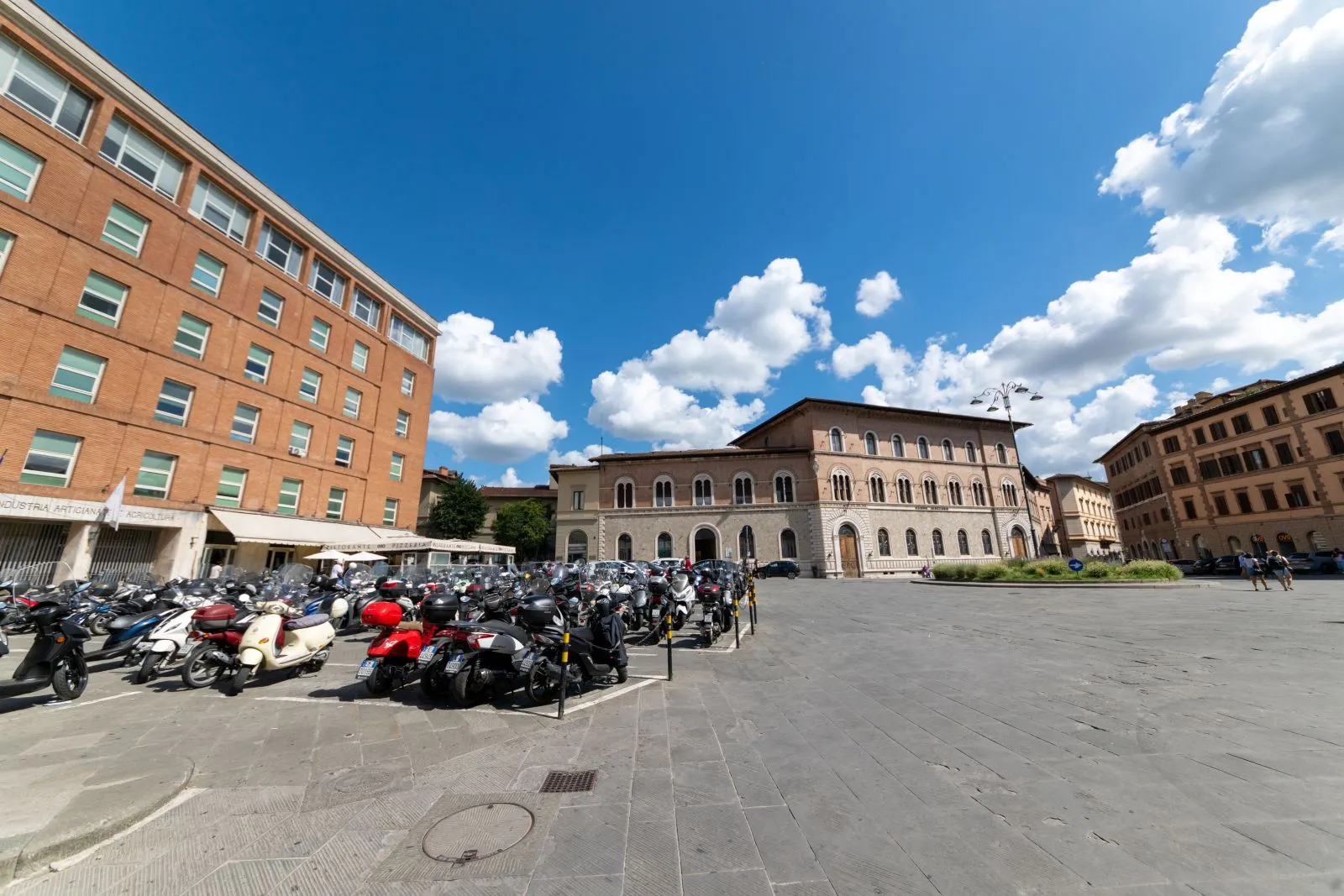
A place that has changed its face without losing its memory
What we now call Independence Square has not always been an open space. For centuries, houses, shops, and the Church of San Pellegrino intertwined here, alongside the buildings of the Wool Guild, the powerful artisan corporation of Siena. Walking among these stones, one can almost hear the sound of looms, bells, and the footsteps of those who worked and prayed in a neighborhood animated by faith and commerce.
From the Middle Ages to the 19th Century: the square takes shape
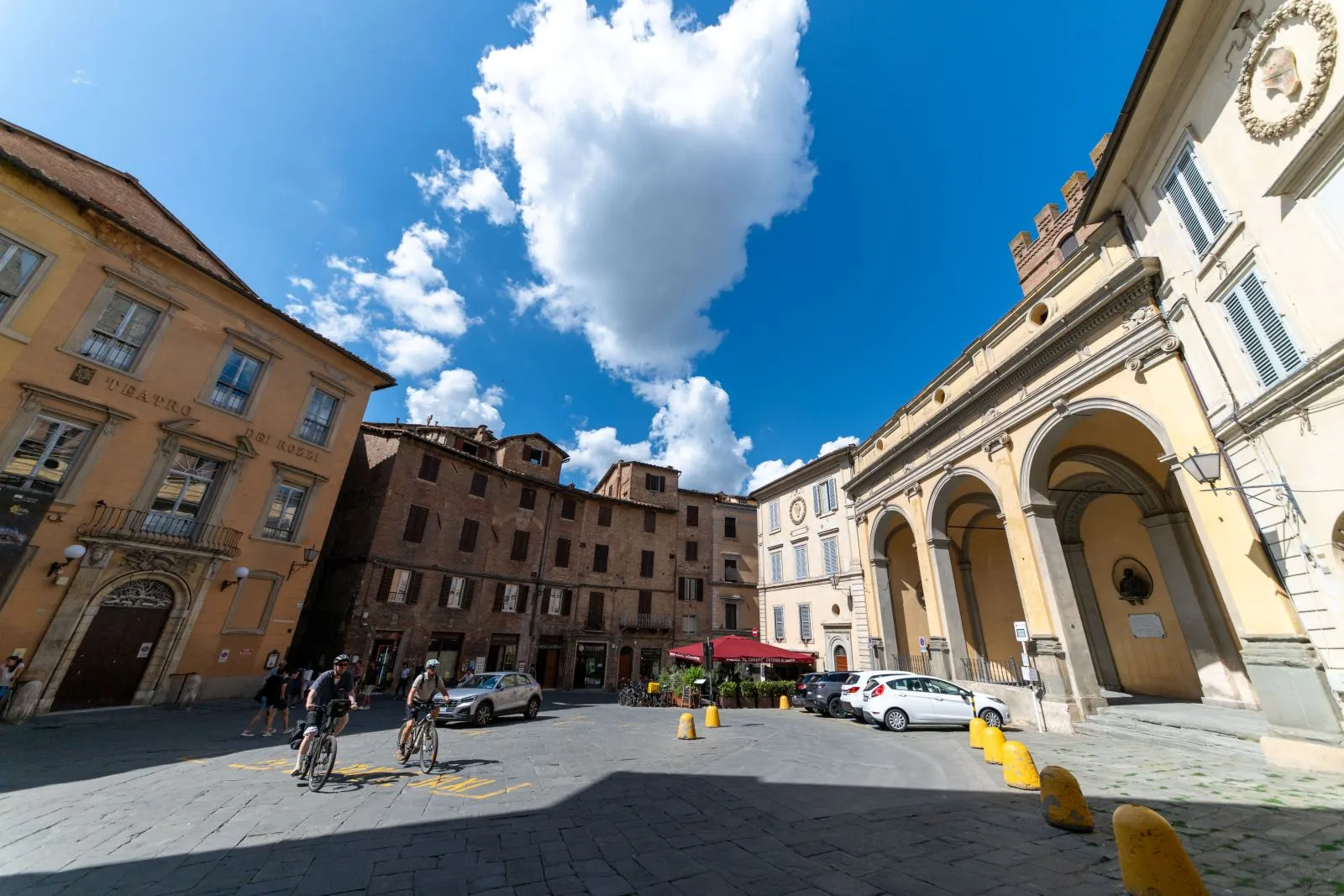
Over time, the area gradually lost its religious function and many buildings were demolished. In 1812, the Church of San Pellegrino was torn down to give space to the Teatro dei Rozzi and finally create an open space. The demolitions revealed new ground, ready to host meetings, quick steps, and the curious gaze of the Sienese. The Loggia, built at the end of the 19th century with its three arches, now accompanies those who cross the square, between past and present.
Palaces, Towers, and Details that Speak
Behind the loggia stands Palazzo Ballati, with its stone tower: the famous Bear Tower, reduced in height in the 17th century, continues to tell a piece of medieval history. The other palaces, noble or tower houses, the biforas, and the bright facades create a harmony that unites centuries of architecture without confusion. Every detail – windows, arches, and frames – seems to whisper stories of Sienese families, artisans, and travelers who have passed through this corner of the city.
Between Memory, Theater, and Culture
The name of the square is a tribute to the Italian Risorgimento, a homage to the citizens who fell for the unity of the country. At the end of the 19th century, a monument by Tito Sarrocchi symbolically remembered Italy and the Sienese soldiers. Although moved in the 20th century to San Prospero, the civic sense of the square remains palpable. On the opposite side, the Theater dei Rozzi, linked to the ancient Academy of Rozzi, testifies to the artistic vitality of a place where culture, entertainment, and city life have intertwined for centuries.
A Stroll Between History and Shopping
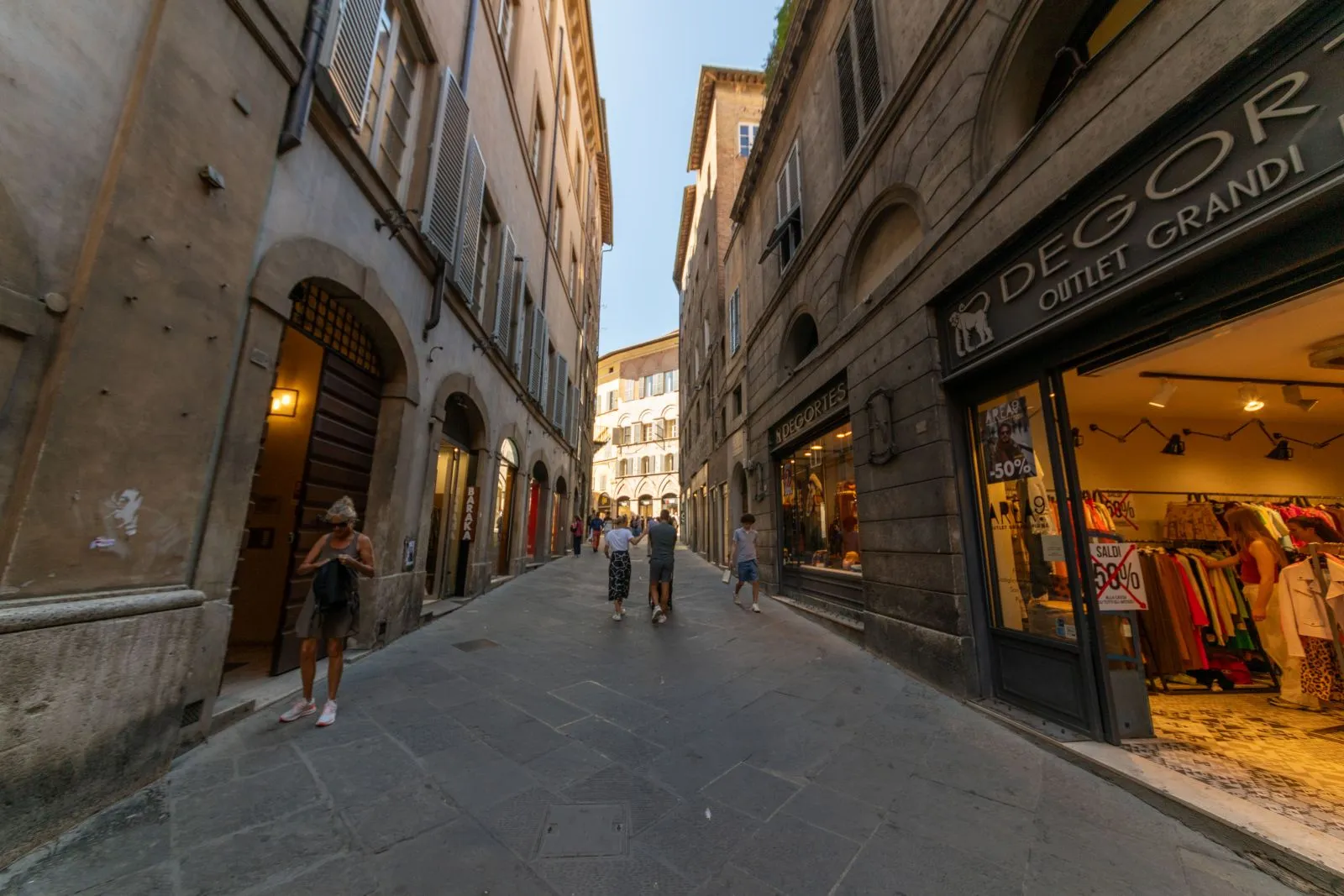
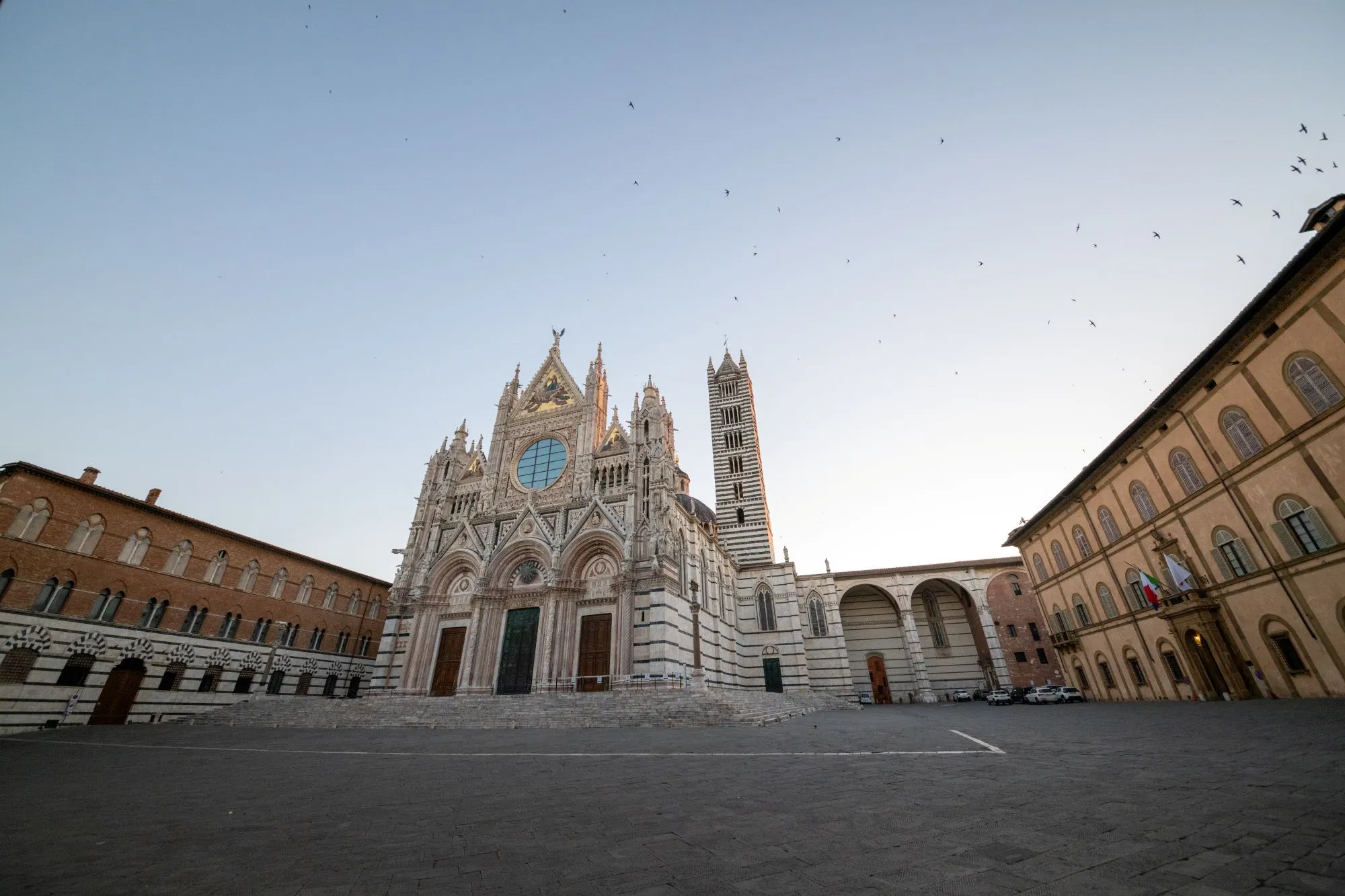
Independence Square was not born as a market or a place for popular festivals, but its charm lies precisely in the combination of different elements: medieval remains, 19th-century architecture, and contemporary cultural functions. It is the ideal starting point to reach the Cathedral, Santa Maria della Scala, the Pinacoteca, and the Church of San Pietro. Between one stroll and another, among historical views and hidden shops, it is possible to experience a unique Sienese experience, where history, culture, and shopping coexist in harmony.