It is not a square. It was supposed to be a church
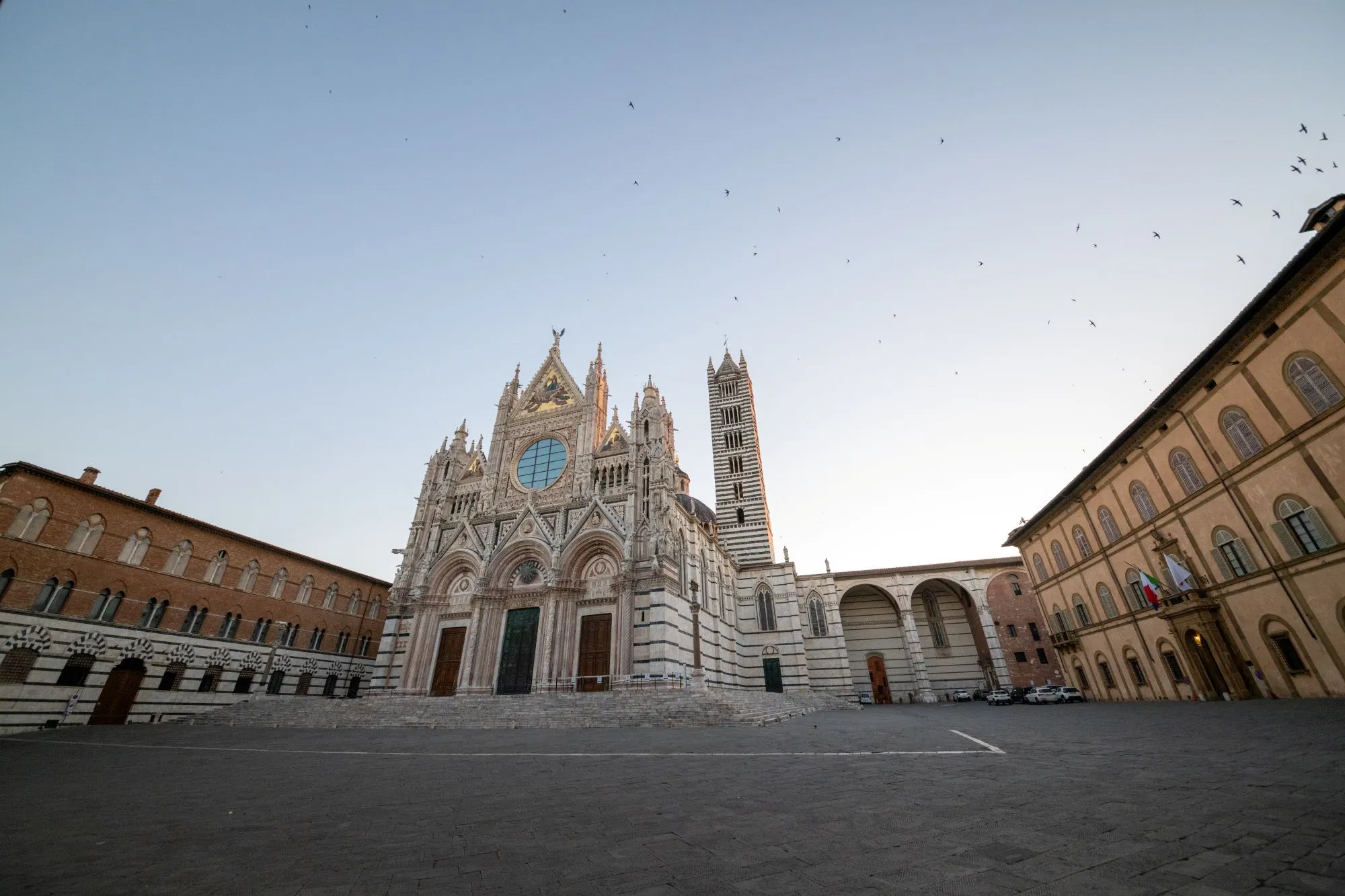
Walking next to the Cathedral, you suddenly find yourself in an open, spacious, and bright area, unusual for a medieval center that usually tightens the alleys around those who walk. Piazza Jacopo della Quercia was not born as a square: it was the interior of a church that never existed. It stands exactly where in the Fourteenth Century the central nave of the New Cathedral, the largest cathedral in Christendom that Siena had decided to build, was supposed to rise, and which the Black Death of 1348 and the subsequent economic crisis halted forever. What you cross today is an interrupted dream, paved in serena stone and finally returned to the city after years of being used as a parking lot.
What the floor tells
The bases of the pillars and the unfinished walls
Looking down, the floor speaks. The bases of the nave's pillars and the unfinished side walls are still visible, the remains of a construction site that abruptly stopped and never resumed. During the excavations of the Twentieth Century, tools from medieval construction sites were also found: objects from those who were building something grand and did not yet know they would never finish. Every stone in this square is a document, a fragment of an ambition that history decided not to fulfill.
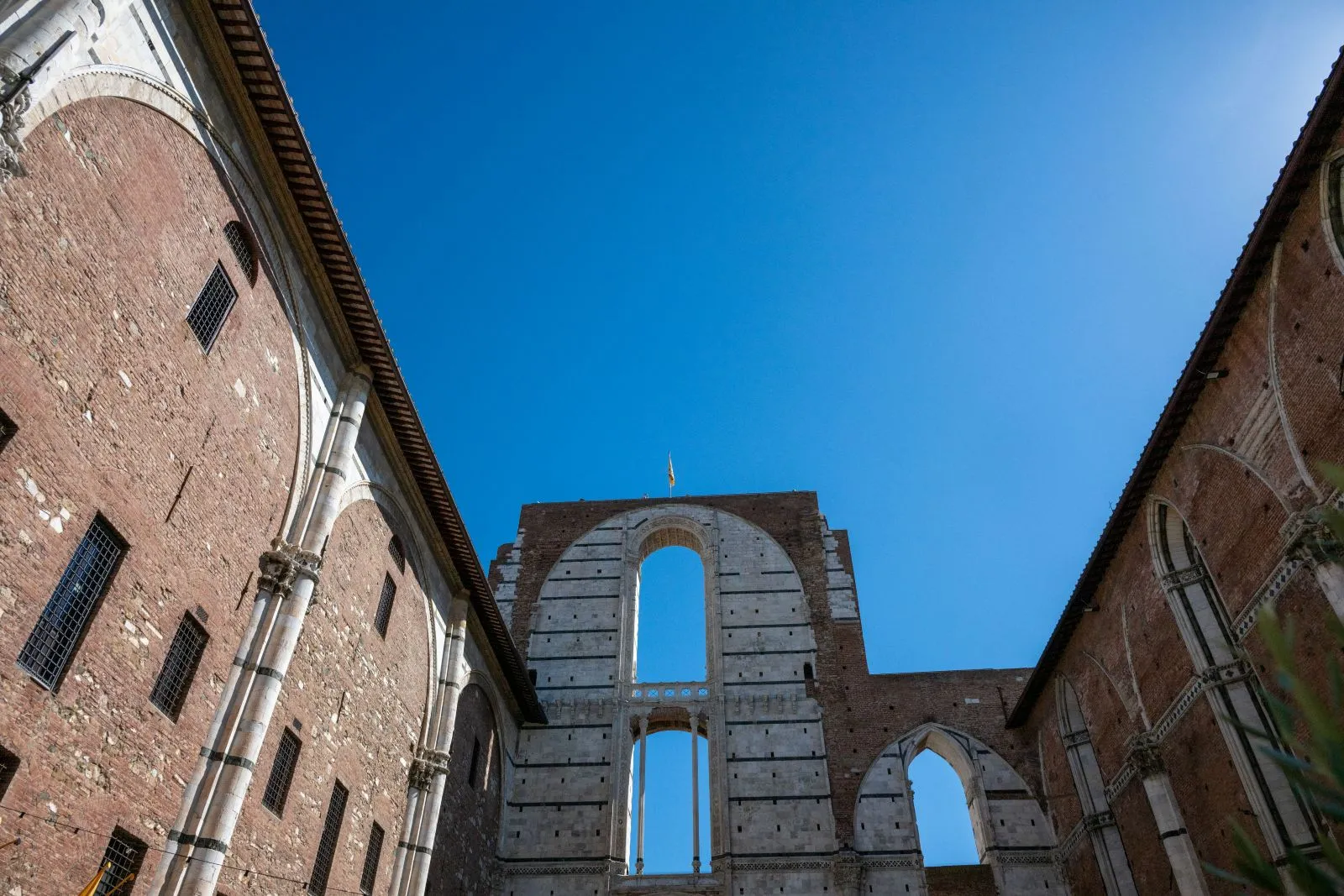
The Facciatone: the only part still standing
Dominating the square is the Facciatone, the only part of the project that has survived: the skeleton of the new facade that was never completed, which still stands today as a silent warning. It is one of the most beloved viewpoints in Siena, and climbing to the top reveals what it could have been. The silence up there says the rest.
The Contrada dell'Aquila and the life that fills the void
Dinners of victory, parties, and the Palio
This space that history has left empty, the Contrada dell'Aquila has filled with life. The square is lived as an identity place: here the dinners of victory, parties, and community gatherings take place, celebrations related to the Palio. An architectural void that has become over time the heart of a community, the place where the contrada gathers and recognizes itself. As if history had left an open space on purpose, knowing that someone would fill it with something important.
A set, excavations, and a name that carries weight
The square is named after Jacopo della Quercia, the Sienese sculptor who left his mark in the history of the Italian Renaissance with his art. It has been used as a film set for historical films, as if its atmosphere suspended between past and present was already a perfect scenery without the need for modifications. Surrounded by historic buildings and the monumental complex of the Cathedral, it is a space that does not need to explain itself: it speaks for itself, to those who are willing to stop and listen.