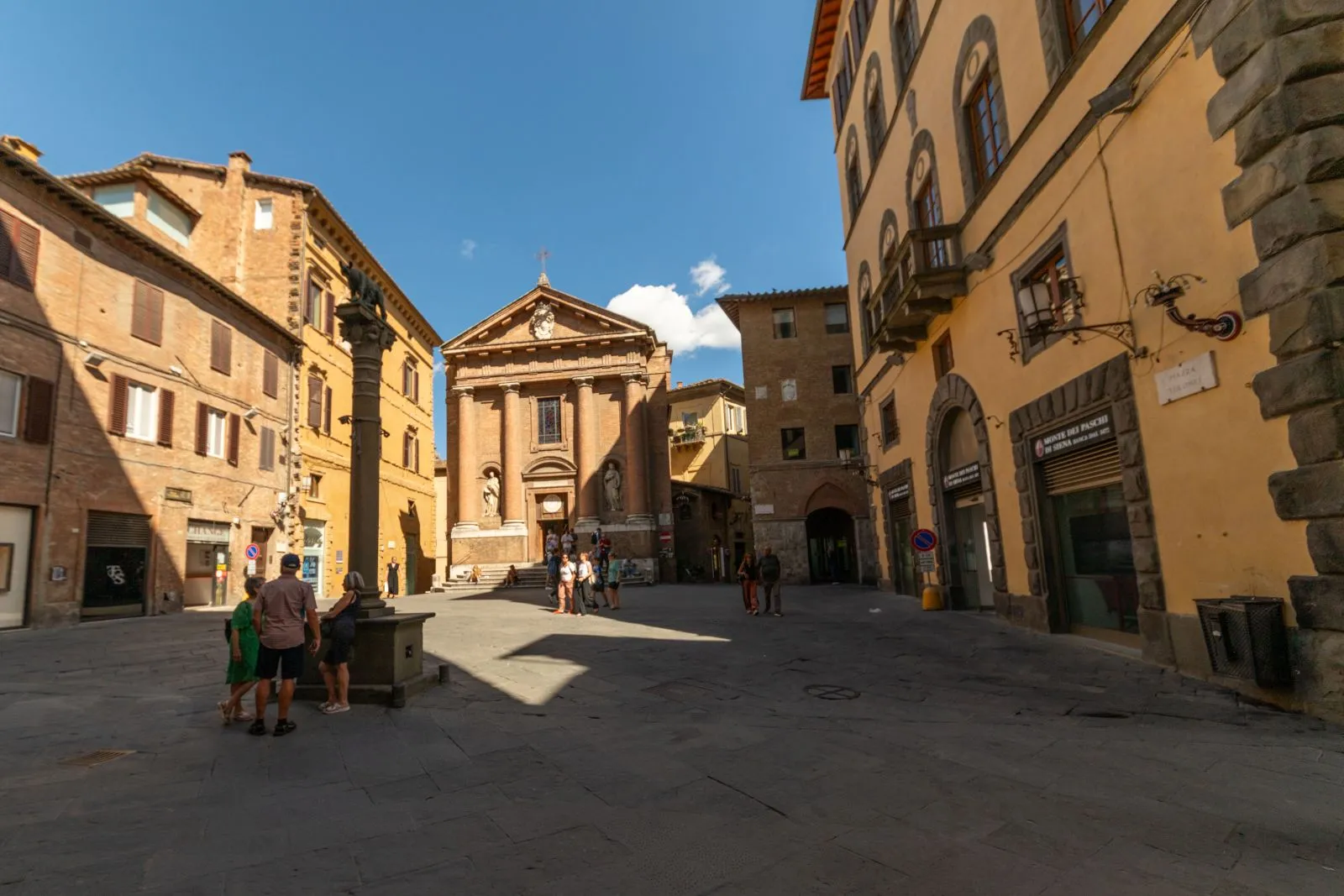
Piazza Tolomei, between myths, power, and medieval charm
Where legends and nobility intertwine, Piazza Tolomei reveals the authentic soul of Siena. Located along Via del Corso, the square leads towards Piazza del Campo and holds within it a concentration of history, architecture, and stories of influential families. Despite its small size, the square is a small treasure chest of medieval memory and Sienese tradition.
Palazzo Tolomei: power and resilience
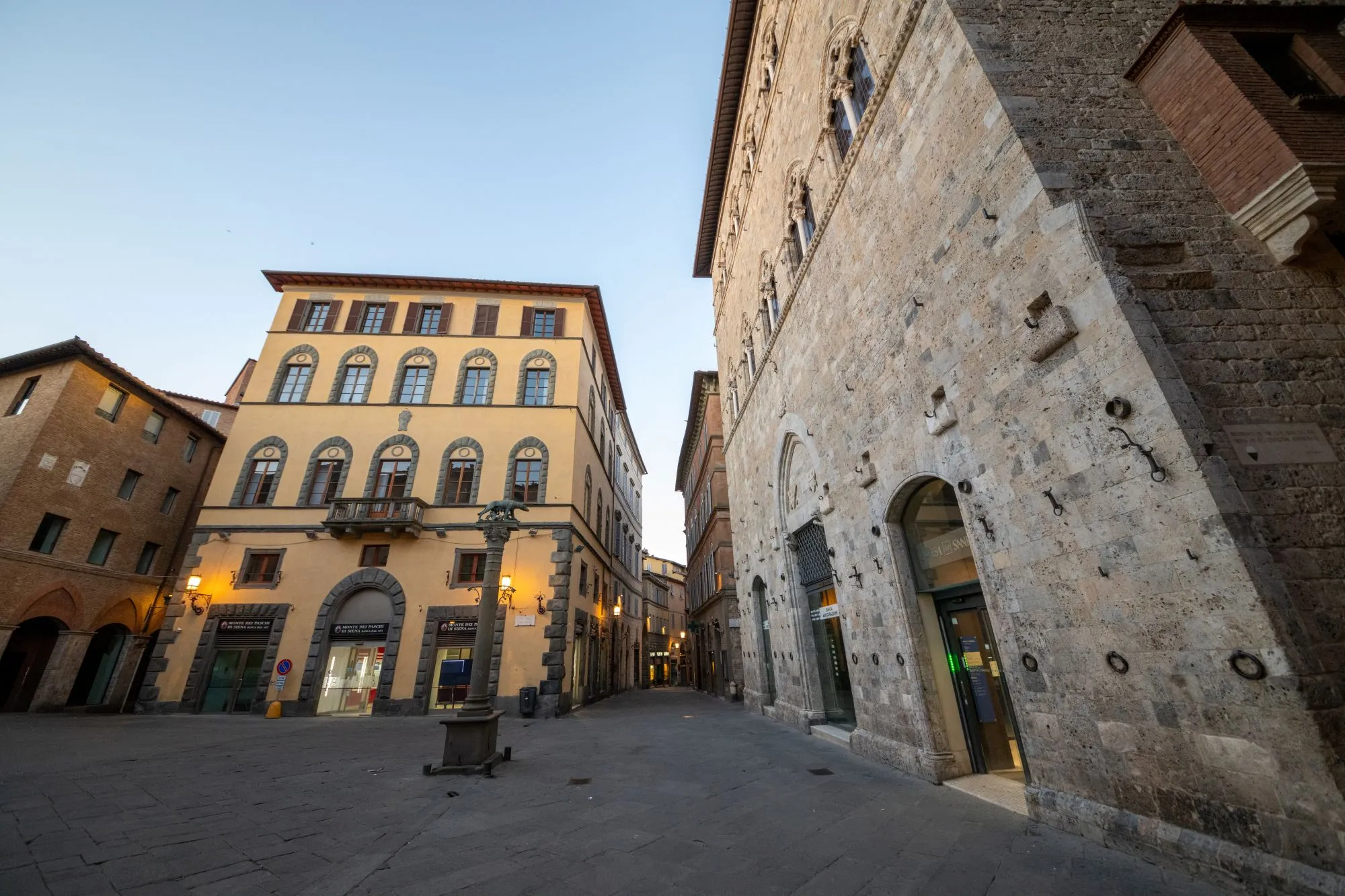
At the center of the square stands Palazzo Tolomei, built around 1205 and considered the oldest private building in Siena. A splendid example of 13th-century civil architecture, with a gray stone facade and elegant Gothic bifora windows, it testifies to the power of the Tolomei family, aligned with the Guelph faction. Destroyed by the Ghibellines in 1267, the palace was rebuilt shortly after, regaining its monumental appearance. In the early years after its construction, it even hosted municipal functions before returning to be the residence and bank of the family.
The square is also steeped in myth thanks to Pia de’ Tolomei, immortalized by Dante in Purgatorio with the line “Siena made me, Maremma unmade me.” Tradition tells that Pia lived here before being imprisoned and killed by her husband Nello Pannocchieschi. A plaque on the facade still remembers her story today, intertwining memory and legend.
Piazza Tolomei: a corner of nobility and Sienese history
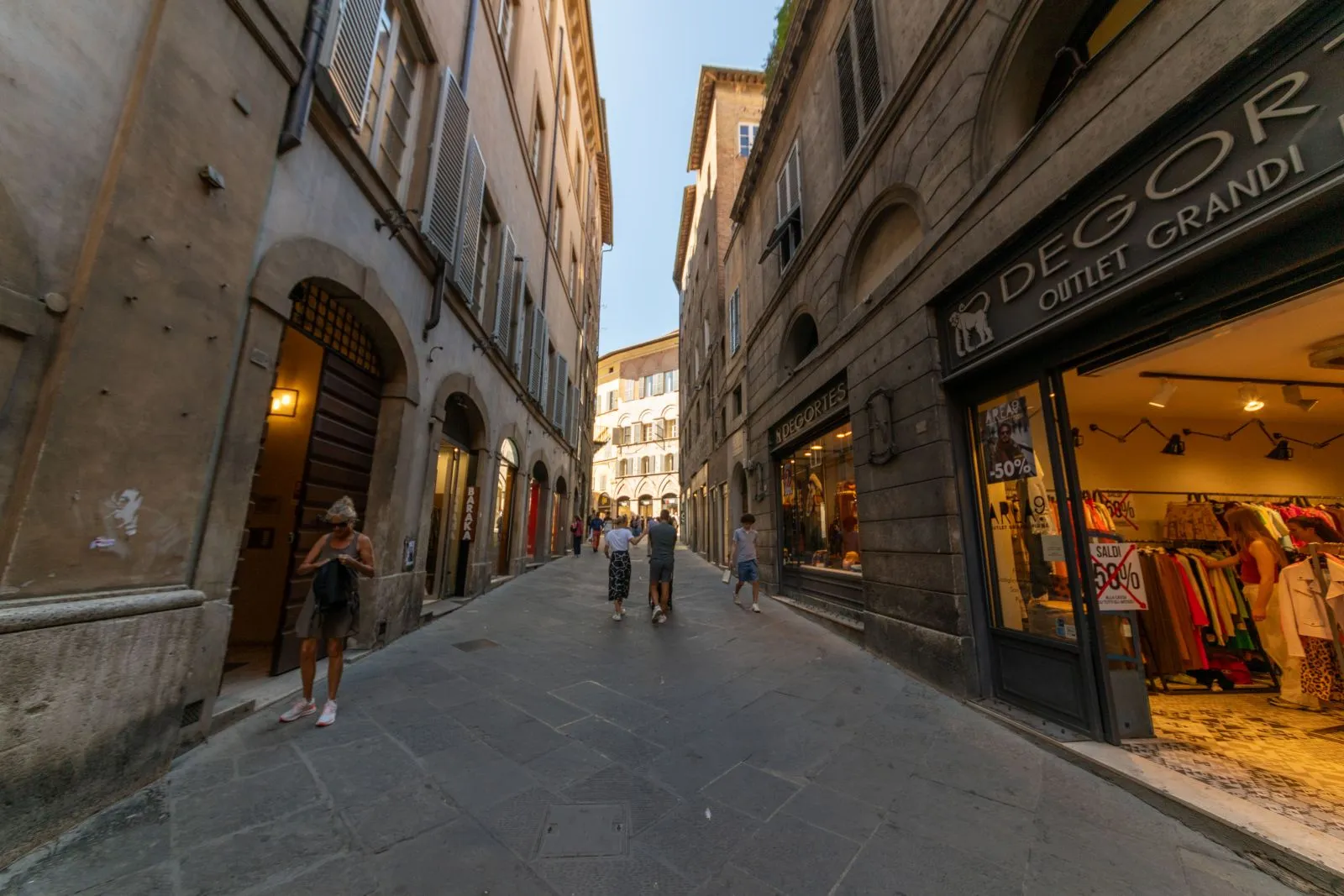
Piazza Tolomei belongs to the territory of the Contrada Priora della Civetta, known as the “nest of the nobles” for the high concentration of aristocratic families that resided there. Today, the square maintains a cozy and authentic atmosphere, where one can still breathe the charm of the ancient merchant families that made Siena a leading financial center in the Middle Ages. Walking among the stones of the square means feeling the echo of a city that blends history, nobility, and popular tradition, offering a corner of Siena that seems suspended in time.
Church of San Cristoforo and the Column with the She-Wolf
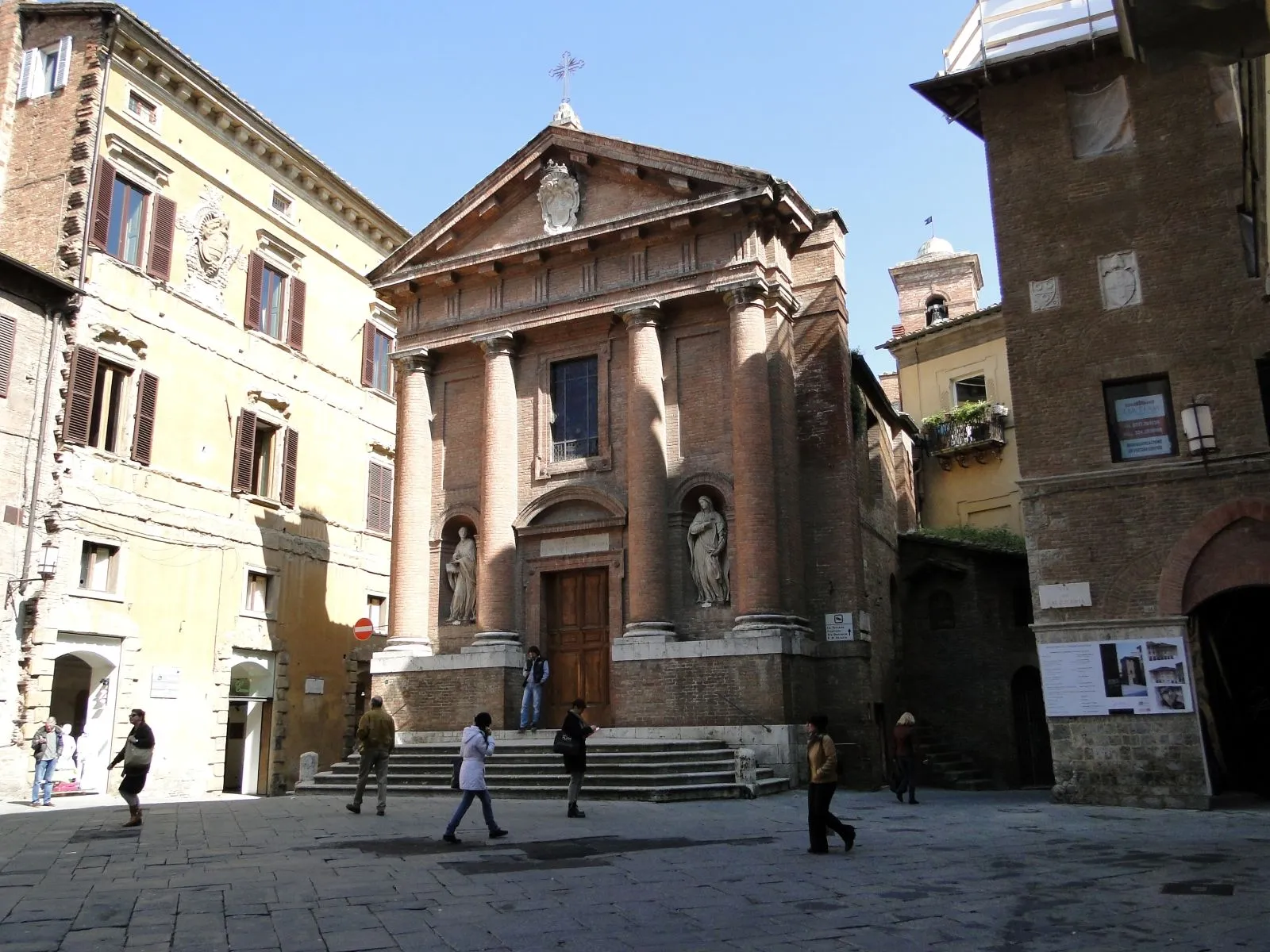
Opposite the palace stands the Church of San Cristoforo, documented as early as 1088 and among the oldest in Siena. Originally Romanesque and renewed in the Neoclassical period, it offers a unique architectural contrast to the dominant Gothic style in the city. The church served as a landmark for travelers and pilgrims along the Via Francigena, uniting spirituality and everyday life.
At the center of the square rises the Column with the She-Wolf, sculpted by Domenico Arrighetti, a symbol of the city and the myth of the twins Senio and Ascanio. This monument underscores the civic role of the square, a place for political meetings, markets, and financial activities.