Siena opens a bigger heart for you
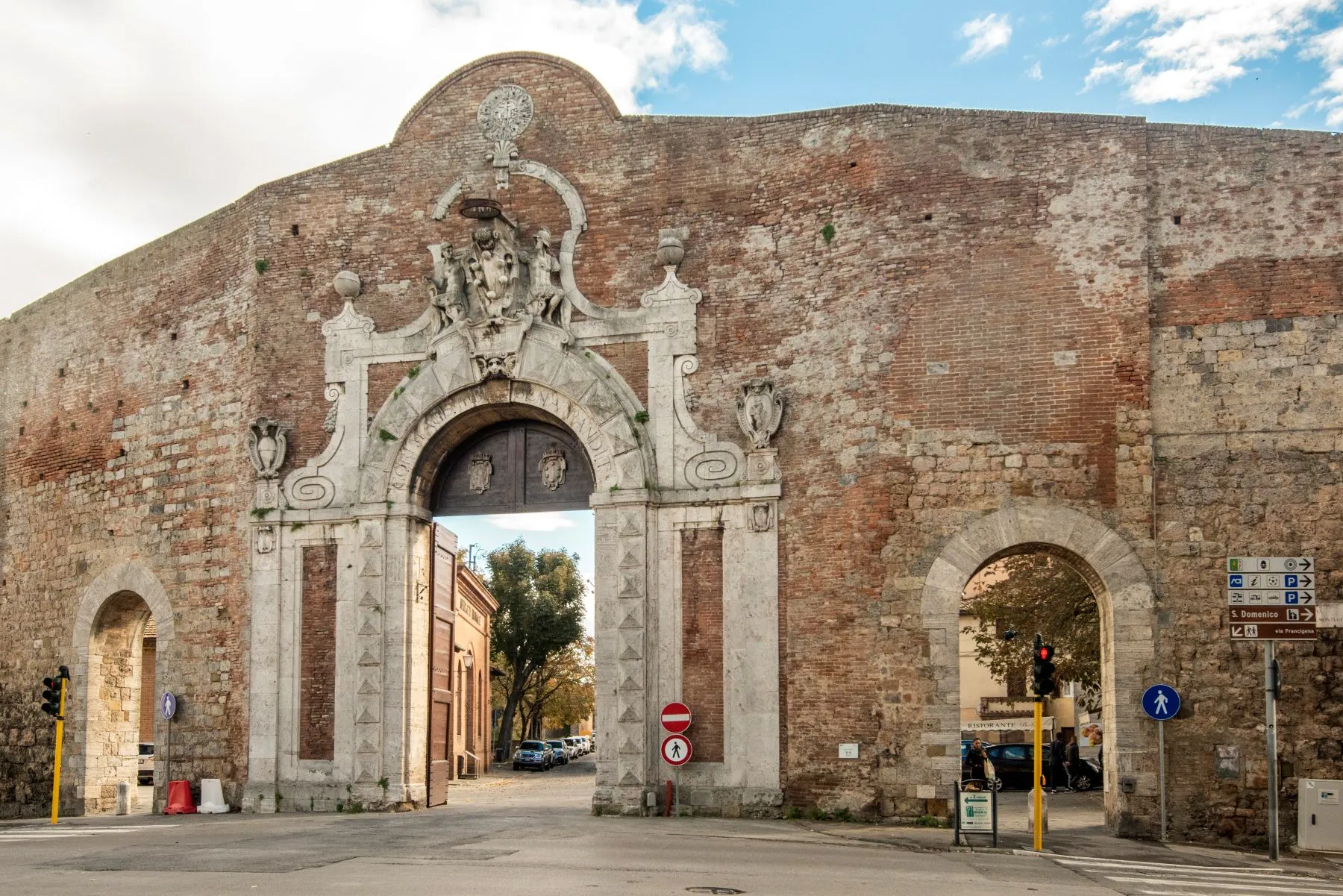
There are thresholds that you cross and forget. And then there is Porta Camollia: that one you never forget. On the outer arch, engraved in stone like a promise, stand the most beautiful words a city has ever addressed to a traveler: "Cor magis tibi Sena pandit" — Siena opens a heart bigger than the door you are crossing.
It is not just an inscription. It is a statement of character, an invitation that has lasted for centuries, addressed to pilgrims, merchants, ambassadors, and tourists of every era. Because Porta Camollia has always been the representative door of Siena: the main entrance for those arriving from Florence along the via Cassia, the first glimpse of the city for those traveling the Via Francigena towards Rome.
A name that comes from myth
The name of the door has roots in the foundational legend of Siena. It is said to derive from Camulio, the legendary envoy of Romulus, who in the 7th century BC would have established his camp right here, during the pursuit of Senio and Ascanio, the sons of Remus and mythical founders of the city. An origin that ties Siena to Rome with an ancient thread, emphasizing that deep connection with the noblest roots of Italic civilization.
History, battles, and monuments
The door that rose from the ruins
The current structure dates back to 1604, rebuilt according to the design of Alessandro Casolani after the medieval door was severely damaged during the devastating siege of Siena in 1554-1555. A monumental and richly decorated architecture, quite different from the military austerity of other city gates: designed to welcome, not just to defend.
The Battle of Camollia and the Column of Portugal
The area has experienced moments of intense history. The most famous is the Battle of Camollia in 1526: the Sienese army, at a clear numerical disadvantage, managed to dramatically defeat the papal and Florentine troops, defending the independence of the Republic with a courage that the Sienese still remember with pride today.
Just outside the door stands the Column of Portugal, a monument that commemorates the meeting in 1451 between Emperor Frederick III of Habsburg and his betrothed Leonora of Portugal, in the presence of Enea Silvio Piccolomini, the future Pope Pius II. Great history, preserved in a small space.
Today, between Palio and daily life
Porta Camollia is now the main entrance to the Third of Camollia and stands in the heart of the territory of the Sovereign Contrada of the Porcupine. During the Palio, it is adorned with flags and lights. Porta Camollia plays a role that has always belonged to it, that of being the threshold between the world and Siena.
Cross it
Come to Porta Camollia, read those words on the arch, enter the city. Because certain invitations, after four hundred years, are still valid.
Northern extremity of the walls, Siena, in the territory of the Contrada of the Porcupine.