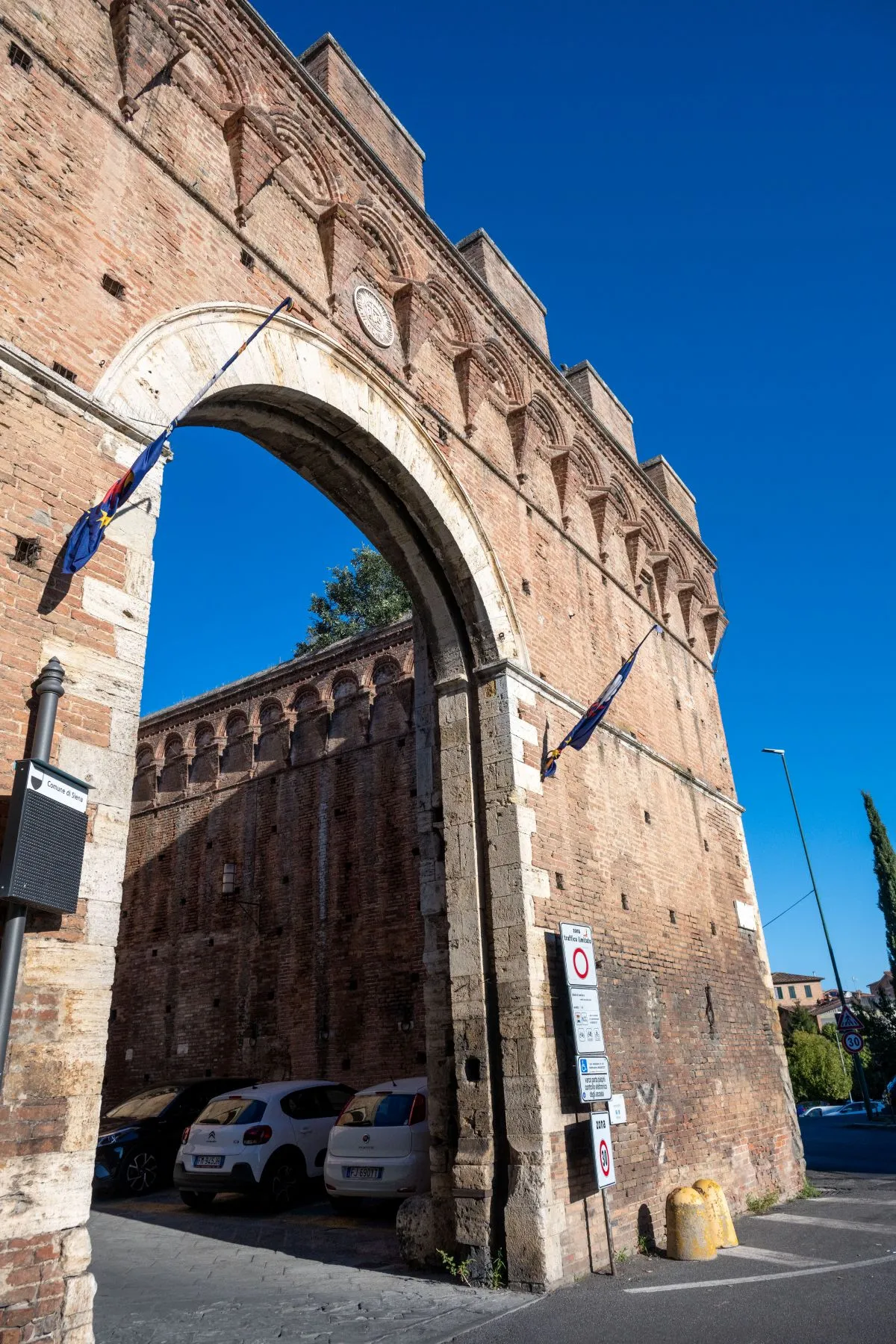
A gate, a thousand stories
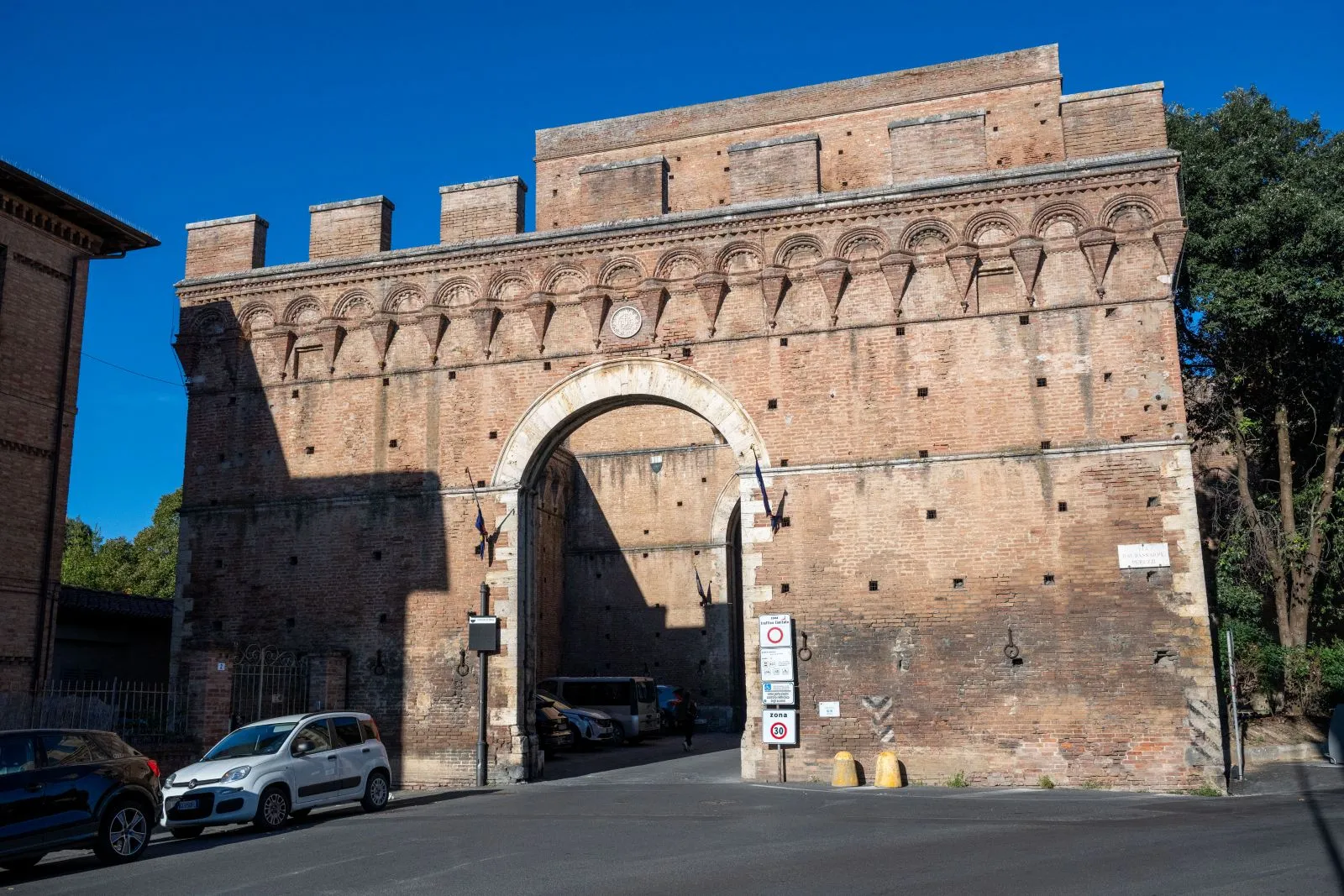
There are stones that remember. Porta Pispini is one of those: austere, silent, heavy with centuries that weigh just right. Built starting from 1326 during the great expansion of the 14th-century city walls, this gate is not just a passage in stone. It is a boundary between worlds, a point where the city ended and the rest of the world began, where every entrance was a rite and every exit a farewell.
Its ancient name was Porta San Viene, linked to a moving episode: the solemn return of the relics of Saint Ansano, patron saint of Siena, which took place in 1107 amid the joyful cries of the population. A name that carried with it devotion, memory, and a sense of belonging. The current name, on the other hand, derives from the nearby Fonte dei Pispini, whose name evoked the characteristic sound of the "pispinnare" of water gushing from the underground conduits of the wells.
Strategy, art, and devotion
The gate as a fortress
From a military perspective, Porta Pispini occupied a strategic position in the Third of San Martino, guarding the eastern side of Siena, historically one of the most exposed points to external attacks. In 1527, the structure was enhanced with a fortification designed by the famous architect Baldassarre Peruzzi: sloped walls and spaces for artillery, designed to respond to modern siege techniques. A concrete response to a changing world, where cannons replaced catapults.
Sodoma and beauty in the midst of war
But Siena did not know how to build defenses without also incorporating beauty. The inner facade of the gate was adorned with a fresco of the Nativity painted by Sodoma, the remnants of which still survive today as a testament to a city that combined art, religious devotion, and military function with a naturalness that was uniquely Sienese.
The gate and the Nicchio
Porta Pispini stands in the territory of the Noble Contrada del Nicchio, and for the Nicchiaioli it still represents a profound identity symbol, rooted in the history of the district and in the social life of the contrada. A bond that time has not eroded, but rather strengthened.
Come discover it
The structure still retains its austere and compact appearance: a large brick arch, an ante-wall that served to filter and control every access, a perfect balance between solidity and medieval elegance.
Third of San Martino, Siena, in the territory of the Contrada del Nicchio.