A monumental and majestic gate
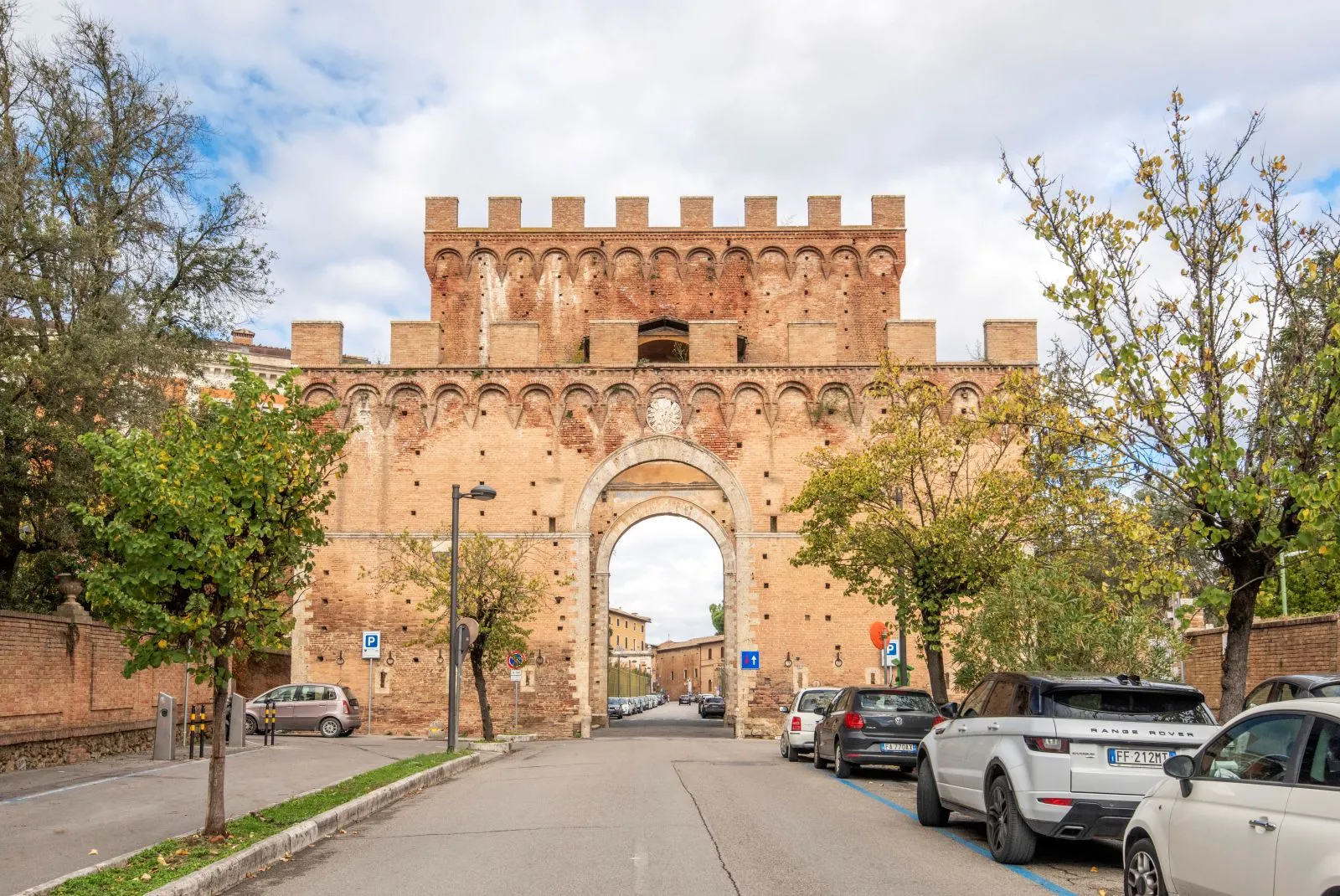
Porta Romana was considered the most beautiful gate ever built also for its remarkable dimensions: at its highest point, it reaches thirty meters.
Its monumentality impressed Agnolo di Tura del Grasso, author of the Sienese Chronicle, who around the mid-14th century described it as "great and beautiful, of great difficulty more than any gate in Italy."
The interior contains spacious, accessible rooms equipped with stairs leading to the roof of the building. The gate was connected to the city walls only after its construction.
The fresco of the Coronation of the Virgin
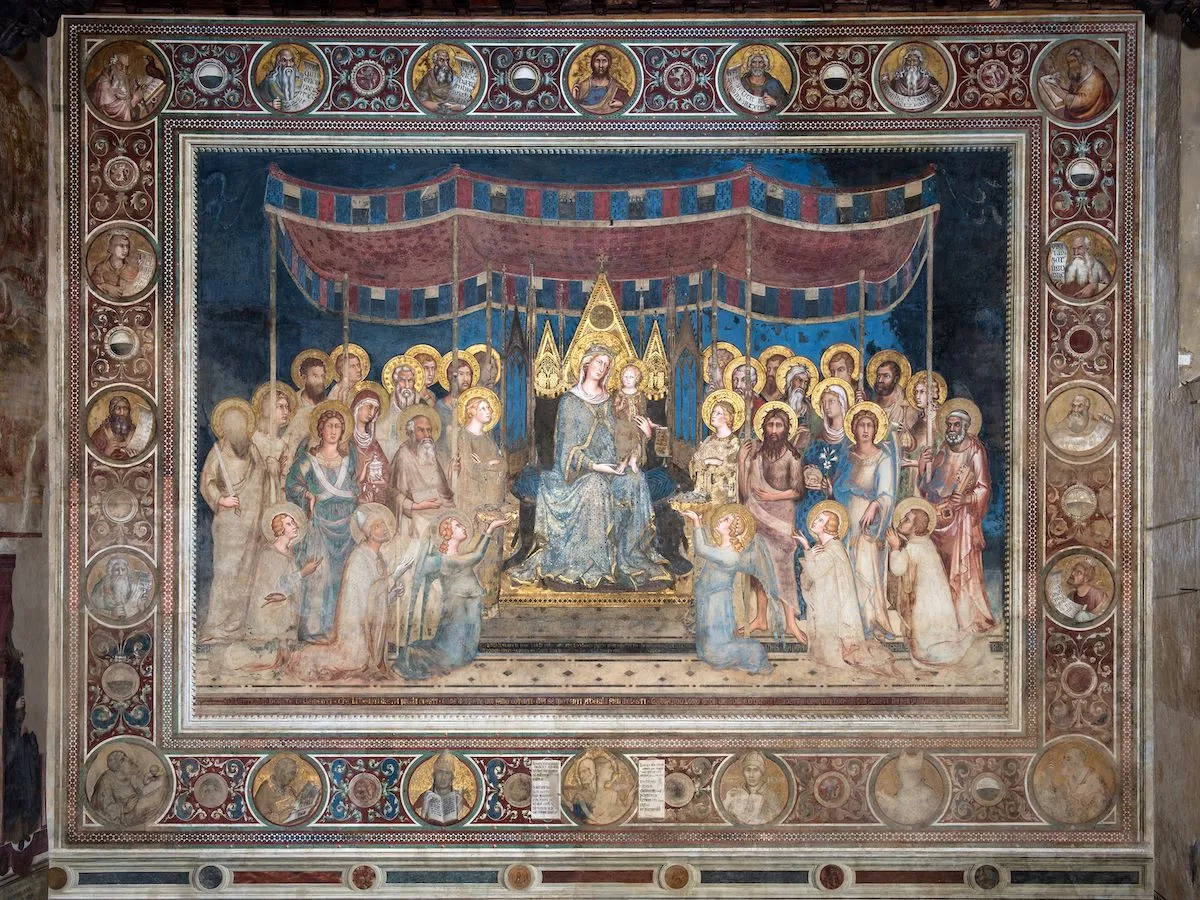
To enhance its beauty, Porta Romana was decorated with the fresco placed on the large niche of the tower, depicting The Coronation of the Virgin.
The work was commissioned and started by Stefano di Giovanni, known as Sassetta, and, after his death, completed by Sano di Pietro.
Coats of arms, inscriptions, and historical traces
Porta Romana is located on the route of the ancient Via Cassia and was equipped with battlements and a defensive antemural. To the right of the gate, one can see a fragment of a travertine slab with part of a Roman-era inscription and, below, a plaque with a long inscription in Latin, dictated in 1734.
The oldest plaque was identified by the Sienese Teofilo Gallaccini in 1606, near Porta Romana, on the city wall that descended towards Porta Pispini.
On the right side of the antemural, there is a large marble coat of arms of the Medici family, with the inscription "Cosmus Medices Florentiae Et Senarum Dux II". Together with the coat of arms placed on the facade of the Town Hall in 1560, it was placed on one of the complexes considered most significant in the city.
Porta Romana and the Via Francigena
Travelers and pilgrims entering Siena from Porta Camollia, along the Via Francigena, would leave the city through Porta Romana, often referred to in documents as Porta "Nuova".
For those leaving Siena towards Rome, this gate was a solemn threshold, capable of encapsulating the elegance and strength of the city.